Award-Winning High School Chemistry Tutors
serving Green Bay, WI
High School Chemistry
Tutors in Green Bay
Private 1-on-1 tutoring, weekly live classes for academic support, test prep & enrichment, practice tests and diagnostics, and more to elevate grades and test scores.
Based on 3.4M Learner Ratings
UniversitiesSchools & Universities
DeliveredHours Delivered
ProficiencyGrowth in Proficiency
Who needs tutoring?
No obligation. Takes ~1 minute.

Amber's path led to theater casting and producing in New York, but her 35 ACT and deep comfort with math and science mean she tackles chemistry topics like stoichiometry and gas laws with the same precision she brings to her strongest subjects. She teaches students to read chemical equations the way she reads a script — pulling apart what each piece is doing and why it's there, so nomenclature and reaction balancing start to follow a logic instead of feeling arbitrary. Rated 5.0 by students.
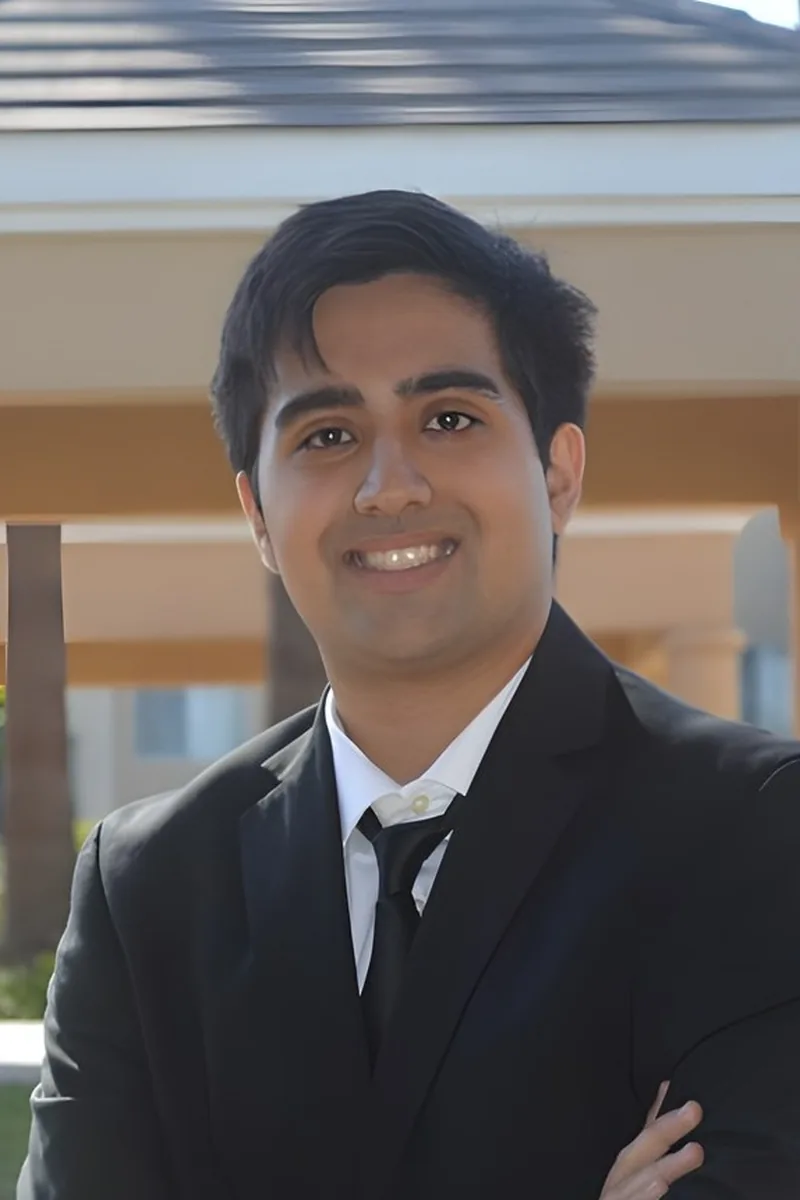
Between his UCLA biology coursework and medical school, Abrahim has taken chemistry from multiple angles — stoichiometry, equilibrium, acid-base reactions, thermodynamics. He's direct about pinpointing where a student's understanding breaks down, whether that's balancing redox equations or interpreting periodic trends. His 5.0 rating speaks to how well that targeted approach works.
Alex's psychology and neuroscience coursework required pushing through college-level chemistry where concepts like molecular polarity, functional groups, and acid-base reactions weren't elective — they were prerequisites for understanding how drugs cross the blood-brain barrier and how neurotransmitters behave. That health-science lens gives her a way to teach high school topics like bonding and solution chemistry through the biological questions that make the material click. Rated 5.0 by students.
Balancing equations and stoichiometry problems tend to click faster when a tutor can trace the logic back to what atoms are actually doing — and Miriam's biology degree means she's applied chemistry concepts like molecular interactions, pH, and reaction energetics in contexts where getting them wrong meant misunderstanding entire biological systems. She teaches the quantitative side of chemistry by connecting each calculation to the physical reality it represents, so formulas feel like descriptions rather than arbitrary rules. Rated 4.9 by students.
Materials Science & Engineering at UW-Madison is essentially applied chemistry — Adam's coursework in crystallography, phase diagrams, and thermodynamics means he's actively using concepts like bonding, atomic structure, and energy changes to understand how real materials behave. That ongoing exposure lets him explain high school topics like periodic trends and chemical reactions with the kind of intuition that comes from seeing where those ideas actually lead.
Balancing equations, predicting products, and understanding mole ratios all click faster when a tutor can tie them to real-world chemistry. Eitan's zoology degree required deep coursework in general and organic chemistry, so he explains concepts like stoichiometry and periodic trends with the confidence of someone who's applied them in biological contexts. Rated 5.0 by students.
Stoichiometry, gas laws, and redox reactions all follow patterns that become predictable once a student sees the underlying logic. Samantha breaks down high school chemistry problems by connecting them to real lab scenarios she's encountered in her research at UW-Madison, turning formula sheets into something students can actually reason through. She holds a 5.0 rating from past students.
Stoichiometry, electron configurations, acid-base reactions — high school chemistry is full of concepts that seem unrelated until someone connects them. Zach's biochemistry coursework at UW-Madison, including organic chemistry, gives him a deep understanding of why these foundational ideas matter and how they build on each other.
Engineering students take more chemistry than most people realize, and Brendan's Marquette coursework gave him a solid handle on stoichiometry, thermochemistry, and molecular bonding. He breaks down problems like balancing redox reactions or predicting gas behavior by connecting them to the physical intuition students already have about how materials behave.
As a passionate educator with a Master's in Educational Psychology from the University of Wisconsin - Madison, I have over 8 years of tutoring and classroom experience, currently teaching a range of subjects including AP Biology and Physics. My approach centers on fostering a supportive learning environment that encourages curiosity and critical thinking, helping students connect complex concepts to real-world applications. I believe that every student has the potential to succeed, and I am dedicated to tailoring my methods to meet individual learning styles. Outside the classroom, I enjoy exploring the latest scientific research and engaging in outdoor activities, which I find enriches my teaching and connects me with my students.
Chemistry can feel like learning a new language — balancing equations, interpreting the mole concept, predicting reaction types — and Asta treats it that way, breaking each topic into its own vocabulary and logic. Her experience tutoring internationally in Hong Kong gave her practice explaining scientific concepts to students from varied academic backgrounds. Rated 5.0 by students.
Running a middle school science department in Philadelphia meant John taught chemistry fundamentals daily — building up from atomic structure and the periodic table to chemical reactions and basic stoichiometry — and his role as curriculum chair forced him to think carefully about the sequence in which those ideas need to land. That classroom experience shows when he explains topics like balancing equations or classifying reaction types, because he's already mapped out where students typically get lost. Rated 5.0 by students.
Balancing equations, understanding molarity, and predicting reaction products are all things Lisa does routinely in her marine biogeochemistry lab at Stony Brook. She approaches high school chemistry by grounding each new topic in a concrete example so students see the logic behind the math, especially in tricky areas like equilibrium and acid-base chemistry.
Chemistry has always been one of Samantha's favorite subjects to teach — she earned her degree in Chemistry & Chemical Biology from Cornell and genuinely enjoys unpacking topics like stoichiometry, molecular geometry, and acid-base equilibria. She's a visual teacher who sketches out Lewis structures, orbital diagrams, and reaction maps so that abstract concepts become something students can actually picture. Her 5.0 rating speaks to how well that approach lands.
Running an immunology lab at Columbia means Matthew uses chemistry daily — from buffer calculations to understanding reaction kinetics in biological systems. For high school students tackling stoichiometry, equilibrium, or electron configurations, he explains the logic behind each concept rather than handing out shortcuts that fall apart on harder problems. Rated 5.0 by students, he makes the quantitative side of chemistry far less intimidating.
The jump from memorizing chemical formulas to actually solving equilibrium and redox problems is where most high school chemistry students struggle. JF tackles this gap head-on, walking through dimensional analysis, electron bookkeeping, and reaction predictions with the precision his Stanford math background provides. He's rated 5.0 by students who've worked with him.
General chemistry was the first subject Alec taught as a TA at Cornell, running problem-solving sessions where students worked through stoichiometry, equilibrium, and acid-base reactions in real time. That hands-on teaching background means he knows exactly where high schoolers get tripped up — whether it's balancing redox equations or making sense of periodic trends. Rated 4.8 by students.
Most high school Chemistry struggles come down to one thing: the periodic table is supposed to be a cheat sheet, but nobody taught students how to read it. Sharan connects trends like electronegativity and atomic radius to actual behavior in reactions, so predicting whether a bond is ionic or covalent stops being a guessing game. She's earned a 5.0 rating tutoring science subjects alongside her premed studies at Cornell.
Whether it's naming ionic compounds, predicting products of a reaction, or working through gas law calculations, Ravnoor zeroes in on the specific concept causing trouble and drills it with targeted practice problems. His 5.0 rating comes from a hands-on style that keeps sessions focused on doing chemistry, not just reading about it.
Teaching college chemistry for years gave Jeremy a clear picture of what high school students actually need before they arrive on a college campus — and where most curricula leave gaps. He zeroes in on the conceptual reasoning behind topics like mole conversions, gas laws, and electron configurations, making sure students can explain *why* an answer is correct, not just arrive at the right number.
Max earned his chemistry degree at MIT and spent much of high school diving deep into organic chemistry projects — meaning the fundamentals of high school chemistry like stoichiometry, electron configuration, and chemical bonding are second nature to him. He teaches gas law and equilibrium problems by pushing students to derive relationships themselves rather than memorize equations, building intuition that pays off when exam questions don't look like the textbook examples. Rated 5.0 by students.
When mole conversions and electron configurations start piling up in high school chemistry, the subject can feel like pure memorization. Andrew reframes it: he walks through the logic of the periodic table so students can predict reactivity, bonding behavior, and molecular geometry from first principles instead of flashcards. Rated 4.8 by students.
Testimonials
Because the right High School Chemistry tutor makes all the difference.
Average Session Rating – Based on 3.4M Learner Ratings
Nearby High School Chemistry Tutors
Other Green Bay Tutors
Related Science Tutors in Green Bay
Frequently Asked Questions
Varsity Tutors matches Green Bay students with expert High School Chemistry tutors for 1-on-1 instruction. We pair each student with a tutor based on their specific needs, learning style, and goals.
Whether you need homework help, exam prep, or want to get ahead, our High School Chemistry tutors are ready to help.
Common challenges include gaps from earlier material, difficulty with specific concepts, and trouble applying learning to new problems. These issues can snowball quickly in High School Chemistry.
A tutor identifies where you're stuck, fills in gaps, and provides targeted practice. The 1-on-1 format means you get help exactly where you need it.
Tutors work with your student's actual coursework—homework assignments, class notes, and upcoming tests. This keeps tutoring directly relevant to what's happening in the classroom.
When you share information about your student's school and curriculum, we can match you with a tutor who has relevant experience.
All tutors complete background checks, credential verification, and teaching evaluation. Many of our High School Chemistry tutors hold advanced degrees or have years of teaching experience.
You can review tutor profiles to find someone with the right background for your student's level and needs.
Many students see improved grades within a few weeks, along with better understanding of High School Chemistry concepts and more confidence tackling challenging material.
Tutors track progress and adjust their approach to ensure continued improvement.
Most students benefit from 1-2 sessions per week. More frequent sessions help if your student is significantly behind or has an important exam coming up.
Your tutor can recommend a schedule based on your student's specific situation and goals.
Tutoring is purchased in packages of hours, with rates varying by tutor experience. Varsity Tutors offers several options to fit different budgets and needs.
You can discuss pricing during your consultation to find what works best.
Your tutor will assess where your student is, discuss goals, and start working on priority areas. Most students bring current homework or upcoming test material to focus on.
By the end, you'll have a clear sense of how the tutor can help and a plan for moving forward.
Let’s find your perfect tutor
Answer a few quick questions. We’ll recommend the right plan and match you with a top 5% tutor.