Award-Winning Statistics Tutors
serving Green Bay, WI
Statistics
Tutors in Green Bay
Private 1-on-1 tutoring, weekly live classes for academic support, test prep & enrichment, practice tests and diagnostics, and more to elevate grades and test scores.
Based on 3.4M Learner Ratings
UniversitiesSchools & Universities
DeliveredHours Delivered
ProficiencyGrowth in Proficiency
Who needs tutoring?
No obligation. Takes ~1 minute.
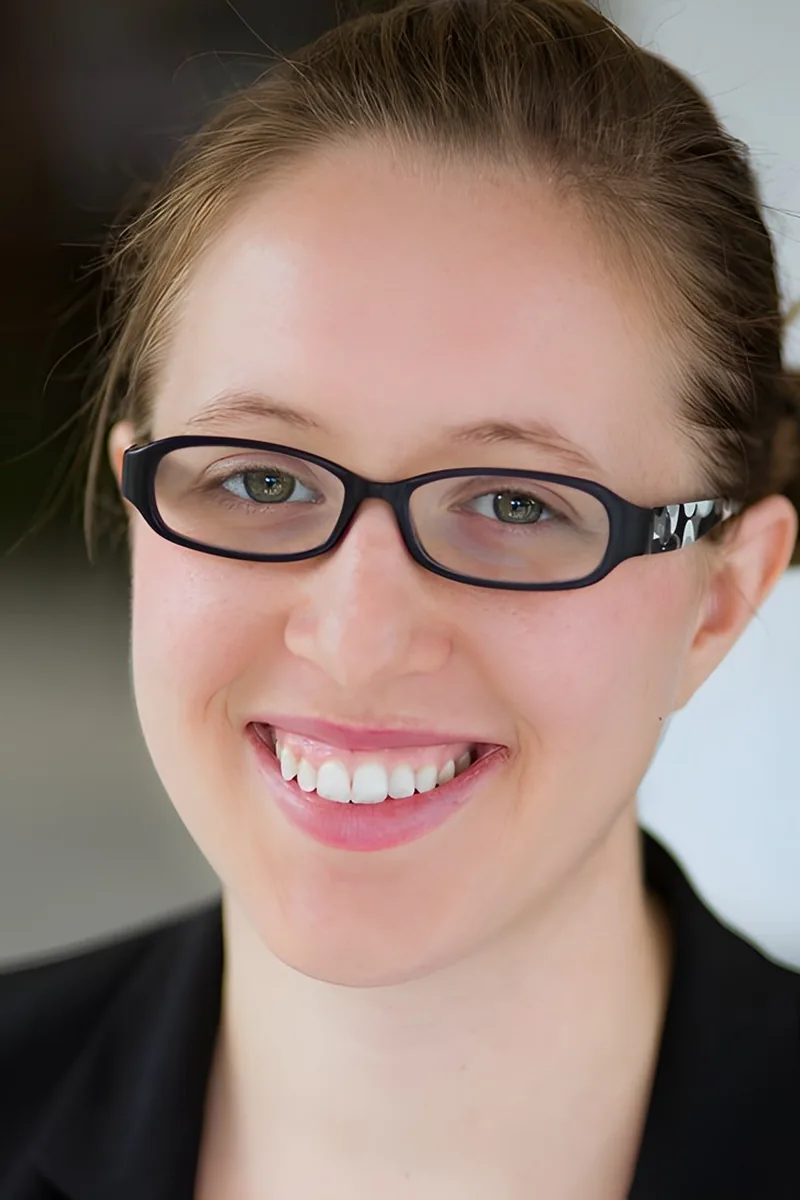
Most students walk into statistics expecting another math class and get blindsided by the emphasis on interpretation — explaining what a confidence interval actually means, or why correlation isn't causation. Amber tackles that interpretive layer head-on, teaching students to read context before crunching numbers. Her theater background gives her a knack for making abstract concepts like probability distributions feel concrete and memorable.

Megan earned her degree in Mathematics with a focus in Statistics from Washington University in St. Louis, then went deeper into data-driven decision-making during her MBA at UVA Darden — so she's used statistical methods on both the theoretical and applied sides. She unpacks concepts like probability models, variational analysis, and inference by connecting them to the economic and behavioral research questions she's studied across her math, econ, and psychology training. Rated 5.0 by students.
Studying Math/Stats at Carleton College means Thomas doesn't just teach statistics formulas — he understands the theory behind hypothesis testing, confidence intervals, and probability distributions at a level that lets him explain *why* a method works. He's especially sharp at translating word-heavy problems into the correct statistical setup, which is often the hardest part for students. Rated 5.0 by his students.
Standard deviation, confidence intervals, and p-values all describe the same underlying question — how much should we trust a pattern in data? — but textbooks rarely make that thread explicit. Aaron, who holds a PhD in mathematics and teaches statistics at the graduate level as well, connects the formulas to the probability theory underneath them so students can interpret results, not just compute them.
Psychology research runs on statistics — probability distributions, p-values, ANOVA, correlation versus causation — so Nicole didn't just study these topics in a textbook; she applied them to actual experimental data throughout her honors coursework. That applied lens makes her especially effective at teaching students who need to understand not just how to compute a standard deviation but what it actually tells them.
Probability distributions, regression analysis, and hypothesis testing all click faster when someone can explain the intuition behind the formulas. Connor is completing a double major in Applied Math and Finance at UW-Madison, so he regularly applies statistical reasoning to real datasets — and brings that practical fluency into every session. He holds a 5.0 rating from students.
Reading a dataset and knowing what story it tells — mean vs. median, standard deviation, probability distributions — requires a different kind of math thinking than most students are used to. Breanna's graduate-level research training gave her hands-on experience with statistical analysis, and she breaks down each concept using real-world examples that make the numbers meaningful.
Studying biology at the college level means living inside datasets — running chi-square tests on genetic crosses, interpreting p-values from lab experiments, and building regression models from field data. That daily immersion in applied statistics gives Jeffry a practical fluency with probability distributions, hypothesis testing, and confidence intervals that pure math coursework alone doesn't provide. Rated 4.9 by students.
Biochemistry lab work generates mountains of data — and Zach's coursework at UW-Madison means he's had to design experiments, run analyses, and make sense of variability in results firsthand. He breaks down concepts like standard deviation and sampling distributions by connecting them to the kinds of messy, real datasets students will actually encounter. Rated 5.0 by students.
Economics training is essentially applied statistics, so Ian brings a practical fluency to concepts like probability distributions, hypothesis testing, and regression analysis. He connects abstract formulas — z-scores, confidence intervals, p-values — to the kind of real data interpretation students will actually encounter in research or business contexts.
Every week in her Industrial and Organizational Psychology program, Almira works with standard deviations, z-scores, and probability distributions to interpret real behavioral data. That daily fluency means she can explain statistical concepts through concrete examples — showing students what a p-value actually tells you, not just how to calculate one.
Engineering labs at Marquette require Brendan to design experiments, interpret distributions, and run hypothesis tests on real data sets, so he teaches statistics as a decision-making tool rather than a formula sheet. He digs into concepts like standard deviation, regression, and probability with an emphasis on understanding what the numbers actually tell you.
I am currently studying at Northwestern University, on the track to a Bachelor of Arts in Statistics with a double major in Mathematical Methods in the Social Sciences, which is just a fancy way of saying math-based economics, and a minor in Legal Studies as well as Marketing. After my undergraduate studies, I plan on working in consulting for a few years before attending law school. Finally, I hope to combine my law studies with my consulting work to become a well-rounded corporate lawyer. At Northwestern, I provide SAT tutoring to Chicago-area juniors and seniors. In high school, I tutored third through fifth graders in basic reading and writing skills and developed their interpersonal skills through group crafts and teamwork activities. While I am open to tutoring a broad range of subjects and tests, I am most passionate about Math, Statistics, Economics, and US History. In my experience helping students prepare for the SAT, I have found that interactive activities and group work really help! I am a firm believer in the work-hard-play-hard mindset and find it to be absolutely necessary for a balanced lifestyle, and I try to impart this appreciation to all of my students. While I encourage my students to keep up with their studies and work hard, I also believe that studying needs to be balanced out with interests and fun.
A PhD statistician who also holds a biomedical engineering degree, Sam teaches introductory and intermediate statistics with an unusual amount of real-world context. Whether the topic is hypothesis testing, confidence intervals, or regression, he unpacks the logic behind each method so students can interpret results critically, not just run calculations.
Running regression analyses, interpreting p-values, and choosing between parametric and nonparametric tests are things Martha does routinely in her social psychology research at Michigan. That hands-on fluency means she can explain not just how to compute a standard deviation or set up a hypothesis test, but why each step matters and what the results actually tell you. Rated 5.0 by students.
Probability distributions, hypothesis testing, and regression analysis each require a different kind of thinking — and Rahi distinguishes clearly between the conceptual reasoning and the mechanical calculation so students know which skill a problem is actually testing. His applied mathematics background means he can explain the logic behind formulas like the Central Limit Theorem instead of just handing students a recipe to follow.
Probability distributions, hypothesis testing, and regression analysis all clicked for Sami during his economics work at Duke, where statistical reasoning was baked into nearly every course. Now pursuing an MBA at Yale, he still uses these tools daily and teaches students to interpret data with genuine intuition — understanding what a p-value actually means, not just when to reject a null hypothesis.
Earning a 5 on the AP Statistics exam gave William a head start, but it's his engineering training at Vanderbilt — designing experiments, interpreting distributions, running hypothesis tests on real data — that makes him effective at teaching the subject. He digs into the reasoning behind concepts like p-values and confidence intervals so students can interpret results, not just calculate them.
As experienced and passionated educator with a Bachelor's degree in Computer Science from Rice University, I am passionate about empowering students to achieve their academic goals. With over 3 years of tutoring experience in subjects such as AP Computer Science A, Machine Learning, and SAT Math, I adapt to different learning styles and create a supportive learning environment. My teaching philosophy centers on personalized instruction, where I connect with each student to understand their unique learning styles and challenges. I take pride in guiding students through the complexities of computer science and college application essays, equipping them with the skills they need for future success. Outside of tutoring, I enjoy exploring new technologies and engaging in coding projects to improve my teaching approach.
Studying conducting at Juilliard means Molly lives in data — analyzing scores, interpreting patterns, and making decisions based on complex information. She brings that same analytical mindset to statistics, breaking down probability distributions, hypothesis testing, and data interpretation into logical steps. Her 5.0 client rating speaks to how clearly she communicates even the trickiest concepts.
I am currently working in a Bronx Public School as a teaching apprentice in Algebra. I have four years of experience tutoring one on one with students of all ages.
Between her sociology research in undergrad and her MBA coursework, Krupa has run enough regressions, hypothesis tests, and probability models to know exactly where students get tripped up. She tackles the conceptual side — why you'd choose a t-test over a z-test, what a p-value actually means — so the formulas stop feeling arbitrary. Her 4.9 rating speaks to how clearly she communicates these ideas.
A political science degree from Brown meant Lyall spent years interpreting polling data, regression models, and probability distributions in real research contexts. He brings that applied lens to statistics tutoring, connecting concepts like standard deviation and confidence intervals to situations where the numbers actually matter. Students get someone who treats stats as a tool for making arguments, not just a formula sheet to memorize.
Yi's graduate training in research and experimental psychology required heavy use of statistical methods — from hypothesis testing and ANOVA to regression modeling and interpreting p-values in published studies. That hands-on experience with real data analysis means she teaches statistics as a tool for answering questions, not just a set of formulas to memorize.
Studying mathematical economic analysis means Kenan lives in the world of probability distributions, hypothesis testing, and regression — the exact toolkit a statistics course demands. He unpacks concepts like p-values and confidence intervals by tying each one to a concrete decision it would inform, so the reasoning sticks long after the formula sheet is gone.
Testimonials
Because the right Statistics tutor makes all the difference.
Average Session Rating – Based on 3.4M Learner Ratings
Practice Statistics
Free practice tests, flashcards, and AI tutoring for Statistics
Nearby Statistics Tutors
Other Green Bay Tutors
Related Math Tutors in Green Bay
Frequently Asked Questions
Varsity Tutors matches Green Bay students with expert Statistics tutors for 1-on-1 instruction. We pair each student with a tutor based on their specific needs, learning style, and goals.
Whether you need homework help, exam prep, or want to get ahead, our Statistics tutors are ready to help.
Common challenges include gaps from earlier material, difficulty with specific concepts, and trouble applying learning to new problems. These issues can snowball quickly in Statistics.
A tutor identifies where you're stuck, fills in gaps, and provides targeted practice. The 1-on-1 format means you get help exactly where you need it.
Tutors work with your student's actual coursework—homework assignments, class notes, and upcoming tests. This keeps tutoring directly relevant to what's happening in the classroom.
When you share information about your student's school and curriculum, we can match you with a tutor who has relevant experience.
All tutors complete background checks, credential verification, and teaching evaluation. Many of our Statistics tutors hold advanced degrees or have years of teaching experience.
You can review tutor profiles to find someone with the right background for your student's level and needs.
Many students see improved grades within a few weeks, along with better understanding of Statistics concepts and more confidence tackling challenging material.
Tutors track progress and adjust their approach to ensure continued improvement.
Most students benefit from 1-2 sessions per week. More frequent sessions help if your student is significantly behind or has an important exam coming up.
Your tutor can recommend a schedule based on your student's specific situation and goals.
Tutoring is purchased in packages of hours, with rates varying by tutor experience. Varsity Tutors offers several options to fit different budgets and needs.
You can discuss pricing during your consultation to find what works best.
Your tutor will assess where your student is, discuss goals, and start working on priority areas. Most students bring current homework or upcoming test material to focus on.
By the end, you'll have a clear sense of how the tutor can help and a plan for moving forward.
Let’s find your perfect tutor
Answer a few quick questions. We’ll recommend the right plan and match you with a top 5% tutor.