Award-Winning Geometry Tutors
serving Tacoma, WA
Geometry
Tutors in Tacoma
Private 1-on-1 tutoring, weekly live classes for academic support, test prep & enrichment, practice tests and diagnostics, and more to elevate grades and test scores.
Based on 3.4M Learner Ratings
UniversitiesSchools & Universities
DeliveredHours Delivered
ProficiencyGrowth in Proficiency
Who needs tutoring?
No obligation. Takes ~1 minute.
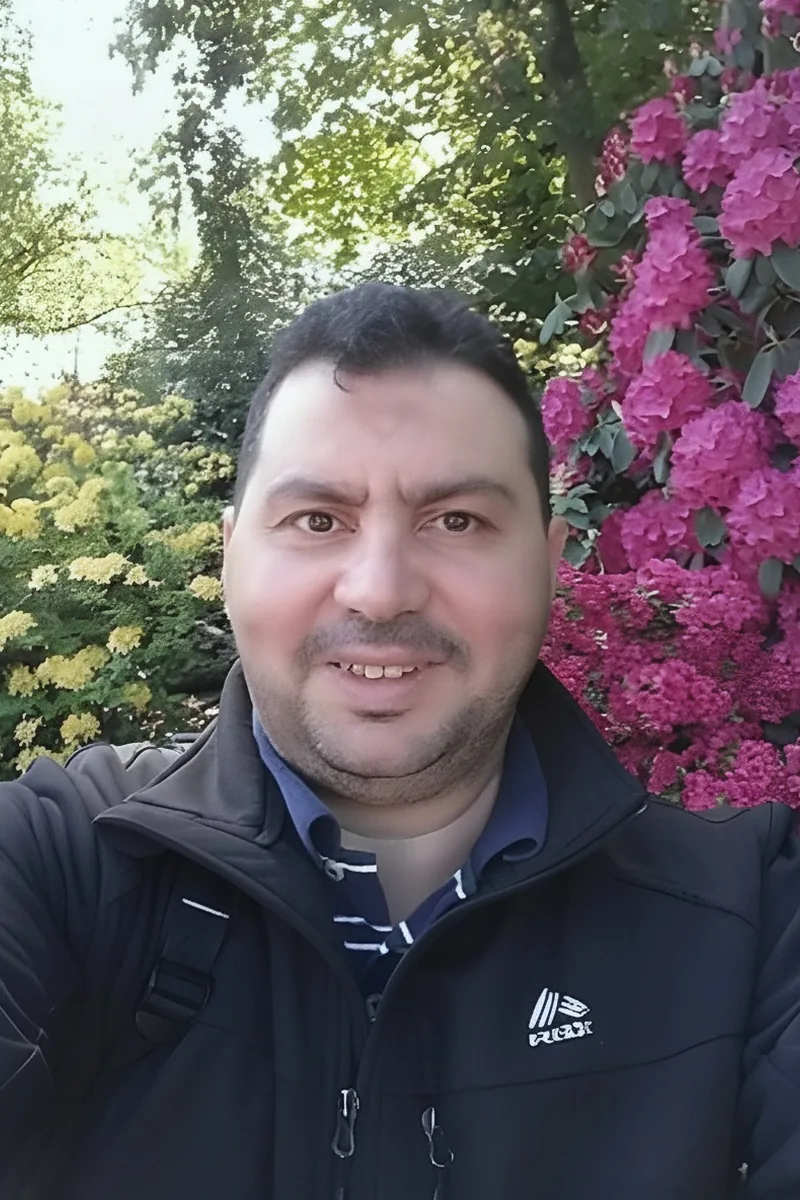
Teaching geometry as adjunct faculty at Washington State University gave Moayad a clear picture of which proof techniques and spatial reasoning skills trip students up most — particularly when problems layer angle relationships on top of triangle congruence or circle properties. His two math degrees mean he can unpack the formal logic behind each theorem while keeping the visual intuition front and center.
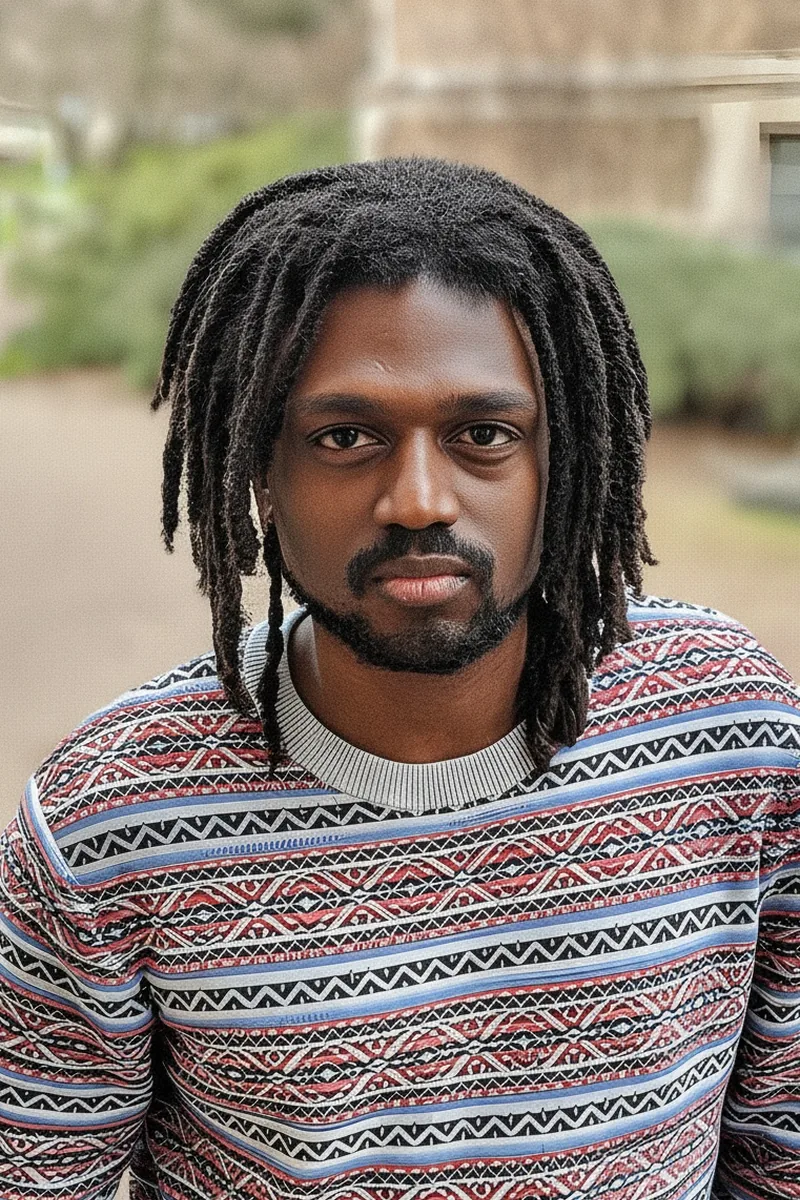
A Stanford math degree paired with a history PhD in progress means Najja toggles daily between formal mathematical reasoning and the kind of argumentative writing that underpins geometric proofs — making two-column and paragraph proofs feel less foreign to students who think of themselves as "not math people." He unpacks the logic behind circle theorems, triangle inequalities, and angle-side relationships by treating each theorem as a claim that needs evidence, much like a historical argument.
Proofs are usually the first place Geometry students feel lost — suddenly math requires written arguments, not just calculations. Alice teaches students to read diagrams like stories, identifying congruence relationships and angle properties that make each proof's logic visible. She treats every problem as a puzzle with a strategy to uncover, which turns Geometry's abstract side into something approachable.
Proofs are usually the first place geometry students feel lost, because suddenly math asks them to explain *why* something is true instead of just computing an answer. Cory tackles this by walking through the logic of congruence, similarity, and parallel-line theorems as a conversation — asking questions that lead a student to construct the argument themselves. That approach builds the deductive reasoning skills that carry well beyond the geometry classroom.
I am a professional scientist with multiple years of experience in the biopharmaceutical field. I have spent time in the classroom with elementary aged students and am comfortable with this age group. I am also familiar with AP classes and ACT/SAT preparation. I look forward to sharing my love of learning with students and helping them achieve academic goals!
An econometrics degree is built on modeling relationships between variables — and in geometry, that same instinct for structure kicks in when students need to see how angle relationships, congruence criteria, and parallel line properties connect inside a single diagram. Chica teaches students to read a geometric figure the way she'd read a dataset: identify what you know, figure out what's linked, and build toward the answer step by step. Rated 5.0 by students.
Proofs are usually where Geometry students panic, but the logic behind them is surprisingly close to building a written argument — something Avalon spent four years practicing in USC's honors reading and writing program. She applies that same structured reasoning to angle relationships, triangle congruence, and circle theorems, walking through each proof step by step.
Flying airplanes requires constant mental geometry — calculating descent angles, visualizing approach paths in three dimensions, and reasoning about distances and bearings on navigation charts. Jon's commercial aviation training at the University of North Dakota means he can ground abstract concepts like angle relationships and triangle properties in real-world spatial problems that make the material feel less theoretical. He's especially comfortable with the measurement and application side of the subject, where precision actually matters.
I am an undergraduate earning my Bachelor's degree in Electrical Engineering from the University of Washington. I have already earned my Associate's of Arts with honors through the running start program, and graduated high school as a Valedictorian. I have worked with Disability Resource Services in taking notes for students, and have also offered assistance with homework to other students. As an engineering student, I am able to use my experience to offer assistance with math. I am also able to tutor in chemistry since I have already completed the general chemistry series. I believe that education is extremely important in life, not only for the purpose of knowledge, but also for the determination and ambition that learning teaches us. Understanding concepts not only takes time, but also dedication. As a student who has also attended many tutoring hours, I have come to understand that concepts sometimes require different approaches to finally have that idea click.
Working with Varsity is flexible and fun. I worked for over 25 years as a civil engineer solving flooding problems and improving fish habitat. I changed careers to teaching math about five years ago. I have taught high school math from Algebra I to AP Calculus. I enjoy working with people to achieve their academic goals. When I am not doing math I like to sail, ski rock climb and cook. I look forward to meeting you!
I'm a tutor who loves the moment when a concept finally clickswhether that's solving a calculus problem or debugging a first Python script. With experience teaching math from elementary to college level and professional training in full-stack development, I help students build confidence alongside competence in both math and programming. At Mathnasium, I worked with groups of 4-6 students at different levels, learning to adapt quickly to different learning styles. I bring that same flexibility to teaching HTML, CSS, JavaScript, Python, and other programming languages. I don't just give answersI guide students to discover solutions themselves because that's what sticks. Whether it's explaining why a for-loop isn't working, walking through derivatives, preparing for the SAT, or building a first web page, I focus on understanding over memorization. I'm patient but direct, and I adjust my approach based on what's actually working for each student. My goal is simple: make learning feel achievable, not intimidating, and give students tools they can use long after our sessions end.
Proofs are usually where geometry students panic — the logic feels nothing like the computation they're used to. Rachel spent her Dartmouth engineering program constructing logical arguments from axioms and constraints, so she's comfortable walking students through how to set up two-column and paragraph proofs while also tackling area, volume, and triangle congruence.
Proofs are usually where geometry students panic, but they're really just structured arguments — and Dane approaches them that way. Studying engineering at Duke sharpened his spatial reasoning across topics like congruence, similarity, and coordinate geometry, and he teaches students to visualize relationships before translating them into formal logic.
Cornell's biological engineering program threw Mary into years of modeling physical systems — fluid flow through channels, stress on biomaterials, device dimensions — all of which demand precise geometric reasoning about shapes, cross-sections, and spatial relationships. She brings that practical fluency to topics like circle theorems, properties of quadrilaterals, and area-volume calculations, making abstract definitions feel grounded in real measurement. Rated 5.0 by students.
Proofs are usually the first place geometry students feel lost, because suddenly they're being asked to construct arguments instead of compute answers. Ben teaches proof-writing as a logical skill: identifying what's given, what's needed, and which theorems bridge the gap. His approach turns the frustration of "I don't know where to start" into a repeatable process.
Proofs are usually the sticking point in geometry — students can calculate angles and areas but freeze when asked to construct a logical argument from postulates. Kevin tackles this by teaching proof strategy as a skill: identifying what's given, what's needed, and which theorems connect the two. His background in computational geometry and algorithmic thinking at Stanford gives him a structured approach that clicks for students who think logically.
A political science degree from the University of Chicago means Asta spent four years constructing airtight arguments from premises to conclusions — exactly the skill that makes geometric proofs click. She applies that structured reasoning to two-column proofs and logical chains involving congruence, triangle properties, and circle theorems, treating each one like a case to be built rather than a formula to memorize. Rated 5.0 by students.
Dennis's research into quasicrystals and aperiodic tilings — like Penrose tilings of rhombuses — is geometry at its most fascinating, exploring how shapes fit together under unusual symmetry rules. That deep spatial intuition carries directly into high school Geometry, where he teaches proofs, congruence, and circle theorems by encouraging students to reason visually before writing anything formal.
Cognitive science — Sugi's major at Rice — is fundamentally about how people build mental models, and geometry is one of the few math subjects where that matters enormously: students who can't visualize a rotation or mentally decompose a figure into simpler shapes will struggle no matter how many theorems they memorize. Sugi teaches the visualization first, then layers in the formal reasoning for congruence, similarity, and circle properties so that proofs feel like describing something you can already see. Rated 5.0 by students.
Proofs trip up a lot of geometry students because they require a completely different kind of thinking — constructing logical arguments instead of just computing answers. Kirstie's liberal arts background actually strengthens her approach here, since she treats geometric proofs the way she'd treat building a persuasive essay: claim, evidence, reasoning. She also covers the computational side, from triangle congruence to circle theorems.
A biology major from Rice with a 1570 SAT, Perry approaches geometry problems the way he approaches lab work — by breaking complex diagrams into discrete, manageable pieces and reasoning through each relationship step by step. He's especially effective at teaching circle theorems and polygon properties, where students often know the individual rules but freeze when a problem layers several together. Rated 5.0 by students.
Proofs are usually the moment geometry stops feeling intuitive and starts feeling impossible. Noah approaches them as logical arguments rather than memorization exercises, drawing on the same analytical reasoning he sharpened through his political science training at Penn. He also tackles coordinate geometry and triangle congruence by emphasizing the visual logic behind each theorem.
Proofs are usually the first time a geometry student has to explain *why* something is true, not just calculate an answer. Vansh teaches proof-writing as a logical argument rather than a mysterious format, walking through triangle congruence, parallel-line theorems, and circle properties with enough patience to make the reasoning feel natural.
Testimonials
Because the right Geometry tutor makes all the difference.
Average Session Rating – Based on 3.4M Learner Ratings
Practice Geometry
Free practice tests, flashcards, and AI tutoring for Geometry
Other Tacoma Tutors
Related Math Tutors in Tacoma
Frequently Asked Questions
Varsity Tutors matches Tacoma students with expert Geometry tutors for 1-on-1 instruction. We pair each student with a tutor based on their specific needs, learning style, and goals.
Whether you need homework help, exam prep, or want to get ahead, our Geometry tutors are ready to help.
Common challenges include gaps from earlier material, difficulty with specific concepts, and trouble applying learning to new problems. These issues can snowball quickly in Geometry.
A tutor identifies where you're stuck, fills in gaps, and provides targeted practice. The 1-on-1 format means you get help exactly where you need it.
Tutors work with your student's actual coursework—homework assignments, class notes, and upcoming tests. This keeps tutoring directly relevant to what's happening in the classroom.
When you share information about your student's school and curriculum, we can match you with a tutor who has relevant experience.
All tutors complete background checks, credential verification, and teaching evaluation. Many of our Geometry tutors hold advanced degrees or have years of teaching experience.
You can review tutor profiles to find someone with the right background for your student's level and needs.
Many students see improved grades within a few weeks, along with better understanding of Geometry concepts and more confidence tackling challenging material.
Tutors track progress and adjust their approach to ensure continued improvement.
Most students benefit from 1-2 sessions per week. More frequent sessions help if your student is significantly behind or has an important exam coming up.
Your tutor can recommend a schedule based on your student's specific situation and goals.
Tutoring is purchased in packages of hours, with rates varying by tutor experience. Varsity Tutors offers several options to fit different budgets and needs.
You can discuss pricing during your consultation to find what works best.
Your tutor will assess where your student is, discuss goals, and start working on priority areas. Most students bring current homework or upcoming test material to focus on.
By the end, you'll have a clear sense of how the tutor can help and a plan for moving forward.
Let’s find your perfect tutor
Answer a few quick questions. We’ll recommend the right plan and match you with a top 5% tutor.