Award-Winning Middle School Math Tutors
serving Olympia, WA
Middle School Math
Tutors in Olympia
Private 1-on-1 tutoring, weekly live classes for academic support, test prep & enrichment, practice tests and diagnostics, and more to elevate grades and test scores.
Based on 3.4M Learner Ratings
UniversitiesSchools & Universities
DeliveredHours Delivered
ProficiencyGrowth in Proficiency
Who needs tutoring?
No obligation. Takes ~1 minute.
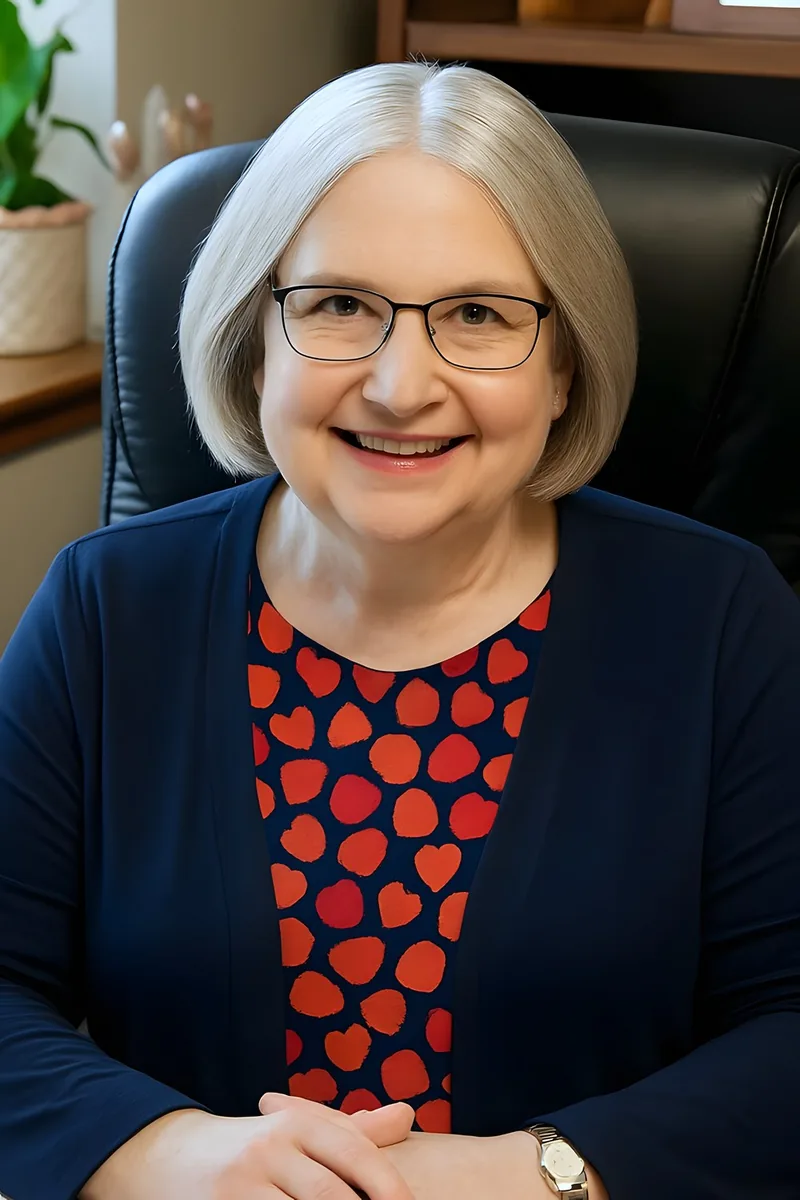
I am a graduate of the University of Pennsylvania with a Masters degree in Education and have been an Elementary and Middle School educator for over thirty years. I have worked with students in the inner city, suburbs, Appalachia, and Deep South. I love teaching and children, and have discovered my passion in tutoring students who are struggling in Reading and Math. I have taught children with learning disabilities to read, and coached students with dyscalculia in math and reading. I worked as a principal for the past eight years, so was working with students from Pre-K to 8th grade, coaching teachers, analyzing data, and tutoring individual students in math and reading. I have worked as a national park ranger in the past, so social studies and history are areas of strength. Students that I teach respond well to my teaching style and enjoy working with me. I believe that education is extremely important for children's futures and do everything that I can to help them be successful.

I'm a current PhD student in the history department at Georgetown University who is also an experienced instructor with Varsity Tutors. As a recipient of several degrees, the most recent being a BA in history from Hillsdale College and a MA in Russian, East European, and Eurasian Studies from Stanford University, I have long sought to make teaching my profession. Meanwhile, as a volunteer grade school teacher and a tutor with this company, I have many years' experience helping students reach their full potential. I am capable of teaching students in many subjects, including reading, mathematics, test prep, Latin, and especially writing, history, and literature. In practice, I am comfortable adapting to different learning styles and specific student preferences. Outside of my academic and career endeavors, I enjoy cooking, reading, and listening to and making music.
Having earned a math degree from Stanford, Najja knows exactly which gaps in fraction fluency, decimal operations, or integer reasoning will cause trouble once algebra arrives — and he catches them early. His current PhD work in history keeps him sharp at breaking dense material into logical sequences, a skill that translates directly to teaching middle schoolers how to organize multi-step problems instead of guessing at operations.
Being in an accelerated pre-med program means Alice has taken math from arithmetic through calculus and uses it daily in her biology coursework — so she knows exactly which middle school skills (like fraction fluency and setting up equations) become non-negotiable later on. She treats each problem like a mini puzzle, teaching students to spot which strategy fits rather than defaulting to rote steps. Rated 5.0 by students.
The jump from arithmetic to middle school math — ratios, basic geometry, expressions with variables — can feel sudden, and confidence matters as much as content at this stage. Helen teaches these topics by grounding them in concrete examples before moving to abstraction, a habit she picked up studying engineering at Johns Hopkins. She's especially good at identifying exactly where a student's understanding breaks down and rebuilding from that point.
At the middle school level, math starts asking students to think abstractly — proportional reasoning, integer operations, basic equation solving — and that transition can feel like a different subject entirely. Cory uses analogies drawn from everyday life to make concepts like ratios and negative numbers intuitive, turning confusion into genuine understanding. His patient, conversational style has earned him a 4.9 rating across dozens of sessions.
Intensely curious, I am interested in STEM subjects and the liberal arts. I tutor to help you reach your educational goals and because it's immensely gratifying to see my students succeed.
Xiansheng's cellular and molecular biology degree means he's been doing math disguised as science for years — unit conversions, ratios in solution prep, interpreting data tables — all of which map directly onto the quantitative reasoning middle schoolers are building. He's particularly effective at showing students how to organize their work on multi-step problems, a habit from lab science where skipping steps means ruined experiments. Rated 4.7 by students.
Fractions, ratios, and proportional reasoning click faster when students see how the numbers connect to real patterns — not just worksheets. Chica's econometrics background means she treats middle school math as the building blocks of quantitative thinking, walking through each concept until the logic behind it is clear. Rated 5.0 by students.
Fractions, ratios, and proportions don't have to be abstract — Angela ties them to real-world scenarios that make the logic click, drawing on her experience teaching K-12 students in classroom settings. Her substitute teaching background means she's comfortable adapting explanations on the fly when a student needs a concept like integer operations or basic geometry approached from a different angle. Rated 5.0 by students.
From ratios and proportions to introductory geometry and basic equation solving, Tsering covers the full spread of middle school math with an emphasis on connecting topics to each other. A student who sees that fractions, decimals, and percentages are the same idea expressed three ways is a student who stops dreading word problems. Her public health background means she's especially good at showing where math appears in real-world data.
The jump from elementary math to middle school math trips students up when ratios, proportional reasoning, and negative numbers all land at once. Avalon's approach is to connect each new concept back to something concrete — percentages become budgeting problems, coordinate planes become map reading — so the abstraction doesn't feel arbitrary.
Ratios, proportions, and early equation solving can feel like a sudden leap for students used to straightforward computation. Jon tackles middle school math by identifying exactly where a student's understanding breaks down — whether it's fraction operations, negative numbers, or translating word problems into expressions — and rebuilds from that specific point.
Update: I completed a two-month full-time guest teacher assignment teaching World Languages Spanish to high school students (9th-12th) Spanish 1/2/3. By utilizing a student-centered learning approach, cultural competence, and equitable teaching, I support students with pedagogy rooted in inquiry, hypothesis, information gathering, problem-solving, and action. I encourage all students to adopt an open-minded approach, and provide support to gifted students, students with disabilities, English Language Learners, and Multilanguage Learners with equity. "Not everything that is faced can be changed, but nothing can be changed until it is faced." James Baldwin I am in my second year of grad school, pursuing a dual master's degree in K-8 Elementary Education and K-12 Special Education (Mild to Moderate Disabilities). With my education grad studies and BFA from the Rhode Island School of Design (RISD), I synthesize creativity and best practices in education to find creative ways of supporting learners. My pursuit and purpose is to guide with compassion and enthusiasm. I encourage students to take ownership of their learning. By promoting student agency, students empower themselves to achieve in academic, social, emotional, and behavioral development. As an ADHD adult, I enjoy working with ADHD students and adults experiencing anxiety + depression. What is effortful for our neurodivergent brains is also our superpower! In my career, I have lived and worked in NYC as an editorial photographer, actor, and dancer. I lived in Berlin and pursued performance art + music while honing my communications skills in digital art + copywriting in Marketing. In Los Angeles, I succeeded as a commercial and theatrical actor. My skill set is suited for collaboration with all students to support and develop their passion for learning, exploration, and critical thinking. I live in southeastern Washington State and teach in northeastern Oregon and southeastern Washington State public school districts. I support students in the following subjects: Elementary School Reading Elementary School Math AP English High School English Middle School English Middle School Math Digital Media & Graphic Design Fine Arts & Filmmaking Creative Writing Study Skills & Organization German 1/2 Spanish 1/2/3 Spanish Language Arts English Language Learners English Language Development Algebra 1/2 Special Education (all subjects) High School Math "We all have ability. The difference is how we use it." Stevie Wonder Thank you for reading! Ms. Anna C.
Fractions, ratios, and proportions stop being abstract when a student sees how they connect to real problems — and Madyson's biochemistry background means she uses those tools daily. She breaks down multi-step word problems into smaller, logical pieces so middle schoolers build genuine number sense instead of relying on shortcuts.
Hi there! I'm Harini, and I absolutely love helping students become confident readers, writers, and math thinkers. Whether your student is working through fractions for the first time, tackling a tough reading assignment, or getting ready for middle school, I'm here to make learning feel approachable and even fun. I bring fresh, relatable teaching strategies and a real passion for helping younger students grow. I break challenging texts, writing assignments, and math concepts into simple, manageable steps, so ideas finally "click." I believe every student can succeed with the right guidance and a little patience, and I want every student to feel comfortable asking questions, making mistakes, and learning at their own pace. When I'm not tutoring, you'll find me reading, sewing, trying new recipes, or hiking and rock climbing. Let's work together to build your student's confidence and reach their goals!
Math intimidation is real for middle schoolers — Daniel tackles it head-on by stripping away the anxiety around fractions, ratios, and pre-algebra so students can actually think clearly. His experience breaking down concepts for his younger brother and for large groups at Stevens gave him a knack for making problems like proportions and integer operations feel approachable.
I developed a strong interest in mathematics after high school, when taking college Algebra 1 showed me the value of learning concepts step by step. I graduated from the University of Washington with a BA in Music Education, a minor in Music, and a K-12 Teaching Certificate, while also completing college-level coursework in Algebra, Geometry, Trigonometry, and Pre-Calculus. Later, I returned to school for mathematics certification and went on to teach math from 4th through 12th grade during a twenty-three-year career in public education. I hold a current Washington Teaching Certificate in K-12 Choral Music and 4-12 Mathematics. For the past six years, I have focused exclusively on online math instruction, helping students with coursework, test preparation, and confidence-building through clear, logical explanations.
I'm a tutor who loves the moment when a concept finally clickswhether that's solving a calculus problem or debugging a first Python script. With experience teaching math from elementary to college level and professional training in full-stack development, I help students build confidence alongside competence in both math and programming. At Mathnasium, I worked with groups of 4-6 students at different levels, learning to adapt quickly to different learning styles. I bring that same flexibility to teaching HTML, CSS, JavaScript, Python, and other programming languages. I don't just give answersI guide students to discover solutions themselves because that's what sticks. Whether it's explaining why a for-loop isn't working, walking through derivatives, preparing for the SAT, or building a first web page, I focus on understanding over memorization. I'm patient but direct, and I adjust my approach based on what's actually working for each student. My goal is simple: make learning feel achievable, not intimidating, and give students tools they can use long after our sessions end.
Economics majors spend their days building models out of exactly the kind of math middle schoolers are learning — graphing relationships, manipulating equations, interpreting data — so Mackenzie can show students where skills like proportional reasoning and solving for unknowns actually lead. Her 35 ACT score speaks to rock-solid fundamentals, and she's particularly effective at helping kids organize their scratch work so careless mistakes stop eating into their grades. Rated 4.8 by students.
Getting past the Jeopardy! Online Test takes quick mental math and pattern recognition — two skills Paula now brings to teaching middle schoolers topics like ratios, integer operations, and basic geometry. Her psychology background also gives her a read on how students process new information, so she adjusts her explanations based on what's actually clicking rather than just repeating the same steps louder. Rated 4.8 by students.
Princeton's Mechanical and Aerospace Engineering program threw Matthew into calculus and physics from day one, but he traces his math instincts back to the fundamentals — integer operations, fraction reasoning, and the algebraic thinking that middle schoolers are just starting to wrestle with. His tutoring method is hands-on: he walks through a problem step by step, then puts a harder one in front of the student and lets their questions drive the next explanation. A 34 ACT composite backs up the depth of his mathematical fluency.
Every middle school math struggle Julia sees — whether it's proportional reasoning, integer operations, or early equation-solving — comes down to a gap in conceptual understanding that got papered over with memorized steps. She pinpoints that gap quickly and rebuilds the reasoning behind it using questions that get students thinking out loud. Rated 4.8 by families she's worked with.
Having completed the full IB diploma program and scored a 35 on the ACT, Dalton knows what it takes to build the kind of mathematical fluency that carries through high school and beyond — and he can trace that back to the fundamentals middle schoolers are working on now, like operations with integers and setting up simple equations. His Mass Communications degree sharpened his ability to explain ideas clearly and concisely, which turns out to be exactly what a confused seventh grader needs when a concept like negative number arithmetic suddenly stops making sense.
Building number sense in middle school — whether it's fraction operations, proportional reasoning, or early work with variables — sets the trajectory for every math class that follows. JF has been tutoring students as young as third grade since high school and knows how to make concepts like ratios and integer arithmetic click before they become obstacles in algebra.
The jump from elementary math to middle school math is bigger than most people realize: suddenly students are dealing with fractions, ratios, proportions, and negative numbers all in the same problem set. Brian tutored underclassmen in math throughout his time at Stuyvesant and knows how to break these topics into manageable steps that build real number sense rather than rote procedures.
Ratios, proportions, and early equation-solving can feel abstract to middle schoolers who've only ever worked with straightforward arithmetic. Marisa bridges that gap by connecting each new concept to something concrete — turning word problems into stories and fractions into visual models that actually click.
Fractions, ratios, and early equation-solving can feel like a sudden leap from the arithmetic kids are used to — Greg breaks those transitions down so the logic behind each step is clear. His chemistry background at Cornell means he's constantly using middle school math concepts in real-world contexts, which gives students a reason to care about what they're learning. Rated 5.0 by students.
Running a tutoring program at a charter middle school in Boston gave Liz a front-row seat to every common math struggle sixth through eighth graders face — from proportional reasoning to coordinate graphing to early work with expressions and equations. She pairs that classroom experience with a Master's in Special Education, which means she's practiced at adapting explanations on the fly for different learning styles. Rated 4.7 by students and families.
The middle school math years pile on topics fast — ratios, proportions, integer operations, basic equation solving — and gaps from one unit snowball into the next. Noah identifies exactly where a student's understanding breaks down and rebuilds from that point, keeping lessons tied to concrete examples before moving to abstraction. His 5.0 client rating speaks to how well that targeted approach works.
Scoring a 35 ACT and 1570 SAT means Amber has the quantitative chops to teach middle school math cold, but her theater background is what makes her especially effective — she knows how to read an audience, adjust on the fly, and make a concept land. She zeroes in on the specific spot where a student's understanding breaks down, whether that's negative number operations or setting up basic equations, and rebuilds from there. Rated 5.0 by students.
Testimonials
Because the right Middle School Math tutor makes all the difference.
Average Session Rating – Based on 3.4M Learner Ratings
Other Olympia Tutors
Related Math Tutors in Olympia
Frequently Asked Questions
Varsity Tutors matches Olympia students with expert Middle School Math tutors for 1-on-1 instruction. We pair each student with a tutor based on their specific needs, learning style, and goals.
Whether you need homework help, exam prep, or want to get ahead, our Middle School Math tutors are ready to help.
Common challenges include gaps from earlier material, difficulty with specific concepts, and trouble applying learning to new problems. These issues can snowball quickly in Middle School Math.
A tutor identifies where you're stuck, fills in gaps, and provides targeted practice. The 1-on-1 format means you get help exactly where you need it.
Tutors work with your student's actual coursework—homework assignments, class notes, and upcoming tests. This keeps tutoring directly relevant to what's happening in the classroom.
When you share information about your student's school and curriculum, we can match you with a tutor who has relevant experience.
All tutors complete background checks, credential verification, and teaching evaluation. Many of our Middle School Math tutors hold advanced degrees or have years of teaching experience.
You can review tutor profiles to find someone with the right background for your student's level and needs.
Many students see improved grades within a few weeks, along with better understanding of Middle School Math concepts and more confidence tackling challenging material.
Tutors track progress and adjust their approach to ensure continued improvement.
Most students benefit from 1-2 sessions per week. More frequent sessions help if your student is significantly behind or has an important exam coming up.
Your tutor can recommend a schedule based on your student's specific situation and goals.
Tutoring is purchased in packages of hours, with rates varying by tutor experience. Varsity Tutors offers several options to fit different budgets and needs.
You can discuss pricing during your consultation to find what works best.
Your tutor will assess where your student is, discuss goals, and start working on priority areas. Most students bring current homework or upcoming test material to focus on.
By the end, you'll have a clear sense of how the tutor can help and a plan for moving forward.
Let’s find your perfect tutor
Answer a few quick questions. We’ll recommend the right plan and match you with a top 5% tutor.