Award-Winning AP Calculus BC Tutors
serving Richmond, VA
AP Calculus BC
Tutors in Richmond
Private 1-on-1 tutoring, weekly live classes for academic support, test prep & enrichment, practice tests and diagnostics, and more to elevate grades and test scores.
Based on 3.4M Learner Ratings
UniversitiesSchools & Universities
DeliveredHours Delivered
ProficiencyGrowth in Proficiency
Who needs tutoring?
No obligation. Takes ~1 minute.

Having spent countless hours teaching calculus to engineering, computer science, physics, and economics majors, Austin knows exactly where each group tends to stumble — and BC's leap into series convergence and polynomial approximation is where the gaps widen fastest. His applied mathematics degree gives him the formal grounding to trace a shaky understanding of, say, the Lagrange error bound back to the specific limit reasoning that needs reinforcing. He scored a 1430 on the SAT and approaches every BC topic by making the underlying logic explicit rather than drilling formulas.
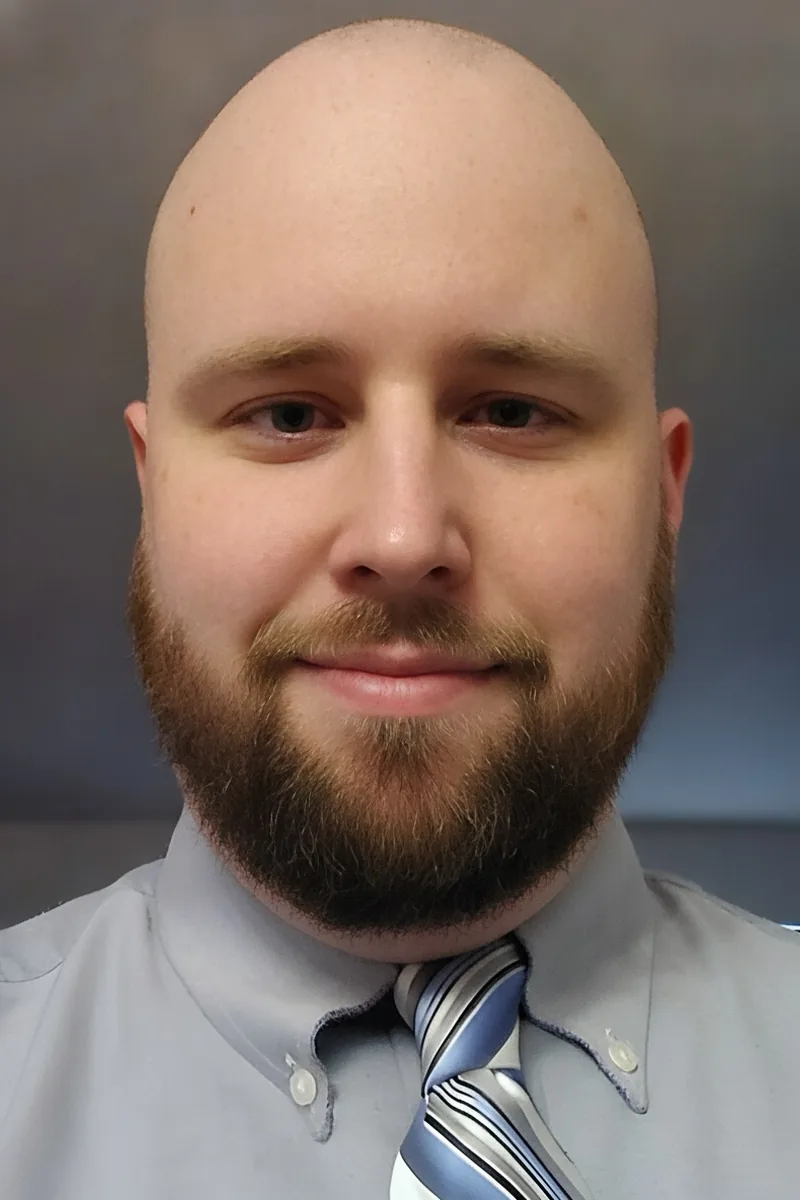
Kyle teaches BC Calculus with an emphasis on the topics that distinguish it from AB — Taylor and Maclaurin series, parametric and polar functions, and convergence tests that require more than rote memorization. His background spans algebra through multivariable calculus and differential equations, so he can show students how BC concepts connect to what comes next in college-level math.
Series convergence tests are where most BC students start losing confidence — ratio, root, comparison, and alternating series all blur together without a clear decision framework. Logan teaches a systematic approach to series analysis built on years of high school math instruction and his own applied math training at William & Mary. He also digs into parametric equations and polar curves with the same structured clarity.
I am currently a lead preschool teacher. I received my Bachelor's in Psychology from VCU and am looking to return to school to further my education. While in college, I worked as a Supplemental Instruction leader, teaching general biology and anatomy. I have also worked in an after school program with elementary age children, but I have my fondest memories volunteering as a counselor for Camp Kesem. In my own experience, I loved school and now I love teaching even more at all age levels! I especially enjoy the challenge of getting creative to discover what approach and mediums work best for each student. I am available for in person as well as online tutoring.
Hey, I'm Ryan, I specialize in micro and macro economics, math through Calc 3, Spanish, and SAT prep. I've been tutoring for years throughout middle school and high school, and I'm happy to help with whatever you might need!
As a current Computer Science student at Virginia Tech, I am passionate about making complex concepts accessible and engaging for my students. With over 2 years of tutoring experience in subjects like Algebra 2, AP Calculus, and Java, I prioritize creating a supportive learning environment where students feel confident to explore and ask questions. My teaching philosophy centers on individualized instruction, adapting my methods to each student's unique learning style, which fosters both understanding and enthusiasm for mathematics and programming. I am committed to helping students not just succeed academically but also develop a genuine interest in these subjects, and I find joy in witnessing their growth and confidence.
Running a peer-tutoring program in high school meant Ryan spent years diagnosing exactly where classmates got stuck on calculus problems — a skill he's sharpened further through his civil engineering coursework at Cornell, where series expansions and integration techniques show up constantly in structural analysis and fluid mechanics. He breaks down the BC-specific leap into convergence tests and Taylor polynomials by grounding each new idea in the derivative and integral logic students built in AB. His 35 ACT and 4.7 rating speak to the precision he brings to every session.
Most BC students can follow a convergence test step by step but freeze when asked to choose which test to apply — that decision-making is where Nima, a physics major heading to Duke on a full merit scholarship, spends most of his teaching energy. His physics training means he treats series and parametric equations as descriptions of real motion and real forces, which gives students an intuitive anchor when the abstraction piles up. A 1580 SAT and 4.7 rating back up his ability to make that AB-to-BC jump feel manageable.
Biomedical engineering at Johns Hopkins means Bidyut uses series approximations and differential equations to model biological systems — the same convergence tests and integration techniques that define the BC curriculum beyond AB. He's especially sharp at showing how a topic like Taylor polynomial error bounds connects back to the derivative reasoning students already trust, turning what feels like a wall of new material into a logical extension. Holds a 5.0 rating and a 36 ACT composite.
Convergence tests, parametric equations, and Taylor series expansions are where BC separates from AB — and where many students start to feel lost. Rithi breaks these topics into intuitive steps, connecting new concepts back to the foundational calculus reasoning students already have. Her 1550 SAT and deep STEM background reflect the kind of mathematical fluency that makes those connections clear.
Electrical engineering at Duke means Brooke is actively using series expansions to analyze circuits and integration techniques to model signal behavior — so when she teaches convergence tests or Taylor polynomial construction, she knows exactly which conceptual gaps trip students up because she's recently closed those gaps herself. Her 1550 SAT and 5.0 tutoring rating back up what her coursework suggests: she can break down the leap from AB to BC in precise, concrete terms that make parametric curves and polar integrals feel like logical next steps rather than foreign territory.
Environmental engineering graduate work is essentially applied calculus — Kate's thesis work required series approximations for modeling fluid dynamics and integration techniques for analyzing pollutant transport, so BC topics like Taylor polynomials and improper integrals are tools she's used professionally, not just academically. She's particularly good at showing how convergence tests follow a logical decision tree rather than feeling like a random grab bag of techniques. Rated 4.9 by students.
Derek scored a 5 on the AP Calculus BC exam and now studies applied mathematics at Harvard, which means series convergence tests, parametric equations, and polar area problems are still part of his daily toolkit. He breaks down intimidating topics like Taylor series error bounds and integration by parts into repeatable strategies that click on exam day. Rated 4.9 by students.
BC Calculus throws students into convergence tests, parametric equations, and polar curves on top of an already demanding AB foundation — it's a lot to hold in your head at once. Corrina's mechanical engineering degree meant living in multivariable and differential equations daily, so she teaches series and integration techniques with the fluency of someone who actually uses them. Rated 4.7 by students.
Studying both mathematics and computer science at Rice, William is taking the courses that treat BC topics like series convergence and parametric integration as foundational tools rather than standalone exam material. His 1540 SAT reflects the kind of precise, structured reasoning he brings to breaking down the jump from AB to BC — especially when Taylor polynomial construction or convergence tests start feeling like they came out of nowhere.
Teaching discrete math at Penn while finishing a CS master's means Keenan lives in the world of rigorous mathematical argument — the same mindset that separates students who survive BC from those who actually understand it, especially when series convergence proofs and error bound reasoning demand more than mechanical computation. His philosophy undergraduate training adds an unusual edge: he treats each BC concept like a logical claim that needs justification, which makes topics like the Lagrange remainder or comparison tests feel structured rather than arbitrary. Rated 5.0 by students.
Biochemistry lab work at Columbia demands comfort with the calculus that models reaction kinetics and molecular behavior — Andrew has spent years using integration techniques and series approximations in that context, which gives his BC teaching a practical edge when students ask "why does this matter?" He's especially effective at breaking down the transition from AB to BC, tracing topics like Taylor polynomial construction and convergence criteria back to the derivative and integral logic students already trust. Rated 4.9 by students.
Justin's PhD work in Computational and Applied Mathematics at the University of Chicago means he doesn't just teach Taylor series and convergence — he builds on them daily in research involving image processing and climate modeling, where approximation methods have to actually hold up under real conditions. That perspective sharpens how he explains error bounds and series manipulation, grounding each technique in why it matters rather than just how to execute it on an exam. Rated 5.0 by students.
Testimonials
Because the right AP Calculus BC tutor makes all the difference.
Average Session Rating – Based on 3.4M Learner Ratings
Practice AP Calculus BC
Free practice tests, flashcards, and AI tutoring for AP Calculus BC
Other Richmond Tutors
Related Math Tutors in Richmond
Frequently Asked Questions
AP Calculus BC builds on Calculus AB concepts and includes limits, derivatives, integrals, differential equations, and sequences/series. The course also covers parametric equations, polar coordinates, and vector-valued functions—topics that distinguish BC from AB. For students in Richmond, understanding this expanded scope helps you prepare for the full exam and ensures you're not caught off guard by unfamiliar question types on test day.
Score improvement depends on your starting point and consistency with practice, but students typically see meaningful gains—often 1-2 points on the 1-5 scale—when they work with a tutor to identify weak areas and develop targeted strategies. The key is focusing on your specific challenges, whether that's mastering integration techniques, understanding series convergence, or managing time pressure during the exam. Personalized 1-on-1 instruction helps you address gaps quickly rather than spending time on concepts you already understand.
Many students struggle with the volume and complexity of calculus concepts—particularly integration techniques, series and sequences, and parametric/polar coordinate problems. Time management is another major challenge; the exam requires you to work through problems quickly while showing your reasoning. Additionally, students often underestimate the importance of understanding *why* a method works, not just memorizing steps. A tutor can help you build conceptual understanding and develop efficient problem-solving strategies to address these pain points.
The AP Calculus BC exam has two sections: multiple choice (45 minutes for 30 questions) and free response (1 hour 30 minutes for 6 questions). A smart strategy is to spend roughly 1.5 minutes per multiple-choice question, which leaves buffer time for harder ones. On free response, allocate about 15 minutes per question. Practice tests are essential—they help you develop pacing instincts and identify which question types slow you down. Working with a tutor, you can practice under timed conditions and refine strategies that work for your strengths.
Practice tests are critical for AP Calculus BC success. They help you get comfortable with the exam format, identify weak content areas, and build test-taking stamina. Research on retrieval practice shows that testing yourself—rather than just reviewing notes—significantly improves retention and performance. Aim to take full-length practice tests regularly in the weeks leading up to the exam, and review your mistakes carefully. A tutor can help you analyze your practice test results to pinpoint patterns in your errors and adjust your study plan accordingly.
Series and convergence tests are challenging because they require you to recognize which test applies to which series type—and there are many tests (ratio test, integral test, alternating series test, etc.). Students often memorize the tests without understanding when to use them, leading to confusion on the exam. Additionally, determining convergence vs. divergence requires careful reasoning that can't be rushed. Personalized instruction helps you build a framework for choosing the right test and develop the intuition to recognize series patterns quickly.
Your first session is about assessment and planning. A tutor will likely review your current understanding of key calculus concepts, look at your recent homework or test results, and identify your biggest challenge areas—whether that's derivatives, integrals, series, or exam strategy. From there, you'll develop a personalized study plan tailored to your goals and timeline. This diagnostic approach ensures your tutoring focuses on what matters most for your success, rather than spending time on concepts you've already mastered.
Look for tutors with strong mathematics backgrounds—ideally a degree in math, engineering, physics, or a related field—and proven experience teaching or tutoring calculus. It's also valuable if they've worked with AP students and understand the specific demands of the AP exam format and scoring rubric. Varsity Tutors connects you with expert tutors who have the subject expertise and teaching experience to help you master AP Calculus BC content and test-taking strategies. During your first session, don't hesitate to ask about their experience with AP Calculus BC specifically.
Let’s find your perfect tutor
Answer a few quick questions. We’ll recommend the right plan and match you with a top 5% tutor.