Award-Winning Math Tutors
serving Chesapeake, VA
Math
Tutors in Chesapeake
Private 1-on-1 tutoring, weekly live classes for academic support, test prep & enrichment, practice tests and diagnostics, and more to elevate grades and test scores.
Based on 3.4M Learner Ratings
UniversitiesSchools & Universities
DeliveredHours Delivered
ProficiencyGrowth in Proficiency
Who needs tutoring?
No obligation. Takes ~1 minute.
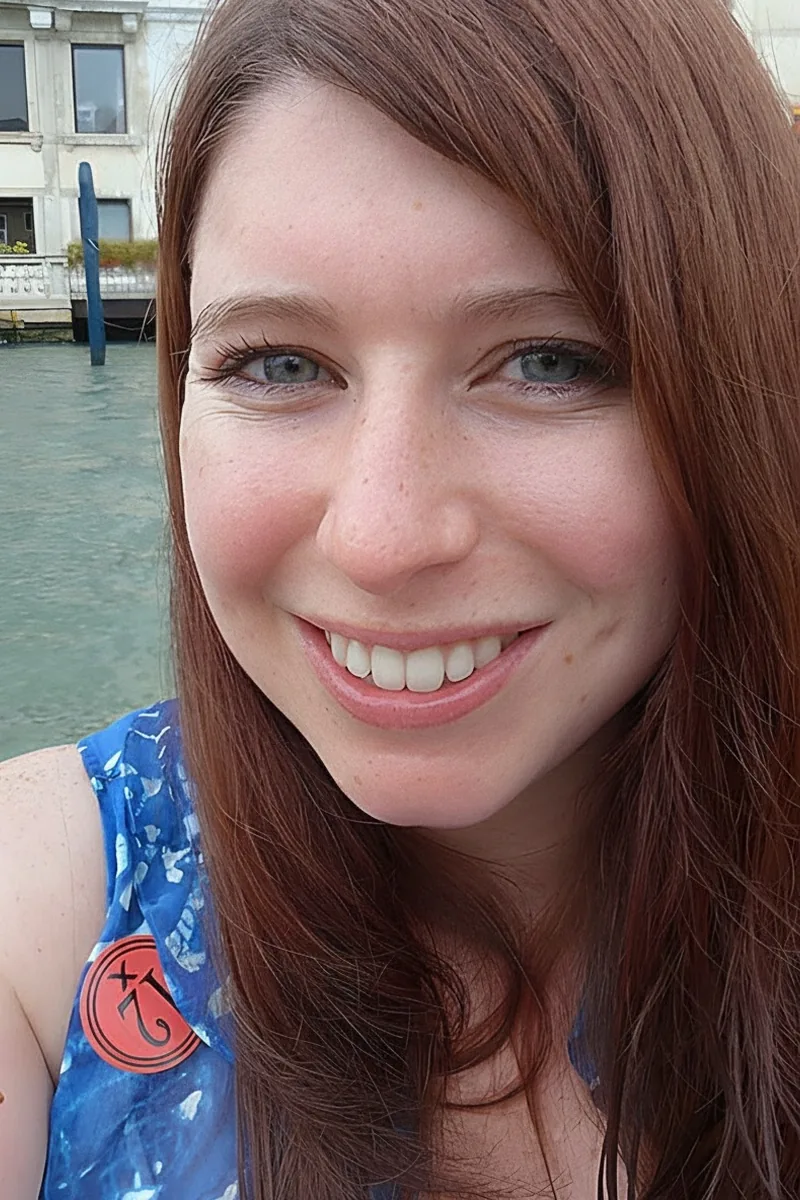
Whether a student is struggling with fractions or pushing through precalculus, Karen identifies the specific concept creating the bottleneck and addresses it directly. She teaches across the full math sequence — from foundational arithmetic through algebra 2 and calculus — which means she knows exactly which earlier skills each new topic depends on.
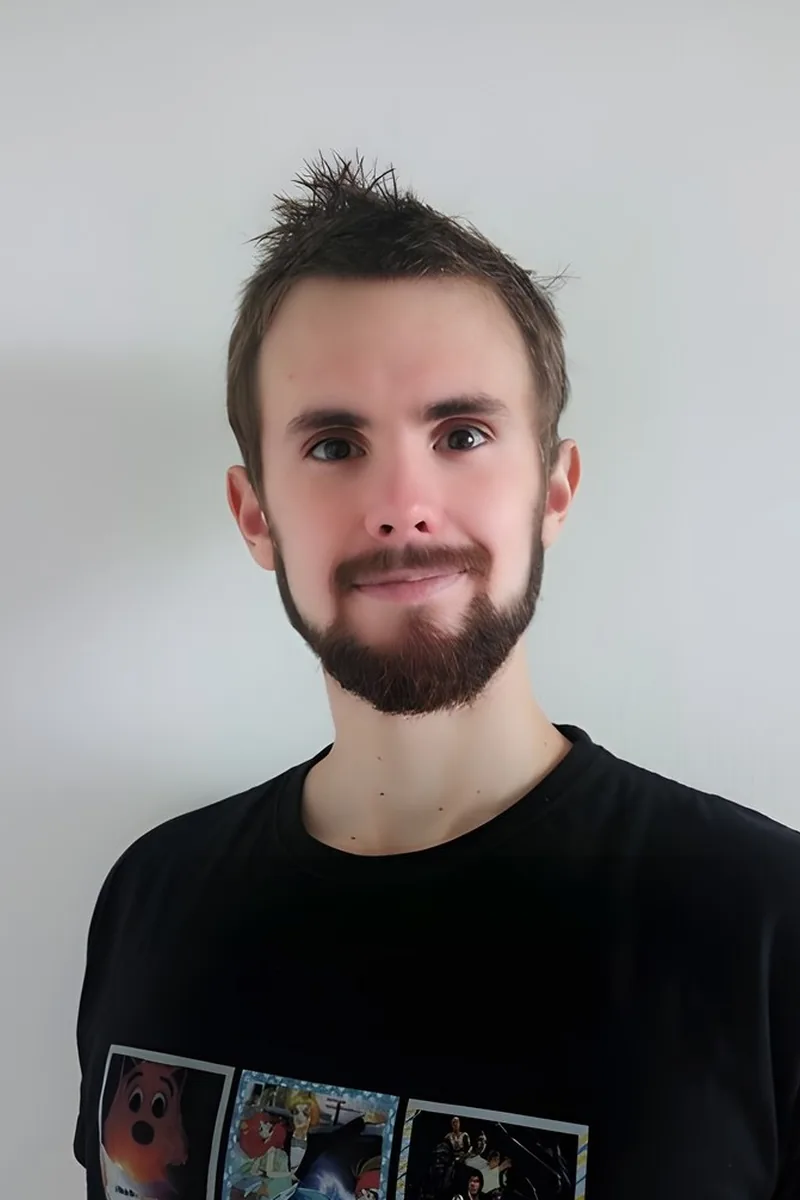
Cole's economics graduate work at the University of Amsterdam required heavy quantitative coursework, and he served as a teaching assistant in both economics and mathematics while there. He tackles algebra, functions, and data interpretation by tying abstract operations to concrete problem-solving — building the kind of numerical fluency that carries across subjects.
Three physics degrees mean Bryan has spent thousands of hours translating real-world problems into mathematical language — setting up integrals, manipulating algebraic expressions, and interpreting what a graph actually tells you. Whether a student is stuck on fraction operations or working through polynomial equations, he connects each procedure to the reasoning behind it so the steps make sense on their own.
From elementary arithmetic through calculus, Waleed's engineering background means he doesn't just demonstrate procedures — he explains the reasoning behind each step. Whether a student is struggling with fractions or tackling polynomial equations, he breaks problems into smaller pieces until the logic clicks.
Gary scored a 1500 on the SAT, which required strong quantitative reasoning across algebra, data analysis, and problem-solving under time pressure. He approaches math by emphasizing the logic behind each step — why you isolate a variable this way, or how a word problem translates into an equation — so that procedures make sense instead of feeling arbitrary.
Amber approaches math by connecting abstract procedures to logical reasoning — the same analytical thinking she uses in her legal work. Whether a student is wrestling with fractions, linear equations, or basic functions, she walks through each problem step by step and pinpoints exactly where confusion sets in so it can be addressed directly.
Molly's primary strengths are in writing and test prep, but she also tutors foundational math concepts — arithmetic operations, fractions, basic algebraic reasoning, and the kind of quantitative thinking that shows up in standardized tests. She's especially good at translating word problems into equations, a skill she sharpened while coaching students through the math-adjacent logic of the SAT and LSAT.
Marin's primary expertise is in the humanities and test prep, but her 1530 SAT demonstrates strong quantitative reasoning. She's a good fit for students who need support with foundational math concepts — fractions, proportions, basic algebra — especially when the real barrier is confidence or study habits rather than the content itself.
Growing up as one of seven kids, Austin has been explaining math concepts to different ages and skill levels since long before he earned his applied mathematics degree. Whether a student is wrestling with fraction operations in middle school or integration techniques in college, he unpacks each concept by connecting it to something the student already understands rather than layering on abstract rules.
While Briana's primary expertise sits in the humanities and social sciences, she teaches foundational and intermediate math with an emphasis on translating word problems into solvable equations. Her cognitive science training gives her insight into where conceptual misunderstandings tend to form — particularly around fractions, proportional reasoning, and basic algebraic thinking. She's patient with students who've decided they're "not math people" and breaks problems into logical steps that build confidence.
Currently an adjunct faculty member teaching university-level courses and a tutor preparing elementary students for state math assessments, Joel covers an unusually wide range of math levels. That breadth means he can pinpoint exactly where a gap in foundational skills — fractions, integer operations, order of operations — is causing trouble in more advanced work.
From algebraic manipulation in chemistry stoichiometry to the calculus behind kinetics curves, Anurag used math as a daily tool throughout his science degree rather than treating it as an isolated subject. That applied perspective means he can show students why a technique like factoring or solving systems of equations matters beyond the worksheet. He's especially comfortable bridging the gap between arithmetic confidence and the more abstract reasoning that trips students up in pre-algebra and beyond.
A dual background in mathematics and philosophy means Calin doesn't just teach procedures — he unpacks the reasoning behind them, whether that's why the distributive property works or how a word problem translates into an equation. He's taught across the full math spectrum from basic algebra through calculus and statistics, rated 5.0 by students along the way.
Architecture requires constant applied math — calculating loads, scaling dimensions, working with trigonometric relationships in structural design — so Christianna teaches math as a tool that does something, not just an abstract exercise. She covers everything from pre-algebra fundamentals through calculus, adjusting her approach based on whether a student needs conceptual understanding or computational speed. That practical lens tends to click for students who've been asking 'when will I ever use this.'
A pre-med track means solving problems under pressure — Bhumi spent years working through calculus and algebra alongside her biology coursework, building the kind of numerical fluency that translates directly to tutoring ratios, proportions, and equation-solving. She breaks multi-step word problems into smaller logical pieces so the path to the answer feels obvious rather than overwhelming.
From arithmetic fundamentals through pre-algebra and beyond, Emma treats math as a chain where every link matters — a shaky grasp of fractions, for instance, quietly derails work with ratios and proportions later. Her electrical engineering background means she's constantly using math in applied contexts and can show students why a concept matters, not just how to get through a worksheet.
From early arithmetic through calculus, Roshni's teaching range in math is unusually wide — she spent eight months at a tutoring center working with students ages 5 to 18 on everything from fractions to polynomial functions. That experience means she can pinpoint exactly where a concept broke down, whether a student is struggling with long division or integration by parts. Her 1550 SAT and 35 ACT confirm the depth behind her teaching.
An engineering degree means Sanam didn't just take math courses — she used calculus, algebra, and statistics as daily tools for solving real problems in circuit analysis, biomechanics, and data modeling. She brings that applied perspective to everything from fraction operations to derivatives, connecting abstract procedures to tangible reasons they matter.
Kyle's sweet spot in math runs from pre-algebra through calculus, and he's currently completing additional math coursework for a teaching endorsement. He excels at translating abstract procedures — like factoring polynomials or setting up integrals — into intuitive, step-by-step reasoning that younger and older students alike can follow. His 4.7 rating speaks to an ability to make math feel approachable without oversimplifying it.
From arithmetic fundamentals through early algebra, Ying builds each concept by connecting it to the next — showing students why order of operations matters when they start simplifying expressions, or how fractions become essential once variables enter the picture. Her engineering background at VCU means she sees math as a toolkit, and she teaches it that way.
I am currently a lead preschool teacher. I received my Bachelor's in Psychology from VCU and am looking to return to school to further my education. While in college, I worked as a Supplemental Instruction leader, teaching general biology and anatomy. I have also worked in an after school program with elementary age children, but I have my fondest memories volunteering as a counselor for Camp Kesem. In my own experience, I loved school and now I love teaching even more at all age levels! I especially enjoy the challenge of getting creative to discover what approach and mediums work best for each student. I am available for in person as well as online tutoring.
Kendra's background in Development Economics means she spent her UCLA coursework buried in quantitative analysis — growth models, cost-benefit calculations, interpreting data sets — which built a practical comfort with math that she now brings to tutoring everything from basic operations to algebra. Her ESL and curriculum development experience also gave her a sharp instinct for breaking down instructions and procedures into clear, sequential language, a skill that pays off when a student is staring at a word problem and can't figure out where to start.
Kara's biology and pre-med coursework at UVA keeps her sharp on the quantitative reasoning that underpins math — from algebraic manipulation to the calculus she uses in biostatistics. She breaks word problems into smaller logical steps so students can see the structure behind the numbers rather than guessing at formulas.
Samantha's tutoring covers math from arithmetic fundamentals through pre-algebra and into algebra, with particular attention to translating word problems into equations — the step where most students lose confidence. Her psychology training gives her a sharp eye for the specific conceptual gaps holding a student back, so she can address the real issue rather than just re-explaining the procedure.
Cognitive science trains you to think in systems — how inputs become outputs, how patterns emerge from rules — and Megan applies that same framework when she breaks down math problems, whether it's setting up an equation or tracing the logic through a multi-step geometry proof. She's especially good at reading how a student learns and inventing non-standard explanations when the textbook approach isn't landing. Rated 5.0 by students.
Stephanie's English and linguistics background means she thinks in structures — how parts relate to wholes, how rules generate patterns — which is exactly the kind of reasoning that untangles a tricky algebra setup or a word problem buried in confusing language. She's not a math specialist, but her 1410 SAT and systematic approach to breaking down complex material translate well when a student needs someone who can slow down and make each step logically clear. Rated 5.0 by students.
I am a graduate of Tufts University. I received my Bachelor of Arts in English as well as a minor in History. Since graduation, I have worked as a 7th grade Reading Language Arts teacher in Dallas Texas at a newly formed public all boys school. This has provided me with great experience and insight into how students best learn and how to create culturally responsive lessons that students will engage with. I am most passionate about English, Literature, History, and Spanish. In my experience, working to prepare students for state standardized tests has had the additional benefit of helping students to discover what they enjoy reading about. This increase in intrinsic motivation to read has had an important impact on struggling students. I am dedicated towards ensuring that students are provided with an education that increases their quality of life.
Before entering medical school, Braveen completed coursework in calculus and statistics as part of his science prerequisites, giving him a practical grip on the math concepts students encounter from pre-algebra through early calculus. He's especially effective at connecting abstract procedures — like solving systems of equations or interpreting functions — to concrete reasoning so the steps make sense instead of feeling arbitrary.
Devan's math background spans pre-algebra through calculus and AP Statistics, so he can pinpoint exactly where a concept went sideways and rebuild understanding from that spot. Whether a student is stuck on fraction operations or wrestling with derivatives, he connects each new idea back to the reasoning behind it. Rated 4.7 by students.
From fraction operations in middle school to integration techniques in calculus, Yashwant covers a wide math range and knows where the common stumbling blocks sit at each level. He digs into the reasoning behind each step so that a student solving a system of equations, for example, understands elimination as a strategy rather than a recipe to follow.
From pre-algebra fundamentals to calculus, Zeke covers a wide range of math and adjusts his explanations based on where a student is getting stuck — whether that's setting up word problems, working with fractions, or understanding why a formula works in the first place. His economics background at UVA kept him doing applied math daily, so he's comfortable connecting abstract procedures to real scenarios. He holds a 5.0 student rating.
Music composition at the doctoral level is surprisingly math-heavy — rhythmic subdivisions, set theory, frequency ratios, and formal logic all show up in the work. Armando applies that structured, pattern-oriented thinking when teaching arithmetic, pre-algebra, and foundational problem-solving, connecting abstract operations to concrete reasoning.
While Amanda's primary expertise is in English and the humanities, she also tutors math and brings a structured, step-by-step clarity to problem-solving that students who struggle with abstract concepts often find helpful. She's especially patient with foundational skills like fractions, word problems, and algebraic reasoning where careful reading matters as much as computation.
Whether a student is wrestling with fractions, tackling their first equations, or preparing for algebra, Shahad connects math concepts to logical reasoning rather than rote procedure. Her bioinformatics major requires heavy quantitative work — statistics, computational modeling, data analysis — so she understands how foundational math skills feed into bigger ideas. She's rated 4.9 across her students.
A biochemistry degree requires a surprising amount of math — from the calculus behind enzyme kinetics to the algebra in chemical equilibrium problems. Allison uses those real-world applications to make abstract math concepts click, especially for students who need to see why a formula matters before they'll trust it.
While Julia's primary strengths are in English and art, she brings a structured, step-by-step approach to math that's especially useful for students who feel lost in abstraction. She breaks problems down into smaller logical moves and teaches students to identify what a question is actually asking before jumping into calculations. Her patience with foundational concepts like fractions, proportions, and basic algebraic reasoning makes her a good fit for students building confidence.
Whether a student is working through fractions or tackling polynomial equations, Anmol connects each concept to the reasoning behind it so the next topic doesn't feel like starting over. His CS background at Virginia Tech means he's comfortable across arithmetic, algebra, and early calculus, and his 5.0 rating speaks to how clearly he breaks down multi-step problems.
From pre-algebra fundamentals through Calculus 2, Brittany covers the full arc of math and knows where the common stumbling blocks sit — fractions and proportional reasoning early on, then the leap to abstract thinking when variables replace numbers. She asks targeted questions to find exactly where a concept breaks down before building it back up. Rated 5.0 by students.
From arithmetic fundamentals through early calculus, Shona covers a wide range of math concepts and has a particular knack for making word problems less intimidating. Her time as a TA for college algebra at VCU means she's seen exactly where students get stuck on equations, inequalities, and graphing — and knows how to untangle the confusion quickly.
From pre-algebra through calculus, Palak's teaching spans the full math pipeline, which means she can pinpoint exactly where a gap in earlier material is causing trouble in a current course. Her approach emphasizes understanding why a method works — why you flip and multiply fractions, why the quadratic formula is derived from completing the square — so that new topics click faster instead of feeling like disconnected procedures.
Testimonials
Because the right Math tutor makes all the difference.
Average Session Rating – Based on 3.4M Learner Ratings
Practice Math
Free practice tests, flashcards, and AI tutoring for Math
Other Chesapeake Tutors
Related Math Tutors in Chesapeake
Frequently Asked Questions
Varsity Tutors matches Chesapeake students with expert Math tutors for 1-on-1 instruction. We pair each student with a tutor based on their specific needs, learning style, and goals.
Whether you need homework help, exam prep, or want to get ahead, our Math tutors are ready to help.
Common challenges include gaps from earlier material, difficulty with specific concepts, and trouble applying learning to new problems. These issues can snowball quickly in Math.
A tutor identifies where you're stuck, fills in gaps, and provides targeted practice. The 1-on-1 format means you get help exactly where you need it.
Tutors work with your student's actual coursework—homework assignments, class notes, and upcoming tests. This keeps tutoring directly relevant to what's happening in the classroom.
When you share information about your student's school and curriculum, we can match you with a tutor who has relevant experience.
All tutors complete background checks, credential verification, and teaching evaluation. Many of our Math tutors hold advanced degrees or have years of teaching experience.
You can review tutor profiles to find someone with the right background for your student's level and needs.
Many students see improved grades within a few weeks, along with better understanding of Math concepts and more confidence tackling challenging material.
Tutors track progress and adjust their approach to ensure continued improvement.
Most students benefit from 1-2 sessions per week. More frequent sessions help if your student is significantly behind or has an important exam coming up.
Your tutor can recommend a schedule based on your student's specific situation and goals.
Tutoring is purchased in packages of hours, with rates varying by tutor experience. Varsity Tutors offers several options to fit different budgets and needs.
You can discuss pricing during your consultation to find what works best.
Your tutor will assess where your student is, discuss goals, and start working on priority areas. Most students bring current homework or upcoming test material to focus on.
By the end, you'll have a clear sense of how the tutor can help and a plan for moving forward.
Let’s find your perfect tutor
Answer a few quick questions. We’ll recommend the right plan and match you with a top 5% tutor.