Award-Winning ACT Reading Tutors
serving Chesapeake, VA
ACT Reading
Tutors in Chesapeake
Private 1-on-1 tutoring, weekly live classes for academic support, test prep & enrichment, practice tests and diagnostics, and more to elevate grades and test scores.
Based on 3.4M Learner Ratings
UniversitiesSchools & Universities
DeliveredHours Delivered
ProficiencyGrowth in Proficiency
Who needs tutoring?
No obligation. Takes ~1 minute.

I am ready to help all students by answering their questions and frequently addressing some questions to them....
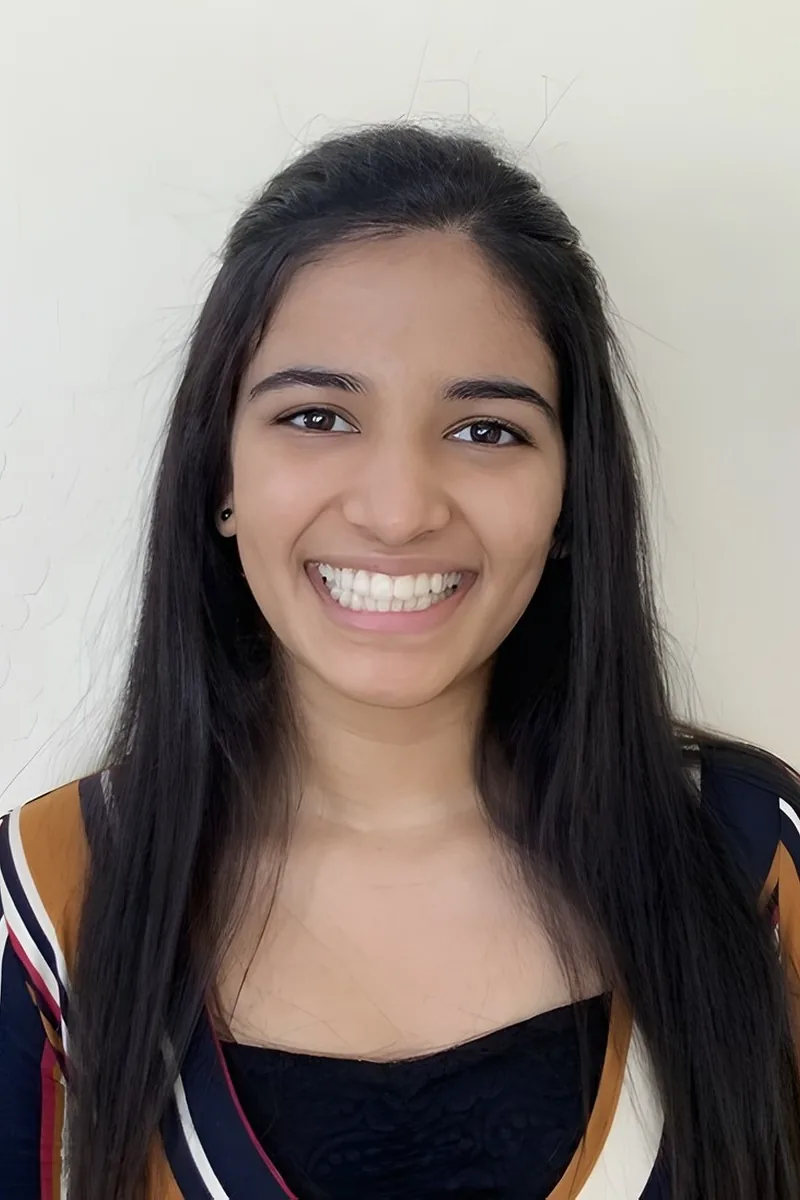
The ACT Reading section isn't about being a fast reader — it's about knowing what the questions actually ask and where to find the evidence. Roshni breaks each passage type (prose fiction, social science, humanities, natural science) into a targeted strategy so students stop re-reading entire paragraphs and start pinpointing answers. Her 35 ACT composite backs up an approach that consistently clicks.
I am a sophomore electrical engineering student and member of the honors college at Virginia Commonwealth University. I recently graduated from Maggie L. Walker Governor's School in June of 2017. I have a passion for mathematics, especially calculus, and am excited to share my knowledge with others.
I am a student at the University of Virginia majoring in Commerce. I have a passion for statistics, mathematics, and teaching others.
Every ACT Reading passage is a timed argument-analysis exercise, and Kyle's philosophy training makes him unusually fast at extracting a passage's main claim and supporting structure. He teaches specific annotation strategies for each passage type — prose fiction, social science, humanities, natural science — so students stop rereading and start answering with confidence.
I am currently a student at the University of Pittsburgh! I originally hail from the DC area. I have been tutoring for about 2 years and have a lot of experience because my family has a huge teaching background. I am majoring in biochemistry and psychology but I love to write and read books! I love to tutor not only because I love to teach but also because I love to meet new people and help people lead happier lives.
The ACT Reading section isn't really testing whether you understood the passage — it's testing whether you can find specific evidence under time pressure. Zeke scored a 34 ACT composite and developed a passage-mapping strategy that cuts through dense prose in the social science and humanities sections. Rated 5.0 by students, he breaks down how to eliminate wrong answers quickly even when two choices look equally plausible.
Computer science teaches you to process information in layers — scan the structure first, then drill into the details that matter — and that's exactly how Anmol approaches the ACT Reading section's four passage types under tight time pressure. He trains students to build a quick mental map of each passage's argument before engaging with questions, turning inference and detail items into targeted retrieval instead of panicked re-reading. His 33 ACT composite and 5.0 student rating back up the method.
From the moment I began helping classmates in middle school study for math quizzes, I realized how much I enjoyed guiding others toward understanding. Over time, that spark grew into a genuine passion for education. What drives me most is witnessing the transformation in a student's confidencethe moment when confusion gives way to clarity, and they begin to believe in their own abilities. Tutoring, for me, is not simply about helping students achieve better grades; it's about empowering them to trust their capacity to learn and grow. My journey as a tutor began in high school, where I volunteered as a math tutor for underclassmen struggling with algebra and geometry. I worked one-on-one with students after school, helping them tackle difficult problems and build foundational skills. This early experience taught me how patience and consistent encouragement could make a lasting difference. In college, I served as a teaching assistant for general chemistry at the University of Virginia.
I am currently a lead preschool teacher. I received my Bachelor's in Psychology from VCU and am looking to return to school to further my education. While in college, I worked as a Supplemental Instruction leader, teaching general biology and anatomy. I have also worked in an after school program with elementary age children, but I have my fondest memories volunteering as a counselor for Camp Kesem. In my own experience, I loved school and now I love teaching even more at all age levels! I especially enjoy the challenge of getting creative to discover what approach and mediums work best for each student. I am available for in person as well as online tutoring.
I'm currently a Junior at VCU. My major is Biology and I'm minoring in Chemistry and Mathematics. In addition, I'm also on the pre-med track, so I have taken many science classes!
I'm Julian and I'm currently pursuing a Bachelor's degree in Mechanical Engineering at the University of Virginia. I have been there before. Repeatedly, there are moments where I do not understand a certain subject and I am in need of assistance. Even the most notable scholars need help at some point in their lifetime. For this reason, I'd like to repay the favor and help other students in need. More people than I can count have been there to help me and I would like to do the same with other students. To do this, I will tutor with an engaging and interactive environment. When assisting students, I like to go beyond explicit instructions. I strive for the student to fully understand the processes that we cover so that it sticks in the student's mind more effectively. Subsequently, I believe it is important to continue practicing the content individually. The main goal is to instill long term confidence in the student that surpasses what is being taught.
Having studied and worked abroad in Spain and Brazil, Jessica developed a habit of reading for meaning in unfamiliar contexts — a skill that translates surprisingly well to the ACT Reading section, where students face dense passages on topics they've never encountered. She teaches students to lock onto an author's central claim and track how supporting details connect to it, which keeps inference and detail questions from becoming guessing games. Her 33 ACT composite backs up an approach grounded in active, purposeful reading.
Most ACT Reading mistakes come from time pressure, not comprehension — students understand passages but can't consistently answer 40 questions in 35 minutes. Elliot teaches a triage strategy: how to identify question types, when to skim versus close-read, and how to eliminate answer choices that paraphrase the passage just enough to seem right. Rated 5.0 by students.
I am most excited about helping other students achieve their dreams of going to medical school by helping them study for the MCAT. Besides MCAT tutoring, my favorite subjects are chemistry, biology, and math which are all subjects I have tutored in before. I believe that every student can learn the material they hope to with the right guidance and effort. I hope that I can help students realize their full potential and grow in confidence as a learner. Outside of teaching, I like to perform in musicals, most recently I have been in local productions of Mamma Mia and Footloose, as well spend time with friends.
Reading four dense passages in 35 minutes forces a different kind of reading than most students are used to. Sugi's cognitive science training at Rice gives her a framework for teaching active reading strategies — how to map an argument's structure on a first pass so that inference and tone questions become straightforward rather than agonizing. She holds a perfect 36 ACT composite and a 5.0 tutoring rating.
I am in my second year at MIT studying mathematics, and I am currently doing a research project in Spectral Graph Theory. I have been a tutor since my junior year in high school, and I enjoy teaching all levels of math; everything from pre-algebra through calculus and linear algebra! I focus primarily on making sure that the definitions and processes given in class make intuitive sense, so that math can begin to feel like second nature.
Scoring a perfect 36 ACT composite means Max has firsthand experience with the Reading section's tightest time pressure — 35 minutes across four passages with no room for re-reading. His biology research background, which involves digesting dense ecological studies and isolating specific claims from surrounding data, trained him to do exactly what the natural science and social science passages demand: separate what the author actually states from what the surrounding context merely suggests. Rated 5.0 by students.
Scoring a 36 ACT composite means Emily has beaten every passage type the Reading section throws at students — prose fiction, social science, humanities, natural science — under real time pressure. Her computational biology training at Cornell, which requires constant toggling between dense scientific papers and code documentation, built a habit of extracting exactly what a text claims without getting pulled into irrelevant detail. She teaches students to pre-map each passage's argument in under two minutes, so question time is spent confirming answers rather than hunting for them.
I am a current sophomore at Rensselaer Polytechnic Institute, where I am majoring in Biology as part of the 7 Year Accelerated Medical Program. I am also minoring in Healthcare Economics and Policy. My favorite subjects in school are Chemistry, Biology, and Math, but I also enjoy the process of writing and editing thought provoking essays. During high school, I spent time tutoring for the National Honor Society. My approach to tutoring is to teach the concepts in a simplistic manner and reinforcing the concepts while adding difficulty through effective practice problems. In my free time, I have recently found myself reading, working out, drawing, and spending time with my siblings.
The ACT Reading section punishes students who read passively — four passages in 35 minutes requires a deliberate strategy for extracting main ideas and locating evidence fast. David, who scored a 36 composite, teaches a structured approach to each passage type so students spend less time rereading and more time answering confidently.
I'm a recent college graduate with degrees in Biological Sciences and Russian from Ohio University. During my time there, I tutored students in a variety of subjects, including biology, chemistry, and Spanish. In addition, I worked as both a peer advisor and teaching assistant, which gives me insight into the learning strategies and study skills that students need to succeed. As a tutor, I like to focus on doing actual problems with students because it is the most effective way to immediately identify their strengths and weaknesses and to address them. In my free time, I like to lift weights, read books, and spend time with my friends.
I am a junior at Purdue University studying Aerospace Engineering and am part of the Air Force ROTC program. I have 6 years of tutoring experience at places including Kumon, Mathnasium, and Purdue University. I have worked with kids of all ages from kindergarten to sophomores in college, each with their own set of unique strengths, and tutored a variety of subjects, including calculus, trigonometry, geometry, thermodynamics, chemistry, and physics. Like many of my previous students, I struggled to understand concepts that I was being taught and was a terrible test taker. However, I found ways to overcome my obstacles and develop an better intuition for what I was learning. I believe that it is only this intuition and understanding that helps overcome these obstacles. My least favorite thing to see people be discouraged, so with a little bit of guidance and reassurance, I want to show people that they are capable of anything they put their mind to.
I am a Neuroscience and Behavior major at Columbia University. Although my major is centered in the STEM field, I am also passionate about human rights work, global engagement, and local outreach. While my future plans are subject to change, I see myself continuing in academia, going to medical school, and becoming a physician.
After scoring a perfect 36 ACT composite, Anna developed a question-first approach to the Reading section — previewing what each question demands before touching the passage, so every line read serves a purpose. Her medical education background means she's used to processing dense, unfamiliar material quickly and extracting exactly what matters, a skill that translates directly to the natural science and social science passages. Rated 5.0 by students.
Testimonials
Because the right ACT Reading tutor makes all the difference.
Average Session Rating – Based on 3.4M Learner Ratings
Practice ACT Reading
Free practice tests, flashcards, and AI tutoring for ACT Reading
Other Chesapeake Tutors
Related Test Prep Tutors in Chesapeake
Frequently Asked Questions
Varsity Tutors matches Chesapeake students with expert ACT Reading tutors for 1-on-1 instruction. We pair each student with a tutor based on their specific needs, learning style, and goals.
Whether you need homework help, exam prep, or want to get ahead, our ACT Reading tutors are ready to help.
Common challenges include gaps from earlier material, difficulty with specific concepts, and trouble applying learning to new problems. These issues can snowball quickly in ACT Reading.
A tutor identifies where you're stuck, fills in gaps, and provides targeted practice. The 1-on-1 format means you get help exactly where you need it.
Tutors work with your student's actual coursework—homework assignments, class notes, and upcoming tests. This keeps tutoring directly relevant to what's happening in the classroom.
When you share information about your student's school and curriculum, we can match you with a tutor who has relevant experience.
All tutors complete background checks, credential verification, and teaching evaluation. Many of our ACT Reading tutors hold advanced degrees or have years of teaching experience.
You can review tutor profiles to find someone with the right background for your student's level and needs.
Many students see improved grades within a few weeks, along with better understanding of ACT Reading concepts and more confidence tackling challenging material.
Tutors track progress and adjust their approach to ensure continued improvement.
Most students benefit from 1-2 sessions per week. More frequent sessions help if your student is significantly behind or has an important exam coming up.
Your tutor can recommend a schedule based on your student's specific situation and goals.
Tutoring is purchased in packages of hours, with rates varying by tutor experience. Varsity Tutors offers several options to fit different budgets and needs.
You can discuss pricing during your consultation to find what works best.
Your tutor will assess where your student is, discuss goals, and start working on priority areas. Most students bring current homework or upcoming test material to focus on.
By the end, you'll have a clear sense of how the tutor can help and a plan for moving forward.
Let’s find your perfect tutor
Answer a few quick questions. We’ll recommend the right plan and match you with a top 5% tutor.