Award-Winning Statistics Tutors
serving Dallas, TX
Statistics
Tutors in Dallas
Private 1-on-1 tutoring, weekly live classes for academic support, test prep & enrichment, practice tests and diagnostics, and more to elevate grades and test scores.
Based on 3.4M Learner Ratings
UniversitiesSchools & Universities
DeliveredHours Delivered
ProficiencyGrowth in Proficiency
Who needs tutoring?
No obligation. Takes ~1 minute.
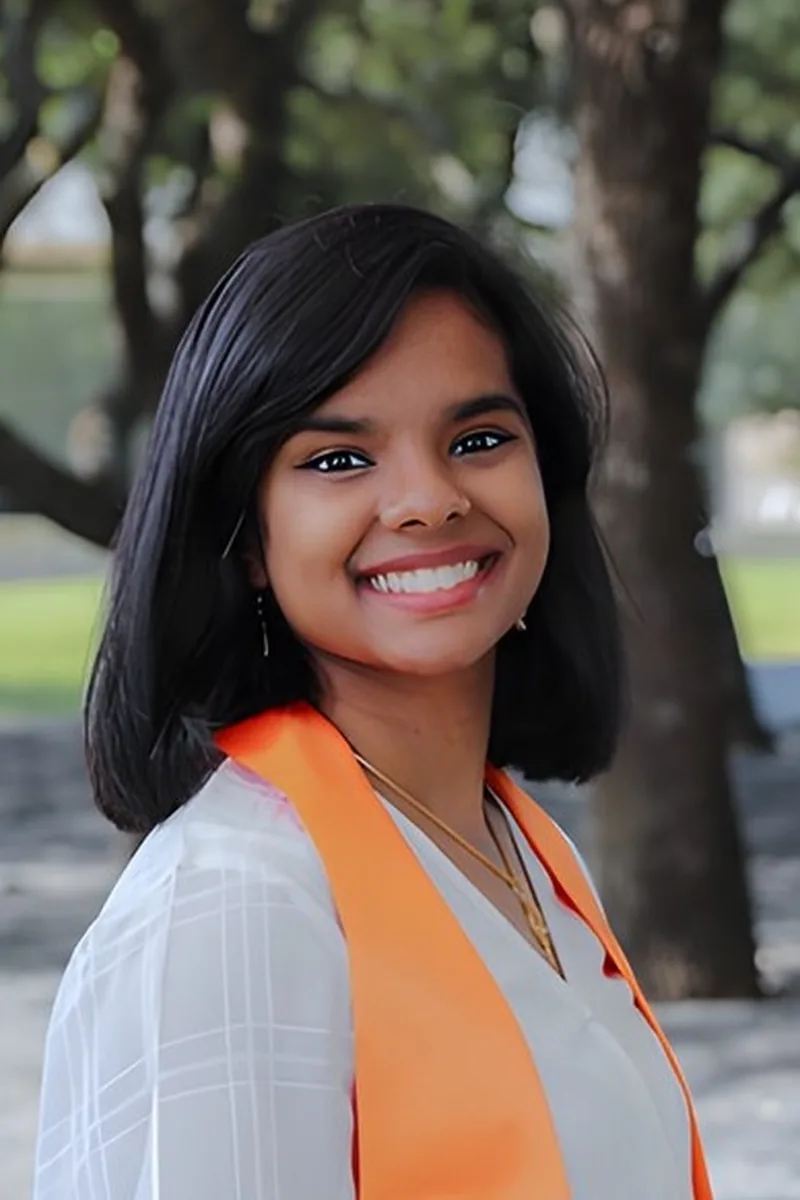
Probability distributions, hypothesis testing, confidence intervals — statistics is the one math course where the answer is almost never a clean number, and that throws a lot of students off. Snipta's research experience at the NIH required daily statistical analysis on real-world data, so she teaches these concepts through the lens of what they actually mean rather than just which formula to grab.

As a medical student at Nova Southeastern, Brianna reads and interprets statistical analyses in clinical research papers regularly — probability distributions, p-values, confidence intervals, and hypothesis testing are part of her daily life. She translates that practical fluency into clear explanations for students encountering these concepts for the first time. Her approach ties each formula back to the question it actually answers, so the math stops feeling arbitrary.
Regression models, probability distributions, and hypothesis tests all show up constantly in business and finance — which is exactly where Maftuna learned to use them. She translates statistical jargon into everyday language and teaches students to interpret output and p-values with genuine understanding, whether the course is introductory or intermediate level.
Understanding the difference between correlation and causation, reading a regression output, or knowing when a t-test applies versus a chi-square — these are the conceptual hurdles that separate students who memorize formulas from those who actually think statistically. Daniel's engineering training required constant data analysis, and he brings that practical fluency to topics like probability distributions and hypothesis testing.
I am very comfortable and confident in not only tutoring them but doing so at a level and style that students can readily follow and understand. I have taken higher level math courses and understand the fundamentals very well so it allows me to teach them in a way that is basic enough for anyone to understand.
An economics degree means Maggie didn't just study statistics in a textbook — she applied distributions, hypothesis testing, and regression analysis to real datasets. She teaches students to interpret what a p-value actually tells them and how to choose the right test for a given scenario, building the kind of statistical intuition that carries through exams and research projects alike.
Studying economics at Brown meant Carter lived inside datasets — running regressions, testing hypotheses, and interpreting distributions long before he started tutoring. That firsthand experience makes him especially effective at teaching concepts like standard deviation, normal models, and conditional probability in ways that feel grounded rather than abstract. He's rated 5.0 by students.
The hardest part of statistics for most students isn't the math — it's interpreting what a p-value or confidence interval actually means in context. Vy's training in cognitive studies at Vanderbilt, which is heavily research-methods driven, means she's spent real time designing studies and running analyses. She unpacks concepts like distributions, hypothesis testing, and regression by tying them to concrete research questions.
As experienced and passionated educator with a Bachelor's degree in Computer Science from Rice University, I am passionate about empowering students to achieve their academic goals. With over 3 years of tutoring experience in subjects such as AP Computer Science A, Machine Learning, and SAT Math, I adapt to different learning styles and create a supportive learning environment. My teaching philosophy centers on personalized instruction, where I connect with each student to understand their unique learning styles and challenges. I take pride in guiding students through the complexities of computer science and college application essays, equipping them with the skills they need for future success. Outside of tutoring, I enjoy exploring new technologies and engaging in coding projects to improve my teaching approach.
Studying cognitive science at Rice required Adam to run experiments, interpret data sets, and draw conclusions from statistical tests — so he teaches statistics as a practical reasoning tool, not just a math course. Whether it's regression analysis, p-values, or probability distributions, he connects each topic to real research questions that make the material intuitive.
Understanding when to use a standard deviation versus an interquartile range — or why a skewed distribution changes your entire analysis — requires more than formula memorization. Vinson approaches statistics through data interpretation first, walking through probability distributions, hypothesis testing, and regression with an emphasis on what the numbers actually tell you. He's studying computational math at Rice, where statistical reasoning is woven into his daily coursework.
Studying mathematical economic analysis means Kenan lives in the world of probability distributions, hypothesis testing, and regression — the exact toolkit a statistics course demands. He unpacks concepts like p-values and confidence intervals by tying each one to a concrete decision it would inform, so the reasoning sticks long after the formula sheet is gone.
The IB Mathematics program threw Kinjal into statistics early — designing internal assessments that required real data collection, chi-square tests, and interpreting results under strict analytical standards. That experience, combined with her biology training at Texas A&M where statistical analysis underpins every lab report, means she teaches concepts like correlation, sampling, and variability as practical tools rather than isolated formulas. Rated 5.0 by students.
Cognitive science leans heavily on statistical reasoning — from designing experiments to interpreting p-values and regression models — so Nikit has spent years applying these tools in real academic contexts. He breaks down concepts like probability distributions, hypothesis testing, and confidence intervals by connecting them to concrete research questions rather than abstract formulas.
Engineering coursework forced Jonathan to live inside probability distributions, hypothesis testing, and regression analysis long before he started tutoring. He breaks statistical concepts into the same logical framework he uses for any problem: what information do you have, what assumptions can you make, and what conclusion follows? That structured approach makes even tricky topics like confidence intervals and p-values more intuitive.
Earning an MPH required Thomas to live inside statistical methods — hypothesis testing, regression analysis, confidence intervals, and study design were daily tools, not textbook exercises. That applied fluency means he can explain not just how to run a t-test but why you'd choose it over an ANOVA, and what your p-value actually tells you. He holds a 5.0 client rating.
Having scored a 1570 on the SAT, Emina knows how to break quantitative problems into manageable steps — a skill she brings directly to teaching statistics topics like data interpretation, probability, and measures of central tendency. Her background in political science means she's comfortable with polling data, survey design, and the kind of real-world statistical reasoning that makes abstract concepts click for students.
Psychology research runs on statistics — hypothesis testing, regression, confidence intervals — and Enstin spent his time at Rice applying these tools firsthand as a psychology major. That research context makes abstract concepts like p-values and standard deviation feel purposeful rather than arbitrary. He walks students through both the calculations and the reasoning behind choosing the right test for a given dataset.
Alexander calls statistics his favorite subject for a specific reason — it's where calculus, algebra, and real-world modeling all converge, and his math degree at Rice gave him the tools to teach that convergence clearly. His coursework in risk analysis means he can show students how concepts like expected value, variance, and probability distributions actually drive decisions outside the classroom. Rated 5.0 by students.
Probability distributions, hypothesis testing, and regression analysis each require a different kind of thinking, and many students struggle to switch gears between them. Yuanxin's financial engineering training at USC meant applying every one of these tools to messy, real-world data, so she teaches statistics as a decision-making framework rather than a collection of isolated formulas.
Ted's medical training required him to interpret clinical data daily — calculating confidence intervals, reading p-values, and distinguishing correlation from causation in research studies. That real-world statistical reasoning translates directly into how he teaches probability distributions, hypothesis testing, and regression analysis. He makes the logic behind each formula visible so students aren't just memorizing steps.
Because Sage uses statistics daily in her Data Science coursework at Rice, she teaches concepts like standard deviation, sampling distributions, and regression analysis as tools with real purpose — not just formulas to memorize for an exam. She's particularly sharp at walking through the logic of when to apply a t-test versus a chi-square test, which is where most introductory students get stuck.
Having run statistical analyses on lab data throughout his biochemistry program at Texas A&M, Gabriel understands distributions, regression, and probability as practical tools, not just textbook exercises. He walks through problems by tying each formula — whether it's standard deviation or a chi-square test — to what it actually reveals about a data set.
Hi y'all! I hold my Master of Science in Psychology of Sport and my Bachelor of Science in both Psychology and Applied Human and Sport Physiology. I have many years of tutoring under my belt, working with people of all levels from elementary school through college in hard science subjects (Biology, Chemistry, and Mathematics), a few social sciences (History, Psychology, Economics), and language arts. When not tutoring, I love playing soccer and I even coach a youth team. I love encouraging students to learn, grow, and think critically for themselves.
As a pre-med biomedical engineering student, Felipe encounters statistics in nearly every research paper he reads — from regression models in clinical trials to probability distributions in lab data. He teaches concepts like standard deviation, normal distributions, and correlation by grounding them in real examples rather than abstract formulas. That applied perspective makes topics like sampling methods and expected value click faster for students who want to understand the reasoning, not just pass the test.
Discrete math — Laila's strongest area within her UT mathematics degree — is built on combinatorics and probability, which means she arrives at statistics with the counting and logic skills that make topics like probability distributions and expected value click at a deeper level. She teaches students to trace a formula back to the combinatorial reasoning behind it, turning problems that look like memorization into something they can actually derive. Rated 4.5 by students.
Teaching philosophy at both the graduate and undergraduate level sharpened Will's ability to walk through logical arguments step by step — a skill that translates directly to statistics, where every hypothesis test follows a chain of reasoning from assumptions to conclusions. He tackles topics like probability and inference by making the logic explicit, so students understand why they reject or fail to reject a null hypothesis rather than just following a checklist.
Applied math training means Rakhi doesn't just know the formulas for variance or regression — she understands the linear algebra and calculus that make them work, which lets her explain statistical concepts at whatever depth a student needs. Her 1550 SAT and competition math background reflect sharp quantitative instincts she channels into breaking down tricky topics like probability distributions and hypothesis testing. Rated 4.8 by students.
Probability distributions, hypothesis testing, and regression analysis all demand a specific way of thinking: comfort with uncertainty. Miguel's computer science degree gave him years of practice working with real datasets and statistical models, so he explains concepts like standard deviation and confidence intervals through concrete examples rather than abstract formulas. He's particularly good at demystifying the logic behind why we calculate a test statistic before we can draw any conclusion.
Environmental statistics was the core of Alex's master's work at Rice, which means probability distributions, hypothesis testing, and regression analysis aren't textbook abstractions for him — they're tools he used daily to interpret real datasets. He breaks down concepts like p-values and confidence intervals by tying them to tangible questions students can visualize.
Probability distributions, hypothesis testing, confidence intervals — statistics has a language problem. The notation and terminology can make straightforward ideas feel impossibly abstract. Naushaba, who used statistics daily during her Epidemiology master's program, translates each concept into plain reasoning before connecting it back to the formal math.
Probability distributions, hypothesis testing, and confidence intervals require a different kind of mathematical thinking than most students are used to — less computation, more interpretation. Roozbeh's graduate training in industrial management leaned heavily on statistical analysis, so he brings firsthand experience with how these tools actually get used in research and decision-making. He's especially sharp at demystifying p-values and helping students read output from statistical software.
As a data science major at the University of Rochester, Lloyd lives in statistics — probability distributions, hypothesis testing, regression modeling, and everything in between. He teaches the reasoning behind each method so students can look at a problem and know which test to run and why. That blend of theoretical understanding and applied practice is exactly what makes stats stop feeling like guesswork.
Probability distributions, hypothesis testing, and confidence intervals show up constantly in Effie's medical training — she reads studies built on these tools every week. That real-world fluency means she can explain concepts like p-values and standard error using concrete examples that make abstract formulas feel intuitive. Her biochemistry and psychology research background adds even more depth to how she teaches data interpretation.
Probability distributions, hypothesis testing, confidence intervals — statistics asks students to think about uncertainty in a way that's fundamentally different from the rest of math. Michael's quantitative training in UT Austin's mathematics program means he can walk through the logic behind a t-test or a regression model, not just the calculator steps. He also draws on his science background to show how statistical reasoning applies to real experimental data.
Fieldwork in archaeology is surprisingly data-heavy — Brandi has used statistical methods on National Science Foundation grants to analyze artifact distributions, date findings, and draw conclusions from incomplete datasets. She brings that practical grounding to topics like probability, standard deviation, and hypothesis testing, making abstract formulas feel purposeful.
Probability distributions, hypothesis testing, and standard deviation all click faster when someone explains the logic underneath the formulas. Ervin approaches statistics the way he learned it in engineering: as a toolkit for making decisions with incomplete information, which makes abstract concepts like p-values and confidence intervals feel grounded and purposeful.
Reading a dataset the way a political scientist does — looking for trends, questioning sampling methods, spotting misleading averages — is exactly how Samuel approaches statistics tutoring. His political science background means he's spent years interpreting polls, regression tables, and probability models, and he teaches students to do the same.
Running statistical analyses was a daily part of Salman's graduate research in pathology and laboratory medicine — designing experiments, calculating confidence intervals, and interpreting p-values with real consequences. He brings that hands-on fluency to topics like hypothesis testing, probability distributions, and regression, translating textbook formulas into the reasoning behind them.
Testimonials
Because the right Statistics tutor makes all the difference.
Average Session Rating – Based on 3.4M Learner Ratings
Practice Statistics
Free practice tests, flashcards, and AI tutoring for Statistics
Nearby Statistics Tutors
Other Dallas Tutors
Related Math Tutors in Dallas
Frequently Asked Questions
Statistics is taught differently across Dallas schools—some emphasize computational methods while others focus on conceptual understanding and interpretation. When you connect with a tutor, they'll review your student's textbook, course materials, and specific learning objectives to align instruction accordingly. This ensures the tutoring directly supports what's being taught in class, whether it's probability distributions, hypothesis testing, or data visualization.
Many students struggle with translating real-world scenarios into statistical problems—understanding when to use which test, interpreting p-values, and distinguishing between correlation and causation. Others find the conceptual leap from descriptive to inferential statistics challenging, or they get lost in the calculations and miss the bigger picture of what they're actually analyzing. A tutor helps bridge these gaps by connecting formulas to meaning and building problem-solving strategies that work across different question types.
Word problems require students to identify relevant information, determine which statistical methods apply, and communicate their reasoning—skills that go beyond just knowing formulas. Tutors work with students to develop a systematic approach: reading carefully, organizing given information, selecting appropriate tools, and interpreting results in context. With guided practice and feedback, students build confidence in tackling unfamiliar problem types.
In Statistics, showing work isn't just about getting the right answer—it demonstrates understanding of the reasoning process and makes it easier to catch errors. Tutors emphasize clear communication of statistical thinking: stating assumptions, explaining why a particular method was chosen, and interpreting results. This approach helps students earn partial credit on exams and, more importantly, deepens their conceptual understanding of statistical concepts.
Statistics anxiety often stems from feeling overwhelmed by unfamiliar concepts or past negative math experiences. Personalized 1-on-1 instruction creates a judgment-free space where students can ask questions, work through problems at their own pace, and build confidence gradually. Tutors help students see that Statistics is about telling stories with data—a skill that becomes less intimidating once the underlying logic clicks.
Statistics builds on foundational concepts—probability connects to distributions, which connect to hypothesis testing and confidence intervals. Tutors help students understand these relationships rather than treating each topic as isolated. By connecting new concepts to what students already know and showing how different statistical methods serve similar purposes, tutors help students develop a coherent understanding of the entire subject.
The first session focuses on assessment and planning. A tutor will discuss your student's current challenges, review recent assignments or exams, and understand their learning style and goals. This helps the tutor identify specific gaps—whether it's conceptual understanding, calculation skills, or test-taking strategy—and create a personalized plan. By the end, your student should have a clear sense of how tutoring will address their needs.
Varsity Tutors connects you with expert tutors in the Dallas area who specialize in Statistics and understand local school curricula. When you reach out, you'll be matched with a tutor whose expertise and teaching style fit your student's needs. You can discuss availability, learning goals, and any specific topics your student is struggling with to ensure a great fit from the start.
Let’s find your perfect tutor
Answer a few quick questions. We’ll recommend the right plan and match you with a top 5% tutor.