Award-Winning Physical Chemistry Tutors
serving Columbia, SC
Physical Chemistry
Tutors in Columbia
Private 1-on-1 tutoring, weekly live classes for academic support, test prep & enrichment, practice tests and diagnostics, and more to elevate grades and test scores.
Based on 3.4M Learner Ratings
UniversitiesSchools & Universities
DeliveredHours Delivered
ProficiencyGrowth in Proficiency
Who needs tutoring?
No obligation. Takes ~1 minute.

An applied mathematics degree plus active graduate math coursework gives Drisana the calculus fluency that p-chem demands — she's comfortable with the differential equations, multivariable integrals, and linear algebra that show up in everything from quantum mechanical wave functions to statistical thermodynamics. Where many chemistry students struggle because the math outpaces them, she tackles derivations from the opposite direction, building physical meaning onto mathematical structures she already knows cold. Rated 5.0 by students.
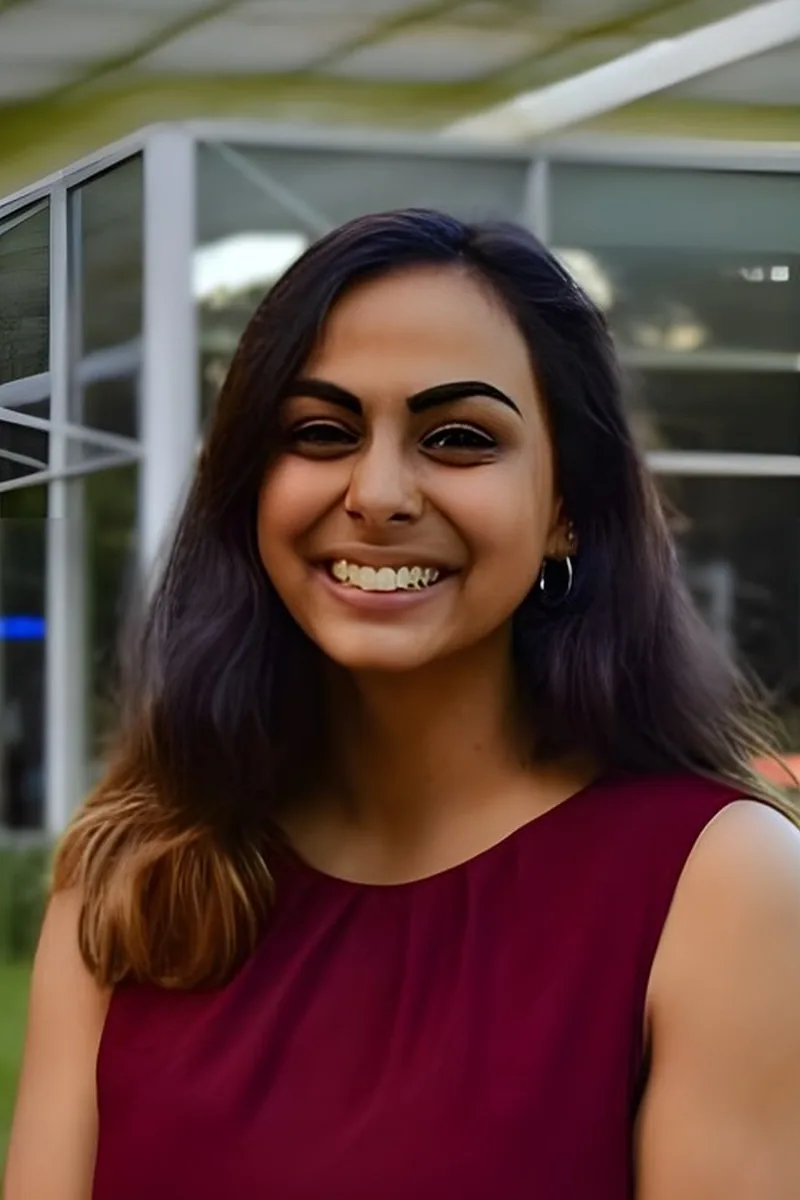
I am most passionate about biology and chemistry. I am a firm proponent of education, believing it to be absolutely necessary for an improved quality of life, and I try to impart this appreciation to all of my students.
I am a public school teacher (Chemistry and Living Environment) but can tutor most sciences. I truly believe in differentiated learning and once I know the learning style of a student, I tailor my teaching style for optimum time usage. I love to utilize stories from my real life experiences in labs to help students understand the implications of their science education.
I am currently an adjunct professor of chemistry at a small liberal arts college in the Chicago area. Previously, I worked in the chemical industry for several years as a researcher, but I've found that the most satisfying moments have come when I am able to share my expertise with someone else. Similarly, I very much enjoyed the four semesters in the graduate school when I was a teaching assistant. It gave me the opportunity to work with students and help them develop an understanding for the subject. These are the primary reasons that I have decided to go into teaching.
Earning a B.S. in Chemistry means Uttam has worked through the thermodynamics, kinetics, and quantum mechanics sequence firsthand — he knows exactly where a derivation like the Clausius-Clapeyron equation starts losing students and how to rebuild the logic step by step. His broad teaching range across calculus, algebra, and multiple chemistry levels keeps him sharp at bridging the math-chemistry gap that makes p-chem uniquely difficult.
Thermodynamics, kinetics, and quantum mechanics all converge in physical chemistry — and that's exactly where Monika's biochemistry and molecular biology training intersects. She breaks down intimidating topics like Gibbs free energy calculations and reaction rate laws by tying them to real chemical systems she studied during her PhD research. Rated 4.8 by students.
Mechanical engineering at Rice means Aleksey has been solving thermodynamic cycles, heat transfer problems, and differential equations for years — the exact mathematical toolkit that p-chem throws at students in a chemistry wrapper. He breaks down topics like entropy, enthalpy, and phase equilibria by treating them as engineering problems first, then layering in the molecular-level chemistry that gives each variable its meaning. Rated 5.0 by students.
A bio-organic chemistry degree means Alex spent serious time with thermodynamic cycles, kinetics derivations, and the quantum mechanical underpinnings of molecular behavior — the core of any p-chem course. He approaches the subject by tying each derivation back to the organic and biochemical systems students already recognize, so an intimidating equation like the Arrhenius expression becomes a story about why reactions speed up at the molecular level.
Pursuing a dual Ph.D./Pharm.D. at UConn with graduate work in medicinal chemistry means Xhesika encounters the thermodynamic and kinetic formalism of p-chem as daily working tools — calculating drug stability, modeling reaction pathways, predicting how molecular interactions shift with temperature and pressure. She teaches derivations like Maxwell relations and Clausius-Clapeyron by tying each variable back to the pharmacological systems where she actually uses them, so the math carries chemical weight instead of feeling like abstract symbol-pushing.
A physics degree means Eitan spent years inside the quantum mechanics, statistical mechanics, and thermodynamics that p-chem courses formalize on the chemistry side — Schrödinger's equation, Boltzmann statistics, and state functions are native territory rather than new abstractions. He teaches the derivations by clarifying the physical picture each equation encodes, so a student wrestling with a partition function or a Carnot cycle can see the molecular behavior driving every calculus step. Holds a 5.0 rating.
Biochemistry lab work and a dual bachelor's in arts and biochemistry mean Andrew has already applied the thermodynamics, kinetics, and quantum mechanical concepts that make p-chem brutal — calculating free energy changes in enzyme systems, modeling reaction rates at the molecular level. He unpacks the heavy calculus in derivations by keeping one foot in the real chemistry, so a partition function or a phase diagram reads as a description of molecular behavior rather than an exercise in pure math. Rated 4.9 by students.
Garrett's biology degree means he already thinks in terms of systems — enzyme kinetics, membrane potentials, metabolic energy flow — which gives him a concrete anchor for the abstract math that makes p-chem so intimidating. He teaches thermodynamic and kinetic concepts by connecting derivations to the biological and chemical phenomena they describe, so something like a Gibbs free energy calculation feels like a tool rather than an exercise in symbol-pushing.
Testimonials
Because the right Physical Chemistry tutor makes all the difference.
Average Session Rating – Based on 3.4M Learner Ratings
Nearby Physical Chemistry Tutors
Other Columbia Tutors
Related Science Tutors in Columbia
Frequently Asked Questions
Physical Chemistry combines abstract theoretical concepts with complex mathematics, making it one of the most challenging chemistry courses. Students often struggle with visualizing molecular behavior at the quantum level, balancing thermodynamic equations, and understanding how theoretical principles apply to real lab work. Personalized tutoring helps break down these abstract concepts into concrete explanations and connects the math to the chemistry happening at the molecular scale.
Your first session focuses on understanding your specific challenges—whether that's quantum mechanics, thermodynamics, kinetics, or lab report writing. The tutor will assess your current understanding, identify gaps in foundational concepts, and create a personalized plan tailored to your course goals and learning style. This initial conversation ensures the tutoring is targeted to what you actually need help with, not generic review.
Physical Chemistry is most meaningful when you understand how theoretical principles—like thermodynamics, equilibrium, and molecular orbital theory—drive real chemical reactions and lab experiments. Expert tutors help you bridge this gap by explaining why equations matter, how they predict molecular behavior, and how they connect to the experiments you're conducting in lab. This deeper understanding makes both the theory and the lab work more intuitive and memorable.
Absolutely. Balancing equations and unit conversions are fundamental skills that unlock success in Physical Chemistry, and they're very teachable with focused practice. A tutor can identify whether you're struggling with the chemistry concepts or the math mechanics, then address the root cause. With personalized instruction and targeted practice problems, most students develop confidence in these skills quickly and can apply them to more complex problems.
Visualizing abstract molecular-scale phenomena is essential for understanding Physical Chemistry, and tutors use multiple strategies to make these concepts concrete—diagrams, molecular models, energy level drawings, and real-world analogies. By explaining concepts from different angles and connecting them to visual representations, tutors help you build mental models that make quantum mechanics, thermodynamics, and spectroscopy feel less abstract and more intuitive.
Yes. Physical Chemistry lab reports require both strong experimental understanding and clear scientific communication. Tutors can help you interpret experimental data, understand the theory behind your results, explain unexpected outcomes, and organize your findings into a coherent report. This support strengthens both your grasp of the underlying chemistry and your ability to communicate scientific reasoning—skills that matter far beyond this course.
Effective exam preparation involves understanding core concepts deeply, practicing problem-solving under timed conditions, and identifying weak areas before test day. A tutor can help you create a study strategy, work through practice problems while explaining your reasoning, catch conceptual misunderstandings before the exam, and build confidence in your problem-solving approach. Personalized preparation is much more efficient than generic review because it targets your specific gaps.
Varsity Tutors connects you with expert tutors for students in Columbia who specialize in Physical Chemistry and understand the specific curriculum and challenges you're facing. You can discuss your goals—whether that's improving your grade, preparing for an exam, or mastering specific topics—and get matched with a tutor whose expertise and teaching style fit your needs. This personalized matching ensures you work with someone who can actually help you succeed.
Let’s find your perfect tutor
Answer a few quick questions. We’ll recommend the right plan and match you with a top 5% tutor.