Award-Winning Geometry Tutors
serving Columbia, SC
Geometry
Tutors in Columbia
Private 1-on-1 tutoring, weekly live classes for academic support, test prep & enrichment, practice tests and diagnostics, and more to elevate grades and test scores.
Based on 3.4M Learner Ratings
UniversitiesSchools & Universities
DeliveredHours Delivered
ProficiencyGrowth in Proficiency
Who needs tutoring?
No obligation. Takes ~1 minute.

A biology degree might seem unrelated to geometry, but David's scientific training built the exact skill that trips most students up: constructing a logical argument from given information to a conclusion. He applies that reasoning to two-column proofs and theorem-based problems, breaking down why each step follows from the last rather than asking students to memorize proof templates. Rated 5.0 by students.
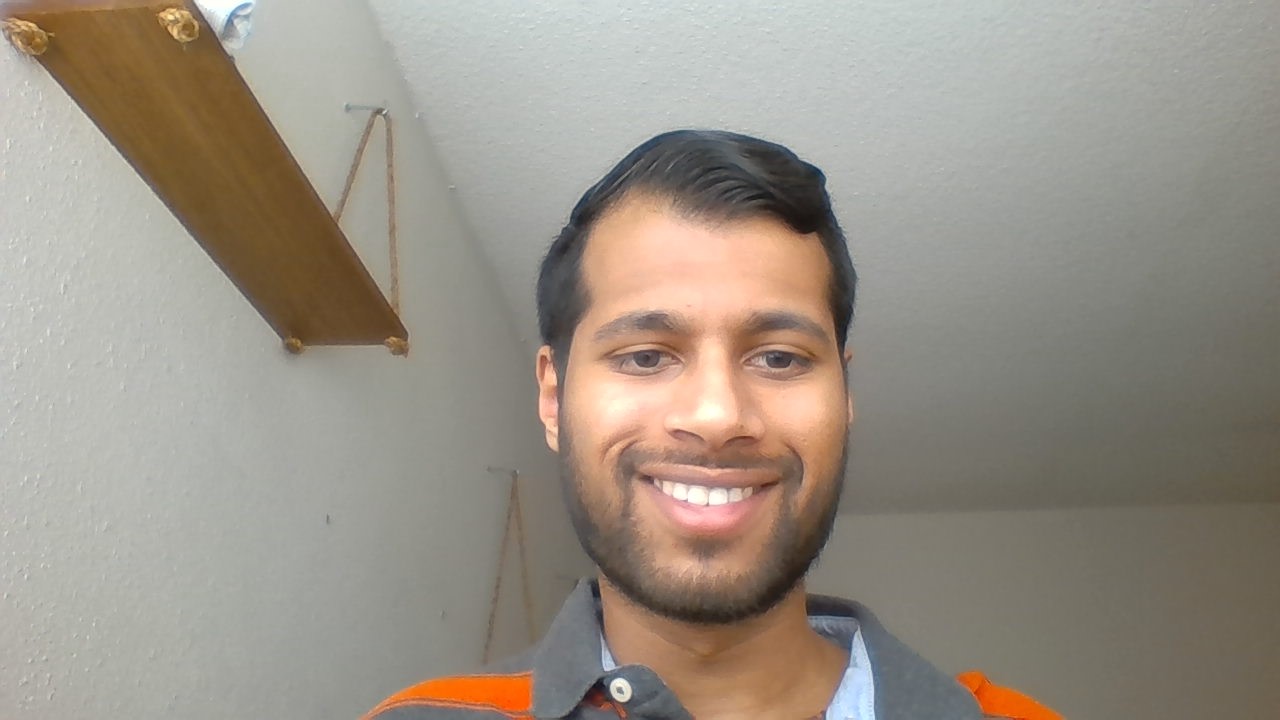
I'm a Structural Engineering graduate from UC San Diego with a passion for helping students in the math and science fields, as well as SAT/ACT test prep. I've had experience tutoring all subjects up to the high school level, and I strive to create a fun and rewarding environment for students. I've worked with a variety of age groups as a member of the Big Brothers Big Sisters program, and I find it easy to relate to all types of students. When I'm not studying or tutoring, I enjoy playing chess and basketball.
A biology major from Rice with a 1570 SAT, Perry approaches geometry problems the way he approaches lab work — by breaking complex diagrams into discrete, manageable pieces and reasoning through each relationship step by step. He's especially effective at teaching circle theorems and polygon properties, where students often know the individual rules but freeze when a problem layers several together. Rated 5.0 by students.
Proofs are usually the first place geometry students get stuck, because suddenly math asks them to argue logically instead of just compute. Ian approaches proof-writing the way he approaches physics derivations at Yale — step by step, with each claim grounded in a specific theorem or postulate. He also covers triangle congruence, circle theorems, and coordinate geometry with the same structured clarity.
Proofs are usually where geometry stops feeling like math and starts feeling like a foreign language. Ava tackles that disconnect by teaching students to read diagrams actively — identifying congruent triangles, parallel line relationships, and angle pairs before ever writing a formal statement. Her engineering background means spatial reasoning is second nature to her.
Proofs are where most geometry students get stuck — the leap from calculating angles to constructing logical arguments feels like a different subject entirely. Jonathan breaks that transition down by teaching students to identify given information, spot congruence relationships, and build each proof step by step. His 4.9 rating speaks to how well that structured approach clicks.
Materials science is a field where you're constantly thinking about how structures behave — crystal lattices, grain boundaries, stress distributions across shapes — so Jennifer's engineering background gives her a natural fluency with the spatial reasoning geometry demands. She unpacks problems involving angle relationships and properties of polygons by connecting them to the physical intuition she built studying how real materials are structured. Rated 5.0 by students.
Most geometry struggles aren't about the shapes — they're about constructing logical arguments. Writing a two-column proof or reasoning through circle theorems requires a style of thinking that Justin, trained in mathematical proof at both the undergraduate and doctoral level, breaks down into concrete steps. He treats each theorem as a claim that needs defending, which builds reasoning skills students carry into every future math class.
Proofs and spatial reasoning make geometry feel like a different species of math compared to algebra, and that shift frustrates a lot of students. Steve tackles it by grounding geometric logic in tangible examples — angle relationships in trusses, symmetry in mechanical parts — drawing on his engineering background to make abstract theorems feel concrete.
Proofs are usually where geometry students panic, but they're really just structured arguments — and Dane approaches them that way. Studying engineering at Duke sharpened his spatial reasoning across topics like congruence, similarity, and coordinate geometry, and he teaches students to visualize relationships before translating them into formal logic.
An MIT math major doing research in Spectral Graph Theory, Enrico brings a deep comfort with spatial structures and relationships that makes geometry's core ideas — congruence, similarity, transformations — feel like natural extensions of logical thinking rather than a pile of disconnected rules. He emphasizes building intuition around definitions so that when a problem asks students to prove two triangles congruent or reason about angle bisectors, the right approach surfaces on its own. Rated 5.0 by students.
Proofs are usually the first place geometry students feel lost, because suddenly they're being asked to construct arguments instead of compute answers. Ben teaches proof-writing as a logical skill: identifying what's given, what's needed, and which theorems bridge the gap. His approach turns the frustration of "I don't know where to start" into a repeatable process.
Mechanical and aerospace engineering at Princeton means Matthew lives in a world of geometric constraints — fitting components into tight spaces, calculating load-bearing angles, reasoning about three-dimensional shapes on paper before they ever get built. He brings that same step-by-step precision to teaching triangle properties, angle relationships, and the logic behind constructions, typically demonstrating a technique and then handing students progressively harder problems until the reasoning becomes automatic.
Proofs are where most geometry students start to struggle, because suddenly math requires building logical arguments instead of just computing answers. Margaret's background in both computer science and political science at Stanford means she thinks in structured logic all day — and she brings that same rigor to angle relationships, congruence, and circle theorems.
Testimonials
Because the right Geometry tutor makes all the difference.
Average Session Rating – Based on 3.4M Learner Ratings
Practice Geometry
Free practice tests, flashcards, and AI tutoring for Geometry
Nearby Geometry Tutors
Other Columbia Tutors
Related Math Tutors in Columbia
Frequently Asked Questions
Many students find the transition from algebra to geometry challenging because it requires both visual reasoning and logical proof-writing. The most common pain points include understanding geometric proofs, visualizing 3D shapes from 2D diagrams, and applying theorems to word problems. With personalized 1-on-1 instruction, tutors can help students build confidence by breaking down complex concepts into manageable steps and showing how different theorems connect to real-world applications.
Proofs require both logical thinking and clear communication—skills that benefit greatly from personalized instruction. A tutor can work with you to identify the key given information, recognize which theorems apply, and develop a step-by-step strategy before writing. By practicing proofs together and getting immediate feedback on your reasoning, you'll develop the confidence and pattern recognition needed to tackle unfamiliar problems independently.
During your first session, a tutor will assess your current understanding of geometry concepts, identify specific areas where you're struggling, and learn about your learning style. This personalized approach allows the tutor to create a customized plan that targets your needs—whether that's mastering angle relationships, improving proof-writing, or building problem-solving strategies. Subsequent sessions build on this foundation with targeted practice and reinforcement.
Yes, tutors work with students using various geometry curricula and textbooks commonly used across Columbia's school districts. Whether your school uses integrated geometry, traditional Euclidean geometry, or a specific textbook approach, Varsity Tutors connects you with tutors who can align their instruction with your classroom material. This ensures that tutoring reinforces what you're learning in class and helps you succeed on your specific assessments.
Word problems require you to translate written descriptions into geometric diagrams and identify which theorems or formulas apply. Tutors help by teaching you to break problems into steps: first identifying what you know and what you're solving for, then sketching the situation, and finally selecting the right approach. With guided practice on various problem types, you'll develop the pattern recognition skills to tackle unfamiliar scenarios with confidence.
Spatial reasoning is a skill that improves with targeted practice and the right strategies. Tutors can use multiple approaches—drawing from different perspectives, building physical models, or using interactive tools—to help you develop stronger mental visualization. Many students find that once they understand the underlying structure of 3D shapes and how 2D diagrams represent them, the concepts become much clearer and more manageable.
Math anxiety often stems from feeling rushed or not understanding the 'why' behind concepts. With 1-on-1 instruction, you can learn at your own pace and ask questions without pressure, building genuine understanding rather than just memorizing steps. As you see patterns, solve problems successfully, and develop stronger problem-solving strategies, your confidence naturally grows—transforming geometry from intimidating to manageable.
Simply tell us about your geometry goals and challenges, and Varsity Tutors will connect you with a tutor who has expertise in the concepts you need help with. The process is straightforward and personalized to your schedule and learning needs. You'll work with an experienced tutor who understands geometry deeply and knows how to explain it in ways that click for you.
Let’s find your perfect tutor
Answer a few quick questions. We’ll recommend the right plan and match you with a top 5% tutor.