Award-Winning Pre-Calculus Tutors
serving Columbia, SC
Pre-Calculus
Tutors in Columbia
Private 1-on-1 tutoring, weekly live classes for academic support, test prep & enrichment, practice tests and diagnostics, and more to elevate grades and test scores.
Based on 3.4M Learner Ratings
UniversitiesSchools & Universities
DeliveredHours Delivered
ProficiencyGrowth in Proficiency
Who needs tutoring?
No obligation. Takes ~1 minute.
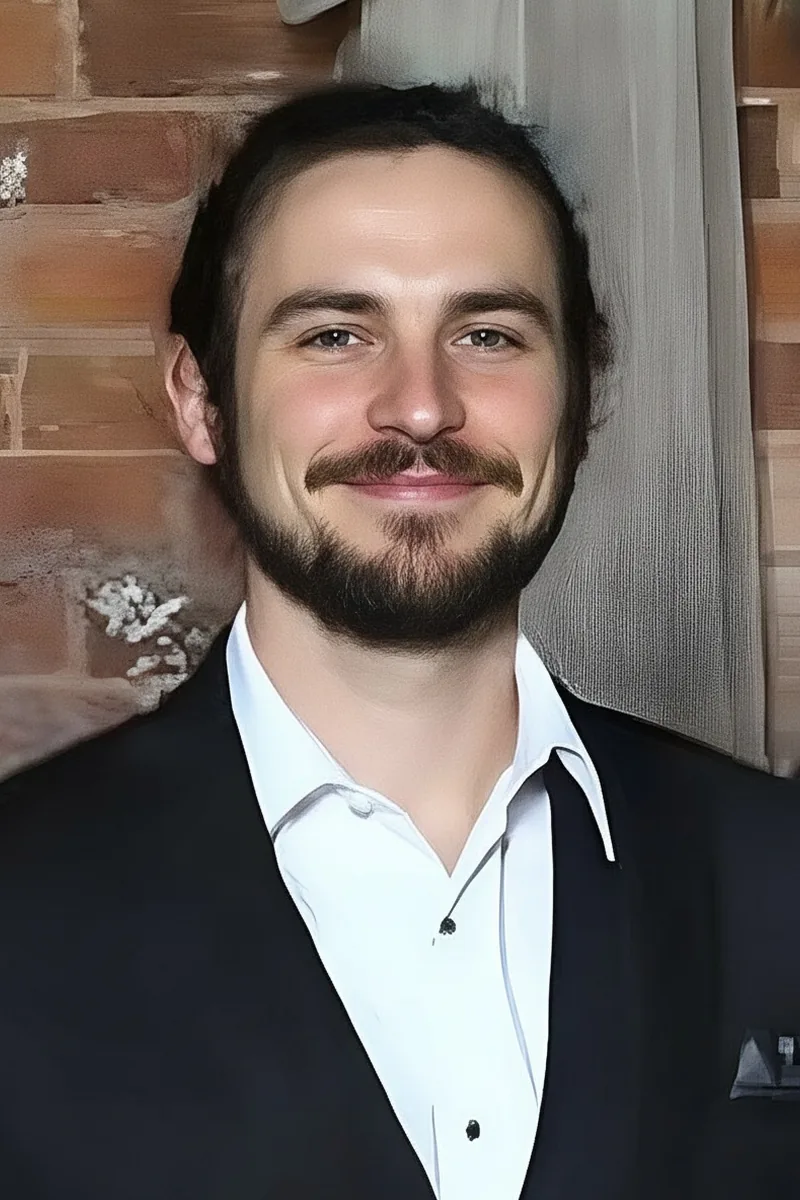
Most pre-calculus struggles trace back to a shaky relationship with functions — not knowing what they are so much as not trusting how they behave when transformed, composed, or inverted. David's biology background means he learned function families through growth models, decay curves, and dose-response relationships before ever teaching them, so he explains the intuition behind each transformation rather than just the rules. Rated 5.0 by students.

I'm a Structural Engineering graduate from UC San Diego with a passion for helping students in the math and science fields, as well as SAT/ACT test prep. I've had experience tutoring all subjects up to the high school level, and I strive to create a fun and rewarding environment for students. I've worked with a variety of age groups as a member of the Big Brothers Big Sisters program, and I find it easy to relate to all types of students. When I'm not studying or tutoring, I enjoy playing chess and basketball.
Materials science at Brown is essentially applied pre-calculus — Shun uses trigonometric functions to model crystal lattice orientations, exponential decay to describe diffusion processes, and logarithmic relationships to analyze phase transformations. That hands-on familiarity means he teaches topics like function behavior and graphical transformations as tools he actually reaches for, not abstract exercises to memorize. His 1590 SAT and 4.9 rating confirm the precision behind his approach.
Trigonometric identities, logarithmic functions, and the behavior of rational expressions all land differently when a student can see what's happening on a graph. Dylan leans heavily on visual and graphical reasoning to make Pre-Calculus concepts intuitive rather than procedural — an approach sharpened by his physics and math coursework at Vanderbilt. He's particularly effective at bridging the gap between algebraic manipulation and the conceptual thinking calculus will demand.
Chemical engineering at Georgia Tech means Aimee has been solving problems built on pre-calculus concepts — rational functions in reactor design, trigonometric models in thermodynamic cycles, logarithmic relationships in kinetics — since her first semester. She teaches the course by showing how each topic threads into the next, so the jump from polynomial behavior to limits feels like a natural step rather than a cliff. Her 33 ACT and 4.9 rating reflect the kind of structured, patient approach that makes that transition stick.
I've been working with students for over seven years, from middle school all the way through college, across subjects like math, calculus, statistics, linear algebra, chemistry, and physics, with a lot of SAT and ACT prep mixed in. My background is perhaps a little unconventional. I have two bachelor's degrees, one in Engineering and one in Communication Studies, plus a Master's in Design. That combination means I can guide you through challenging technical material and communicate it in a way that is easy to grasp. What I care most about is helping students get to a place where they don't need me anymore. I know that sounds like a strange thing for a tutor to say, but I think it's the right goal. I'm not here to walk you through steps to copy down. I want you to understand why something works, because that's what holds up under pressure, on a test you haven't seen before. If you're ready to ace that test or prove that theorem that's been bugging you, reach out and let's work together
The jump to pre-calculus is where many students first encounter limits of their algebraic intuition — rational functions behave strangely, trigonometric identities pile up, and sequences suddenly matter. Emily tackles these topics by emphasizing the graphical and conceptual logic underneath, drawing on a math background that earned her a 1590 SAT and a 36 ACT.
Phillips Exeter's math program is built around problem sets that force students to derive concepts before seeing formal definitions — and that training shaped how Violet teaches pre-calculus topics like rational functions, sequences, and the behavior of composite expressions. Her BS in Mathematics from Brown means she's carried these ideas through multivariable calculus and beyond, so she can pinpoint exactly where a pre-calc concept is headed and why mastering it now saves real pain later. Her 1550 SAT confirms the quantitative sharpness behind that long-view approach.
Todd's biology degree from UIUC built the quantitative reasoning that pre-calculus demands — modeling population dynamics with exponential and logarithmic functions, analyzing periodic phenomena with trig, interpreting rate-of-change problems that preview calculus. He draws on that science background to give function families a concrete meaning, so topics like transformations and composite functions feel like tools with a purpose rather than abstract exercises. His 33 ACT and 5.0 rating back that up.
The jump to pre-calculus is where students suddenly need to think about trigonometric identities, limits of sequences, and polar coordinates all at once. Margaret tackles each of these by connecting them back to algebraic reasoning students already have, rather than treating every unit as brand new. Rated 4.9 by students, she's especially effective at demystifying the transition into calculus-level thinking.
Tutoring calculus students at Penn's Tutoring Center taught Brittany exactly which pre-calculus skills matter most — she saw firsthand where gaps in trigonometric reasoning or shaky function manipulation derailed students in Gen Chem and Physics. Her psychology training also gives her a sharp read on how students get stuck, letting her adjust explanations of topics like polynomial end behavior or composite functions on the fly. She's been teaching math since her Mu Alpha Theta days in high school and hasn't stopped since.
What separates students who survive pre-calculus from those who actually understand it is whether they've internalized the *why* behind each technique — and Daniel, as an applied mathematics major, learned every concept the hard way, by sitting down and working through the logic piece by piece. That deliberate approach makes him especially effective at breaking down topics like rational functions and graph transformations, since he teaches the reasoning he had to build for himself rather than skipping steps that feel obvious. Rated 4.7 by students.
A Cornell chemical engineering degree means Rahul spent years working with exponential decay, logarithmic scales, and trigonometric models before most students even encounter them in a textbook. He teaches pre-calculus by emphasizing the conceptual reasoning behind each topic — why a logarithm undoes an exponential, how the unit circle generates every trig value — so the mechanics actually make sense. Rated 4.9 by students, with a 36 ACT to back up the quantitative chops.
The jump to pre-calculus often trips students up at trigonometric identities and the shift from algebraic to function-based thinking. Ellie's biomedical engineering coursework at Yale runs on these exact tools — polar coordinates, parametric equations, and limits all show up in her daily problem sets. Rated 5.0 by students, she connects each pre-calc concept to the bigger mathematical picture so the material actually sticks.
Testimonials
Because the right Pre-Calculus tutor makes all the difference.
Average Session Rating – Based on 3.4M Learner Ratings
Practice Pre-Calculus
Free practice tests, flashcards, and AI tutoring for Pre-Calculus
Nearby Pre-Calculus Tutors
Other Columbia Tutors
Related Math Tutors in Columbia
Frequently Asked Questions
Pre-Calculus shifts from procedural problem-solving to understanding the deeper concepts behind functions, transformations, and trigonometry. Students need to move beyond "plug and chug" to seeing patterns and connections between different topics. Many students struggle with this conceptual shift, especially when graphing functions or working with trigonometric identities—this is where personalized tutoring helps bridge that gap by breaking down the why behind each concept.
Word problems require students to translate real-world scenarios into mathematical equations, which is a skill that takes practice and strategy. Expert tutors work with students to develop a systematic approach: identifying what you know, what you're solving for, and which Pre-Calculus concepts apply. Through guided practice and feedback, students build confidence in tackling unfamiliar problem types rather than feeling stuck.
Trigonometry introduces new functions and identities that feel abstract without a solid conceptual foundation—many students memorize formulas without understanding what sine, cosine, and tangent actually represent. When tutors help students visualize the unit circle and connect trig to right triangles and periodic functions, the concepts become concrete and memorable. Personalized instruction lets tutors identify exactly where understanding breaks down and rebuild from there.
Showing work is critical in Pre-Calculus because it reveals your thinking process and helps catch errors—teachers and tutors can see where misconceptions happen. Beyond earning partial credit, the act of writing out steps forces you to slow down and think through each transformation or simplification, which deepens understanding. Tutors emphasize clear, organized work as a problem-solving tool, not just a requirement.
Graphing requires students to understand transformations (shifts, stretches, reflections) and how they affect the parent function—it's easy to memorize rules without truly seeing how changing a parameter changes the graph. Many students also struggle connecting equations to their visual representations. Tutors help by using multiple representations (equations, tables, graphs) and having students predict what happens before graphing, building intuition rather than reliance on calculators.
Absolutely. Math anxiety often stems from feeling lost or behind, which Pre-Calculus can trigger as concepts become more abstract. One-on-one tutoring creates a judgment-free space where students can ask questions without embarrassment and work at their own pace. As students experience success with personalized explanations and see patterns click into place, confidence builds naturally—and anxiety decreases.
The first session focuses on understanding your current level, learning style, and specific challenges—whether that's struggling with trig, word problems, or overall confidence. Tutors assess which foundational concepts might need reinforcement and discuss your goals (improving grades, preparing for Calculus, building understanding). This personalized foundation ensures every future session targets exactly what you need.
Calculus builds directly on Pre-Calculus foundations—a strong grasp of functions, transformations, and trigonometry is essential for understanding limits, derivatives, and integrals. Tutors can help you master these concepts thoroughly rather than just passing Pre-Calculus, so you enter Calculus with genuine readiness. Students who work with tutors on conceptual understanding in Pre-Calculus typically find Calculus far less intimidating.
Let’s find your perfect tutor
Answer a few quick questions. We’ll recommend the right plan and match you with a top 5% tutor.