Award-Winning AP Human Geography Tutors
serving Columbia, SC
AP Human Geography
Tutors in Columbia
Private 1-on-1 tutoring, weekly live classes for academic support, test prep & enrichment, practice tests and diagnostics, and more to elevate grades and test scores.
Based on 3.4M Learner Ratings
UniversitiesSchools & Universities
DeliveredHours Delivered
ProficiencyGrowth in Proficiency
Who needs tutoring?
No obligation. Takes ~1 minute.
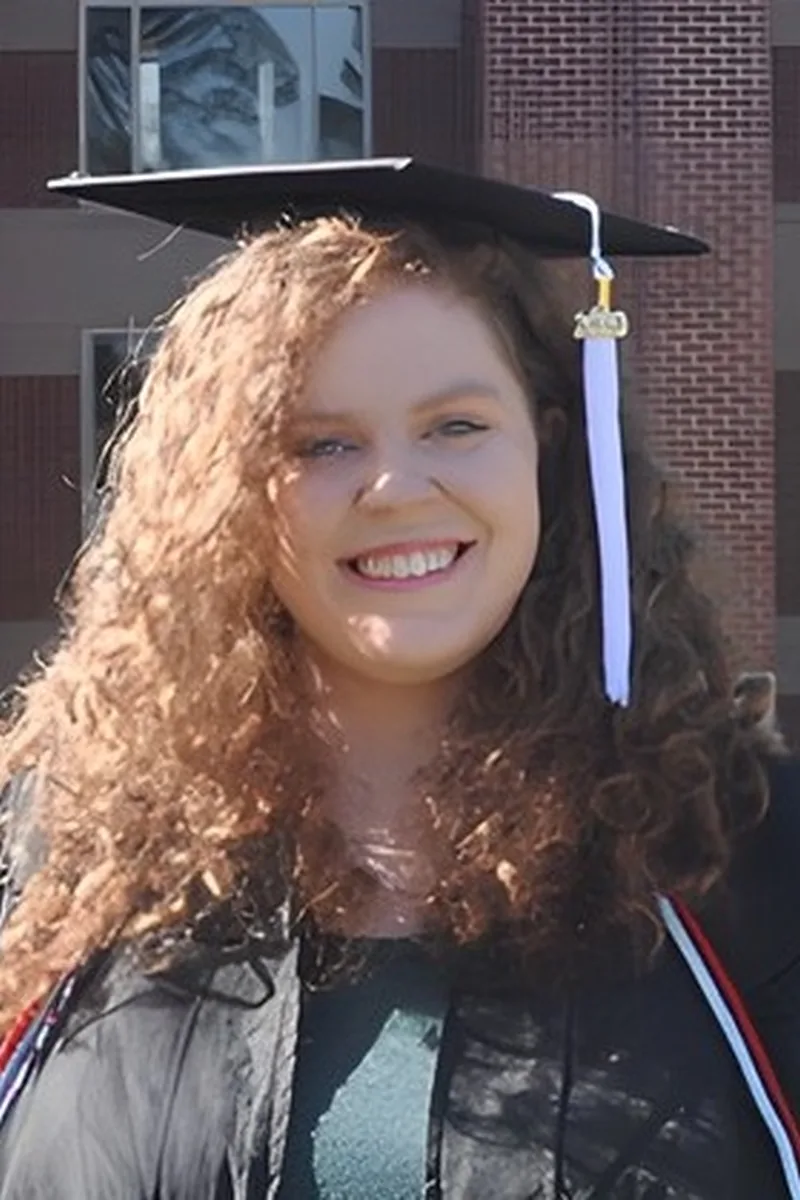
Between a history BA and a master's in history, Alison has spent years tracing the migration patterns, colonial legacies, and political boundary shifts that form the backbone of AP Human Geography's toughest units. She's especially strong at connecting those historical threads to geographic models — showing students why the Rimland theory or Ratzel's organic state concept emerged when and where they did, rather than treating them as standalone definitions. Holds a 5.0 rating.

Twelve AP classes and a math-focused mind at UChicago mean Felix approaches AP Human Geography's models — things like the von Thünen agricultural model or gravity model — with the quantitative intuition most social studies tutors lack. He's sharp at teaching students to decode the exam's data-heavy stimulus questions, reading population pyramids and development indicators with precision rather than guesswork. Rated 5.0 by students.
A UChicago BA and UBC master's degree — both in geography — plus a Fulbright research fellowship in Bulgaria mean Duncan has lived the discipline AP Human Geography introduces: migration, cultural landscapes, political boundaries, and spatial organization aren't abstract textbook units for him but the actual substance of his academic career. He teaches students to apply models like the von Thünen or demographic transition not as vocabulary to memorize but as tools for interpreting the stimulus maps and data sets the exam puts in front of them. Rated 5.0 by students.
Few tutors bring a more natural fit to AP Human Geography than someone trained in social anthropology at Harvard. Jorge digs into the spatial patterns behind migration, urbanization, and cultural diffusion with the same analytical lens he used studying human communities academically. He teaches students to think like geographers — reading landscapes, interpreting demographic models, and building arguments with data.
Economic development models, urbanization patterns, and the politics of agricultural land use sit at the intersection of Dana's economics expertise and AP Human Geography's core units. She teaches students to read spatial data critically and to write FRQ answers that link geographic concepts — like Rostow's stages or the demographic transition model — to specific real-world examples.
Environmental science training at the college level means James has spent real time with the spatial thinking, resource distribution patterns, and human-environment interactions that anchor AP Human Geography's toughest units — particularly agriculture, development, and sustainability. He connects concepts like Boserup's theory or the Green Revolution to actual ecological data rather than treating them as flashcard terms, which pays off on stimulus-based questions where students need to read landscapes, not just recall vocabulary. Rated 4.9 by students.
I am a graduate of The University of Colorado, Boulder and Harvard Kennedy School. I received my Bachelor of Arts in Economics and my Master in Public Policy with a focus on international and global affairs. Since graduation, I have worked in investment banking and management consulting, though I also have worked on government relations. While I tutor a broad range of subjects, I am most passionate about History, English Literature, and Math (namely algebra and pre-calc). In my experience helping students prepare for Standardized Tests, I like to focus on the writing and math assessments, as those tend to be challenging to many students. I believe in ensuring students are able to think independently and have the confidence to understand the material. I believe the subjects I tutor are necessary for students to succeed and I want to impart what I know to students. In my spare time, I enjoy reading about history and geopolitics, hiking, and writing.
Jacob's history degree and specialization in the American Gilded Age give him a sharp handle on the industrialization, urbanization, and migration patterns that dominate several AP Human Geography units. He teaches students to see models like von Thünen's agricultural land use or Rostow's development stages as historical arguments — frameworks built from real economic and political forces — which makes applying them on FRQs far more intuitive than rote memorization. Rated 4.9 by students.
Jenna's AP background spans multiple disciplines — AP English, AP Calculus, AP Environmental Science, AP U.S. Government — which means she's familiar with the cross-subject thinking AP Human Geography actually rewards, where a single question might pull from economics, politics, and environmental science simultaneously. She's particularly sharp at helping students decode the exam's multiple-choice stimulus materials, drawing on the same analytical reading skills that earned her a 1400 SAT and 31 ACT. Rated 4.9 by students.
Mikkel's biology degree with a biochemistry focus might seem like an odd fit for AP Human Geography, but the population ecology and resource distribution concepts he studied at Carleton map surprisingly well onto units covering the demographic transition model, Malthusian theory, and agricultural development patterns. He also brings strong Spanish fluency and broad social studies knowledge to the cultural geography and political organization units, where understanding how language and identity shape regional boundaries makes abstract models feel concrete.
Elena's Child Development studies at Vanderbilt give her a sharp understanding of how population dynamics, family structures, and cultural practices vary across regions — concepts that map directly onto AP Human Geography units covering population, migration, and cultural patterns. She pairs that with strong SAT performance (1540) and a knack for teaching younger students complex ideas in accessible ways, which translates well to breaking down dense models like the demographic transition or Zelinsky's migration framework for exam prep. Rated 5.0 by students.
Population pyramids, the Demographic Transition Model, spatial diffusion — AP Human Geography throws a lot of vocabulary at students and expects them to apply it to real-world scenarios on the FRQs. Liraz teaches students to think geographically, connecting concepts like urbanization patterns and cultural landscapes to places they already know about.
Testimonials
Because the right AP Human Geography tutor makes all the difference.
Average Session Rating – Based on 3.4M Learner Ratings
Practice AP Human Geography
Free practice tests, flashcards, and AI tutoring for AP Human Geography
Nearby AP Human Geography Tutors
Other Columbia Tutors
Related Social Studies Tutors in Columbia
Frequently Asked Questions
AP Human Geography explores how humans interact with their environment across eight main units: thinking geographically, population and migration patterns, cultural patterns and processes, political organization of space, economic patterns and processes, cities and urban land use, agriculture and rural land use, and human-environment interaction. The course emphasizes real-world applications, case studies, and understanding geographic perspectives on global issues. A tutor can help you master these concepts and develop the analytical skills needed to succeed on the exam.
The AP Human Geography exam consists of two sections: a 60-minute multiple-choice section with 60 questions, and a 75-minute free-response section with three essay questions. Success requires both quick recall of geographic concepts and the ability to apply them to unfamiliar scenarios. Tutors can help you develop efficient reading strategies for the multiple-choice section and teach you how to structure clear, evidence-based responses for the essays.
Many students struggle with distinguishing between similar concepts (like different types of migration or economic systems), applying geographic thinking to unfamiliar case studies, and managing time across both the multiple-choice and essay sections. Understanding map reading and spatial analysis can also be challenging without targeted instruction. A tutor can help you build conceptual clarity, practice applying frameworks to new situations, and develop a pacing strategy that works for you.
Score improvement depends on your starting point and how consistently you engage with tutoring. Students who work with a tutor typically see gains by closing knowledge gaps, learning test-specific strategies, and practicing with released exams. With focused preparation over several months—especially if you start early in the school year—many students move from scoring a 2 or 3 to a 4 or 5. The key is identifying your weakest units and practicing application of concepts to new scenarios.
An effective approach combines regular concept review (using practice questions and flashcards), case study analysis, and timed practice tests. Start by mastering the eight units one at a time, then move to mixed practice that requires you to apply concepts across units. Take full-length practice exams under timed conditions to build speed and identify weak areas. A tutor can help you create a personalized study schedule, prioritize high-impact topics, and provide targeted feedback on your essays.
The three FRQs typically ask you to define a concept, provide examples, and explain real-world applications. Start by identifying the geographic concept being tested, then structure your response with a clear definition, 2-3 relevant examples (often from different regions), and analysis of how the concept plays out globally. Many students lose points by providing examples without explanation. A tutor can teach you the FRQ format, help you practice writing under time pressure, and give you feedback on whether your responses are specific and analytical enough.
Columbia's 102 schools across 7 districts serve nearly 48,000 students, and many high schools offer AP Human Geography courses with dedicated teachers. However, personalized tutoring can complement classroom instruction by giving you one-on-one help with challenging concepts, customized practice, and test strategy coaching. Varsity Tutors connects you with expert tutors for students in Columbia who can work around your schedule and focus on your specific needs.
In your first session, a tutor will assess your current understanding of AP Human Geography concepts, identify which units or question types are most challenging for you, and learn about your goals (improving a specific score, mastering particular topics, or building overall confidence). You'll discuss a personalized study plan and get started with targeted instruction or practice. Most students find it helpful to bring recent practice test results or assignments so the tutor can see exactly where you need support.
Let’s find your perfect tutor
Answer a few quick questions. We’ll recommend the right plan and match you with a top 5% tutor.