Award-Winning Math Tutors
serving Philadelphia, PA
Math
Tutors in Philadelphia
Private 1-on-1 tutoring, weekly live classes for academic support, test prep & enrichment, practice tests and diagnostics, and more to elevate grades and test scores.
Based on 3.4M Learner Ratings
UniversitiesSchools & Universities
DeliveredHours Delivered
ProficiencyGrowth in Proficiency
Who needs tutoring?
No obligation. Takes ~1 minute.

A biology major at Penn, Shayan brings a scientist's precision to math — breaking down word problems into variables, teaching proportional reasoning through real-world dosage calculations, and making algebra feel like a tool rather than an abstract exercise. His tutoring spans everything from fractions and ratios up through calculus, and he's rated 5.0 by students.
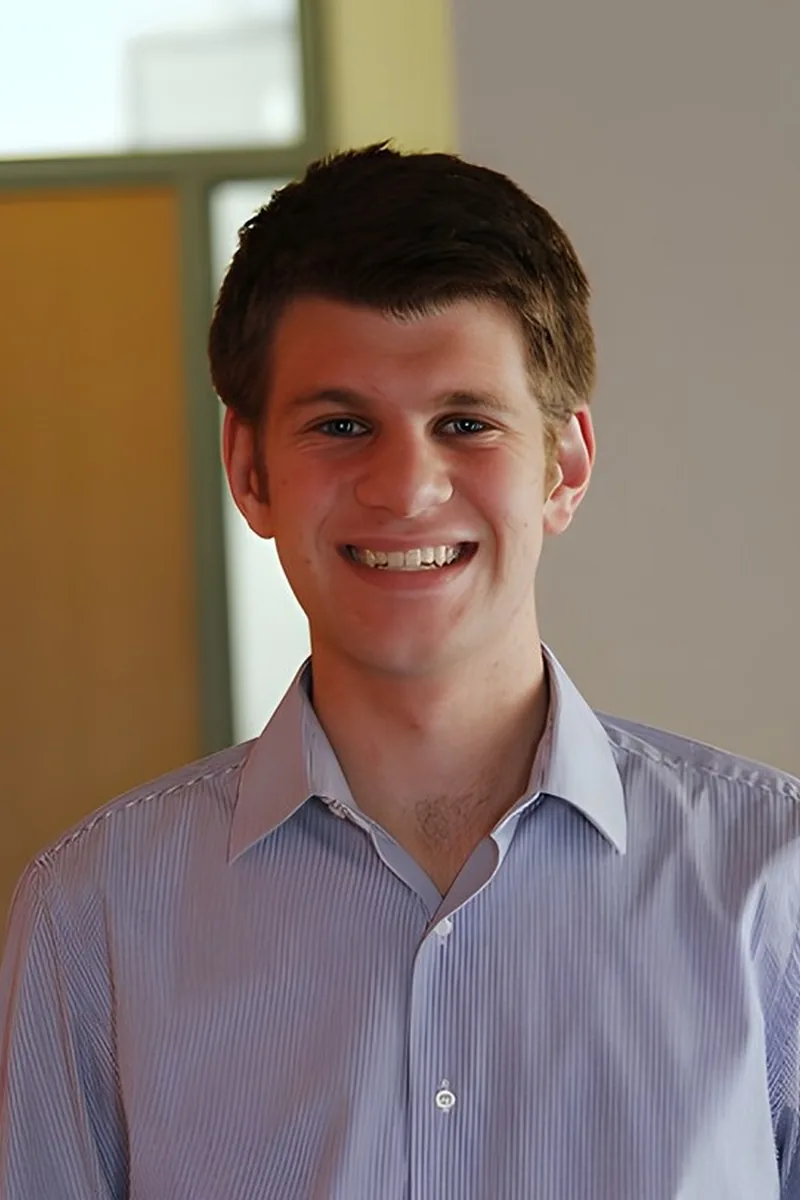
Kevin treats math as a language that rewards understanding over memorization, whether a student is working through fractions or tackling introductory calculus concepts. His 34 ACT composite reflects strong quantitative reasoning, and his economics coursework at Penn keeps him applying mathematical thinking to real problems every day.
From simplifying algebraic expressions all the way through integration by parts in AP Calculus BC, Kate covers the full span of middle school and high school math. Seven years of tutoring means she's seen where students consistently get stuck — like the jump from arithmetic thinking to variable thinking — and she knows how to make that transition click.
While Victoria's primary training is in the humanities, her SAT composite of 1520 required strong quantitative performance, and she tutors foundational math concepts like proportional reasoning, basic algebra, and arithmetic fluency. She approaches math the way an anthropologist approaches fieldwork — methodically, with attention to why each step matters before moving to the next one.
Whether a student is working through fraction operations in middle school or tackling precalculus concepts, Nishad connects each new math skill to the reasoning behind it so that procedures actually stick. His premed and SAT math background means he's comfortable across the full K-12 spectrum, from proportional reasoning to polynomial behavior. He's especially effective at diagnosing exactly where a student's understanding breaks down and rebuilding from that point.
From long division in elementary school to limits in calculus, Simon covers the full math pipeline and knows exactly where common gaps hide — fractions that never solidified, negative-number rules that stay shaky, or function notation that feels abstract. He diagnoses the specific sticking point first, then rebuilds understanding from that spot forward so new material actually makes sense.
Growing up with two university math professors as parents, Matthew absorbed how to teach concepts like proportional reasoning, integer operations, and basic functions long before he started tutoring. He breaks problems into visual, step-by-step logic so students understand the 'why' behind each procedure — not just the shortcut to an answer. Rated 4.9 by students.
A chemistry degree requires serious math fluency — from algebraic manipulation in stoichiometry to logarithmic reasoning in pH calculations — and Kathleen uses those real-world applications daily in her classroom. She's particularly effective at connecting abstract math procedures to tangible problems so that formulas feel like tools rather than things to memorize.
From basic fraction operations to derivatives, Mary has tutored math at every level and knows exactly where common gaps form — like the jump from arithmetic to algebraic thinking, or the leap from memorizing formulas to understanding why they work. Her engineering background at Cornell means she can show students how each concept connects to real problems, making abstract ideas feel concrete.
Two years teaching algebra and geometry in a charter high school — plus managing the school's entire math tutorial program — gave Wamweni a clear picture of where students typically lose the thread, whether it's distributing negatives or setting up word problems. She tackles those specific sticking points directly, building fluency through practice that actually connects to the reasoning behind each step. Rated 5.0 by students.
Kristin's science background means she treats math as a tool that has to actually work — not just produce correct homework answers. She breaks down algebraic reasoning and foundational calculus concepts by connecting them to real quantitative problems, which tends to make the "why do I need this" question answer itself.
This isn't Hannah's core discipline, but her 1590 SAT required strong quantitative reasoning, and she's comfortable walking younger students through foundational concepts like fractions, ratios, and basic equation-solving. She approaches math the way a writing tutor would — by making sure each step in a solution actually makes sense to the student before moving on.
From basic algebra through differential equations, Steve has taught math across nearly every level — and his dual engineering degrees mean he always has a real-world application ready to explain why a concept matters. He's especially sharp at identifying the specific algebraic or arithmetic gap that's causing a student to struggle with newer material, then closing it so everything downstream makes more sense.
Whether a student is wrestling with fractions or working through early algebra, Kirstie connects math concepts to concrete reasoning so the logic sticks. Her teaching spans elementary through calculus, so she knows exactly which foundational gaps cause trouble later — and addresses them before they compound.
Katherine has taught math at every level from elementary arithmetic through Algebra 2, first at a community center and then through Penn's West Philadelphia Tutoring Project. That range means she can spot exactly where a gap in foundational skills — whether it's fractions, order of operations, or number sense — is causing trouble in more advanced work. Her 1590 SAT score speaks to the depth of her own quantitative ability.
From fraction operations in middle school to limits and derivatives in high school, Zachary covers the full K-12 math spectrum. His approach zeroes in on the specific step where a student's reasoning breaks down — whether that's setting up a word problem, manipulating algebraic expressions, or interpreting a graph — and rebuilds understanding from that exact point. He's rated 5.0 by students.
From fraction operations in elementary school to derivatives in calculus, Annie has taught math across a wide range of levels. She zeroes in on the conceptual gap causing the problem — whether that's not understanding what division really means or losing track of variables in multi-step equations — and addresses that root issue so the rest starts clicking. Rated 5.0 by students.
From arithmetic fundamentals through calculus and trigonometry, Matt covers the full math pipeline and knows where students typically lose the thread — often at the jump from concrete numbers to abstract variables. He teaches each new concept by anchoring it to something the student already understands, whether that's connecting slope to rate of change or showing how fractions behave inside algebraic expressions.
From fraction operations to pre-algebra word problems, Emma tackles the specific spots where younger math students tend to lose confidence. Her science training means she's constantly using math as a tool — converting units, reading graphs, solving for unknowns — so she can show students why these skills actually matter outside a worksheet. She scored a 32 ACT composite, reflecting strong quantitative fluency.
Balancing a triple major at Penn in Political Science, Economics, and Psychology means Alessia uses math daily — from statistical models to economic proofs — and she brings that applied perspective to topics like fractions, ratios, and algebraic reasoning. She's especially sharp at translating word problems into equations, a skill that trips up many students who understand the arithmetic but freeze when it's buried in context. Rated 5.0 by students.
Molecular biology coursework is quietly math-heavy — Annabel's undergraduate training required everything from logarithmic pH calculations to statistical analysis of experimental data, giving her a fluency with applied math that makes abstract operations feel grounded. She scored a 1600 on the SAT and teaches across the full K-12 range, but she's particularly sharp at showing students how proportional reasoning and algebraic thinking connect to problems they can actually visualize.
A philosophy degree trained Keenan to build careful logical arguments; a CS master's at Penn trained him to think in precise, formal systems. That combination makes him especially effective at breaking down math problems — whether arithmetic, fractions, or early algebra — into clear, sequential reasoning that students can follow and reproduce on their own.
Rebecca's biology degree required heavy quantitative coursework — statistics, calculus, and the kind of applied math that shows students why equations actually matter outside a textbook. She breaks down word problems and algebraic reasoning by connecting abstract steps to concrete scenarios, making the logic behind each solution visible rather than mechanical.
Stephanie's strengths are squarely in language and literature — her degrees are in Cinema/Media Studies and English — but her 1510 SAT required serious math performance, and she's tutored calculus and algebra alongside her humanities subjects for years. She's particularly useful for students who struggle with math word problems or test-prep math, where the real challenge is often reading comprehension and logical sequencing rather than raw computation. Rated 4.9 by students.
While English is William's primary expertise, his early tutoring career started with both reading and math, giving him experience breaking down arithmetic, pre-algebra, and foundational problem-solving for students who need individualized pacing. He's particularly effective with students whose math anxiety gets in the way of the skills they already have.
Claire's linguistics training at Brown sharpened her ability to decode symbolic systems, which translates naturally to breaking down math problems into logical steps. She's particularly effective at teaching students how to read word problems carefully — identifying what's actually being asked before jumping into calculations. Her 1590 SAT score speaks to her own quantitative fluency.
Linguistics trains you to see hidden structure — the rules governing how sounds combine, how sentences parse, how meaning shifts with a single morpheme — and William applies that same pattern-recognition instinct to math, where noticing structural similarities between problems matters more than memorizing formulas. He tutors pre-algebra through calculus and scored a 1580 SAT and 35 ACT, so the quantitative foundations are solid. Rated 5.0 by students.
Algebra is Sarah's favorite subject to teach because she sees it as the most intuitive branch of math — the place where patterns, logic, and problem-solving instincts all come together. With a Penn math degree and a 35 ACT, she covers everything from elementary arithmetic through college-level calculus, but her real skill is getting students to trust their own reasoning instead of relying on memorized steps.
Biomedical engineering at Yale means Jonathan lives in math daily — differential equations modeling blood flow, linear algebra underpinning imaging systems, statistics driving clinical research — so he teaches concepts like derivatives and integrals as tools with real purpose behind them. His 1550 SAT and 5.0 tutoring rating back up what his coursework suggests: he knows this material cold and can break it down clearly across levels, from pre-algebra fundamentals through AP Calculus BC.
From pre-algebra through calculus, Larkin sees math as one continuous story where each concept builds on the last — and when a student is struggling, the real issue is usually a gap from an earlier chapter. His physics degree and engineering master's mean he can explain not just how to solve a problem but why the method works, which makes the next topic easier to learn.
Scoring a 35 ACT and a 1540 SAT required Cindy to master math concepts from proportional reasoning through precalculus-level functions and trigonometry. She's particularly effective at connecting abstract procedures — like solving systems of equations or interpreting graphs — back to what the problem is actually asking, which clears up the confusion that slows most students down.
From elementary arithmetic through AP Calculus BC, Spencer covers the full math pipeline and knows exactly where the stumbling blocks hide — fractions turning into proportions, proportions turning into linear equations, linear equations turning into functions. His engineering training means he can always answer the question students actually care about: "When would I ever use this?"
From arithmetic foundations through calculus, Jackson covers the full math pipeline and pinpoints exactly where a concept stopped making sense. His approach treats each problem as a puzzle with identifiable clues — he teaches students to read a question the way an instructor wrote it, spotting what's really being tested before jumping into computation. That analytical habit tends to unlock progress faster than drilling extra practice sets.
Every science course Daniel has taken — from undergraduate biology to medical school pharmacology — required fluency in math fundamentals like ratios, unit conversions, algebraic manipulation, and basic statistics. He explains math concepts by connecting them to real problems, whether that's calculating a drug dosage or interpreting a graph. That practical framing tends to click for students who've struggled with abstract-only instruction.
From basic fraction operations to the logic behind algebraic proofs, Erik covers the full range of K–12 math with the depth of someone who went on to study real analysis and physics at the university level. He unpacks each concept until the reasoning clicks, not just the procedure. His 1510 SAT score speaks to the kind of precision and fluency he brings to quantitative problem-solving.
Biostatistics and public health research forced Selamawit to use math as a daily tool — calculating confidence intervals, interpreting regression output, and modeling real data sets. That applied perspective shapes how she teaches everything from fraction operations to algebraic reasoning, always tying procedures back to why the math works and where students will actually use it.
From factoring polynomials in algebra to integration techniques in calculus, Ade covers the full math pipeline and spots exactly where a concept stopped making sense. His 1510 SAT and 34 ACT reflect genuine comfort with quantitative reasoning at every level. He unpacks each problem step by step, making sure students understand the logic before moving on.
Whether a student is stuck on long division or working through derivatives, Joyce identifies the exact concept causing the bottleneck and rebuilds understanding from that point forward. Her background spans elementary arithmetic through college-level calculus and statistics, so she connects earlier math skills to the more advanced topics students will encounter next.
Jennifer teaches math across algebra and calculus, breaking abstract problems into concrete, step-by-step reasoning rather than rote formula memorization. Her directing background gives her an unusual skill: she watches how a student thinks through a problem in real time and pinpoints exactly where the logic breaks down, then rebuilds from that spot.
From arithmetic foundations through algebra and early calculus, Sidharth connects each new math concept to the reasoning behind it so students aren't just following steps. His computer science training at Penn means he's constantly applying mathematical thinking — logic, functions, patterns — and he brings that applied perspective into every session.
Testimonials
Because the right Math tutor makes all the difference.
Average Session Rating – Based on 3.4M Learner Ratings
Practice Math
Free practice tests, flashcards, and AI tutoring for Math
Other Philadelphia Tutors
Related Math Tutors in Philadelphia
Frequently Asked Questions
Philadelphia students often struggle with the transition from memorizing procedures to understanding the concepts behind them—especially in algebra, where word problems and multi-step equations require both strategic thinking and accurate computation. Many students also find it difficult to show their work clearly, connect different problem-solving strategies, and build confidence when facing unfamiliar problem types. With Philadelphia's average student-teacher ratio of 14.4:1, personalized 1-on-1 instruction can help students slow down, ask questions without hesitation, and develop a deeper grasp of foundational skills.
Math anxiety often stems from feeling rushed or unsupported in a classroom setting. Personalized tutoring creates a low-pressure environment where students can work through problems at their own pace, ask questions freely, and celebrate small wins. Tutors help students recognize patterns, understand why methods work, and build a sense of competence—shifting the mindset from "I can't do math" to "I can figure this out." Over time, this confidence carries over into classroom performance and standardized testing.
Philadelphia's 91 school districts use various textbooks and teaching approaches, from traditional to inquiry-based methods. Varsity Tutors connects you with tutors who understand multiple curriculum frameworks and can adapt their teaching to match your school's approach—whether that's Singapore Math, Eureka Math, or your district's specific program. This alignment ensures that tutoring reinforces what's happening in class while filling gaps and deepening understanding.
Showing work isn't just about getting credit—it's a window into a student's thinking process and a way to catch errors early. Tutors help students develop clear, organized problem-solving strategies by modeling how to break complex problems into steps, label their work, and explain their reasoning. This skill becomes especially critical in algebra, geometry proofs, and standardized tests like the SAT and ACT, where partial credit and logical reasoning matter.
Word problems require students to translate language into mathematical operations—a skill that doesn't come naturally to everyone. Tutors teach students to identify key information, visualize the problem (using diagrams or models), and choose the right strategy before diving into calculations. By practicing this systematic approach repeatedly, students build the pattern recognition skills needed to tackle unfamiliar scenarios with confidence.
The first session is about understanding where your student is and what they need. Tutors will assess current skills, identify specific challenges (whether it's graphing, fractions, or proofs), and learn about your student's learning style and goals. From there, they'll create a personalized plan that builds on strengths while addressing gaps—ensuring every session is focused and productive.
Graphing and proofs require students to visualize abstract concepts and think logically—skills that benefit enormously from personalized guidance. Tutors break these topics into manageable steps, use visual tools and manipulatives to build intuition, and provide plenty of practice with immediate feedback. This approach helps students move from confusion to confidence, understanding not just how to graph or write a proof, but why each step matters.
Varsity Tutors matches you with expert tutors who have experience teaching the specific topics and grade levels your student needs—whether that's elementary arithmetic, algebra, geometry, or advanced placement courses. You can discuss your student's challenges, learning style, and goals upfront, and tutors will tailor their approach accordingly. The goal is a strong fit that helps your student not just improve grades, but develop lasting confidence in math.
Let’s find your perfect tutor
Answer a few quick questions. We’ll recommend the right plan and match you with a top 5% tutor.