Award-Winning Spanish Tutors
serving Eugene, OR
Spanish
Tutors in Eugene
Private 1-on-1 tutoring, weekly live classes for academic support, test prep & enrichment, practice tests and diagnostics, and more to elevate grades and test scores.
Based on 3.4M Learner Ratings
UniversitiesSchools & Universities
DeliveredHours Delivered
ProficiencyGrowth in Proficiency
Who needs tutoring?
No obligation. Takes ~1 minute.

Learning Spanish grammar often feels like memorizing tables of conjugations without understanding why the subjunctive exists or when "por" becomes "para." Sarah teaches Spanish at every level from beginner through advanced and connects grammatical rules to the logic behind them, so patterns click instead of just being drilled. Her background in English grammar and syntax gives her a knack for explaining how Spanish structure differs from — and sometimes mirrors — what students already know.
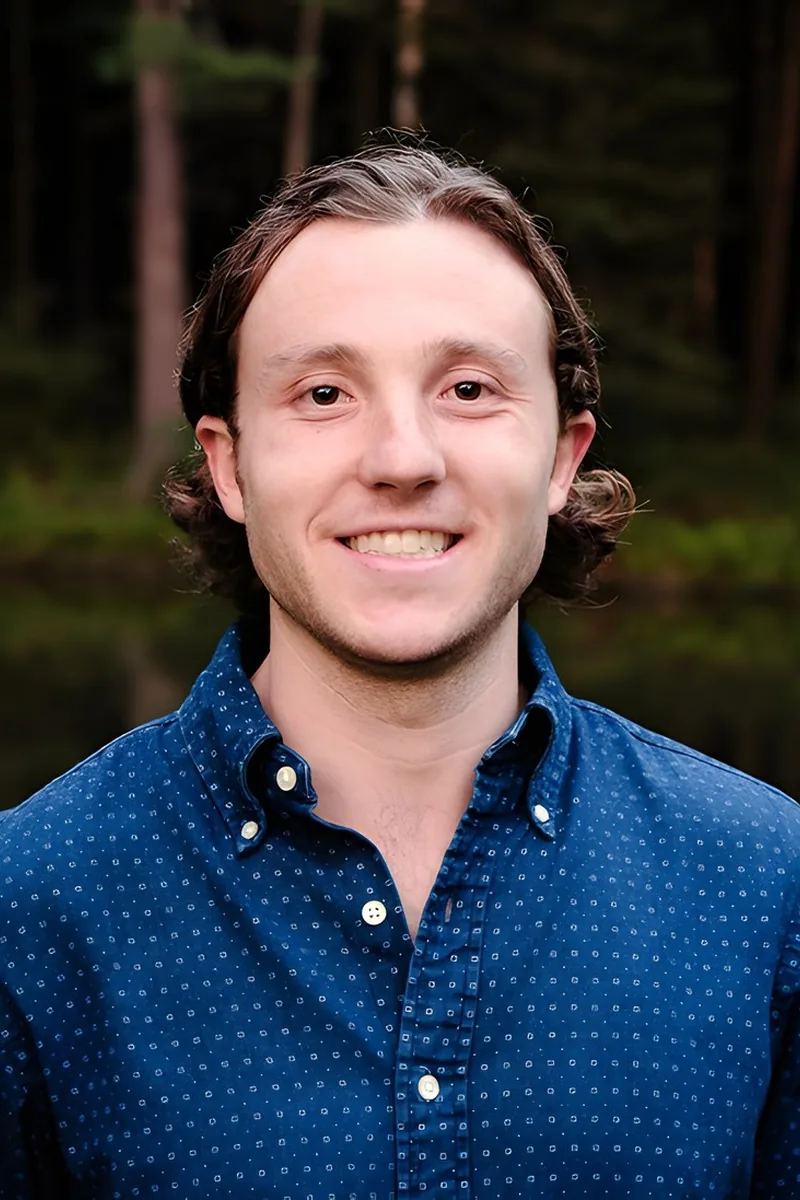
Foundational vocabulary and verb conjugations matter, but Dylan pushes students to actually use Spanish before they feel fully ready — because that productive discomfort is where fluency grows. He's lived and traveled extensively in Spanish-speaking communities, which means he teaches not just textbook grammar but the idiomatic expressions and cultural context that make the language real.
Teaching across four cities in four different states exposed Claire to diverse communities and communication styles — useful context for anyone learning a second language. Her psychology background gives her a sharp read on how memory and repetition actually work, which she applies to drilling Spanish vocabulary and verb conjugation until recall becomes automatic. Two master's degrees in education mean she knows how to sequence grammar lessons so each new concept builds on the last.
Saz minored in Spanish and spent time teaching in Peru, which means she knows the language from both the classroom and real-world immersion sides. She tackles tricky areas like subjunctive conjugations, ser vs. estar distinctions, and pronoun placement by connecting grammar rules to how native speakers actually use them.
Graduating summa cum laude from a liberal arts college means Heather spent four years toggling between disciplines — sociology, writing, humanities — which built the kind of cross-disciplinary thinking that makes picking apart Spanish grammar feel like second nature. She zeroes in on sentence structure and verb agreement by connecting them to patterns students already recognize from English, turning unfamiliar conjugations into something logical. Rated 5.0 by students.
Having studied Latin American, Caribbean, and Iberian cultures at the university level, Laura brings real-world context to Spanish grammar and vocabulary that a textbook alone can't provide. She digs into verb conjugation patterns — preterite vs. imperfect, subjunctive triggers — by connecting them to authentic readings and cultural scenarios that make the rules intuitive.
Studying bilingual elementary education means Alicia doesn't just speak Spanish — she's trained in how people actually acquire a second language. She breaks down tricky grammar concepts like ser vs. estar, preterite vs. imperfect, and subjunctive triggers in ways that build real comprehension instead of rote conjugation charts.
Beyond classroom study, Flavia immersed herself in Spanish through her award-winning research on Chilean literary resistance under Pinochet, which required reading poetry, political documents, and critical essays in the original language. That real-world engagement with Spanish texts gives her a feel for the language that goes deeper than conjugation drills. She's comfortable covering everything from foundational grammar through reading comprehension and conversational practice.
As a Spanish minor at USC, Nikita uses the language in academic settings regularly, which means she can explain tricky grammar concepts like the subjunctive mood or ser-versus-estar distinctions with real context rather than rote conjugation charts. She connects vocabulary and grammar to conversational practice so that students build both accuracy and confidence when speaking. Rated 5.0 by students.
Verb conjugation charts only go so far without understanding when to use preterite versus imperfect or why the subjunctive keeps showing up in everyday speech. Rebecca teaches Spanish through all three levels and emphasizes the logic behind grammar rules, so students internalize patterns instead of relying on rote memorization for every new tense.
For students just getting started with Spanish, Ben covers the fundamentals — present-tense conjugation, ser vs. estar, noun-adjective agreement — using repetition techniques grounded in his psychology background. He keeps vocabulary practice active and contextual, building sentences from day one instead of drilling isolated word lists.
Learning Spanish herself — through university coursework, a semester in Spain, and time in Panama conducting field research — Kelsey knows exactly where English speakers tend to stumble, from ser versus estar to the subjunctive mood. She also worked in a bilingual English/Spanish elementary classroom, which gave her practical experience teaching grammar and vocabulary at different proficiency levels. She makes connections between English and Spanish structures that take the mystery out of tricky conjugations.
Marshall became fluent in Spanish through two immersion experiences — one in Orizaba, Mexico and another in Quito, Ecuador — then came back and led Spanish II lab sessions and tutored students in Spanish I and II at Juniata College. That combination of real-world fluency and structured teaching means he can explain tricky grammar concepts like the subjunctive mood or ser versus estar with examples that actually stick. His biology minor in Spanish also exposed him to academic and technical vocabulary most tutors never encounter.
I'm teaching is as important as understanding the subject itself.
I am a 2014 graduate of Vassar College, in Poughkeepsie, NY, where I majored in Cognitive Science and minored in Spanish/Hispanic Studies. In college, I played two years of DIII lacrosse, sang in an a cappella group, studied abroad for a semester in Madrid, and was the co-chair of my major committee. With a faculty member in the physics department, I worked on a project analyzing the intersection of physics education, cognitive science, and contemplative practice (e.g., meditation). My senior thesis was a critical evaluation of the goals and results of neuroimaging studies purportedly studying "the self."
I am passionate about helping students when they are feeling stuck or frustrated, especially in math classes. For 2 years, I have tutored Algebra, Geometry, and Pre-Calculus. I have found it is most helpful to reteach concepts in a setting where students can ask questions along the way. When students feel comfortable asking for help and can work through adversity, they are better able to succeed in the classroom and learn valuable problem-solving skills they can use in the future.
Heavy math and science training — calculus, chemistry, statistics — means Channing thinks in rules, patterns, and logical structures, which turns out to be surprisingly useful for tackling Spanish conjugation systems and grammatical agreement. He approaches the language the way he'd approach a proof: identify the pattern, understand why it works, then practice until it's automatic.
Having studied Spanish through the advanced level — Spanish 2, 3, and 4 — Sarah can walk students through tricky grammar concepts like subjunctive mood, preterite vs. imperfect, and ser vs. estar with clear, practical explanations. She pairs grammatical accuracy with conversational practice so that conjugation charts actually translate into usable language skills.
Kate teaches Spanish at multiple levels, from verb conjugation fundamentals in Spanish 2 through the subjunctive mood and complex sentence structures in Spanish 4. Her engineering background gives her a systematic way of breaking down grammar rules that clicks for students who think analytically.
Six months living in Spain turned Rebecca from a classroom Spanish learner into a fluent speaker, and that transition shapes how she teaches the language now. She breaks down verb conjugations, pronoun placement, and subjunctive triggers by connecting them to how Spanish is actually spoken in daily life — not just how it appears in a textbook. Rated 4.5 by students.
Having taught across four levels of Spanish, Ivan knows exactly where students tend to stall — usually around the subjunctive mood and the difference between preterite and imperfect tense. He breaks down verb conjugation patterns systematically and builds reading comprehension through context rather than word-for-word translation.
Jake has tutored Spanish across multiple levels and speaks the language well enough to teach everything from verb conjugation patterns in the preterite and imperfect to reading comprehension strategies for literary passages. His approach emphasizes understanding the logic behind grammar rules so students can apply them flexibly, not just memorize charts.
Samantha teaches Spanish across multiple levels, from foundational verb conjugations and noun-adjective agreement through advanced grammar like the subjunctive mood and complex sentence structures. Her analytical approach — honed through a Duke science education — treats language acquisition as a system to decode rather than a list to memorize.
Isaiah teaches Spanish with an emphasis on building real comprehension, not just conjugation drills. Whether a student is wrestling with the subjunctive mood or struggling to keep preterite and imperfect straight, he connects grammar rules to how Spanish is actually spoken and written. He covers Spanish 1 through 3 and scored high enough on the SAT Subject Test in Spanish with Listening to tutor it.
Most Spanish classes teach grammar rules in isolation — here's the preterite, here's the subjunctive — without showing how they connect in real conversation or writing. Sarah double-majored in Spanish and approaches the language as a system, linking verb tenses to the communicative situations where they actually matter so that conjugation charts start making intuitive sense.
From Spanish 1 verb conjugations through Spanish 4 literary analysis, Pinelopi has tutored every level of the language and knows exactly where students tend to stall — usually around the subjunctive mood and indirect object pronouns. She breaks these tricky structures down into patterns that stick, building real fluency rather than rote translation skills.
Heather's Spanish teacher trusted her enough to ask her to tutor a classmate — which says more about her command of the language than any credential list. She breaks down verb conjugations, sentence structure, and vocabulary acquisition in ways that stick, whether a student is just starting with present tense or wrestling with the subjunctive mood.
Seven years of formal Spanish study plus a year living in Spain gave Matthew the kind of fluency that covers both grammar rules and the intuitive feel for how the language actually works. He tackles everything from subjunctive mood and preterite-vs-imperfect distinctions to building conversational confidence. Students get someone who learned Spanish as a second language and remembers exactly where the sticking points are.
Tony earned his bachelor's degree in Spanish and continued using the language throughout his Latin American Studies master's program, so his command of the language spans academic writing, literary analysis, and everyday conversation. He tackles tricky grammar concepts like the subjunctive mood and ser-versus-estar distinctions by grounding them in real usage patterns rather than rote conjugation charts. Rated 5.0 by students.
Testimonials
Because the right Spanish tutor makes all the difference.
Average Session Rating – Based on 3.4M Learner Ratings
Nearby Spanish Tutors
Other Eugene Tutors
Related Languages Tutors in Eugene
Frequently Asked Questions
Varsity Tutors matches Eugene students with expert Spanish tutors for 1-on-1 instruction. We pair each student with a tutor based on their specific needs, learning style, and goals.
Whether you need homework help, exam prep, or want to get ahead, our Spanish tutors are ready to help.
Common challenges include gaps from earlier material, difficulty with specific concepts, and trouble applying learning to new problems. These issues can snowball quickly in Spanish.
A tutor identifies where you're stuck, fills in gaps, and provides targeted practice. The 1-on-1 format means you get help exactly where you need it.
Tutors work with your student's actual coursework—homework assignments, class notes, and upcoming tests. This keeps tutoring directly relevant to what's happening in the classroom.
When you share information about your student's school and curriculum, we can match you with a tutor who has relevant experience.
All tutors complete background checks, credential verification, and teaching evaluation. Many of our Spanish tutors hold advanced degrees or have years of teaching experience.
You can review tutor profiles to find someone with the right background for your student's level and needs.
Many students see improved grades within a few weeks, along with better understanding of Spanish concepts and more confidence tackling challenging material.
Tutors track progress and adjust their approach to ensure continued improvement.
Most students benefit from 1-2 sessions per week. More frequent sessions help if your student is significantly behind or has an important exam coming up.
Your tutor can recommend a schedule based on your student's specific situation and goals.
Tutoring is purchased in packages of hours, with rates varying by tutor experience. Varsity Tutors offers several options to fit different budgets and needs.
You can discuss pricing during your consultation to find what works best.
Your tutor will assess where your student is, discuss goals, and start working on priority areas. Most students bring current homework or upcoming test material to focus on.
By the end, you'll have a clear sense of how the tutor can help and a plan for moving forward.
Let’s find your perfect tutor
Answer a few quick questions. We’ll recommend the right plan and match you with a top 5% tutor.