Award-Winning Spanish Tutors
serving Youngstown, OH
Spanish
Tutors in Youngstown
Private 1-on-1 tutoring, weekly live classes for academic support, test prep & enrichment, practice tests and diagnostics, and more to elevate grades and test scores.
Based on 3.4M Learner Ratings
UniversitiesSchools & Universities
DeliveredHours Delivered
ProficiencyGrowth in Proficiency
Who needs tutoring?
No obligation. Takes ~1 minute.

Learning Spanish grammar is a lot like learning English grammar from scratch — verb conjugations, sentence structure, and agreement rules all need to click before conversation feels natural. Peter's English Education background gives him a strong framework for teaching language mechanics, and he applies that same structured approach to Spanish vocabulary building, verb tenses, and reading comprehension.
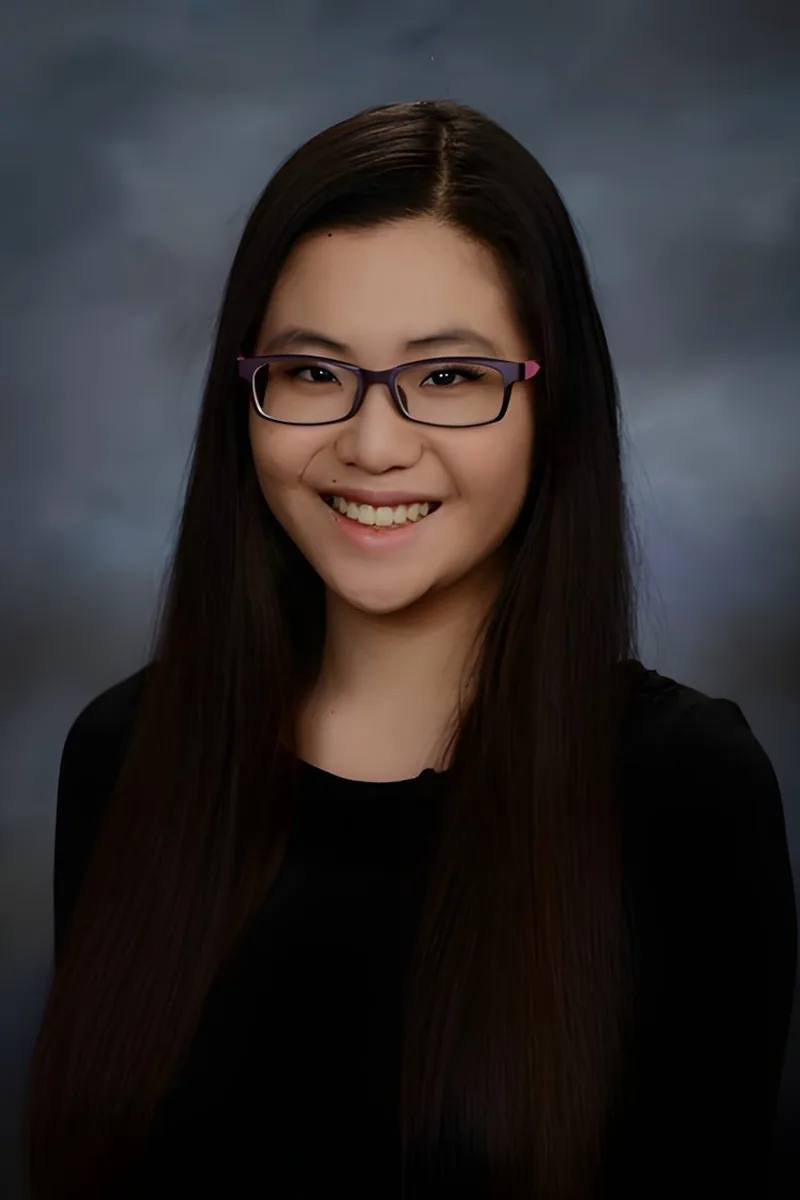
Cynthia is minoring in Spanish at Vanderbilt, which means she's actively immersed in the language — conjugation patterns, subjunctive mood, reading comprehension — on a daily basis. She connects grammar concepts to real conversational use so students internalize rules instead of just drilling verb charts.
Between his Ohio State specialization in Spanish, his work as a courtroom interpreter, and years of direct client communication in legal and financial settings, Trace uses Spanish the way most people use their first language. He tailors lessons to each student's level — whether that means nailing ser versus estar for beginners or polishing subjunctive usage and literary analysis for advanced learners.
I'm a recent college graduate with degrees in Biological Sciences and Russian from Ohio University. During my time there, I tutored students in a variety of subjects, including biology, chemistry, and Spanish. In addition, I worked as both a peer advisor and teaching assistant, which gives me insight into the learning strategies and study skills that students need to succeed. As a tutor, I like to focus on doing actual problems with students because it is the most effective way to immediately identify their strengths and weaknesses and to address them. In my free time, I like to lift weights, read books, and spend time with my friends.
Special education training sharpens one specific skill that matters in language learning: breaking complex tasks into smaller, sequenced steps a student can actually follow. Patrick applies that scaffolding instinct to Spanish grammar — building from present-tense regulars through stem-changers and into preterite — so each new rule feels like a natural next step rather than an overwhelming pile of exceptions. His psychology background also gives him a read on when a student needs more repetition versus when they're ready to move on.
Conjugation tables and vocabulary lists only go so far — Lillian teaches Spanish by building sentences around real contexts, so students internalize when to use the preterite versus the imperfect or why "ser" and "estar" aren't interchangeable. Her structured, analytical approach to grammar appeals especially to students who think more like scientists than poets.
Crystal's background in ESL instruction — she's pursuing a Master's in ESL through NKU's Teacher as Leader program — means she understands the specific hurdles English speakers face when picking up a new language's grammar and sentence patterns. She applies that second-language acquisition lens to Spanish vocabulary building and verb tenses, making the logic behind the language click. Rated 5.0 by students.
Sunay completed three years of Spanish coursework and is comfortable tutoring students in Spanish 1 through 3 — covering verb conjugations, noun-adjective agreement, reading comprehension passages, and basic conversational structures. He takes a structured approach to grammar drills, connecting each rule to practical usage so vocabulary and syntax stick together rather than floating as isolated flashcard facts.
Studying linguistics at the University of Vermont gave Alyssa a deep understanding of how languages are structured — verb conjugation patterns, pronoun usage, and the logic behind subjunctive mood all click faster when you see the underlying system. She applies this same scaffolding approach to Spanish, connecting vocabulary and grammar to students' existing interests in music, food, or culture so new material actually sticks.
Having studied Spanish through advanced levels, John tackles the grammar structures — subjunctive mood, preterite vs. imperfect, indirect object pronouns — that trip students up most often. He breaks conjugation patterns into logical systems so students can produce correct forms on the fly instead of relying on memorization tables.
Farrah teaches Spanish across four levels, which means she understands how early gaps in conjugation or sentence structure snowball into bigger problems later. Whether a student is wrestling with ser versus estar or navigating the subjunctive mood, she connects grammar rules to conversational patterns so the logic sticks. Her systematic approach turns Spanish from a memorization exercise into something students can actually produce on their own.
Kelsey majored in Spanish, so the language isn't a side skill — it's the center of her academic training, from advanced composition to literary analysis. She leans heavily on drills and repetition to lock in conjugation patterns and vocabulary, an approach that builds the kind of automatic recall students need when they're actually speaking or writing under pressure.
Earning a bachelor's degree in Spanish means Grace didn't just take a few semesters of the language — she studied it through advanced grammar, composition, and literary analysis across her entire undergraduate career. Her early childhood education training also sharpens how she explains concepts like subjunctive triggers or ser versus estar, breaking them down with the kind of scaffolded clarity that makes complex ideas accessible. Rated 5.0 by students.
Timothy teaches Spanish across multiple levels — from foundational conjugation patterns in the present tense to the subjunctive mood and complex sentence structures that trip up advanced students. His approach leans on reading and writing as tools for internalizing grammar, not just memorizing charts. Students consistently rate him 5.0.
While Spanish isn't Alice's primary credential, her experience teaching ESL/ELL gives her a sharp understanding of how language acquisition actually works — the grammar patterns, the vocabulary-building strategies, the way reading and writing reinforce each other. She applies that structured, language-aware approach to Spanish learners tackling verb conjugations, sentence construction, and reading comprehension.
Teaching Spanish across every level from kindergarten through adult conversation has given Kathryn an unusually clear sense of where students get stuck — verb conjugation patterns, gendered nouns, the subjunctive. She breaks these grammar hurdles into manageable pieces and reinforces them through reading and writing exercises, not just rote drills. Her 5.0 rating speaks to how well that approach lands.
Biology majors spend four years memorizing Latin and Greek roots — a habit that turns out to be surprisingly useful for building Spanish vocabulary, since so many medical and scientific terms share etymological DNA with everyday Spanish words. Manuel leans on that connection to make vocabulary acquisition faster, while his writing background (he also tutors college essays and literature) sharpens students' ability to compose in Spanish rather than just translate.
Hannah has tutored Spanish at the high school level and studied it through advanced coursework, giving her a clear sense of where students typically get stuck — verb conjugation patterns, subjunctive mood triggers, and the differences between ser and estar that textbooks explain poorly. She teaches grammar rules in context so the logic behind them actually clicks.
Alessia approaches Spanish with the structural mindset of someone trained across multiple Romance languages, including Italian, French, and Latin. That cross-linguistic perspective is especially useful for breaking down tricky concepts like ser vs. estar, subjunctive mood triggers, and preterite-imperfect distinctions — areas where English speakers tend to stall.
Emily pairs structured grammar instruction — verb conjugations, pronoun usage, subjunctive triggers — with reading and listening practice that reinforces vocabulary in context. Her analytical mindset from the sciences translates well to language learning, where pattern recognition in tense structures and sentence construction can accelerate progress quickly.
Tutoring at a bilingual orphanage in Peru gave Priscilla hands-on experience teaching in Spanish outside a classroom setting, where clear communication mattered more than perfect textbook answers. She channels that practical exposure into building students' confidence with vocabulary, reading comprehension, and everyday conversation skills.
Having tutored Spanish formally throughout high school and studied it through advanced levels, Christopher tackles everything from subjunctive mood conjugations to nuanced reading comprehension passages. He treats grammar as a logical system — similar to how he approaches engineering problems at Harvard — which makes verb tenses and pronoun placement click for students who struggle with rote memorization.
Medical school at Baylor means Sugi regularly encounters Spanish-speaking patients and medical terminology rooted in Latin — a context that sharpens her ear for vocabulary patterns and grammatical structures in ways a standard classroom can't replicate. Her cognitive science background from Rice also gives her a research-backed understanding of how the brain acquires new languages, so she tailors practice around the memorization and retrieval techniques that actually stick. Rated 5.0 by students.
Jane tutors Spanish 1 and 2 students on the grammar fundamentals that trip most English speakers up — ser versus estar, preterite versus imperfect, and pronoun placement in different sentence structures. Her analytical approach to language, sharpened by studying English at Princeton, gives her a knack for explaining why Spanish grammar rules work the way they do rather than just listing them.
Mica teaches Spanish across four levels, from foundational conjugation and noun-adjective agreement through advanced grammar like the subjunctive mood and complex sentence structures. Her analytical background at Stanford carries over into how she breaks down tricky verb tenses — she treats grammar rules as logical systems rather than lists to memorize.
Heather's Spanish teacher trusted her enough to ask her to tutor a classmate — which says more about her command of the language than any credential list. She breaks down verb conjugations, sentence structure, and vocabulary acquisition in ways that stick, whether a student is just starting with present tense or wrestling with the subjunctive mood.
Living and running a nonprofit in Ecuador has given Vanessa the kind of everyday Spanish fluency that classroom instruction alone can't replicate. She uses that immersion experience to teach grammar, vocabulary, and verb conjugations through real-world context — ordering food, reading local news, navigating conversations — so the language sticks instead of feeling like an abstract exercise.
Simon teaches Spanish across four levels, from foundational conjugation patterns in the present tense to navigating subjunctive mood and complex reading passages at the advanced level. His approach treats grammar as a logical system — once a student sees why irregular preterite verbs follow certain patterns, retention improves dramatically.
Cassandra teaches Spanish at the introductory and intermediate levels, covering verb conjugation, pronoun usage, and sentence construction. Her background in comparative literature and Latin gives her a structural understanding of how Romance languages work, which makes explaining concepts like the subjunctive or ser-versus-estar distinctions more intuitive for students.
Testimonials
Because the right Spanish tutor makes all the difference.
Average Session Rating – Based on 3.4M Learner Ratings
Other Youngstown Tutors
Related Languages Tutors in Youngstown
Frequently Asked Questions
Varsity Tutors matches Youngstown students with expert Spanish tutors for 1-on-1 instruction. We pair each student with a tutor based on their specific needs, learning style, and goals.
Whether you need homework help, exam prep, or want to get ahead, our Spanish tutors are ready to help.
Common challenges include gaps from earlier material, difficulty with specific concepts, and trouble applying learning to new problems. These issues can snowball quickly in Spanish.
A tutor identifies where you're stuck, fills in gaps, and provides targeted practice. The 1-on-1 format means you get help exactly where you need it.
Tutors work with your student's actual coursework—homework assignments, class notes, and upcoming tests. This keeps tutoring directly relevant to what's happening in the classroom.
When you share information about your student's school and curriculum, we can match you with a tutor who has relevant experience.
All tutors complete background checks, credential verification, and teaching evaluation. Many of our Spanish tutors hold advanced degrees or have years of teaching experience.
You can review tutor profiles to find someone with the right background for your student's level and needs.
Many students see improved grades within a few weeks, along with better understanding of Spanish concepts and more confidence tackling challenging material.
Tutors track progress and adjust their approach to ensure continued improvement.
Most students benefit from 1-2 sessions per week. More frequent sessions help if your student is significantly behind or has an important exam coming up.
Your tutor can recommend a schedule based on your student's specific situation and goals.
Tutoring is purchased in packages of hours, with rates varying by tutor experience. Varsity Tutors offers several options to fit different budgets and needs.
You can discuss pricing during your consultation to find what works best.
Your tutor will assess where your student is, discuss goals, and start working on priority areas. Most students bring current homework or upcoming test material to focus on.
By the end, you'll have a clear sense of how the tutor can help and a plan for moving forward.
Let’s find your perfect tutor
Answer a few quick questions. We’ll recommend the right plan and match you with a top 5% tutor.