Award-Winning Physics Tutors
serving Youngstown, OH
Physics
Tutors in Youngstown
Private 1-on-1 tutoring, weekly live classes for academic support, test prep & enrichment, practice tests and diagnostics, and more to elevate grades and test scores.
Based on 3.4M Learner Ratings
UniversitiesSchools & Universities
DeliveredHours Delivered
ProficiencyGrowth in Proficiency
Who needs tutoring?
No obligation. Takes ~1 minute.
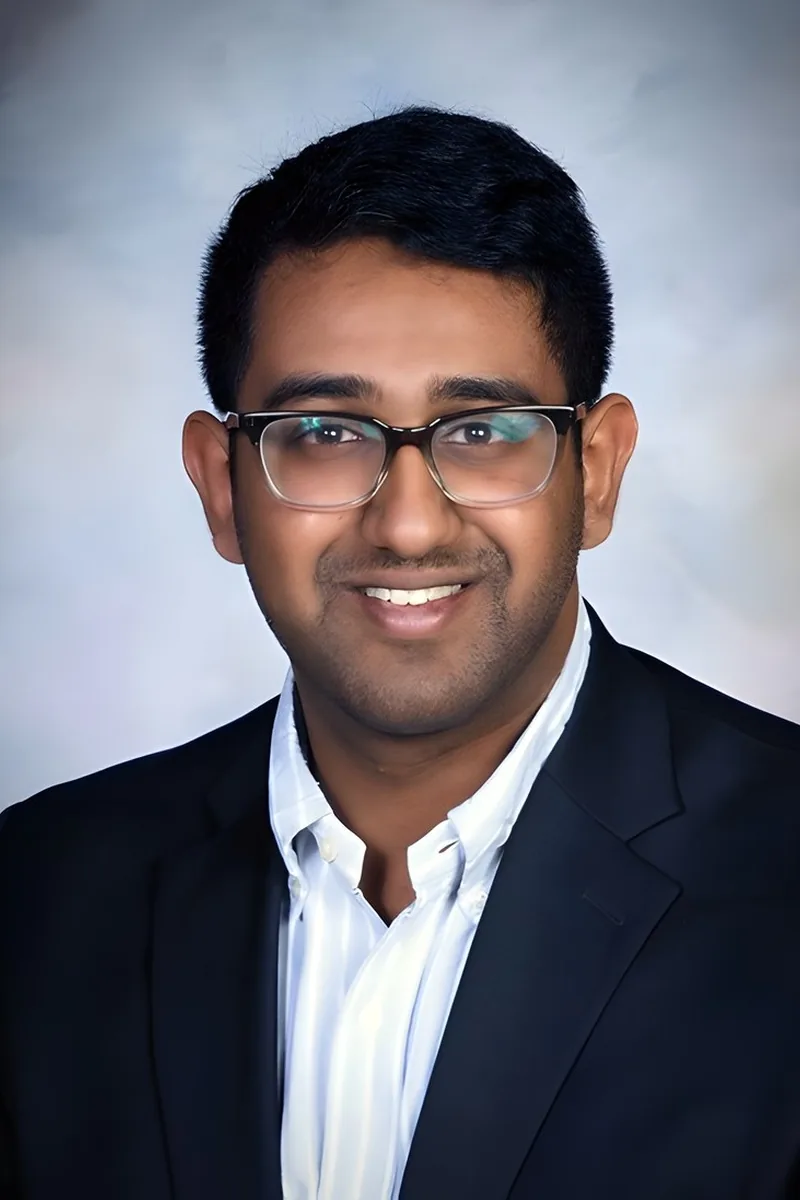
Cornell's chemical engineering program put Rahul through four years of mechanics, fluid dynamics, and thermodynamics problems that demand real physical intuition — not just plugging into formulas. He pushes students to understand why a conservation law applies before setting up the math, building the kind of conceptual reasoning that makes multi-step problems feel manageable rather than chaotic. Rated 4.9 by students.
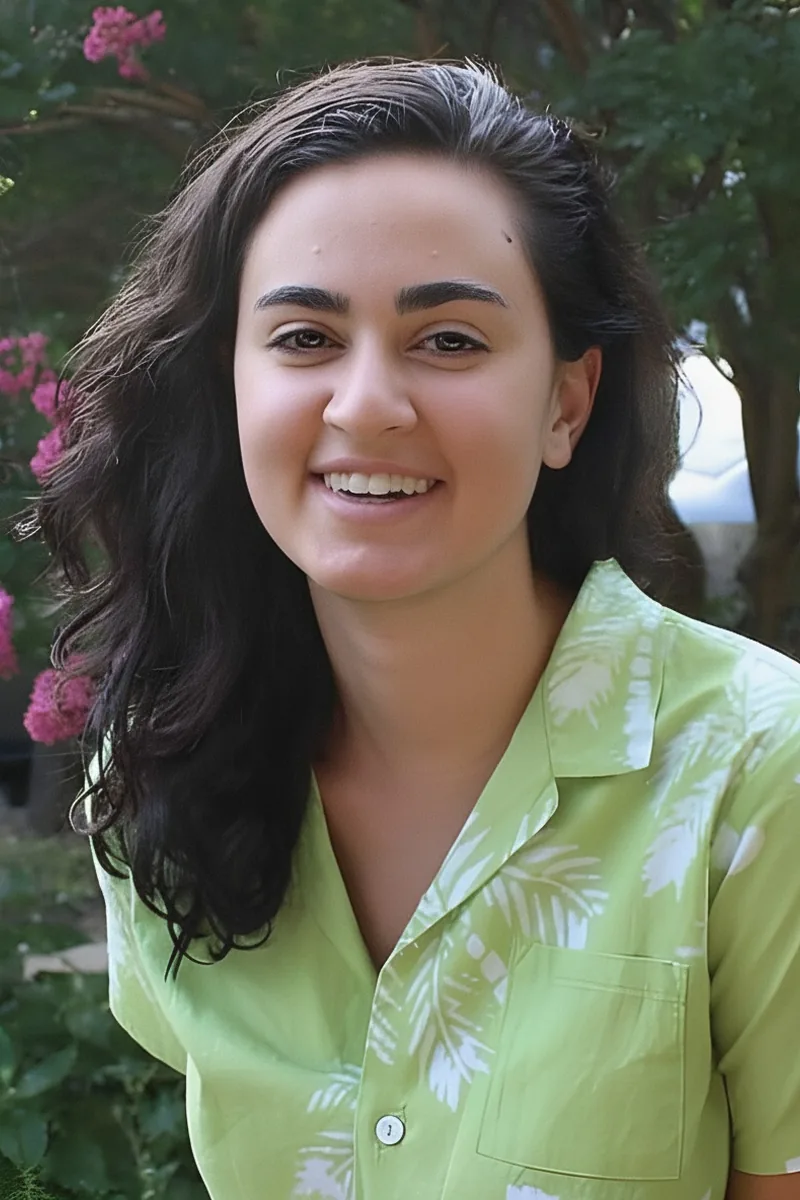
Engineering training changes how you see physics problems — instead of hunting for the right equation, you learn to diagram forces, track energy, and let the math follow the physics. Christine brings that engineering mindset from her biomedical engineering studies at Johns Hopkins, where mechanics and electromagnetism aren't just coursework but tools she applies in lab and design projects.
Kinematics equations and free-body diagrams require both mathematical precision and physical intuition — two things Amy developed through her chemistry and toxicology training, where understanding force, energy, and motion at the molecular level is everyday work. She breaks physics problems into clear steps, emphasizing unit analysis and dimensional reasoning so students can self-check their way through even unfamiliar scenarios.
Kinematics and force diagrams click faster when students learn to translate word problems into mathematical models step by step. Vishank pairs his strong math background — spanning calculus through linear algebra — with science instruction, so he can walk through the physics and the underlying math simultaneously instead of treating them as separate hurdles.
Medical school physics is unforgiving — Sanjul had to master mechanics, waves, and optics not as abstract exercises but as tools for understanding imaging, biomechanics, and fluid dynamics in clinical contexts. That applied perspective means he teaches students to visualize what's physically happening in a problem before touching an equation, using diagrams and real-world analogies that make kinematics and energy concepts stick. Rated 5.0 by students.
Karen earned her B.S. in Applied Physics, which means she doesn't just know the formulas — she understands the derivations behind them and when each model breaks down. She teaches students to sketch free-body diagrams, track energy through a system, and translate word problems into equations before touching a calculator. Whether the topic is kinematics, circuits, or wave behavior, she ties problems to real scenarios that make the physics intuitive.
Ishaan covers both AP Physics 1 and AP Physics 2, which means students working through mechanics don't have to switch tutors when the curriculum shifts to electricity, magnetism, and fluid dynamics. His science preprofessional background keeps him fluent in the quantitative problem-solving that connects free-body diagrams to the underlying math — and his 5.0 rating suggests students find that approach clicks.
Lyndsey approaches physics as a problem-solving language rather than a formula sheet. Her science background gives her a knack for teaching students to diagram a scenario — free-body diagrams, energy bar charts, momentum vectors — before touching an equation, which is where most physics mistakes actually happen.
Free-body diagrams are the language of physics, and most students skip them or draw them wrong — which is why problem after problem feels impossible. Jie insists on diagram-first problem solving, teaching students to map every force before reaching for an equation. His computer engineering program at Michigan is physics-heavy, so concepts like energy conservation and circuit analysis stay sharp in his own coursework.
Exercise science is applied physics — force production, torque at joints, projectile motion of a thrown ball. Nikolas used Newtonian mechanics and energy concepts daily in his Ohio State coursework, so he explains kinematics and free-body diagrams through concrete, physical examples that make abstract formulas tangible.
Dual degrees in mathematics and physics mean Maxwell doesn't treat the math as a separate hurdle — when a rotational dynamics problem demands integration or a circuit requires differential equations, he teaches the physics and the calculus as one seamless argument. He covers everything from introductory mechanics through AP Physics C and into electromagnetism and quantum mechanics, so he can pitch explanations at exactly the depth a student needs. Rated 5.0 by students.
Tackling physics as a pharmacy student meant Lillian had to internalize mechanics and electricity concepts quickly and apply them in adjacent sciences — an experience she now brings to teaching kinematics, Newton's laws, energy conservation, and circuit analysis. She emphasizes setting up problems with clear free-body diagrams and unit tracking before ever reaching for a formula.
Emily's physical chemistry PhD work at Ohio State means she lives at the intersection of physics and math daily — thermodynamics, quantum mechanics, and wave equations are her research tools, not just textbook topics. She teaches problem-solving by connecting the underlying physical intuition to the mathematical formalism, so students understand why an equation applies before they start plugging in numbers. Rated 5.0 by students.
Most physics struggles come down to not knowing how to start a problem — how to draw the diagram, pick the right equation, and track units through to the answer. Alexander tackles this by teaching a consistent problem-solving framework built on free-body diagrams and conservation laws, drawing on years of applying Newtonian mechanics and energy methods in his engineering research.
Brian calls physics his favorite subject precisely because it forces math to mean something — a free-body diagram isn't just vectors, it's a skateboard on a ramp or a satellite in orbit. His approach at Case Western Reserve is relentlessly problem-driven: rather than reviewing notes, he drills students through problem after problem until selecting the right principle and setting up the equations becomes automatic. Rated 5.0 by students.
A mechanical engineering degree and a PhD in applied mathematics give Samuel an unusually strong foundation for tackling physics across the board — from Newtonian mechanics and thermodynamics to electromagnetism and wave phenomena. He approaches each topic by first establishing the core physical principle, then showing how the math follows naturally. Students rate him 5.0 for his ability to make dense material feel approachable.
A PhD in applied mathematics means Dr doesn't just teach physics formulas — she derives them, showing students how Newton's laws, conservation principles, and Maxwell's equations emerge from the underlying math. That deeper understanding makes problem-solving in kinematics, electromagnetism, and thermodynamics far more intuitive than memorizing equations ever could.
Free-body diagrams and Newton's laws tend to trip students up not because the math is hard, but because translating a word problem into forces and vectors requires a specific way of thinking. Sunay breaks that translation process down step by step, connecting kinematics and dynamics to real scenarios so the equations feel intuitive rather than arbitrary. His neuroscience background gives him a sharp comfort with quantitative reasoning that carries through every physics topic.
Kinematics, force diagrams, energy conservation — Patrick tackles all of them through the lens of an engineering student who applies physics principles in lab and coursework every week. He's particularly good at teaching students how to translate a word problem into a free-body diagram, which is usually where the real confusion lives.
Kinematics, energy conservation, and rotational motion all become more intuitive when someone can sketch the free-body diagram and walk through the vector math without hesitation. Steven's mechanical engineering training gave him deep fluency in classical mechanics, and he applies that same structured problem-solving approach to electromagnetism and wave topics as well.
Biomedical engineering is essentially applied physics — biomechanics, circuit analysis for medical devices, fluid dynamics in biological systems. Joseph tackles kinematics, Newton's laws, and energy conservation by grounding each concept in tangible scenarios rather than abstract diagrams. He's completed physics coursework through the college level, including labs, so he's comfortable with both the theory and the hands-on problem-solving.
Christopher's finance degree at Ohio State might not seem like an obvious physics background, but the quantitative problem-solving he applies to financial modeling — setting up equations, tracking units, isolating variables — transfers directly to tackling kinematics and energy conservation problems. He approaches each physics scenario by identifying what's known and what's being asked before reaching for any formula, a structured habit that keeps students from getting lost in multi-step problems.
Ryan taught undergraduate physics before starting his Master's in Medical Physiology at Case Western Reserve, so he knows exactly where students get stuck — unit conversions that derail a kinematics problem, free-body diagrams that miss a force, energy conservation applied to the wrong system. He digs into each concept with enough math rigor to solve problems confidently and enough physical intuition to know when an answer doesn't make sense.
Chemical engineering is applied physics — Kevin spent years calculating fluid dynamics, heat transfer, and thermodynamic equilibria before earning his PhD in environmental engineering. That dual background means he teaches physics concepts like energy conservation, force balancing, and wave behavior by connecting them to tangible, real-world systems students can visualize.
Computer science engineering with a math minor means Samuel spends most of his time thinking computationally — but that same rigor in modeling systems and debugging logic translates directly to setting up force diagrams, tracking energy through a system, or working through multi-body kinematics problems. He digs into the derivations behind the formulas so students understand the structure of a problem rather than pattern-matching to memorized equations. His 36 ACT composite reflects the kind of cross-disciplinary precision that keeps the math clean when the physics gets layered.
Robert teaches physics alongside calculus, chemistry, and biology, which means he's constantly making the cross-subject connections that physics demands — seeing how energy conservation links to chemical thermodynamics, or how kinematics equations are just calculus in disguise. His current coursework in calculus and biochemistry keeps these connections fresh, and his classical studies background gives him a knack for breaking dense, jargon-heavy problems into clear logical steps.
Studying biomedical engineering at Ohio State means Sunnia lives in the overlap of physics and real-world systems — from force analysis in prosthetic design to fluid dynamics in medical devices. She teaches kinematics, Newton's laws, and energy conservation by grounding each concept in physical scenarios students can visualize, then builds up to the math. That applied perspective turns physics from an equation hunt into actual problem-solving.
A genuine enthusiasm for physics drives how Craig teaches the subject — he digs into the conceptual reasoning behind force diagrams, energy conservation, and wave behavior before ever touching an equation. His philosophy background gives him a knack for breaking down abstract principles into clear, logical arguments that make problem-solving feel less like guesswork.
Pre-med microbiology coursework puts Sashwat through the same mechanics, waves, and thermodynamics material that fills introductory physics — and because he also teaches calculus and algebra, the mathematical machinery behind force and energy problems stays sharp. He breaks multi-step problems into their physical pieces first, getting students to identify what type of interaction is happening before reaching for any formula.
Jacob's MA in Mathematics means the calculus underlying every physics problem — setting up integrals for work, differentiating position functions for velocity and acceleration — is second nature rather than a stumbling block. He teaches across both physics and calculus, so when a student gets stuck on a projectile motion or rotational dynamics problem, he can pinpoint whether the gap is in the physical reasoning or the math and address it directly.
Studying computer science and engineering at Ohio State gave Sery a working fluency with the math that underpins physics — vectors, derivatives, force diagrams. She teaches students to translate word problems into equations by identifying what's actually changing, which turns intimidating kinematics and energy problems into a sequence of logical steps.
Understanding physics means learning to translate a word problem into a free-body diagram and then into equations — a skill that doesn't come naturally to most students. Heather earned her bachelor's degree specifically in physics teaching, so she's trained not just in the content but in how to make kinematics, energy conservation, and electromagnetism accessible to someone encountering them for the first time.
Free-body diagrams, conservation laws, circuit analysis — physics demands that students translate real situations into math and then interpret the math back into reality. Christopher teaches both directions of that translation, drawing on a background that includes quantum mechanics, thermodynamics, and college-level coursework. He breaks multi-step problems into physical reasoning first, equations second.
I am an upbeat and patient tutor. I like to make learning as fun as possible, and I'm constantly learning new things.
I am a rising sophomore at Case Western Reserve University studying engineering. I have taken most high-school level standardized tests, and have scored consistently above the 95th percentile. I have tutored small groups of students throughout high school, and also have experience as a private tutor. Outside of the classroom, I enjoy playing Ultimate Frisbee with my college club team.
I am a high school graduate currently attending Case Western Reserve University as a junior where I am double majoring in economics and physics. Although economics and physics are my majors, mathematics is my favourite subject. The reason I am tutoring is that I want to provide help in mathematics and other subjects which I did not have for myself when I was in high school. Not only do I want to tutor because I have a feeling it will be beneficial for students but I also enjoy teaching. Whenever I show teenagers something cool about physics or math, they seem to enjoy the subject more now that they know how it works and they also do better in their classes which is a great feeling for me and beneficial for the students. This friendly but passionate tutoring style is what will make the session enjoyable by both parties but also result in better grades. I also love sports(especially soccer and basketball), reading, writing and speedcubing.
Engineering is applied physics, so Kate spent years solving the exact kinds of problems — free-body diagrams, energy conservation, circuit analysis — that show up in introductory physics courses. She walks through each problem by identifying what physical principle applies and why, which builds the kind of intuition that makes new problems feel approachable instead of intimidating.
Engineering students solve physics problems differently than most — they diagram forces, track units obsessively, and translate word problems into equations almost automatically. Annie brings that engineering instinct from her Cornell coursework to topics like kinematics, Newton's laws, energy conservation, and circuits, showing students a systematic approach that works across problem types.
A PhD in biomedical engineering built on a bachelor's in physics means Andrew has spent years solving problems across mechanics, electromagnetism, and thermodynamics. He teaches physics by emphasizing free-body diagrams, unit analysis, and the habit of translating word problems into mathematical models before reaching for formulas. That systematic approach turns intimidating multi-step problems into manageable sequences.
Medical school at the Medical College of Wisconsin demands a command of mechanics, fluid dynamics, and thermodynamics that goes well beyond intro-level physics — Abrahim applies those principles daily in contexts like blood pressure dynamics and respiratory mechanics. His biology degree from UCLA (cum laude) and a 34 ACT underscore the quantitative chops he brings to breaking down force diagrams, energy conservation setups, and multi-step kinematics problems. Rated 5.0 by students.
Testimonials
Because the right Physics tutor makes all the difference.
Average Session Rating – Based on 3.4M Learner Ratings
Practice Physics
Free practice tests, flashcards, and AI tutoring for Physics
Other Youngstown Tutors
Related Science Tutors in Youngstown
Frequently Asked Questions
Varsity Tutors matches Youngstown students with expert Physics tutors for 1-on-1 instruction. We pair each student with a tutor based on their specific needs, learning style, and goals.
Whether you need homework help, exam prep, or want to get ahead, our Physics tutors are ready to help.
Common challenges include gaps from earlier material, difficulty with specific concepts, and trouble applying learning to new problems. These issues can snowball quickly in Physics.
A tutor identifies where you're stuck, fills in gaps, and provides targeted practice. The 1-on-1 format means you get help exactly where you need it.
Tutors work with your student's actual coursework—homework assignments, class notes, and upcoming tests. This keeps tutoring directly relevant to what's happening in the classroom.
When you share information about your student's school and curriculum, we can match you with a tutor who has relevant experience.
All tutors complete background checks, credential verification, and teaching evaluation. Many of our Physics tutors hold advanced degrees or have years of teaching experience.
You can review tutor profiles to find someone with the right background for your student's level and needs.
Many students see improved grades within a few weeks, along with better understanding of Physics concepts and more confidence tackling challenging material.
Tutors track progress and adjust their approach to ensure continued improvement.
Most students benefit from 1-2 sessions per week. More frequent sessions help if your student is significantly behind or has an important exam coming up.
Your tutor can recommend a schedule based on your student's specific situation and goals.
Tutoring is purchased in packages of hours, with rates varying by tutor experience. Varsity Tutors offers several options to fit different budgets and needs.
You can discuss pricing during your consultation to find what works best.
Your tutor will assess where your student is, discuss goals, and start working on priority areas. Most students bring current homework or upcoming test material to focus on.
By the end, you'll have a clear sense of how the tutor can help and a plan for moving forward.
Let’s find your perfect tutor
Answer a few quick questions. We’ll recommend the right plan and match you with a top 5% tutor.