Award-Winning AP Chemistry Tutors
serving Columbus, OH
AP Chemistry
Tutors in Columbus
Private 1-on-1 tutoring, weekly live classes for academic support, test prep & enrichment, practice tests and diagnostics, and more to elevate grades and test scores.
Based on 3.4M Learner Ratings
UniversitiesSchools & Universities
DeliveredHours Delivered
ProficiencyGrowth in Proficiency
Who needs tutoring?
No obligation. Takes ~1 minute.
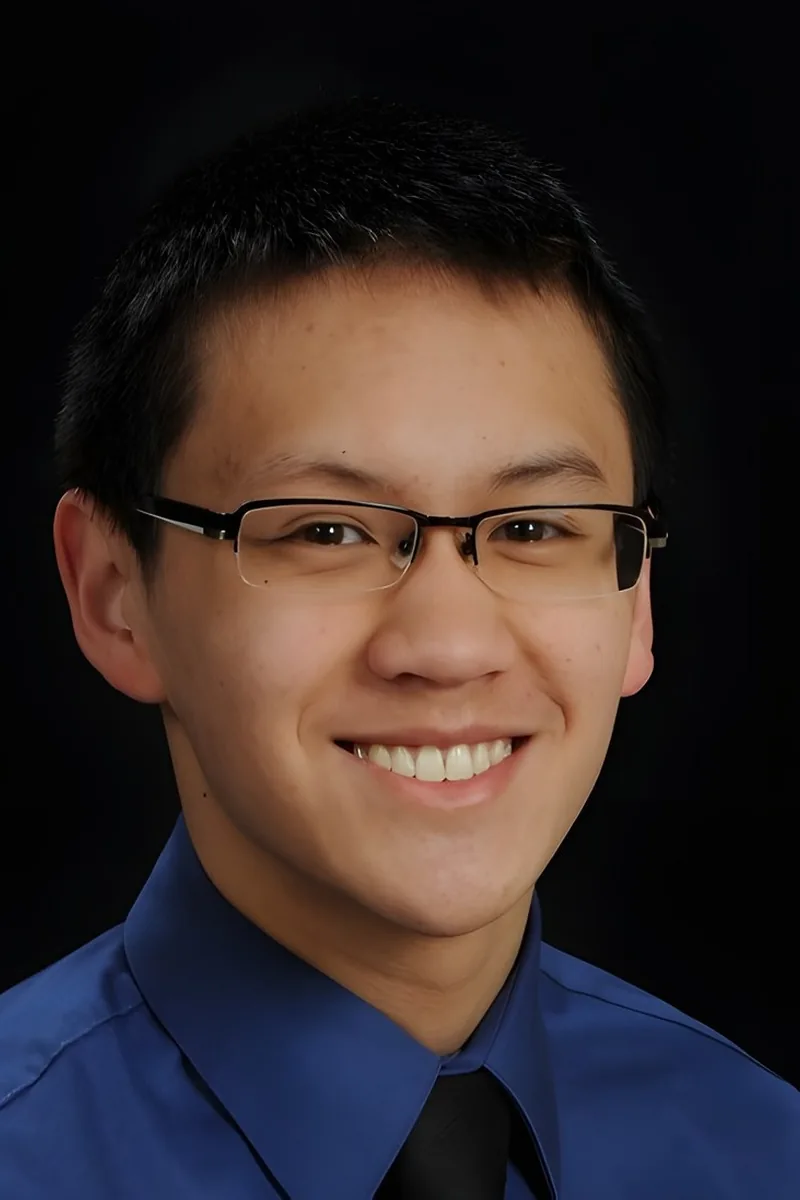
I am always willing to help and I will try my best to help students who desire further understanding of the subject at hand.
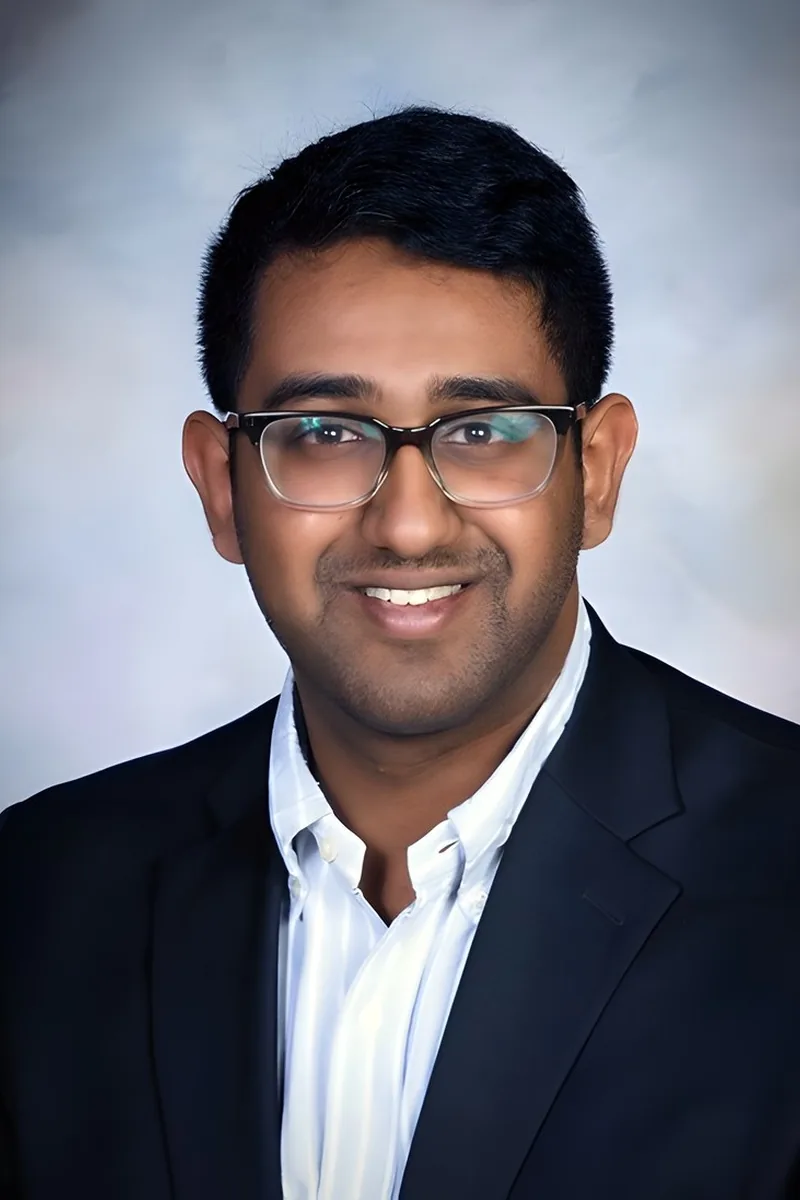
Cornell's chemical engineering program put Rahul through physical chemistry, thermodynamics, and reaction engineering courses where AP Chemistry concepts like enthalpy, equilibrium, and kinetics were just the starting point — so he can teach those topics with the depth that makes free-response questions feel manageable. He's especially sharp on thermochemistry, his self-described favorite, and connects energy diagrams and Hess's law to the industrial-scale processes he studied as an engineer. Rated 4.9 by students.
Forty-plus AP and general chemistry students have worked through thermodynamics, electrochemistry, and equilibrium calculations with Amy, and her 5.0 rating speaks to the results. Her master's in environmental toxicology keeps her deeply connected to the material — she teaches AP concepts like Gibbs free energy and kinetics as tools scientists actually use, not just formulas to memorize for the exam.
AP Chemistry's free-response questions demand more than memorizing reactions — they require students to connect equilibrium, thermodynamics, and kinetics into coherent explanations under time pressure. Vishank's data analytics background at Ohio State sharpens how he breaks down multi-step problems, teaching students to identify what the question is really testing before diving into calculations. Rated 4.9 by students.
A biochemistry degree means Lyndsey has been through the full gauntlet of college-level chemistry — organic mechanisms, physical chemistry, analytical techniques — giving her a depth that makes AP Chemistry's trickiest topics, like electrochemistry and kinetics, feel like familiar territory rather than abstract puzzles. She's especially sharp at teaching students how to read and interpret lab data, a skill the AP exam's free-response section rewards heavily. Rated 5.0 by students.
AP Chemistry's jump from stoichiometry and bonding to thermodynamics and equilibrium catches a lot of students off guard. William tackles each unit by anchoring the math to the underlying chemical logic — explaining why Le Chatelier's principle predicts a specific shift, not just that it does. His experience across both chemistry and biology lets him show how these ideas connect to real systems.
AP Chemistry's free-response questions demand more than memorized formulas — they require students to explain WHY a reaction proceeds, connect particulate diagrams to macroscopic observations, and reason through multi-step equilibrium problems. Ricardo tackles these skills head-on, drawing from his chemistry coursework at Ohio State and years of university-level tutoring. Rated 4.6 by students, he's especially sharp on electrochemistry and thermodynamic calculations.
Chemistry is Lillian's home turf — her prepharmacy program demanded mastery of everything from thermodynamics and equilibrium to electrochemistry and molecular orbital theory. She teaches AP Chemistry by tracing each problem back to the underlying principle, so students learn to predict reaction behavior instead of memorizing isolated equations. That approach shows in her 4.9 client rating.
A PhD in chemical engineering means Alexander has spent years working with thermodynamics, reaction kinetics, and equilibrium at a depth that makes AP Chemistry's toughest topics — like Hess's law, Le Chatelier's principle, and galvanic cells — feel like familiar territory. His biosystems engineering background adds a practical dimension, connecting abstract chemical concepts to real processes like fermentation or membrane transport. Rated 4.9 by students.
Between an economics degree heavy on quantitative modeling and a bioethics master's that required deep engagement with biochemistry and pharmacology, Hyerin has encountered chemistry from multiple angles — which is exactly the kind of cross-disciplinary fluency that AP Chemistry's application-heavy free-response questions reward. She unpacks topics like Le Chatelier's principle and solution chemistry by tying the math to real molecular behavior, making the logic stick long after the exam. Rated 4.9 by students.
As a dedicated Biology major at The Ohio State University, I am passionate about guiding students through the intricacies of science and mathematics. With over 2 years of tutoring experience, I specialize in AP Biology, AP Chemistry, and various levels of calculus, fostering a deep understanding of these subjects. My teaching philosophy emphasizes interactive learning and effective study habits, ensuring students not only grasp concepts but can also apply them to solve problems independently. I believe in the potential of every student to succeed, and I strive to create a supportive environment where they can thrive. Outside of academics, I enjoy sports, solving Rubik's cubes, and immersing myself in music, which keeps my approach to tutoring dynamic and engaging. I am committed to helping the next generation of learners achieve their fullest potential.
AP Chemistry's toughest sections — equilibrium, thermodynamics, electrochemistry — require students to think quantitatively and conceptually at the same time. Susie earned her biochemistry degree at Swarthmore, where the chemistry curriculum is notoriously rigorous, and she's since tutored AP and standardized-test chemistry both domestically and abroad. She unpacks each problem type so students understand the reasoning behind the math, not just the formula.
Neuroscience coursework doesn't let you skip the hard chemistry — John's degree required grappling with electrochemistry, molecular bonding, and reaction thermodynamics to understand how ions cross membranes and how neurotransmitters interact at the receptor level. That gives him a practical angle on AP Chemistry's trickiest conceptual territory, especially when students need to connect what's happening in an equation to what's actually occurring between molecules.
Currently enrolled in Biochemistry alongside his medical school applications, Robert is actively working through the college-level chemistry — reaction mechanisms, thermodynamics, acid-base systems — that AP Chemistry students encounter in condensed form. His Classical Studies background gives him an unusual edge: he's practiced at close reading and structured argumentation, skills that translate directly to parsing AP Chemistry's notoriously tricky free-response prompts where explaining reasoning matters as much as getting the number right.
AP Chemistry's free-response questions punish students who memorize without understanding — especially on equilibrium, thermodynamics, and kinetics. As a college general chemistry instructor, Jennifer teaches this exact material at the university level and knows precisely which conceptual gaps the AP exam is designed to expose. She drills both the quantitative problem-solving and the written justifications the exam demands.
Heather's physics teaching degree and master's in technology and engineering education mean she's spent years explaining the physical chemistry concepts — energy transfer, gas behavior, atomic structure — that sit at the heart of AP Chemistry's most demanding units. She teaches lab-based and free-response questions by connecting the math to real physical systems, so students understand what's driving a reaction rather than just balancing it. Rated 5.0 by students.
As a Chemistry and Neuroscience double at Emory, Maria lives in the material AP Chem covers — thermodynamics, equilibrium, electrochemistry, and intermolecular forces all show up in her coursework and lab work. She knows which free-response question styles the exam favors and teaches students to connect conceptual reasoning with the quantitative problem-solving the AP graders reward.
As a tutor for 20+ years, I bring ample experience and knowledge. I specialize in standardized testing (MCAT, SAT, ACT, GRE, & more), medical school and pre-med courses, and undergraduate STEM subjects. A former medical school student and Master of Public Health, I opted for what truly brings me joy: tutoring, teaching, and guiding students to lifelong academic success.
Hello! My name is Danica and I am an incoming sophomore at the University of Pennsylvania majoring in Neuroscience and Psychology. As the founder of my high school's Chemistry Club, I worked to make challenging scientific concepts approachable and engaging for students of all grade levels. I developed educational materials, organized meetings, and created an environment where students felt comfortable asking questions and exploring their curiosity. I tailor my tutoring approach to each student's learning style, whether that involves working through practice problems, reviewing test corrections, creating study resources, or breaking down complex topics into manageable steps. I believe every student is capable of growth when provided with patience, guidance, and the right support. As a tutor, my goal is not only to help students improve their grades but also to foster confidence, independence, and a genuine appreciation for learning.
Thermodynamics, electron orbitals, kinetics — AP Chemistry sits right at the intersection of Dennis's physics and math training. His research simulating turbulent plasmas and designing optical filters required deep fluency with atomic behavior and energy transfer, so he explains concepts like equilibrium and electrochemistry through the underlying physics rather than just memorized rules.
Cornell's biology curriculum required Viraj to work through college-level chemistry — from reaction energetics to molecular interactions — in courses where chemical reasoning underpins everything from cellular metabolism to pharmacology. He applies that cross-disciplinary perspective to AP Chemistry topics like intermolecular forces and solution chemistry, teaching students to predict behavior at the molecular level instead of memorizing isolated rules. Rated 5.0 by students.
Computational biology at Cornell means Emily lives at the intersection of quantitative reasoning and molecular science — she's worked through the same college-level chemistry that AP students are preparing for, but with the added demand of modeling chemical systems computationally. She teaches topics like equilibrium and reaction energetics by emphasizing the mathematical structure underneath, so students learn to read what equations are actually telling them about molecular behavior. Rated 4.9 by students.
In 2022, I completed my Ph.D. in Chemistry at Vanderbilt University. My goal is to use my expertise in chemistry, algebra, and calculus to help students not only learn but also enjoy these subjects. My favorite subject to teach is general chemistry as it highlights the importance of interdisciplinary study combining, physics, math, and even biology. While my degree expertise lies in chemistry, I am equally adapt in teaching all levels of mathematics. I take pride in reinforcing mathematics concepts with tangible applications in other fields to highlight its importance and making learning interesting.
Studying cellular and molecular biology at Yale on the pre-med track, Shreya has gone deep into the chemistry that underpins life at the molecular level — making topics like intermolecular forces, Lewis structures, and VSEPR geometry feel less like abstract rules and more like tools for understanding how molecules actually behave. She teaches AP Chemistry's conceptual questions by grounding them in the molecular reasoning she uses daily in her own coursework. Rated 5.0 by students with a 36 ACT.
A PhD in chemical engineering means Steven didn't just study chemistry — he lived in thermodynamics, kinetics, and equilibrium for an entire career. For AP Chemistry, he unpacks topics like electrochemistry, reaction mechanisms, and Le Chatelier's principle by explaining the concept, restating it differently, and then grounding it in a real-world scenario that makes the logic stick. Rated 4.9 by students.
Stoichiometry, equilibrium, and thermodynamics each require a different kind of problem-solving, and AP Chemistry expects fluency in all of them by May. Kendall approaches each unit by anchoring the math in the underlying chemical logic — why a reaction favors products, what a mole ratio actually represents — so students can reason through unfamiliar problems on the exam. She also dedicates time to the lab-based questions that many students overlook in their prep.
AP Chemistry's toughest sections — equilibrium, thermodynamics, electrochemistry — demand both conceptual understanding and fast quantitative reasoning. Brian brings strong analytical instincts from his Caltech science training, where rigorous problem-solving across disciplines was the norm. He breaks down multi-step free-response problems into the kind of logical chains that earn full credit on exam day.
Pratik's strongest subject is chemistry, and it shows — he tutors it at both the high school and college level from his home base as a premed biology major at Cornell. He digs into the conceptual logic behind equilibrium, thermodynamics, and electrochemistry so that students can reason through unfamiliar free-response prompts instead of relying on memorized shortcuts.
AP Chemistry's toughest questions — equilibrium calculations, electrochemistry, thermodynamic spontaneity — demand both math fluency and chemical intuition. Rithi's neuroscience and biotechnology training means she's applied these principles in real research contexts, not just on paper. Her 4.9 rating speaks to how clearly she breaks down even the most abstract reaction dynamics.
Neuroscience at Duke required Ankit to master chemistry at the molecular level — understanding how ions cross membranes, how neurotransmitters bind receptors, and how electrochemical gradients drive cellular processes. That gives him a concrete, biology-rooted way to teach AP Chemistry topics like oxidation-reduction reactions and intermolecular forces, where seeing the real-world consequences makes the theory click. His 1580 SAT and 4.8 rating back up the depth he brings to exam preparation.
Testimonials
Because the right AP Chemistry tutor makes all the difference.
Average Session Rating – Based on 3.4M Learner Ratings
Practice AP Chemistry
Free practice tests, flashcards, and AI tutoring for AP Chemistry
Other Columbus Tutors
Related Science Tutors in Columbus
Frequently Asked Questions
AP Chemistry covers eight major units: atomic structure and properties, molecular and ionic bonding, intermolecular forces and properties, chemical reactions, kinetics, thermodynamics, equilibrium, and acids and bases. The course emphasizes both conceptual understanding and problem-solving skills, with significant focus on laboratory work and data analysis. A tutor can help you master the mathematical applications and conceptual frameworks that appear most frequently on the exam.
Score improvement depends on your starting point and consistency with tutoring. Students who work with a tutor typically see gains of 1-2 score points on the 1-5 scale, particularly when they address specific weak areas early in the course. The key is identifying which topics (like equilibrium calculations or thermodynamics) are holding you back, then building targeted practice around those concepts before test day.
Students in Columbus often struggle most with equilibrium calculations, thermodynamic concepts, and kinetics—topics that require both conceptual understanding and mathematical fluency. Acid-base chemistry and electrochemistry also trip up many students because they build on multiple foundational concepts. A tutor can break these topics into manageable pieces and use practice problems to build confidence in your problem-solving approach.
Effective strategies include managing your time across 60 multiple-choice questions (90 minutes) and three free-response questions (90 minutes), reading questions carefully to identify what's actually being asked, and showing all work on free-response sections even if you're unsure of the answer. Many students benefit from practicing with released AP exams to get comfortable with question formats and pacing. A tutor can help you develop a personalized test-day plan based on your strengths and timing challenges.
Most students benefit from taking 3-4 full-length practice tests under timed conditions in the weeks leading up to the exam. This builds stamina, helps you identify remaining weak areas, and reduces test anxiety by making the format familiar. Between full tests, targeted practice on specific units is more valuable than random problem-solving. A tutor can help you interpret your practice test results and create a focused study plan for the remaining time.
The AP Chemistry exam is 50% multiple-choice and 50% free-response questions, with no separate lab section on test day. However, the course requires hands-on laboratory work that builds your understanding of concepts like equilibrium, thermochemistry, and kinetics. Many schools in Columbus integrate lab skills into their curriculum, and understanding the reasoning behind lab procedures helps you tackle free-response questions that reference experimental scenarios.
An effective AP Chemistry tutor should have strong chemistry knowledge (ideally a background in chemistry or a related field), experience with the AP curriculum and exam format, and skill in explaining complex concepts clearly. They should be comfortable with both the conceptual and mathematical sides of chemistry and able to identify your specific weak areas quickly. Varsity Tutors connects you with expert tutors in Columbus who understand the AP Chemistry exam and can tailor their approach to your learning style.
Your first session typically focuses on assessment and planning. A tutor will ask about your current grade, which topics feel strongest and weakest, your target score, and your timeline until the exam. They may give you a quick diagnostic problem or quiz to pinpoint specific gaps. From there, you'll work together to create a study plan that prioritizes the areas where you'll gain the most points before test day.
Let’s find your perfect tutor
Answer a few quick questions. We’ll recommend the right plan and match you with a top 5% tutor.