Award-Winning AP Calculus BC Tutors
serving Cleveland, OH
AP Calculus BC
Tutors in Cleveland
Private 1-on-1 tutoring, weekly live classes for academic support, test prep & enrichment, practice tests and diagnostics, and more to elevate grades and test scores.
Based on 3.4M Learner Ratings
UniversitiesSchools & Universities
DeliveredHours Delivered
ProficiencyGrowth in Proficiency
Who needs tutoring?
No obligation. Takes ~1 minute.

Chemical engineering Ph.D. work means Alexander spent years where series approximations and integration techniques weren't exam problems — they were how he modeled reaction kinetics and heat transfer systems daily. That depth shows up when he teaches BC-specific topics like convergence tests or improper integrals, because he can trace exactly where a student's reasoning breaks down rather than just re-demonstrating the procedure. Rated 4.9 by students.
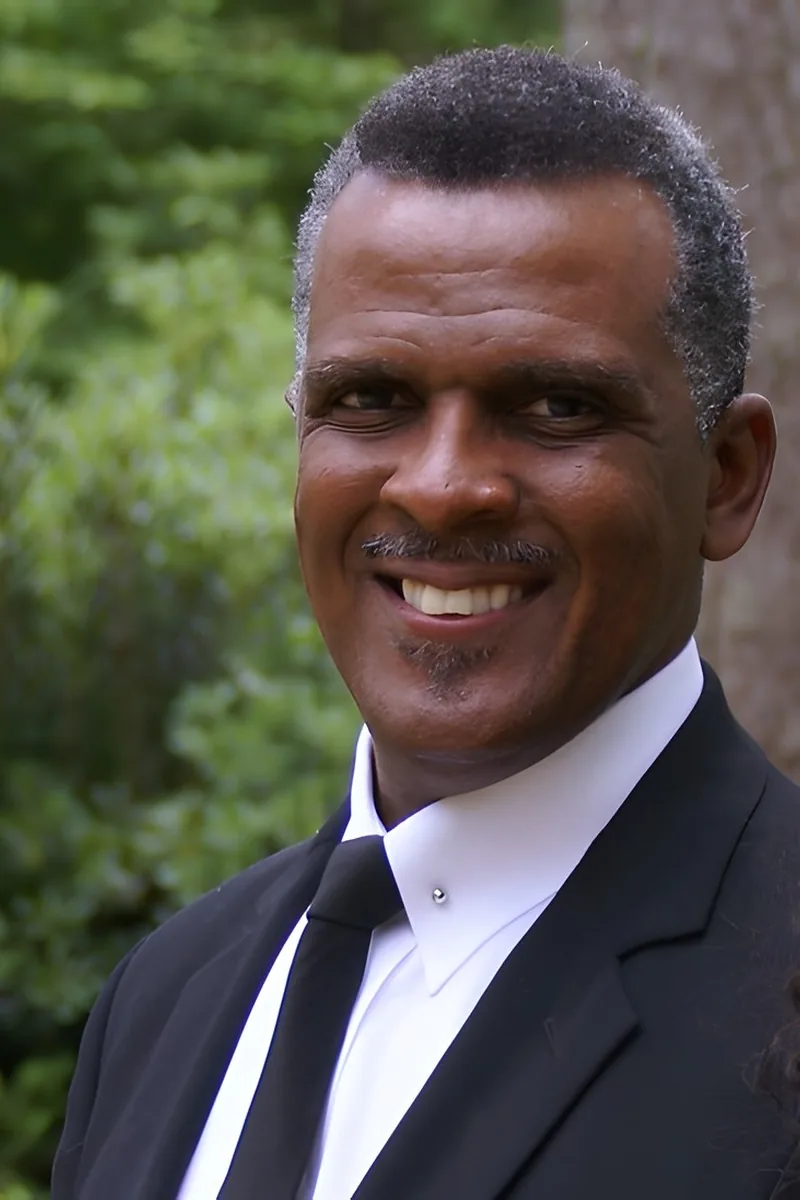
A Ph.D. in Applied Mathematics means Dr has spent years working with the exact machinery underneath BC Calculus — not just computing Taylor series or evaluating convergence tests, but understanding the theoretical scaffolding that makes them rigorous. That depth lets him pinpoint whether a student struggling with, say, the Lagrange error bound actually has a gap in polynomial approximation reasoning or just needs a clearer framework for bounding remainders. Rated 4.9 by students.
Series convergence tests, parametric equations, polar curves — AP Calculus BC piles on topics fast, and falling behind on even one unit can snowball. Brian's approach is straightforward: work through problems until the patterns click, whether that's integration by parts or Taylor series approximations. His strong math foundation from studying computer science at Case Western Reserve keeps sessions grounded in real understanding rather than formula sheets.
The jump from AB to BC is where most students lose their footing — suddenly convergence tests, Taylor polynomials, and parametric derivatives all land at once with no breathing room. Christopher's background in physics and physical chemistry means he learned these tools by necessity, using series expansions to model real systems and integration techniques to solve problems that don't have neat closed-form answers. That applied instinct lets him teach BC topics as connected ideas rather than a checklist of procedures to survive.
Series convergence tests, parametric equations, and polar curves make BC the course where strong calculus students suddenly feel lost. Kevin tackles these topics by connecting them back to the AB foundations students already know, building each new idea as a logical extension rather than a disconnected formula. His engineering coursework at Case Western means he's still using BC-level calculus regularly.
BC Calculus layers on convergence tests, parametric equations, and polar curves at a pace that loses a lot of students mid-semester. Jie tackles these topics by tying them back to the AB foundations students already know, so series and integration techniques feel like natural extensions rather than entirely new material. His computer engineering coursework at Michigan keeps him working with these concepts regularly.
Convergence tests, Taylor series, and parametric equations all demand a level of mathematical fluency that builds on everything from AB and beyond. Lillian breaks these BC-specific topics into logical sequences, connecting each new technique back to the core calculus reasoning students already have so the jumps feel manageable rather than overwhelming.
Series convergence tests, parametric equations, and polar curves are where BC diverges from AB — and where most students start feeling lost. Ella breaks these topics into manageable pieces, connecting new BC concepts back to the AB foundations students already understand. Her economics background also means she's comfortable with the applied integration and differential equation problems that frequently appear on the exam.
Maxwell's dual degree in mathematics and physics means he didn't just pass through BC Calculus — he kept using its tools in upper-level coursework like differential equations, multivariable calculus, and quantum mechanics, where sloppy series reasoning or weak integration technique falls apart fast. That ongoing fluency makes him especially sharp at teaching the logic behind convergence tests and polar area setups, not just the steps. Holds a 5.0 rating.
BC Calculus layers series convergence, parametric equations, and polar coordinates on top of an already demanding AB curriculum, so students need a tutor who can connect those threads clearly. Ricardo's chemistry coursework at Ohio State means he regularly applies Taylor series and differential equations in real problem-solving contexts, giving him a practical fluency that translates directly to AP exam preparation.
Physical chemistry PhD work at Ohio State means Emily lives in the calculus that most BC students only see on exams — series approximations for modeling molecular behavior, integration techniques in thermodynamic derivations, differential equations describing reaction kinetics. She teaches topics like Taylor polynomial construction and convergence tests by grounding them in the physical intuition her chemistry training built, which makes abstract procedures feel like they're actually describing something. Rated 5.0 by students.
Most tutors on this page come from engineering or applied math — Nora's path is different, but her 4.8 rating across a wide spread of math subjects (through BC Calculus) shows she knows how to make dense material land. She's especially deliberate about the AB-to-BC transition, breaking down how new ideas like series convergence and parametric derivatives grow out of limits and integration students have already internalized. Her engineering lab work keeps her comfortable with the applied side, so she can ground abstract convergence tests in concrete reasoning.
BC Calculus throws students into territory where AB concepts aren't enough anymore — Taylor series, parametric equations, and convergence tests each demand a different kind of reasoning. Samuel's math minor at Ohio State means he's studied these ideas well past the AP level, so he can explain not just how to set up a polar area integral but why the formula works. His 4.6 rating speaks to how well that deeper approach clicks with students.
Mechanical engineering put Steven through the full calculus sequence with real stakes — designing load-bearing structures and modeling dynamic systems means integration techniques, series approximations, and differential equations had to actually work, not just produce correct exam answers. He's particularly effective at breaking down the transition from AB to BC, where topics like convergence tests and Taylor polynomials can feel sudden if the underlying logic isn't made explicit. Rated 4.9 by students.
BC Calculus piles on convergence tests, parametric equations, and polar coordinates on top of an already demanding AB curriculum. As an actuarial science major who uses series and integration techniques in probability modeling, John connects these topics to their practical applications. He walks through each convergence test with clear decision frameworks so students aren't guessing which one to apply.
Jacob's MA in Mathematics means he's worked through the proofs and theory that sit beneath every BC topic — so when a student hits a wall on, say, the Lagrange error bound or a tricky ratio test, he can trace the confusion back to the underlying reasoning rather than just re-demonstrating the procedure. He's especially sharp at the transition points where AB intuition needs to stretch into new territory, like moving from basic integration to handling improper integrals or building Taylor series from scratch. His 1540 SAT speaks to the same precision he brings to walking through convergence logic step by step.
Most BC students don't struggle because the material is impossibly hard — they struggle because a shaky concept from weeks ago quietly compounds until Taylor series or convergence tests feel overwhelming. Viola spots those buried gaps early, tracing a student's confusion on something like the ratio test back to the specific limit or sequence reasoning that didn't fully click. Her computer science studies at NYU Tandon keep her immersed in the kind of algorithmic, step-by-step thinking that makes BC's layered problems manageable.
Kenan's mathematical economics training means he's comfortable with the kinds of series, parametric equations, and integration techniques that make BC a step up from AB. He walks through convergence tests and Taylor polynomials by connecting each tool to the problem it was invented to solve, which keeps the logic clear even when the notation gets dense.
BC Calculus throws students into series convergence tests, parametric equations, and polar coordinates — topics that feel disconnected unless someone ties them back to the core ideas of AB. Dylan's physics major at Vanderbilt means he uses calculus daily and can show exactly how Taylor series or integration by parts behave visually, not just symbolically. He turns abstract series into something students can sketch, interpret, and reason through on exam day.
Molecular biology at Yale means Maxwell lives in calculus-heavy territory — modeling gene expression rates, quantifying cell growth curves, analyzing reaction kinetics — so BC topics like differential equations and series approximations aren't abstract exercises for him but tools he actually reaches for in research. He's especially good at walking through the logic of integration techniques and parametric problems by grounding them in the AB concepts students already trust. Holds a 5.0 rating.
A year as a course assistant in Harvard's math department teaching introductory calculus gave Richard a close-up view of exactly where students' AB foundations crack under the weight of BC material — particularly when series convergence and parametric functions demand a more flexible kind of reasoning. He breaks down topics like interval of convergence arguments and integration techniques by rebuilding the underlying logic rather than layering on new formulas. His perfect 1600 SAT and 36 ACT suggest the kind of precision he brings to each explanation.
Princeton's public policy program is surprisingly calculus-heavy — Gianna's coursework in economic modeling and quantitative analysis means she's applied integration techniques and series approximations to real policy questions, not just problem sets. She's especially sharp at walking through the logic of convergence tests and parametric curves, connecting each BC topic back to the AB reasoning that makes it click.
Series convergence tests, parametric equations, polar curves — BC Calculus piles on concepts fast, and falling behind on one unit can cascade through the rest of the course. Ethan breaks each new topic back to its AB foundation before building upward, so students see Taylor series and integration techniques as extensions of ideas they already own rather than entirely new material.
Running a peer-tutoring program in high school meant Ryan spent years diagnosing exactly where classmates got stuck on calculus problems — a skill he's sharpened further through his civil engineering coursework at Cornell, where series expansions and integration techniques show up constantly in structural analysis and fluid mechanics. He breaks down the BC-specific leap into convergence tests and Taylor polynomials by grounding each new idea in the derivative and integral logic students built in AB. His 35 ACT and 4.7 rating speak to the precision he brings to every session.
BC Calculus throws students into deep water fast — Taylor and Maclaurin series, parametric equations, and convergence tests all pile up in a single semester. Rahi's applied mathematics engineering background means he can unpack these topics by connecting them to the real-world modeling problems they were designed to solve. He builds each concept from its AB foundation so students see how the BC extensions actually work.
Molecular biophysics at Brown means Srini is constantly using series approximations and integration techniques to model protein folding dynamics and molecular interactions — BC Calculus isn't a prerequisite he passed, it's a toolkit he reaches for weekly. That active use sharpens how he teaches convergence tests and parametric problems, grounding each in the kind of quantitative reasoning his 1600 SAT and 35 ACT reflect. Rated 4.8 by students.
Coming out of Thomas Jefferson High School for Science and Technology — one of the most rigorous STEM pipelines in the country — Rhamy had BC Calculus concepts like series convergence and parametric integration locked down before most students even encounter them. His computer engineering program at Vanderbilt keeps those tools sharp daily, since signal analysis and circuit design lean heavily on the same Taylor expansions and differential equations that define the BC curriculum. Rated 5.0 by students.
Scoring a 36 on the ACT while studying Human Biology at Cornell means Sharan lives at the intersection of rigorous quantitative thinking and applied science — exactly where BC Calculus sits when series approximations and integration techniques start modeling real biological systems. She breaks down the AB-to-BC jump by treating topics like Taylor polynomials and convergence tests as logical extensions of limits and derivatives, not a separate universe of formulas to memorize. Rated 5.0 by students.
Biology majors at WashU don't just memorize — Laura's upper-level coursework in evolutionary modeling and physical chemistry means she's actively using integration techniques, differential equations, and series approximations to solve problems outside a math classroom. That cross-disciplinary fluency is especially useful for BC's trickiest conceptual leap: understanding what a Taylor polynomial actually approximates and why specific convergence tests apply in specific situations. Rated 5.0 by students.
Testimonials
Because the right AP Calculus BC tutor makes all the difference.
Average Session Rating – Based on 3.4M Learner Ratings
Practice AP Calculus BC
Free practice tests, flashcards, and AI tutoring for AP Calculus BC
Other Cleveland Tutors
Related Math Tutors in Cleveland
Frequently Asked Questions
AP Calculus BC builds on calculus fundamentals and covers limits, derivatives, integrals, differential equations, sequences, and series. The course includes everything from AP Calculus AB plus additional topics like parametric equations, polar coordinates, and vector-valued functions. For students in Cleveland, understanding this broader scope helps with course planning and identifying which areas might need extra focus before the May exam.
Score improvement depends on your starting point and consistency with practice. Students who work with tutors on problem-solving strategies, practice tests, and weak topic areas typically see meaningful gains—often 1-2 score points on the 1-5 scale. The key is identifying which concepts (like integration techniques or series convergence) are holding you back and building mastery through targeted practice and personalized feedback.
Students in Cleveland and nationwide often struggle with integration techniques (u-substitution, integration by parts), series convergence tests, and applications involving parametric or polar curves. Many also find the transition from procedural calculus to conceptual understanding difficult—knowing how to apply the derivative or integral to real-world problems. A tutor can break down these topics into manageable pieces and show you how they connect to the broader calculus framework.
Start with full-length practice tests under timed conditions to identify your pacing and weak areas, then use shorter problem sets to drill specific topics. The AP Calculus BC exam has two sections—multiple choice (45 minutes) and free response (90 minutes)—so practice both formats. Tutors can help you analyze mistakes, develop time-management strategies for each section, and build confidence by showing you how to approach unfamiliar problem types.
Test anxiety often stems from feeling unprepared or unsure about problem-solving strategies. Working with a tutor on practice problems under timed conditions builds confidence and reduces anxiety—you'll know what to expect and have proven strategies for tackling tough questions. Tutors can also teach you how to skip difficult problems strategically, check your work efficiently, and stay calm when you encounter an unfamiliar question format.
Look for tutors with strong mathematics backgrounds, AP Calculus BC teaching or tutoring experience, and familiarity with the current exam format and rubrics. For students in Cleveland, it's valuable to work with someone who understands the specific curriculum at your school and can align tutoring with your course pacing. Varsity Tutors connects you with expert tutors who have proven success helping students master calculus and improve their AP scores.
Ideally, start tutoring early in the school year to build a strong foundation and address gaps before they compound. If you're already struggling mid-year, starting immediately can still help—tutors can accelerate your understanding of current topics while filling in foundational gaps. For students in Cleveland preparing for the May exam, even a few months of focused tutoring can significantly improve your grasp of difficult concepts and your test-taking strategy.
Your first session is an assessment and planning conversation. A tutor will review your current understanding of key calculus concepts, identify which topics are causing difficulty, and discuss your goals for the AP exam. From there, you'll develop a personalized study plan that targets your weak areas, incorporates practice tests and problem-solving strategies, and builds toward exam readiness. This tailored approach ensures your tutoring time is spent on what matters most for your score.
Let’s find your perfect tutor
Answer a few quick questions. We’ll recommend the right plan and match you with a top 5% tutor.