Award-Winning AP Calculus BC Tutors
serving Canton, OH
AP Calculus BC
Tutors in Canton
Private 1-on-1 tutoring, weekly live classes for academic support, test prep & enrichment, practice tests and diagnostics, and more to elevate grades and test scores.
Based on 3.4M Learner Ratings
UniversitiesSchools & Universities
DeliveredHours Delivered
ProficiencyGrowth in Proficiency
Who needs tutoring?
No obligation. Takes ~1 minute.
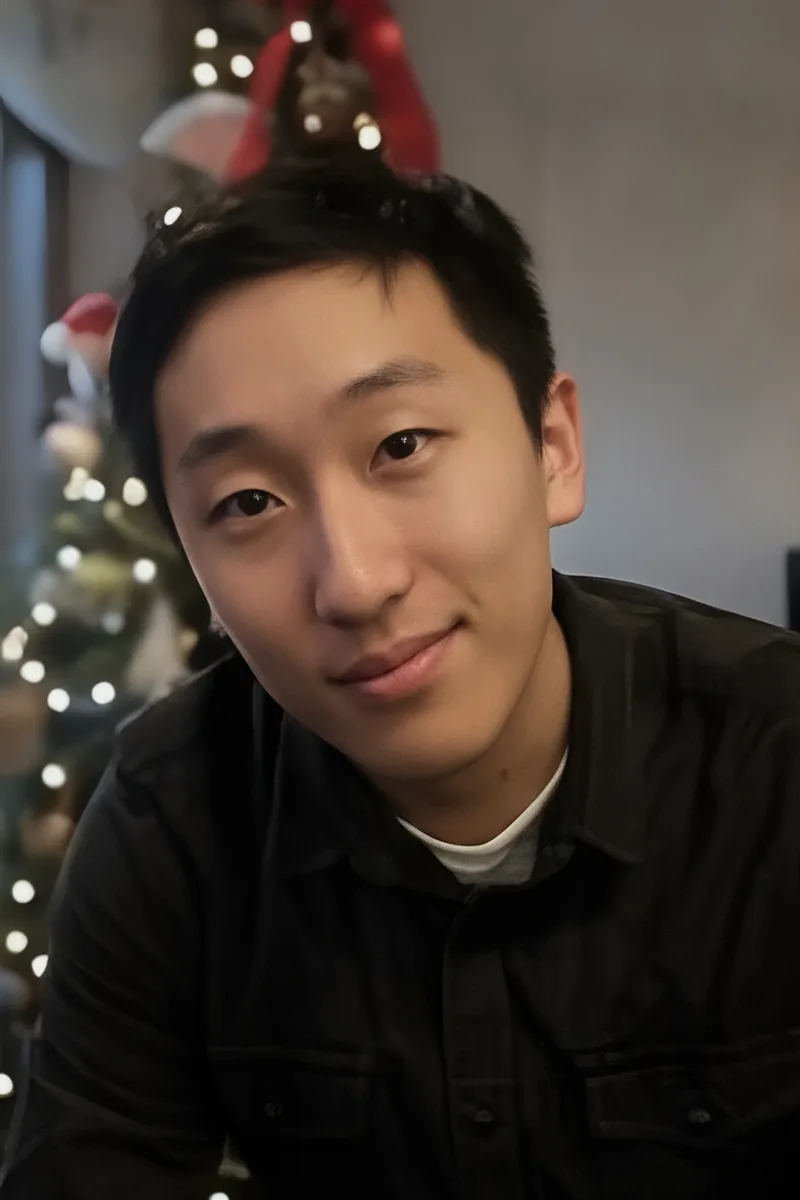
Series convergence tests, parametric equations, and polar curves make BC the course where strong calculus students suddenly feel lost. Kevin tackles these topics by connecting them back to the AB foundations students already know, building each new idea as a logical extension rather than a disconnected formula. His engineering coursework at Case Western means he's still using BC-level calculus regularly.

Series convergence tests, parametric equations, and polar curves are where BC diverges from AB — and where most students start feeling lost. Ella breaks these topics into manageable pieces, connecting new BC concepts back to the AB foundations students already understand. Her economics background also means she's comfortable with the applied integration and differential equation problems that frequently appear on the exam.
Maxwell's dual degree in mathematics and physics means he didn't just pass through BC Calculus — he kept using its tools in upper-level coursework like differential equations, multivariable calculus, and quantum mechanics, where sloppy series reasoning or weak integration technique falls apart fast. That ongoing fluency makes him especially sharp at teaching the logic behind convergence tests and polar area setups, not just the steps. Holds a 5.0 rating.
BC Calculus layers series convergence, parametric equations, and polar coordinates on top of an already demanding AB curriculum, so students need a tutor who can connect those threads clearly. Ricardo's chemistry coursework at Ohio State means he regularly applies Taylor series and differential equations in real problem-solving contexts, giving him a practical fluency that translates directly to AP exam preparation.
BC Calculus layers on convergence tests, parametric equations, and polar curves at a pace that loses a lot of students mid-semester. Jie tackles these topics by tying them back to the AB foundations students already know, so series and integration techniques feel like natural extensions rather than entirely new material. His computer engineering coursework at Michigan keeps him working with these concepts regularly.
Convergence tests, Taylor series, and parametric equations all demand a level of mathematical fluency that builds on everything from AB and beyond. Lillian breaks these BC-specific topics into logical sequences, connecting each new technique back to the core calculus reasoning students already have so the jumps feel manageable rather than overwhelming.
Series convergence tests, parametric equations, polar curves — AP Calculus BC piles on topics fast, and falling behind on even one unit can snowball. Brian's approach is straightforward: work through problems until the patterns click, whether that's integration by parts or Taylor series approximations. His strong math foundation from studying computer science at Case Western Reserve keeps sessions grounded in real understanding rather than formula sheets.
Chemical engineering Ph.D. work means Alexander spent years where series approximations and integration techniques weren't exam problems — they were how he modeled reaction kinetics and heat transfer systems daily. That depth shows up when he teaches BC-specific topics like convergence tests or improper integrals, because he can trace exactly where a student's reasoning breaks down rather than just re-demonstrating the procedure. Rated 4.9 by students.
A Ph.D. in Applied Mathematics means Dr has spent years working with the exact machinery underneath BC Calculus — not just computing Taylor series or evaluating convergence tests, but understanding the theoretical scaffolding that makes them rigorous. That depth lets him pinpoint whether a student struggling with, say, the Lagrange error bound actually has a gap in polynomial approximation reasoning or just needs a clearer framework for bounding remainders. Rated 4.9 by students.
Physical chemistry PhD work at Ohio State means Emily lives in the calculus that most BC students only see on exams — series approximations for modeling molecular behavior, integration techniques in thermodynamic derivations, differential equations describing reaction kinetics. She teaches topics like Taylor polynomial construction and convergence tests by grounding them in the physical intuition her chemistry training built, which makes abstract procedures feel like they're actually describing something. Rated 5.0 by students.
Mechanical engineering put Steven through the full calculus sequence with real stakes — designing load-bearing structures and modeling dynamic systems means integration techniques, series approximations, and differential equations had to actually work, not just produce correct exam answers. He's particularly effective at breaking down the transition from AB to BC, where topics like convergence tests and Taylor polynomials can feel sudden if the underlying logic isn't made explicit. Rated 4.9 by students.
BC Calculus throws students into territory where AB concepts aren't enough anymore — Taylor series, parametric equations, and convergence tests each demand a different kind of reasoning. Samuel's math minor at Ohio State means he's studied these ideas well past the AP level, so he can explain not just how to set up a polar area integral but why the formula works. His 4.6 rating speaks to how well that deeper approach clicks with students.
Most tutors on this page come from engineering or applied math — Nora's path is different, but her 4.8 rating across a wide spread of math subjects (through BC Calculus) shows she knows how to make dense material land. She's especially deliberate about the AB-to-BC transition, breaking down how new ideas like series convergence and parametric derivatives grow out of limits and integration students have already internalized. Her engineering lab work keeps her comfortable with the applied side, so she can ground abstract convergence tests in concrete reasoning.
BC Calculus piles on convergence tests, parametric equations, and polar coordinates on top of an already demanding AB curriculum. As an actuarial science major who uses series and integration techniques in probability modeling, John connects these topics to their practical applications. He walks through each convergence test with clear decision frameworks so students aren't guessing which one to apply.
Most BC students don't struggle because the material is impossibly hard — they struggle because a shaky concept from weeks ago quietly compounds until Taylor series or convergence tests feel overwhelming. Viola spots those buried gaps early, tracing a student's confusion on something like the ratio test back to the specific limit or sequence reasoning that didn't fully click. Her computer science studies at NYU Tandon keep her immersed in the kind of algorithmic, step-by-step thinking that makes BC's layered problems manageable.
Jacob's MA in Mathematics means he's worked through the proofs and theory that sit beneath every BC topic — so when a student hits a wall on, say, the Lagrange error bound or a tricky ratio test, he can trace the confusion back to the underlying reasoning rather than just re-demonstrating the procedure. He's especially sharp at the transition points where AB intuition needs to stretch into new territory, like moving from basic integration to handling improper integrals or building Taylor series from scratch. His 1540 SAT speaks to the same precision he brings to walking through convergence logic step by step.
The jump from AB to BC is where most students lose their footing — suddenly convergence tests, Taylor polynomials, and parametric derivatives all land at once with no breathing room. Christopher's background in physics and physical chemistry means he learned these tools by necessity, using series expansions to model real systems and integration techniques to solve problems that don't have neat closed-form answers. That applied instinct lets him teach BC topics as connected ideas rather than a checklist of procedures to survive.
Having TA'd Calculus I and II at Rice while pursuing a graduate degree in computational and applied mathematics, Sakibul knows exactly where the AB-to-BC transition trips students up — particularly when series convergence and parametric differentiation demand a sharper kind of reasoning than anything before. He breaks down topics like interval of convergence arguments and integration techniques by rebuilding the logic from scratch rather than handing over shortcuts. His applied math background means he treats Taylor approximations and error bounds as precision tools, not abstract busywork.
Environmental engineering graduate work is essentially applied calculus — Kate's thesis work required series approximations for modeling fluid dynamics and integration techniques for analyzing pollutant transport, so BC topics like Taylor polynomials and improper integrals are tools she's used professionally, not just academically. She's particularly good at showing how convergence tests follow a logical decision tree rather than feeling like a random grab bag of techniques. Rated 4.9 by students.
Sanjana doesn't just know AP Calculus BC — she teaches it, serving as a Course Assistant for Harvard's introductory calculus sequence. That means she's seen exactly where students stumble on Taylor series, parametric equations, and convergence tests, and she knows how to untangle those concepts in real time. Rated 5.0 by students.
Penn's economics program leans heavily on calculus-driven modeling, and Mandy is working through that curriculum right now — which means BC topics like series approximations and integration techniques show up in her coursework as tools for analyzing economic behavior, not just abstract exercises. She's especially clear at walking through the logic of convergence tests and connecting new BC material back to the AB foundations underneath it. Holds a 5.0 rating.
Managing an immunology research lab at Columbia means Matthew lives in the quantitative deep end — modeling biological systems, analyzing experimental data — and his physics degree built the calculus fluency that makes that possible. He's especially sharp on the BC topics that trip students up after AB: constructing Taylor series from scratch, navigating convergence tests systematically, and connecting parametric or polar problems back to the derivative logic underneath them.
BC Calculus throws students into convergence tests, parametric equations, and polar curves on top of an already demanding AB foundation — it's a lot to hold in your head at once. Corrina's mechanical engineering degree meant living in multivariable and differential equations daily, so she teaches series and integration techniques with the fluency of someone who actually uses them. Rated 4.7 by students.
Biology majors at WashU don't just memorize — Laura's upper-level coursework in evolutionary modeling and physical chemistry means she's actively using integration techniques, differential equations, and series approximations to solve problems outside a math classroom. That cross-disciplinary fluency is especially useful for BC's trickiest conceptual leap: understanding what a Taylor polynomial actually approximates and why specific convergence tests apply in specific situations. Rated 5.0 by students.
When students hit BC's convergence tests and feel like they're just memorizing a checklist of names — ratio, root, integral, comparison — Samuel reframes each test as a question about how a series behaves, turning rote steps into genuine reasoning. His applied mathematics coursework means he's actively using Taylor series and parametric models in contexts where getting the convergence wrong isn't just a lost point but a broken solution. That perspective, plus a 1590 SAT reflecting sharp quantitative instincts, keeps his teaching grounded in understanding rather than procedure-shuffling.
Most BC students can follow a convergence test step by step but freeze when asked to choose which test to apply — that decision-making is where Nima, a physics major heading to Duke on a full merit scholarship, spends most of his teaching energy. His physics training means he treats series and parametric equations as descriptions of real motion and real forces, which gives students an intuitive anchor when the abstraction piles up. A 1580 SAT and 4.7 rating back up his ability to make that AB-to-BC jump feel manageable.
Justin's PhD work in Computational and Applied Mathematics at the University of Chicago means he doesn't just teach Taylor series and convergence — he builds on them daily in research involving image processing and climate modeling, where approximation methods have to actually hold up under real conditions. That perspective sharpens how he explains error bounds and series manipulation, grounding each technique in why it matters rather than just how to execute it on an exam. Rated 5.0 by students.
Biomedical engineering at Yale means Jonathan lives in the calculus that comes after most students stop — modeling biological systems with differential equations, approximating nonlinear tissue behavior with series expansions, running convergence analysis on numerical simulations. That daily exposure makes him especially effective at teaching the logic behind the ratio and integral tests, because he's seen firsthand what happens when you pick the wrong one. Holds a 5.0 rating.
Convergence tests, parametric equations, and Taylor series expansions are where BC separates from AB — and where many students start to feel lost. Rithi breaks these topics into intuitive steps, connecting new concepts back to the foundational calculus reasoning students already have. Her 1550 SAT and deep STEM background reflect the kind of mathematical fluency that makes those connections clear.
Testimonials
Because the right AP Calculus BC tutor makes all the difference.
Average Session Rating – Based on 3.4M Learner Ratings
Practice AP Calculus BC
Free practice tests, flashcards, and AI tutoring for AP Calculus BC
Other Canton Tutors
Related Math Tutors in Canton
Frequently Asked Questions
Varsity Tutors matches Canton students with expert AP Calculus BC tutors for 1-on-1 instruction. We pair each student with a tutor based on their specific needs, learning style, and goals.
Whether you need homework help, exam prep, or want to get ahead, our AP Calculus BC tutors are ready to help.
Common challenges include gaps from earlier material, difficulty with specific concepts, and trouble applying learning to new problems. These issues can snowball quickly in AP Calculus BC.
A tutor identifies where you're stuck, fills in gaps, and provides targeted practice. The 1-on-1 format means you get help exactly where you need it.
Tutors work with your student's actual coursework—homework assignments, class notes, and upcoming tests. This keeps tutoring directly relevant to what's happening in the classroom.
When you share information about your student's school and curriculum, we can match you with a tutor who has relevant experience.
All tutors complete background checks, credential verification, and teaching evaluation. Many of our AP Calculus BC tutors hold advanced degrees or have years of teaching experience.
You can review tutor profiles to find someone with the right background for your student's level and needs.
Many students see improved grades within a few weeks, along with better understanding of AP Calculus BC concepts and more confidence tackling challenging material.
Tutors track progress and adjust their approach to ensure continued improvement.
Most students benefit from 1-2 sessions per week. More frequent sessions help if your student is significantly behind or has an important exam coming up.
Your tutor can recommend a schedule based on your student's specific situation and goals.
Tutoring is purchased in packages of hours, with rates varying by tutor experience. Varsity Tutors offers several options to fit different budgets and needs.
You can discuss pricing during your consultation to find what works best.
Your tutor will assess where your student is, discuss goals, and start working on priority areas. Most students bring current homework or upcoming test material to focus on.
By the end, you'll have a clear sense of how the tutor can help and a plan for moving forward.
Let’s find your perfect tutor
Answer a few quick questions. We’ll recommend the right plan and match you with a top 5% tutor.