Award-Winning Chemistry Tutors
serving Akron, OH
Chemistry
Tutors in Akron
Private 1-on-1 tutoring, weekly live classes for academic support, test prep & enrichment, practice tests and diagnostics, and more to elevate grades and test scores.
Based on 3.4M Learner Ratings
UniversitiesSchools & Universities
DeliveredHours Delivered
ProficiencyGrowth in Proficiency
Who needs tutoring?
No obligation. Takes ~1 minute.
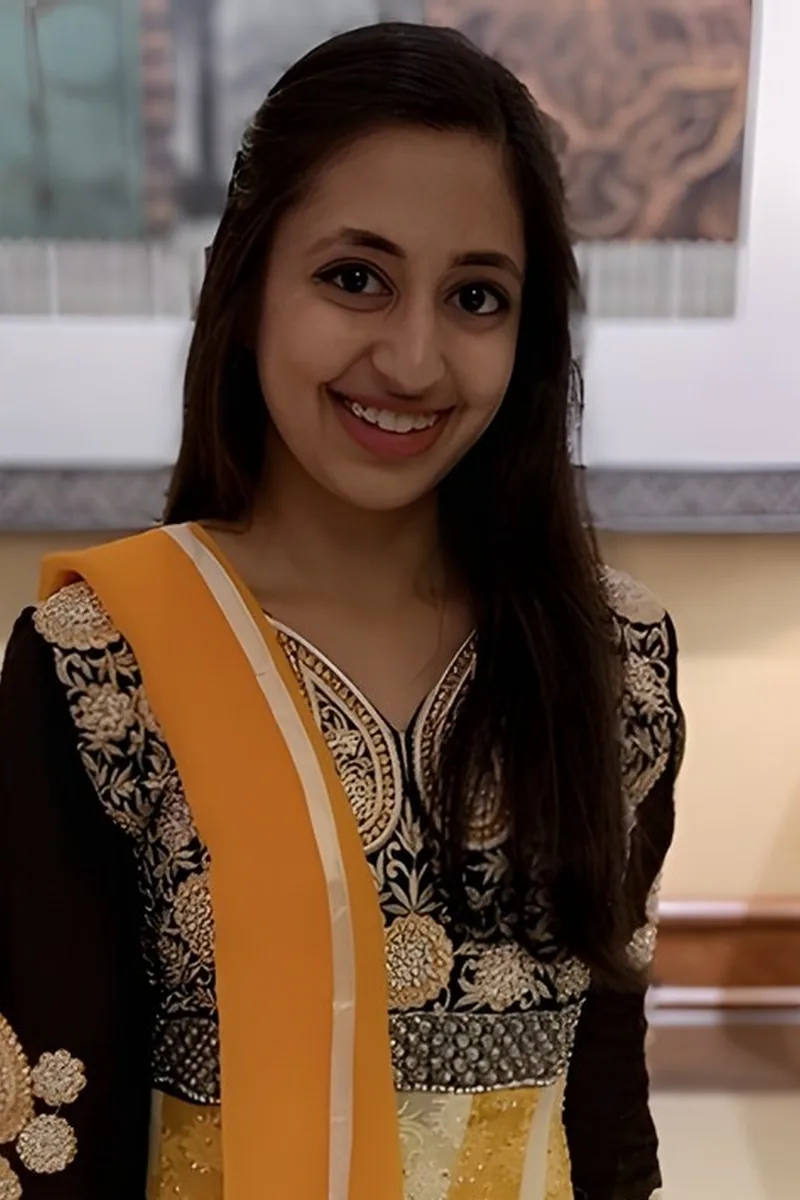
Studying chemistry as a major — not just a prerequisite — gives Maria a depth that shows when she explains topics like molecular orbital theory or reaction kinetics. She walks through problems step by step, connecting the math to the molecular-level picture so that balancing equations and stoichiometry calculations actually make sense.
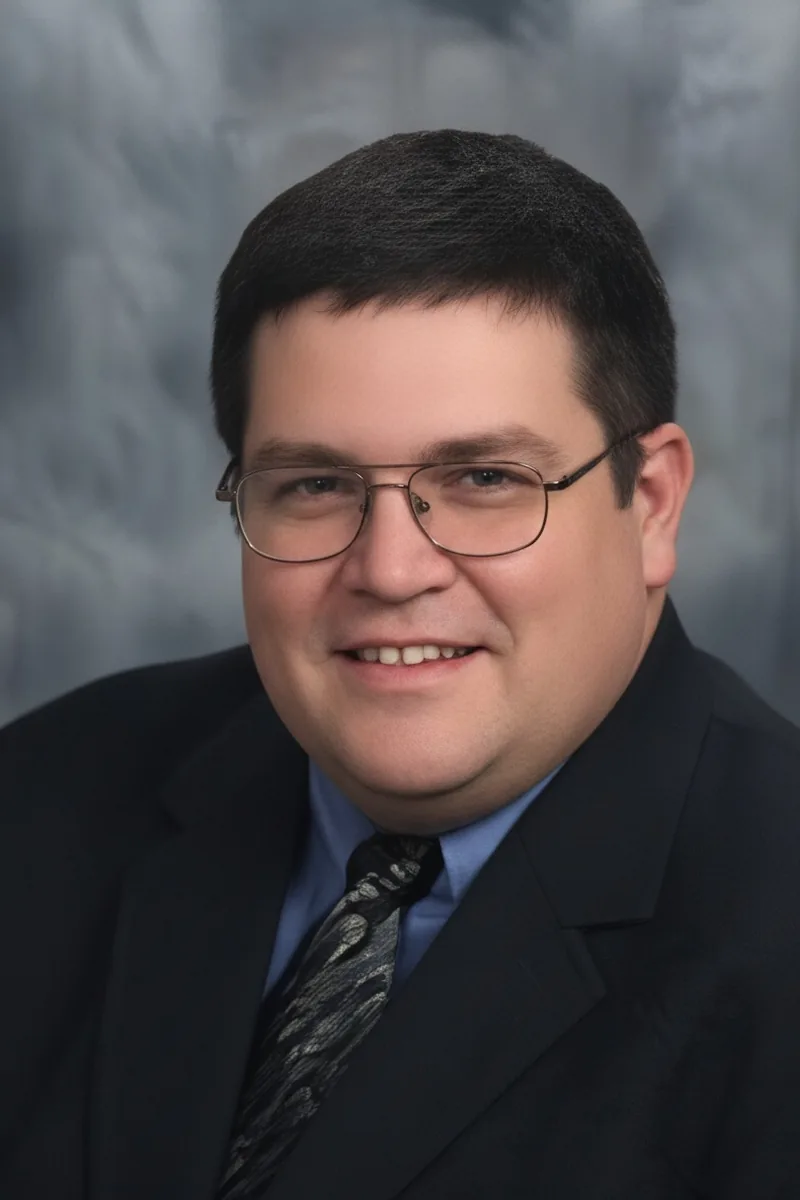
I am a chemical and environmental engineer of long experience who has a knack for explaining science and math concepts in ways that students can understand, helping them to get the concepts. I also help students with their homework in all those areas. While my strong suit is math and science, I can also help explain concepts in English, writing, history, and social studies, as well as edit/proofread papers as needed.
Cornell's chemical engineering program is notoriously rigorous on the chemistry side — physical chemistry, organic chemistry, and thermodynamics are all baked into the curriculum before students ever touch reactor design. Rahul graduated magna cum laude from that program, which means he's internalized concepts like reaction kinetics, equilibrium, and energy transfer at a level most chemistry tutors simply haven't reached. He pushes for conceptual understanding over memorization, so students learn to predict what should happen in a reaction rather than just recalling what the textbook says.
Stoichiometry, electron configurations, equilibrium — chemistry demands comfort with both abstract models and precise calculations. Priya's math background at Vanderbilt gives her a natural advantage when it comes to the quantitative side, and her experience tutoring science since high school means she can unpack the conceptual reasoning behind things like why certain reactions are spontaneous or how molecular geometry shapes polarity.
Few tutors bring the depth Amy does to chemistry. With a bachelor's in the subject and a master's in environmental toxicology, she unpacks everything from atomic structure and periodic trends to reaction mechanisms and thermochemistry with the confidence of someone who uses this science daily — rated 5.0 by the students she's worked with.
Balancing equations, stoichiometry, and mole conversions tend to be the first places students lose confidence in chemistry. Vishank tackles these by connecting each calculation back to what's actually happening at the molecular level, making the math feel purposeful rather than abstract. His 4.9 rating speaks to how well that approach lands with students.
I am an upbeat and patient tutor. I like to make learning as fun as possible, and I'm constantly learning new things.
Biomedical engineering training means Kevin learned chemistry not as an isolated subject but as the foundation for understanding how materials interact with living systems. He breaks down stoichiometry, equilibrium, and reaction kinetics by connecting them to real applications — which tends to make the logic behind the math click faster. Rated 5.0 by students.
A biology degree with a chemistry minor means Sanjul spent years in the overlap between the two — balancing equations, understanding reaction kinetics, and applying acid-base chemistry to physiological systems. He approaches general chemistry topics like stoichiometry, molecular bonding, and equilibrium through diagrams and 3D models that turn abstract formulas into something students can actually picture.
Balancing equations, predicting products, working through stoichiometry — chemistry often feels like learning five different skills at once. Lyndsey untangles those layers by teaching each concept as its own step before combining them, drawing on the deep chemistry foundation she built through her biochemistry degree.
Balancing equations and stoichiometry problems click faster when you understand the logic behind them, not just the steps. Sunny's biology degree and current work as a research associate mean she regularly applies chemical principles in a lab setting, giving her a practical lens on everything from molarity calculations to acid-base equilibria. Rated 5.0 by students.
Whether it's balancing redox reactions, predicting products, or converting between moles and grams, chemistry rewards methodical problem-solving over memorization. Ricardo has tutored chemistry at Ohio State for five years, which means he's seen virtually every stumbling block the subject throws at students. He teaches a structured approach to stoichiometry and unit conversions that students can apply independently on homework and exams.
As a pharmacy student, Lillian uses chemistry daily — balancing thermodynamics, equilibrium, and acid-base concepts against real-world applications like drug solubility and reaction kinetics. She breaks down intimidating topics like electrochemistry and molecular orbital theory into clear, logical steps. Her 4.9 rating speaks to how well that approach clicks with students.
Balancing equations, understanding molarity, and predicting reaction products all require a kind of structured thinking that doesn't always come naturally. William approaches chemistry by teaching students to read a problem like a puzzle — identifying what's given, what's missing, and which concept bridges the gap. His broad science background means he can pull in examples from biology and neuroscience to make abstract ideas tangible.
Emily is a physical chemistry PhD student at Ohio State, which means she lives inside the subject — from molecular orbital theory to reaction kinetics to thermodynamic equilibria. She's especially sharp at connecting the math behind chemistry (logarithms in pH, stoichiometric ratios, rate laws) to the conceptual understanding that makes exam problems feel intuitive. Rated 5.0 by her students.
Balancing equations and stoichiometry are really just ratio problems in disguise — but the chemical notation makes them look scarier than they are. Sunay strips away that intimidation by walking through mole conversions and reaction types with clear, repeatable methods. His analytical mindset from studying neuroscience at Emory translates well to the systematic thinking chemistry demands.
A strong intuition for stoichiometry, bonding, and reaction types makes all of general chemistry more manageable. Alexander approaches these topics the way an engineer would: systematically, with an emphasis on dimensional analysis and understanding why a reaction proceeds rather than just balancing it on paper.
Having served as a teaching assistant for general chemistry at the college level, Maria knows exactly where students get tripped up — whether it's stoichiometry, equilibrium expressions, or thermodynamics. She breaks each problem into a clear chain of reasoning so students can reconstruct the logic on an exam without relying on memorized shortcuts.
From stoichiometry to thermodynamics to acid-base equilibria, Joseph covered chemistry extensively as part of his biomedical engineering and pre-med coursework at the University of Akron. He unpacks reaction mechanisms and dimensional analysis with an engineer's attention to units and precision. Students who feel lost in the math-heavy parts of chemistry benefit from his ability to bridge the two disciplines.
Before entering his graduate program at Case Western Reserve, Ryan tutored undergraduates in general chemistry — everything from stoichiometry and gas laws to acid-base equilibria and thermodynamics. He approaches each topic by building a clear mental model first (what's actually happening at the molecular level) and then layering on the math. That sequence keeps students from blindly plugging into formulas without understanding what they're calculating.
Working at the NIH after completing her biochemistry degree at Swarthmore, Susie brings a researcher's instinct to general chemistry — she knows which concepts like acid-base equilibria, reaction kinetics, and electron orbital theory actually matter when the material gets applied in a lab setting. That perspective lets her teach topics like chemical bonding and thermodynamics with a clarity that comes from using them daily, not just memorizing them for an exam. Rated 5.0 by students.
A master's degree in chemistry means Chad has cycled through general, organic, inorganic, and physical chemistry multiple times — first as a student, then as someone applying those principles in advanced coursework. He's particularly effective at dimensional analysis, balancing redox equations, and the stoichiometry problems that form the backbone of most chemistry courses. Rated 4.8 by students.
Between his biochemistry coursework and medical school preparation, Robert lives in chemistry daily. He unpacks topics like stoichiometry, molecular geometry, and acid-base equilibria by connecting them to tangible applications — why buffer systems matter in your blood, or how electronegativity shapes the molecules around you.
I am always willing to help and I will try my best to help students who desire further understanding of the subject at hand.
Teaching general chemistry at the college level every day gives Jennifer an unusually clear picture of what trips students up — stoichiometry, electron configurations, acid-base equilibria, and the math woven through all of it. She connects each topic to applications from her research collaborations in biology, pharmacy, and medicine, so concepts stick to something concrete.
Whether it's balancing redox reactions, predicting molecular geometry, or working through stoichiometry, Emeric approaches chemistry by connecting each concept to the underlying logic rather than treating it as a set of disconnected formulas. His biochemistry degree required mastering general and organic chemistry at an advanced level, so he knows exactly where students tend to get tripped up.
Exercise physiology coursework at Ohio University means Adam has worked through chemistry from the biological side — understanding how metabolic reactions depend on enzyme kinetics, pH buffering systems, and the thermodynamics of energy transfer in living tissue. That hands-on science background, paired with a biological sciences minor, gives him a practical frame for teaching topics like stoichiometry, molecular bonding, and acid-base chemistry that roots each concept in something tangible.
Balancing equations, understanding molarity, and predicting reaction products all require a kind of structured thinking that comes naturally to an engineering student. Nicholas tutors college peers in chemistry at the University of Dayton and digs into the reasoning behind stoichiometry and thermodynamics rather than just drilling formulas. He has students walk through each problem aloud so he can identify exactly which concept — electron configuration, equilibrium, gas laws — needs more attention.
Stoichiometry, equilibrium, and thermodynamics each demand a different kind of reasoning, and Sashwat adjusts his approach accordingly — dimensional analysis for stoich, conceptual "stress" thinking for Le Chatelier problems, and energy diagrams for thermo. As a microbiology major on the pre-med track, he's taken chemistry at the college level and knows exactly where high school and introductory courses tend to lose students. He's especially sharp on acid-base chemistry and solution calculations.
Balancing equations, converting between moles and grams, and predicting reaction products all require a kind of systematic problem-solving that Heather drills until it becomes second nature. Her physics and engineering background means she approaches chemistry quantitatively, walking through unit conversions and stoichiometric ratios with the precision of someone who uses dimensional analysis daily.
Stoichiometry, equilibrium, acid-base reactions — chemistry rewards students who think in proportions and patterns, not just memorized formulas. Christopher approaches the subject from a physical science perspective, connecting concepts like enthalpy and reaction kinetics to the math and physics principles behind them. Students who feel lost in a sea of equations often find that his explanations make the logic click.
Between his chemistry major and his current MBA studies, Aaron has spent years solving problems that demand precision — balancing redox equations, calculating molar concentrations, and applying gas laws under timed conditions. He tackles each topic by first making sure students understand the underlying concept before drilling the math, which keeps everything from feeling like disconnected formulas.
Sociology taught Ariel to think in systems — how variables interact, how one change ripples through a whole structure — and that same logic applies surprisingly well to chemistry topics like equilibrium shifts and stoichiometric relationships. Her ACT score of 31 confirms she can handle the quantitative side, and she leans on clear, step-by-step breakdowns of problems like mole conversions and balancing equations to make the process transparent.
I am a recent graduate of The Ohio State University, where I received a Bachelor's of Science in Exercise Science Education. At Ohio State, I also was a Defensive Back on the football team, and have tutored many of my teammates. We accomplished much as a team, and became 2014-2015 College Football National Champions. Furthermore, I was named an OSU Scholar Athlete four times, and selected to the Academic All-Big Ten team two times. I will be beginning medical school in August of 2016. Before that begins, I am working as a personal trainer/performance coach, in addition to tutoring.
I am able to tutor a wide variety of subjects, including middle school and high school biology, chemistry, English, Spanish, and Pre-Algebra to Algebra II. I am also able to help with creating effective study techniques for the high school and college years, as well as tutoring all four subjects of the ACT.
As a dedicated Biology major at The Ohio State University, I am passionate about guiding students through the intricacies of science and mathematics. With over 2 years of tutoring experience, I specialize in AP Biology, AP Chemistry, and various levels of calculus, fostering a deep understanding of these subjects. My teaching philosophy emphasizes interactive learning and effective study habits, ensuring students not only grasp concepts but can also apply them to solve problems independently. I believe in the potential of every student to succeed, and I strive to create a supportive environment where they can thrive. Outside of academics, I enjoy sports, solving Rubik's cubes, and immersing myself in music, which keeps my approach to tutoring dynamic and engaging. I am committed to helping the next generation of learners achieve their fullest potential.
I am currently in my second year of medical school. Because of my diverse academic background, I am able to tutor in a wide range of topics, from Economics and math to Russian and ACT prep.
I'm an Economics major at Vassar College who has tutored peers and children for four years, and have learned as much from teaching as those I've taught. In my experience it is easiest for a student to learn when their teacher engages with them directly and adapts their way of teaching to the learning style and interests of the student. This has always been how I have learned most effectively as a student, and is how I attempt to instill knowledge as a teacher.
I am a fourth year medical student at Case Western Reserve University and will be starting my surgical training in 2020 at NYU. I graduated from Skidmore College in 2014 with a BA in Biology and a Music Minor (violin). I tutored extensively from 2014-2016 while working in Boston, MA as a research coordinator and I am comfortable teaching MCAT and STEP 1 board exam material. I believe that every student has the potential to achieve their goals and I look forward to making this process rewarding, exciting and fun!
I am pursuing a Bachelor of Music in opera performance and a Bachelor of Arts in art history. I've been tutoring music theory and ear training at school for two years, and have taught private voice lessons for a year. I also have experience tutoring writing, French, and Italian.
Testimonials
Because the right Chemistry tutor makes all the difference.
Average Session Rating – Based on 3.4M Learner Ratings
Practice Chemistry
Free practice tests, flashcards, and AI tutoring for Chemistry
Other Akron Tutors
Related Science Tutors in Akron
Frequently Asked Questions
Many students find balancing chemical equations, understanding mole concepts, and visualizing molecular structures particularly challenging. Beyond memorization, chemistry requires connecting abstract concepts like bonding and reaction mechanisms to real-world applications—something that's easier to grasp with personalized guidance. With an average student-teacher ratio of 14.2:1 across Akron's 21 school districts, getting that extra support through 1-on-1 instruction can make a significant difference in moving from memorizing formulas to truly understanding the chemistry behind them.
Your first session focuses on understanding your specific challenges—whether that's stoichiometry, equilibrium, organic chemistry, or lab report writing. The tutor will assess your current level, identify knowledge gaps, and discuss your goals, whether you're aiming to improve your grade, prepare for the AP Chemistry exam, or build confidence in the lab. From there, you'll develop a personalized plan that balances concept mastery with problem-solving practice.
Yes. Tutors can help you understand lab procedures, interpret experimental results, and develop strong lab reports that demonstrate scientific reasoning. They can also help you visualize what's happening at the molecular level during experiments and connect your observations to the underlying chemistry concepts. This support strengthens both your practical skills and your ability to think like a scientist.
Balancing equations is often the first major hurdle in chemistry, but it becomes manageable with a systematic approach. A tutor can break down the process step-by-step, help you recognize patterns, and give you targeted practice until it clicks. Rather than just memorizing coefficients, you'll understand the conservation of mass principle behind it—which makes harder problems feel less intimidating.
Unit conversions require both mathematical skill and conceptual understanding of what you're actually converting—moles to grams, liters to milliliters, concentration to molarity. Many students rush through or forget to track units, leading to wrong answers even when their approach is correct. Personalized tutoring helps you develop a reliable system for tracking units and understanding why each conversion matters in the context of the problem.
Concepts like molecular bonding, electron orbitals, and reaction mechanisms are inherently abstract, but tutors use diagrams, models, analogies, and real-world examples to make them concrete. For instance, explaining electronegativity through a tug-of-war analogy or using 3D visualizations of molecular geometry helps these ideas stick. When you can actually picture what's happening at the atomic level, chemistry transforms from memorization into logical problem-solving.
AP Chemistry requires mastery of both content and test-taking strategy. A tutor can help you work through challenging units like thermodynamics and kinetics, practice free-response questions, and develop time-management skills for the exam. They'll also help you understand the difference between what's testable on the AP exam versus what's just interesting chemistry—so your study time is focused and efficient.
Look for tutors with strong chemistry backgrounds—ideally chemistry majors, teachers, or professionals with demonstrated expertise. Beyond credentials, the best tutors can explain complex concepts clearly, adapt to your learning style, and connect theory to real-world applications. Varsity Tutors connects you with experienced tutors who understand both chemistry content and how to help students truly grasp it rather than just memorize it.
Let’s find your perfect tutor
Answer a few quick questions. We’ll recommend the right plan and match you with a top 5% tutor.