Award-Winning AP Computer Science Tutors
serving Fayetteville, NC
AP Computer Science
Tutors in Fayetteville
Private 1-on-1 tutoring, weekly live classes for academic support, test prep & enrichment, practice tests and diagnostics, and more to elevate grades and test scores.
Based on 3.4M Learner Ratings
UniversitiesSchools & Universities
DeliveredHours Delivered
ProficiencyGrowth in Proficiency
Who needs tutoring?
No obligation. Takes ~1 minute.

I am a graduate student at George Mason University studying Computer Science. I also graduated at Vanderbilt University, with Bachelors Degrees in Computer Science, Mathematics, and Philosophy. When a student does not understand a topic or concept, I believe the best way to teach it is to meet students where they are at, providing individually catered feedback, and exploring the aspects of a student's weaknesses, finding a way to explain the concept in a way that resonates with and makes sense to the student. I am most familiar with tutoring for the SAT, where I have generally increased scores by 120-300 points.
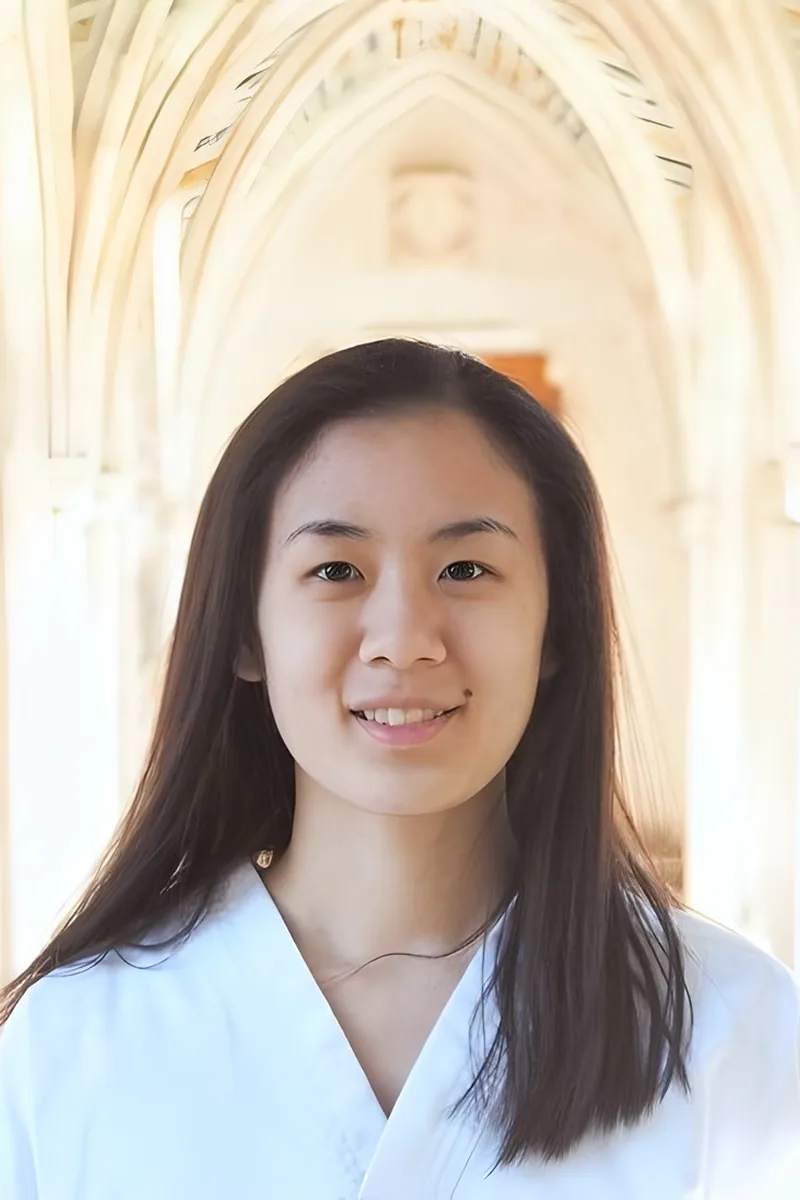
I am a rising senior at Duke University. I major in Computer Science and am also getting a minor in Physics. I have had experience tutoring/teaching as a teaching assistant for three classes: Intro to Databases, Electricity and Magnetism (for engineers), and Computer Network Architecture. I have had industry experience in software development as an intern for IBM and a cybersecurity analyst for TIAA. Outside of school/work, I play the piano and train with the Duke Taekwondo Club. I have a strong background in computer science, physics, and math, but I love learning about and helping students with a wide variety of subjects!
I am a Computer Science major at Duke University passionate about encouraging others who are learning CS so that they may come to understand the powerful, real-world impact that programming can have. As someone who has a strong background in tutoring, including, but not limited to, the chemistry tutoring club I co-founded in high school and my current involvement in the Duke Music Tutors organization, I am confident in my ability to tutor in a way that is focused, individualized, and memorable.
I am currently a student at The University of North Carolina at Chapel Hill pursuing a degree in Computer Science. I not only am incredibly passionate about programming and computer science, but about math and learning in general. I have experience teaching people young and old about computers and the way the work in depth. I love meeting new people and finding out the way they think so I can better serve them as a teacher.
I am a current undergraduate student at Duke University's Pratt School of Engineering. I am pursuing a bachelor of science in engineering in mechanical engineering, a minor in computer science, and a certificate in innovation and entrepreneurship. As an engineer, I believe one of my greatest strengths is breaking down complex ideas into manageable steps that are easy to follow. I have an abundance of STEM tutoring experience through my high school's National Honors Society chapter and as a freelance tutor. Additionally, I have experience working with children as an instructor for Techsplorer's engineering camps/workshops and as a member of the YMCA Leader's Club. The subjects I enjoy teaching are Algebra, Geometry, Calculus, Statistics, Trigonometry, Physics, and SAT/ACT Math and Science Prep. I believe that as a passionate younger college student, I am able to connect with students more effectively, as I was in their shoes not too long ago! Outside of school and teaching, I like to play Ultimate Frisbee, spend time with my dog, and work on personal engineering projects.
I am currently a physics major at the University of North Carolina at Chapel Hill. I have previously tutored at Mathnasium, teaching primarily middle school students with some elementary school students and some high school students. I primarily teach physics and math. I am very passionate about teaching, because I think every student has a different perspective. It is truly amazing how different students tend to think compared to adults, often displaying immense amounts of creativity, enthusiasm, and courage that most people could only dream of. It is important not to underestimate these qualities in young scholars, which is why I make it my goal to personally understand the students that I teach.
Northeastern's co-op model means Charles isn't just learning computer science in a classroom — he's cycling between coursework and real-world application, which keeps AP Computer Science A topics like object-oriented design and algorithm tracing grounded in how software actually gets built. His 1580 SAT speaks to the kind of precise, methodical reasoning that makes the difference on Java free-response questions, where one misplaced semicolon or off-by-one error can unravel an otherwise solid solution.
I am a Stanford student from Maryland studying Political Science and Computer Science. I graduated from high school in 2015, where I was active as the captain of my high school sailing team, a section leader in the orchestra, and part of the STEM magnet program Project Lead the Way. I am currently taking some time off from school to be around family here in Massachusetts and while I will be taking a few classes, I have plenty of time and lots of flexibility. I am excited to work with middle and high school students in math, reading and writing, social studies, and computer science. In addition to taking classes and tutoring this fall I will be volunteering in after school programs with low income middle and elementary school students.
Most AP Computer Science A students get tripped up not on syntax but on thinking through what their code actually does — tracing a loop iteration by iteration or figuring out why a method returns the wrong value. Dennis teaches across Java, JavaScript, and web development, which means he can explain object-oriented concepts from multiple angles and show students how the same logical patterns appear across languages. Rated 5.0 by students.
Scoring a 5 on the AP Computer Science exam while simultaneously deep in calculus, biology, and chemistry APs gave William a clear picture of how CS thinking differs from other STEM disciplines — it's less about formulas and more about structuring logic step by step. His dual engineering track at Vanderbilt (biomedical and chemical) means he regularly writes code to process lab data and model systems, keeping Java concepts like iteration, array handling, and method design sharp through actual use rather than exam review alone.
I am a 2023 graduate of the University of Notre Dame with a Finance/Economics major and a minor in Innovation and Entrepreneurship. I am a passionate student in the math and business realms, as I enjoy the intuitiveness of the former and the real-world potential of the latter. During classes in middle and high school, I developed a reputation of being a good source of help within my classes in a non-tutor capacity, and grew that into a peer tutor role a couple times a week during lunch my senior year of high school. What I hope to accomplish with my tutoring is ensure that you not only achieve your desired grade/score, but see how the different concepts relate to each other in the bigger picture. The more important part is to critically think about the subject matter in other, more unfamiliar contexts. Also, in my math subjects, I seek to provide personal secrets in realms including quicker computation strategies, unique acronyms for certain rules, and other intuitive shortcuts.
The AP Computer Science exam tests both conceptual understanding and the ability to trace through code under time pressure — two skills that require different preparation strategies. Sam's electrical and computer engineering background means he can walk students through recursion, object-oriented design, and array manipulation with the kind of precision that turns confusing exam questions into recognizable patterns.
The AP Computer Science exam tests more than just writing code — it demands quick reasoning about recursion, sorting algorithms, and array manipulation under time pressure. Kirollos, a CS major at NYU, unpacks each of these topics by having students trace through code by hand before ever touching a keyboard, building the kind of fluency the exam rewards.
I'm a sophomore at Vanderbilt University studying computer science, currently focusing on iOS and game development. I like growing as a person, but I find it much more interesting and rewarding to grow other people. Seeing a student change, not in intellect but in perspective, is fascinating. I like to focus more on concepts rather than memorization so that students will have the tools to excel in any facet of academia, beyond some random test that holds too much significance.
I am very passionate about teaching material in a way that works with each student's personal learning needs and making sure that they understand the material at its core, not just how to answer a test question. Because I majored in Neuroscience, I have expertise in a wide range of sciences, as Neuroscience is a very interdisciplinary subject. I have also had extensive experience in Computer Science. Outside of Neuroscience, I devoted a lot of time to studying the humanities. I even started a blog my junior year as an outlet to further pursue these academic interests! As a result, I also enjoy tutoring in Literature, English, and Writing.
The AP Computer Science A exam leans heavily on array manipulation, recursive methods, and class design — topics that reward structured thinking over memorization. Lloyd's data science background at Rochester means he tackles these concepts daily, and he teaches students to trace through code by hand so they can predict output on free-response questions without second-guessing.
Brian owns a web design business alongside his CS studies at Case Western Reserve, so he's not just learning Java in a classroom — he's shipping real code and debugging real problems on a regular basis. That practical loop of building, breaking, and fixing software gives him a concrete way to teach AP Computer Science A topics like object-oriented design and algorithm tracing through actual examples rather than abstract diagrams. Rated 5.0 by students.
Studying Computer Science at Cornell gives Jonathan daily exposure to the data structures, object-oriented design, and algorithmic thinking that drive the AP Computer Science exam. He breaks down topics like recursion and sorting algorithms by connecting them to real engineering problems from his coursework, making abstract concepts click faster.
Testimonials
Because the right AP Computer Science tutor makes all the difference.
Average Session Rating – Based on 3.4M Learner Ratings
Nearby AP Computer Science Tutors
Other Fayetteville Tutors
Related Technology and Coding Tutors in Fayetteville
Frequently Asked Questions
Varsity Tutors matches Fayetteville students with expert AP Computer Science tutors for 1-on-1 instruction. We pair each student with a tutor based on their specific needs, learning style, and goals.
Whether you need homework help, exam prep, or want to get ahead, our AP Computer Science tutors are ready to help.
Common challenges include gaps from earlier material, difficulty with specific concepts, and trouble applying learning to new problems. These issues can snowball quickly in AP Computer Science.
A tutor identifies where you're stuck, fills in gaps, and provides targeted practice. The 1-on-1 format means you get help exactly where you need it.
Tutors work with your student's actual coursework—homework assignments, class notes, and upcoming tests. This keeps tutoring directly relevant to what's happening in the classroom.
When you share information about your student's school and curriculum, we can match you with a tutor who has relevant experience.
All tutors complete background checks, credential verification, and teaching evaluation. Many of our AP Computer Science tutors hold advanced degrees or have years of teaching experience.
You can review tutor profiles to find someone with the right background for your student's level and needs.
Many students see improved grades within a few weeks, along with better understanding of AP Computer Science concepts and more confidence tackling challenging material.
Tutors track progress and adjust their approach to ensure continued improvement.
Most students benefit from 1-2 sessions per week. More frequent sessions help if your student is significantly behind or has an important exam coming up.
Your tutor can recommend a schedule based on your student's specific situation and goals.
Tutoring is purchased in packages of hours, with rates varying by tutor experience. Varsity Tutors offers several options to fit different budgets and needs.
You can discuss pricing during your consultation to find what works best.
Your tutor will assess where your student is, discuss goals, and start working on priority areas. Most students bring current homework or upcoming test material to focus on.
By the end, you'll have a clear sense of how the tutor can help and a plan for moving forward.
Let’s find your perfect tutor
Answer a few quick questions. We’ll recommend the right plan and match you with a top 5% tutor.