Award-Winning AP Computer Science Tutors
serving Charlotte, NC
AP Computer Science
Tutors in Charlotte
Private 1-on-1 tutoring, weekly live classes for academic support, test prep & enrichment, practice tests and diagnostics, and more to elevate grades and test scores.
Based on 3.4M Learner Ratings
UniversitiesSchools & Universities
DeliveredHours Delivered
ProficiencyGrowth in Proficiency
Who needs tutoring?
No obligation. Takes ~1 minute.
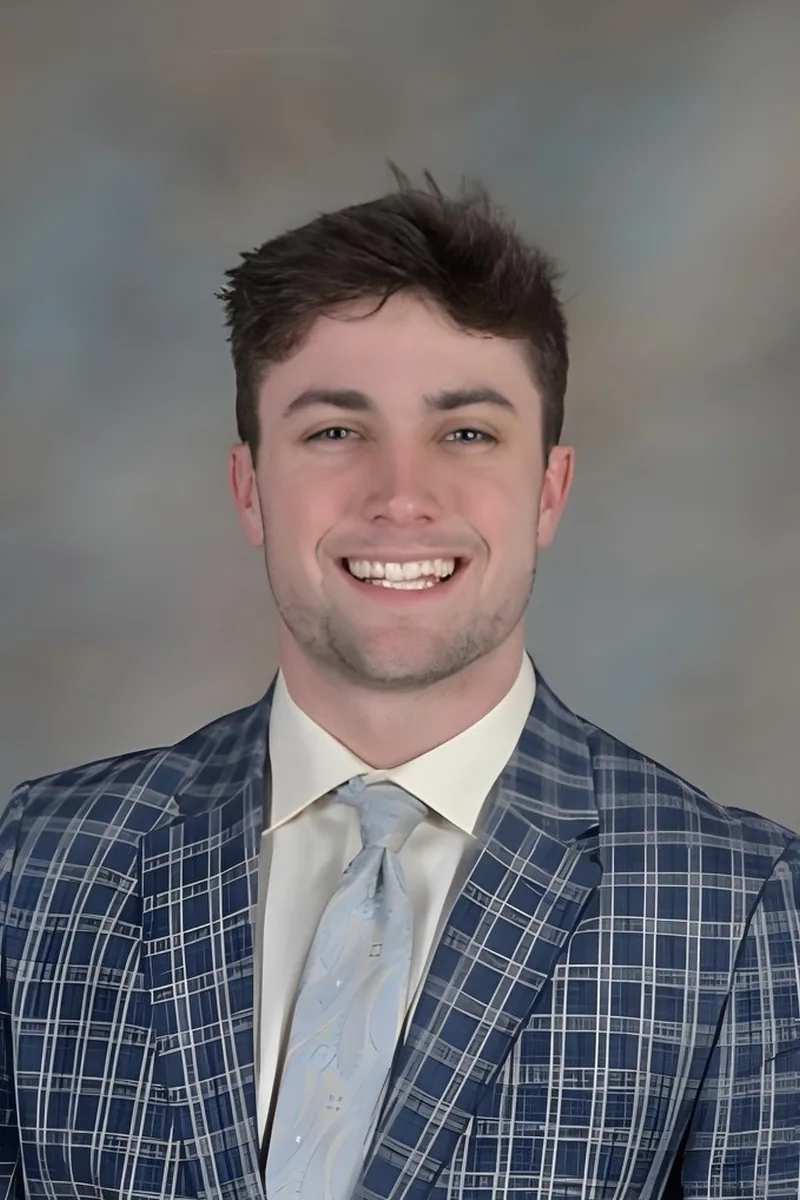
I am currently a student at The University of North Carolina at Chapel Hill pursuing a degree in Computer Science. I not only am incredibly passionate about programming and computer science, but about math and learning in general. I have experience teaching people young and old about computers and the way the work in depth. I love meeting new people and finding out the way they think so I can better serve them as a teacher.
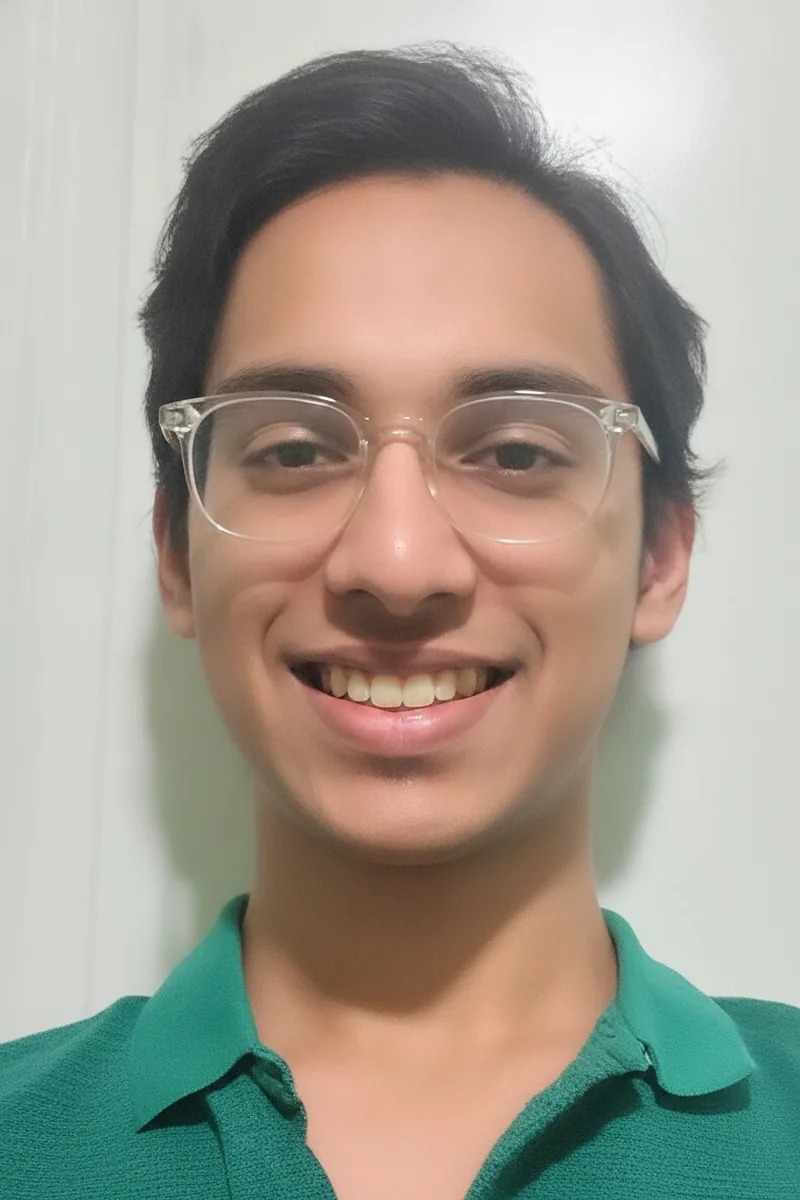
I am currently a physics major at the University of North Carolina at Chapel Hill. I have previously tutored at Mathnasium, teaching primarily middle school students with some elementary school students and some high school students. I primarily teach physics and math. I am very passionate about teaching, because I think every student has a different perspective. It is truly amazing how different students tend to think compared to adults, often displaying immense amounts of creativity, enthusiasm, and courage that most people could only dream of. It is important not to underestimate these qualities in young scholars, which is why I make it my goal to personally understand the students that I teach.
I am a rising senior at Duke University. I major in Computer Science and am also getting a minor in Physics. I have had experience tutoring/teaching as a teaching assistant for three classes: Intro to Databases, Electricity and Magnetism (for engineers), and Computer Network Architecture. I have had industry experience in software development as an intern for IBM and a cybersecurity analyst for TIAA. Outside of school/work, I play the piano and train with the Duke Taekwondo Club. I have a strong background in computer science, physics, and math, but I love learning about and helping students with a wide variety of subjects!
I am a Computer Science major at Duke University passionate about encouraging others who are learning CS so that they may come to understand the powerful, real-world impact that programming can have. As someone who has a strong background in tutoring, including, but not limited to, the chemistry tutoring club I co-founded in high school and my current involvement in the Duke Music Tutors organization, I am confident in my ability to tutor in a way that is focused, individualized, and memorable.
I am a current undergraduate student at Duke University's Pratt School of Engineering. I am pursuing a bachelor of science in engineering in mechanical engineering, a minor in computer science, and a certificate in innovation and entrepreneurship. As an engineer, I believe one of my greatest strengths is breaking down complex ideas into manageable steps that are easy to follow. I have an abundance of STEM tutoring experience through my high school's National Honors Society chapter and as a freelance tutor. Additionally, I have experience working with children as an instructor for Techsplorer's engineering camps/workshops and as a member of the YMCA Leader's Club. The subjects I enjoy teaching are Algebra, Geometry, Calculus, Statistics, Trigonometry, Physics, and SAT/ACT Math and Science Prep. I believe that as a passionate younger college student, I am able to connect with students more effectively, as I was in their shoes not too long ago! Outside of school and teaching, I like to play Ultimate Frisbee, spend time with my dog, and work on personal engineering projects.
I am a graduate student at George Mason University studying Computer Science. I also graduated at Vanderbilt University, with Bachelors Degrees in Computer Science, Mathematics, and Philosophy. When a student does not understand a topic or concept, I believe the best way to teach it is to meet students where they are at, providing individually catered feedback, and exploring the aspects of a student's weaknesses, finding a way to explain the concept in a way that resonates with and makes sense to the student. I am most familiar with tutoring for the SAT, where I have generally increased scores by 120-300 points.
Northeastern's co-op model means Charles isn't just learning computer science in a classroom — he's cycling between coursework and real-world application, which keeps AP Computer Science A topics like object-oriented design and algorithm tracing grounded in how software actually gets built. His 1580 SAT speaks to the kind of precise, methodical reasoning that makes the difference on Java free-response questions, where one misplaced semicolon or off-by-one error can unravel an otherwise solid solution.
Between physics problem sets and computer science coursework at Cornell, Joel writes Java and Python to solve real computational problems — not just classroom exercises. That dual perspective is especially useful for AP Computer Science A topics like algorithm design and object-oriented programming, where understanding the logic behind the code matters as much as getting it to compile. His 35 ACT reflects the kind of precise, systematic thinking that translates directly to tracing through free-response questions.
Most AP Computer Science A students get tripped up not on syntax but on thinking through what their code actually does — tracing a loop iteration by iteration or figuring out why a method returns the wrong value. Dennis teaches across Java, JavaScript, and web development, which means he can explain object-oriented concepts from multiple angles and show students how the same logical patterns appear across languages. Rated 5.0 by students.
Columbia's CS program has Julian writing Java and working with object-oriented design patterns well beyond the AP level, which means he can zoom in on exactly the pieces — like loop tracing, array logic, or class construction — that the exam actually tests. He's spent enough time in group study sessions watching classmates struggle with gaps in foundational concepts to know that solid understanding of how each line of code executes matters more than memorizing syntax.
As experienced and passionated educator with a Bachelor's degree in Computer Science from Rice University, I am passionate about empowering students to achieve their academic goals. With over 3 years of tutoring experience in subjects such as AP Computer Science A, Machine Learning, and SAT Math, I adapt to different learning styles and create a supportive learning environment. My teaching philosophy centers on personalized instruction, where I connect with each student to understand their unique learning styles and challenges. I take pride in guiding students through the complexities of computer science and college application essays, equipping them with the skills they need for future success. Outside of tutoring, I enjoy exploring new technologies and engaging in coding projects to improve my teaching approach.
I'm a recent graduate of the California Institute of Technology in Economics and Computer Science. I was also accepted at Harvard, Princeton, MIT, and Stanford. I have a broad range of interests spanning science, math, engineering, social science, the humanities, the arts, and athletics (I also played on the Caltech basketball team). My background allows me to tutor general college prep, especially the SAT, ACT and the GRE. I love to teach analytical thinking, ranging from advanced Math and Physics to strategies for understanding literature and developing arguments.
Jett codes in Java, Python, and C as part of his electrical and computer engineering program at UT Austin, so the AP Computer Science A curriculum — from writing classes to implementing algorithms — overlaps with work he's already doing for his degree. Where he especially shines is connecting programming logic to the underlying hardware, explaining how a for-loop or recursive call actually executes at the machine level, which makes debugging and tracing problems far less mysterious. Rated 5.0 by students.
Two years as a Java teaching assistant at Illinois Institute of Technology means Muntaser has watched hundreds of students wrestle with the exact concepts AP Computer Science A tests — inheritance, loop tracing, array logic — and learned how to explain them in ways that actually land. His computer engineering degree and professional software engineering work add a layer most tutors can't: he knows how these OOP principles play out in real codebases, not just on exam day.
Ryan studies computer science at UVA and knows the AP Computer Science curriculum inside out — from object-oriented design and recursion to array manipulation and sorting algorithms in Java. He teaches students to think through problems before writing a single line of code, building the kind of algorithmic reasoning that earns 5s on the exam. Rated 5.0 by students.
Recursion, sorting algorithms, and object-oriented design aren't just AP exam topics for Sebastian — they're concepts he uses daily in his computer science coursework at UCF. He teaches students to trace through code by hand before running it, building the kind of debugging intuition that turns a 3 into a 5. Free-response questions get special attention since that's where most points are left on the table.
Engineering coursework trains you to think in systems — breaking complex problems into modular, testable pieces — which is exactly the reasoning AP Computer Science A demands when students write classes, trace through nested loops, or debug recursive methods. Wesley's biomedical engineering degree and research in biophysical chemistry mean he's been coding to solve real scientific problems, not just completing textbook exercises. That applied perspective makes abstract Java concepts feel purposeful rather than arbitrary.
The AP Computer Science exam tests both coding fluency and the ability to trace through unfamiliar code under time pressure. Shlomo tackles both sides — drilling array manipulation, recursion, and ArrayList operations while also teaching the test-taking strategy that keeps students from burning time on free-response questions. His math background is especially useful for the algorithm-analysis problems that blend logic with computation.
Testimonials
Because the right AP Computer Science tutor makes all the difference.
Average Session Rating – Based on 3.4M Learner Ratings
Nearby AP Computer Science Tutors
Other Charlotte Tutors
Related Technology and Coding Tutors in Charlotte
Frequently Asked Questions
AP Computer Science covers two main areas: AP Computer Science A (object-oriented programming in Java) and AP Computer Science Principles (broader computational thinking concepts). Both courses emphasize problem-solving, algorithm design, data structures, and coding practices. The exam tests your ability to write code, trace through programs, and apply computational concepts to real-world scenarios. For students in Charlotte, understanding these core topics early helps you build a strong foundation for the May exam.
Personalized 1-on-1 instruction is particularly effective for AP Computer Science because coding requires hands-on practice and immediate feedback. Many students see significant improvements by working through past exam problems, refining their coding style, and learning test-specific strategies. The key is identifying your weak areas—whether that's understanding algorithms, debugging, or managing time during the exam—and targeting those gaps with focused practice.
Many students struggle with translating logic into clean, efficient code, understanding inheritance and polymorphism, or tracing through complex programs quickly under exam pressure. Time management is another major challenge—the exam requires both reading comprehension and coding speed. Additionally, students often underestimate the importance of understanding why code works, not just making it work. Tutors can help you build these conceptual foundations and develop strategies to work through problems methodically.
Start with practice tests early to understand the exam format and identify your weak areas—whether that's multiple-choice questions, free-response coding problems, or specific topics like arrays or recursion. Take full-length practice tests under timed conditions to build stamina and refine your pacing strategy. After each test, review every question you missed or found difficult, not just the ones you got wrong. Spacing out your practice tests over several months, rather than cramming them at the end, helps reinforce learning and build confidence.
Varsity Tutors connects you with expert tutors who assess your current coding skills and exam readiness, then create a customized study plan based on your goals and timeline. Sessions typically include reviewing challenging concepts, working through practice problems together, and receiving detailed feedback on your code and problem-solving approach. Your tutor can also help you develop test-taking strategies specific to AP Computer Science, like managing the free-response section and avoiding common coding mistakes.
Your first session is an opportunity for your tutor to understand your current level, learning style, and specific goals—whether you're aiming for a 3, 4, or 5 on the exam. You'll likely work through a coding problem or two together so your tutor can see how you approach problems and identify areas to focus on. By the end of the session, you'll have a clear sense of your strengths, the topics that need the most work, and a plan for your upcoming sessions.
Test anxiety for AP Computer Science often stems from uncertainty about whether your code will work or if you're solving problems correctly. Building confidence through repeated practice with real exam questions, under timed conditions, helps reduce anxiety significantly. Your tutor can also teach you strategies like reading questions carefully before coding, starting with easier problems to build momentum, and taking brief mental breaks if you feel overwhelmed. Knowing you've prepared thoroughly with personalized guidance is one of the best anxiety-busters.
The AP Computer Science exam has two sections: multiple-choice (90 minutes for 40 questions) and free-response (90 minutes for 4 coding problems). For multiple-choice, aim to spend about 2 minutes per question, flagging difficult ones to revisit. For free-response, spend a few minutes reading and planning your approach before coding. A tutor can help you practice this pacing on full-length exams and teach you when to move on from a question versus when to push through, so you maximize your score without wasting time on problems you can't solve quickly.
Let’s find your perfect tutor
Answer a few quick questions. We’ll recommend the right plan and match you with a top 5% tutor.