Award-Winning Middle School Math Tutors
serving Charlotte, NC
Middle School Math
Tutors in Charlotte
Private 1-on-1 tutoring, weekly live classes for academic support, test prep & enrichment, practice tests and diagnostics, and more to elevate grades and test scores.
Based on 3.4M Learner Ratings
UniversitiesSchools & Universities
DeliveredHours Delivered
ProficiencyGrowth in Proficiency
Who needs tutoring?
No obligation. Takes ~1 minute.
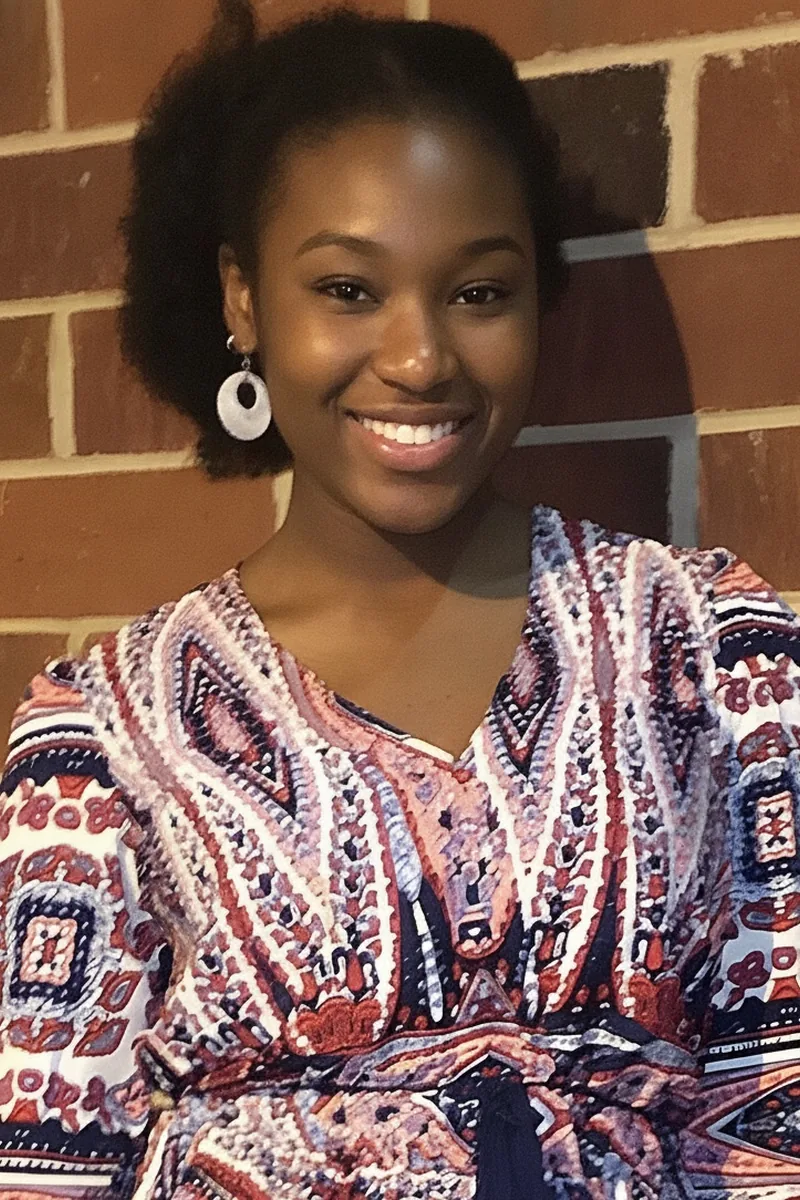
Fractions, ratios, proportions, and early equation-solving are the building blocks that determine whether a student feels confident or lost for years to come. Ify tackles middle school math by making sure each concept clicks before stacking the next one on top. Her 5.0 rating comes from the kind of patience that lets a student ask the same question three different ways without hesitation.
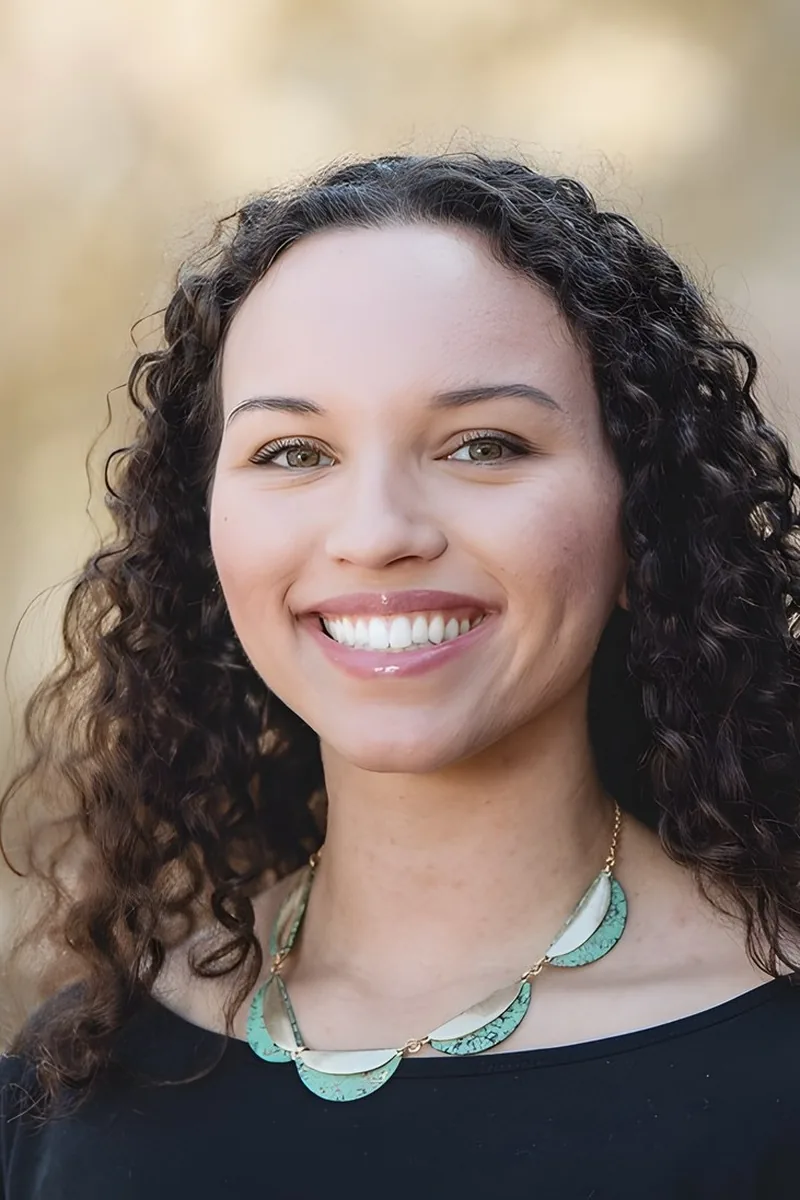
Isabel teaches middle school math out of UNC Chapel Hill, where her coursework spans calculus and algebra — meaning she already knows the full arc these students are heading toward and can anticipate exactly which gaps in fraction reasoning or integer operations will cause trouble later. Her 1400 SAT reflects solid quantitative chops, and she uses that broader perspective to make sure skills like simplifying expressions actually make sense to students rather than just becoming memorized steps.
Fractions, ratios, and pre-algebra concepts click faster when a student understands the reasoning behind each step — not just the procedure. Morgan's background in science and math-heavy graduate coursework at Georgetown means she can show middle schoolers why cross-multiplying works or how proportional thinking applies to real situations. Rated 5.0 by students.
Years of teaching reading and math to K–8 students through education equity programs gave Rebecca a sharp sense of how younger learners process new ideas. She tackles middle school topics like fractions, ratios, and introductory geometry by grounding each lesson in relatable, real-world scenarios. Her 5.0 rating speaks to an approach that keeps students engaged without dumbing anything down.
Fractions, ratios, and early equation-solving can feel like a maze when the "why" behind each step isn't clear. Jack breaks these concepts down using concrete examples — connecting percentages to real shopping scenarios or using visual models to make integer operations click. His computer science training at UNC Chapel Hill means he thinks in logical steps, which translates naturally to teaching middle schoolers how to approach multi-step problems.
At the middle school level, math confidence matters almost as much as math skill — one bad experience with fractions or ratios can snowball into years of avoidance. Daiven tackles this by making sure students can explain their reasoning out loud, not just arrive at a correct answer. Three years of tutoring younger learners taught him how to spot exactly where a concept broke down and rebuild from there.
Madison tackles middle school math by turning abstract problems into something students can actually see — drawing out ratio tables, graphing proportional relationships, and mapping geometry concepts with diagrams. Her biology studies at Guilford College keep her math skills sharp daily, and her 5.0 rating speaks to how well that visual approach lands with younger learners.
The jump from elementary arithmetic to middle school math — ratios, proportional reasoning, negative numbers, basic geometry — can feel overwhelming when everything hits at once. Cailee tackles each concept with clear step-by-step breakdowns and ties problems to real situations so the logic clicks. Her 5.0 rating speaks to how well that approach lands with students.
Having taught primarily middle schoolers at Mathnasium, Shourya knows the exact moments where students start second-guessing themselves — usually around fraction operations, order of operations with negatives, or the first time a letter shows up in a math problem. His physics training means he naturally frames these topics as tools for solving real puzzles rather than isolated procedures to memorize. Rated 4.9 by students.
The jump from fifth-grade math to ratios, proportions, and linear relationships can feel sudden. As a chemistry undergrad who uses these exact skills daily in lab calculations, Srikavya connects middle school math concepts to tangible, real-world problems that make the "why" behind each topic obvious.
From fractions and ratios to basic geometry and early equation-solving, middle school math covers a huge range of skills in a short time. Colleen keeps students organized by showing how each topic links to the next, so a lesson on proportions feeds directly into understanding percentages and scale factors.
The jump from arithmetic to algebraic thinking is the defining challenge of middle school math, and Taylor tackles it by showing students how concepts like ratios, proportions, and integer operations actually connect to each other. Her statistics background gives her a knack for making numbers feel logical rather than arbitrary.
Hello! I'm Kyle Gee, a passionate tutor with a Bachelor's degree in Urban Studies and Business Economics from Brown University. With experience in tutoring and coaching, I thrive on helping students achieve their academic goals, particularly in subjects like Spanish, basic math, and drawing. My teaching philosophy centers on patience and guidance; I believe in empowering students to discover answers independently, using analogies to enhance understanding and retention. I find great joy in witnessing their progress and confidence grow. In my free time, I enjoy drawing, which fuels my enthusiasm for teaching art. I am dedicated to creating a supportive and engaging learning environment that fosters curiosity and success.
Fractions, ratios, and proportions click faster when students see how they show up in real situations — like scaling a recipe or calculating distances on a map. Simon connects these middle school math concepts to tangible examples, building the numerical fluency that makes pre-algebra feel like a natural next step. Rated 5.0 by students.
Between fractions, proportional reasoning, and early equation-solving, middle school math packs in more conceptual leaps than most students expect. Callie's science background at Duke means she's constantly using these foundational skills in real contexts — calculating dosages, interpreting data, scaling measurements — and she brings that practical clarity to every session.
Growing up in Rwanda and Kenya, Caleb learned to teach himself math before he ever had access to a formal classroom — an experience that gave him a sharp sense for where middle schoolers get stuck on concepts like fractions, ratios, and integer operations. Now a Harvard student, he breaks problems into intuitive steps so students build real number sense rather than just following procedures.
Winning Duke's DT Stallings Award for sustained tutoring of local school children meant Taariq spent years in actual middle school classrooms while earning his math degree — not just studying theory, but learning how to explain concepts like integer operations and basic geometry to kids in real time. That experience shows in how he breaks problems into steps a student can follow independently, building the kind of logical persistence that keeps math from feeling impossible once pre-algebra kicks in. Rated 4.9 by families.
Fractions, ratios, and pre-algebra concepts click faster when a student sees how each idea connects to the next — and Eric's background in math education means he knows exactly where middle schoolers tend to get stuck. He breaks problems into smaller steps that build confidence before ramping up difficulty. Rated 5.0 by students.
Fractions, ratios, and proportional reasoning trip up a lot of middle schoolers because the concepts layer on top of each other fast. Alyssa's psychology background gives her a sharp read on where a student's understanding breaks down, and she uses that to reteach the specific skill — not just repeat the same explanation louder. Rated 5.0 by students.
Jennifer's primary strengths are in history and writing, but her M.Ed. in Curriculum and Instruction from Boston College trained her specifically in how to teach — including how to break down multi-step problems and scaffold abstract concepts for younger learners. That instructional design background applies directly to middle school math topics like order of operations and solving basic equations, where knowing *how* to explain a process matters as much as knowing the math itself. She holds a 5.0 rating.
Fractions, ratios, and proportional reasoning are the specific middle school topics that predict whether a student will struggle or thrive in high school math. Professor Florence, a UCLA-trained mathematician who teaches at the university level, brings an unusual depth of number sense to these foundational concepts. She makes ratio tables and percent problems feel logical instead of procedural.
Fractions, ratios, and pre-algebra concepts click faster when a student sees how they connect to each other — not just how to solve each problem in isolation. Bailey breaks down middle school math topics like proportional reasoning and integer operations by building each new idea from the last, so students carry real understanding into high school. Her 3.94 GPA at Duke speaks to the disciplined, step-by-step approach she brings to every session.
Matt's math degree gives him the content knowledge to teach middle school topics cold, but it's his public policy work at Duke — where every argument lives or dies on whether the numbers hold up — that shapes how he explains things like ratios, percentages, and data interpretation. He connects those concepts to questions students can actually care about (how a budget gets split, what a poll really says), which tends to make the abstract feel concrete. Rated 5.0 by students.
At the middle school level, math shifts from arithmetic to reasoning — fractions become ratios, numbers become expressions, and word problems start requiring multi-step logic. Jordan tackles these transitions patiently, using concrete examples to bridge the gap between computation and algebraic thinking. He's rated 5.0 across his students.
The jump from arithmetic to proportional reasoning, basic statistics, and early algebraic thinking trips up a lot of middle schoolers. Zoey's teaching style — she calls it "baby steps" — means she identifies exactly where a student's understanding breaks down and rebuilds from there. Her experience running a marine biology summer camp for kids gave her a knack for keeping younger learners engaged.
Fractions, ratios, and early equation-solving can feel like a sudden jump from the arithmetic students are used to — Anastasia breaks each concept into concrete steps so the logic clicks before the procedures pile up. Her behavioral science background at Duke gives her sharp insight into how middle schoolers actually learn and retain new math skills. Rated 5.0 by students.
Fractions, decimals, ratios, and early equation-solving can feel overwhelming when a middle schooler hits them all in the same year. Katrina started tutoring her younger sister through exactly these topics and has been sharpening that skill ever since. She knows how to make proportional reasoning and integer operations intuitive for younger learners.
Kristina's science career runs on quantitative thinking — her neuroscience PhD involved heavy statistical analysis and data interpretation daily — so she knows exactly which middle school math skills (like working with fractions, graphing, and proportional reasoning) actually matter down the road. She teaches these topics by connecting them to tangible scenarios students can picture, making the leap from arithmetic to more abstract thinking feel purposeful rather than random. Rated 5.0 by students.
From fractions and ratios to early linear equations, middle school math covers a huge range of skills in a short time. Faven has been tutoring students in math since her volunteer days in elementary classrooms, and she's especially good at spotting the specific gap — whether it's decimal operations or proportional reasoning — that's holding a student back.
From ratios and proportions to introductory geometry and basic statistics, middle school math covers a surprisingly wide range of topics in a short time. Wai's approach is to connect each new concept back to something concrete so students see the logic instead of just memorizing procedures. Rated 5.0 by students.
The jump from arithmetic to algebraic thinking trips up a lot of middle schoolers, especially when fractions, negative numbers, and basic equations all converge at once. Lexy has spent extensive time tutoring middle school students and uses creative tools — like custom worksheets and visual puzzles — to make abstract concepts tangible. She prioritizes teaching students how to reason through problems independently, not just follow memorized steps.
Fractions, ratios, and pre-algebra concepts click faster when a student can see how they connect to real situations — and Arial is especially good at building those bridges. Growing up with siblings who needed alternative learning approaches, she developed a knack for explaining proportional reasoning and integer operations in multiple ways until something sticks.
Civil engineering coursework means Elisa spent years calculating areas, volumes, and proportional relationships for real structures — so when a sixth grader asks "when will I ever use this," she has actual answers ready. She breaks down the transition from arithmetic into early algebraic thinking by tying each new concept to something concrete and buildable. Rated 4.8 by students.
Five years of working directly with middle school students — both at Kumon and through volunteer tutoring — means Sophia has seen the full range of places kids struggle, from fraction operations to coordinate graphing to early equation work. She breaks problems into smaller reasoning steps so students actually understand what they're doing instead of memorizing procedures. Rated 4.8 by her students.
Parth's mathematics background means he can trace a middle schooler's confusion back to the exact concept that isn't clicking — whether that's negative number operations, fraction division, or the first time a letter replaces a number in an equation. He teaches the underlying logic behind each rule so students carry understanding forward instead of re-learning procedures every chapter. Rated 5.0 by students.
At the middle school level, math confidence matters as much as math skill — one bad experience with fractions or ratios can snowball into years of avoidance. Hunter brings patience and a knack for finding the specific point where a concept broke down, then rebuilding from there with clear, concrete examples. His 5.0 rating speaks to how well that approach lands with younger learners.
Fractions, ratios, and proportional reasoning trip up more middle schoolers than almost any other topic, and the gap tends to widen if it isn't addressed early. Tanay tackles these foundational skills by tying them to concrete examples students can visualize, building the numerical fluency they'll need for algebra. He holds a 5.0 rating from past students.
The jump from elementary arithmetic to middle school math — fractions, proportions, negative numbers, basic geometry — trips up a lot of students who were doing fine before. Timothy's approach is to pinpoint exactly where the confusion starts and rebuild from that spot, using concrete examples before moving to abstract rules. His background tutoring at Emory gave him years of practice adapting explanations to different learning styles.
The jump from elementary arithmetic to ratios, proportions, and introductory geometry catches many middle schoolers off guard. Candy's graduate work in education gives her a toolkit of different ways to explain the same concept — visual, numerical, verbal — until the right one lands. She keeps sessions structured but relaxed enough that students actually ask questions when they're stuck.
The jump from arithmetic to algebraic thinking is one of the biggest shifts a student makes, and middle school is where it happens. Rick tackles concepts like proportional reasoning, integer operations, and introductory equations by tying them to concrete examples students can visualize. His patience as a lifelong learner — currently back in school himself — means he genuinely remembers what it's like to wrestle with something new.
Testimonials
Because the right Middle School Math tutor makes all the difference.
Average Session Rating – Based on 3.4M Learner Ratings
Nearby Middle School Math Tutors
Other Charlotte Tutors
Related Math Tutors in Charlotte
Frequently Asked Questions
Middle school math in Charlotte spans multiple districts and textbooks—from traditional approaches to more conceptual frameworks. Varsity Tutors connects you with tutors who understand the specific curriculum your student is learning, whether that's focused on procedural fluency, deeper conceptual understanding, or a blend of both. This ensures tutoring reinforces what's being taught in class rather than introducing conflicting methods.
Word problems require students to translate language into mathematical thinking—a skill that's often underdeveloped alongside computation. Many students can solve equations but struggle to identify what's being asked or set up the problem correctly. Working with a tutor helps students break down word problems into manageable steps, recognize patterns in problem types, and build confidence in their problem-solving approach.
Showing work isn't just about getting the right answer—it helps students organize their thinking and lets teachers spot where misunderstandings occur. Tutors work with students to develop clear, logical step-by-step solutions and explain their reasoning, which deepens understanding and improves grades on tests where work is graded. This skill also prepares students for algebra and higher math where showing work becomes essential.
Absolutely. Math anxiety often stems from feeling lost or falling behind, which personalized 1-on-1 instruction directly addresses. Tutors work at your student's pace, celebrate small wins, and help them see that mistakes are part of learning. As students experience success with concepts they previously found frustrating, confidence builds and anxiety decreases.
Graphing and multi-step equations require students to connect abstract symbols to visual representations and spatial reasoning—a big conceptual leap. Many students memorize procedures without understanding why they work, which makes it hard to apply them in new situations. Tutors help students see the underlying patterns and connections, transforming abstract rules into concrete understanding.
The initial session focuses on understanding where your student is—their strengths, specific challenges, and learning style. Tutors assess whether gaps stem from foundational concepts or current material, and they identify whether issues are conceptual, procedural, or confidence-based. This foundation allows tutors to create a personalized plan that targets exactly what your student needs.
Charlotte's middle schools maintain an average student-teacher ratio of about 17:1, which means teachers have limited time for individual attention. Personalized 1-on-1 instruction allows tutors to adapt explanations, pace, and examples to match your student's specific needs—something that's difficult in a classroom setting. This individualized approach is particularly effective for students who need extra support or are ready to move ahead.
Start by telling Varsity Tutors about your student's grade level, specific challenges (like word problems or equations), and learning preferences. You'll get matched with an expert tutor who understands middle school math and can work with your student's schedule. Most students see progress within the first few sessions as tutors identify and address the root of challenges.
Let’s find your perfect tutor
Answer a few quick questions. We’ll recommend the right plan and match you with a top 5% tutor.