Award-Winning Geometry Tutors
serving Manhattan, NY
Geometry
Tutors in Manhattan
Private 1-on-1 tutoring, weekly live classes for academic support, test prep & enrichment, practice tests and diagnostics, and more to elevate grades and test scores.
Based on 3.4M Learner Ratings
UniversitiesSchools & Universities
DeliveredHours Delivered
ProficiencyGrowth in Proficiency
Who needs tutoring?
No obligation. Takes ~1 minute.
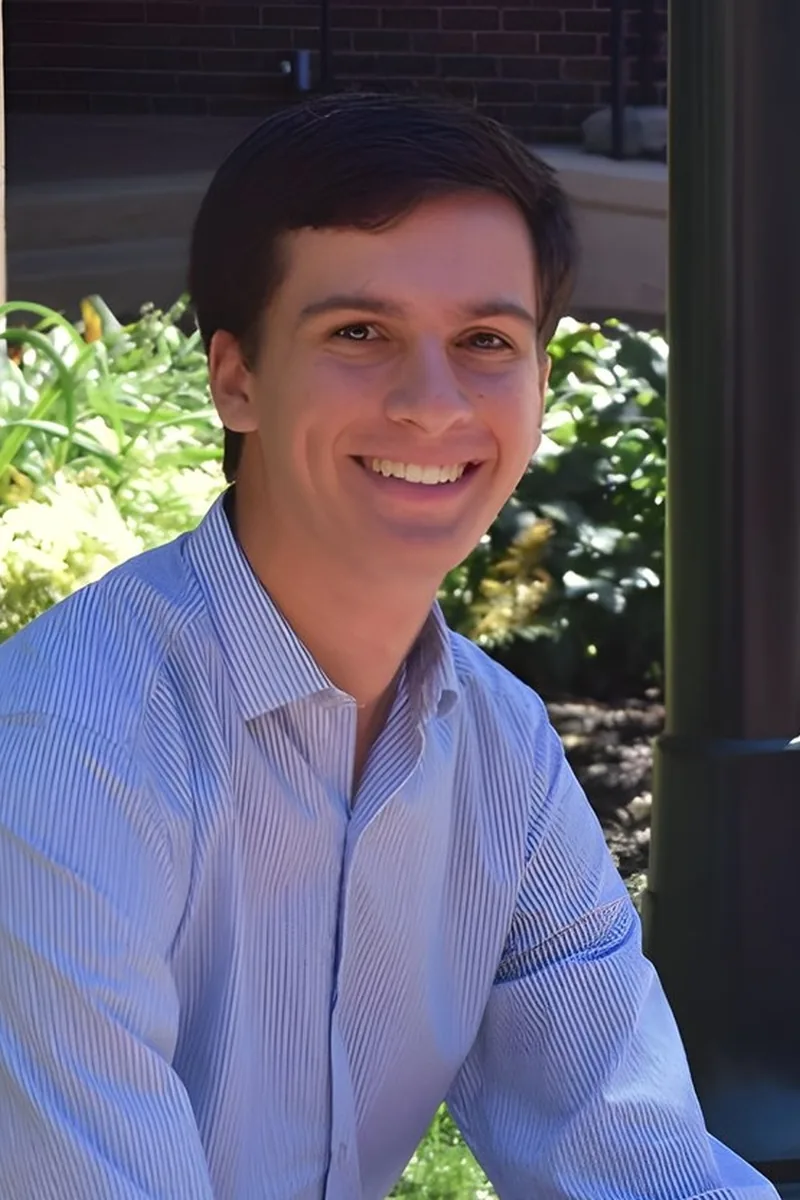
Proofs are usually the moment geometry stops feeling intuitive and starts feeling impossible. Noah approaches them as logical arguments rather than memorization exercises, drawing on the same analytical reasoning he sharpened through his political science training at Penn. He also tackles coordinate geometry and triangle congruence by emphasizing the visual logic behind each theorem.
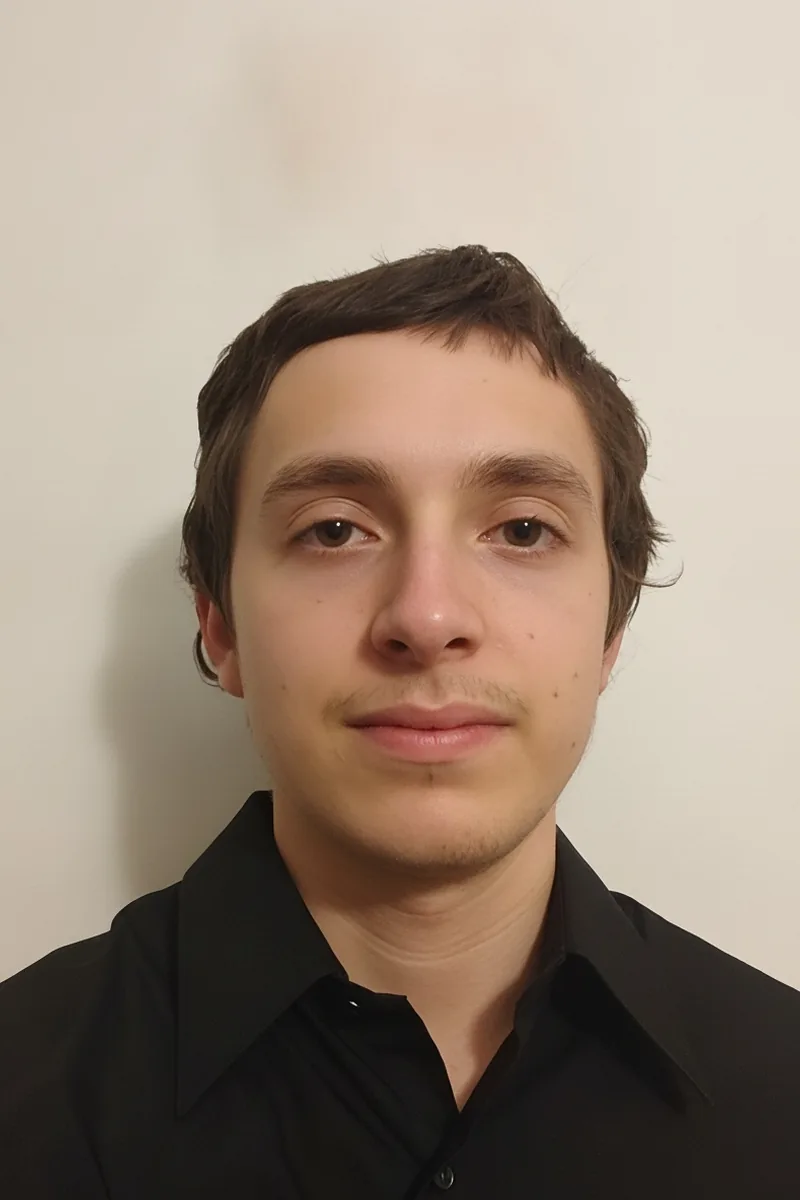
Most geometry struggles aren't about the shapes — they're about constructing logical arguments. Writing a two-column proof or reasoning through circle theorems requires a style of thinking that Justin, trained in mathematical proof at both the undergraduate and doctoral level, breaks down into concrete steps. He treats each theorem as a claim that needs defending, which builds reasoning skills students carry into every future math class.
A chemistry major at Harvard, James is used to thinking in three dimensions — molecular geometries, orbital shapes, bond angles — which gives him a natural fluency with the spatial reasoning geometry requires. He tackles circle theorems and polygon properties by encouraging students to sketch, label, and reason through diagrams before jumping to formulas, building the kind of geometric intuition that makes even multi-step problems feel manageable. Rated 4.9 by students.
Mechanical and aerospace engineering at Princeton means Matthew lives in a world of geometric constraints — fitting components into tight spaces, calculating load-bearing angles, reasoning about three-dimensional shapes on paper before they ever get built. He brings that same step-by-step precision to teaching triangle properties, angle relationships, and the logic behind constructions, typically demonstrating a technique and then handing students progressively harder problems until the reasoning becomes automatic.
Julie's philosophy coursework at Princeton — where every paper is essentially a proof built from premises to conclusion — trained her in exactly the kind of structured reasoning geometry demands. She applies that logical rigor to coordinate geometry, transformations, and circle properties, teaching students to see how each theorem connects rather than treating them as isolated facts. Rated 4.9 by students.
A year as a course assistant in Harvard's math department taught Richard how to break abstract reasoning into concrete steps — a skill that pays off in geometry when students need to connect definitions, postulates, and theorems into a coherent proof. His government major, which is essentially an exercise in building airtight arguments from messy evidence, reinforces the same logical sequencing that two-column and paragraph proofs demand.
Proofs are where most geometry students stall — the leap from calculating angles to constructing logical arguments feels unfamiliar. Camille's interdisciplinary training at Duke and Columbia sharpened her ability to teach that kind of structured reasoning, and she applies it to everything from triangle congruence to circle theorems. Rated 5.0 by students.
Neurobiology at Harvard meant Emma spent years interpreting complex diagrams of neural pathways and brain structures — skills that translate directly to reading the dense, multi-layered figures in geometry where you have to pull out the right angle relationship or identify similar triangles buried inside a larger shape. She tackles the subject from the logic side, treating each proof like a scientific hypothesis that needs step-by-step evidence. Rated 5.0 by students.
Proofs are usually where geometry stops feeling intuitive and starts feeling intimidating. Allen tackles that head-on by teaching students to read a diagram like a puzzle — identifying congruent triangles, parallel-line angle relationships, or circle theorems before writing a single line of formal reasoning. His Yale-trained analytical rigor translates well to the logical structure geometry demands.
An English major might seem like an unlikely geometry tutor, but Ayako's 1540 SAT score speaks to serious quantitative chops — and she approaches geometric reasoning the way she approaches a close reading, breaking a complex figure into its component parts and asking what each piece tells you. She's especially effective at teaching students how to extract usable information from dense diagrams involving circles, inscribed angles, and overlapping triangles. Rated 5.0 by students.
Proofs are usually where geometry students start to struggle, because the logic feels completely different from arithmetic. Judah approaches each proof as a puzzle, teaching students to identify the given information, spot congruence or similarity relationships, and build an argument step by step. He's patient enough to let the reasoning click on its own.
Proofs are usually the first place geometry students get stuck, because suddenly math asks them to argue logically instead of just compute. Ian approaches proof-writing the way he approaches physics derivations at Yale — step by step, with each claim grounded in a specific theorem or postulate. He also covers triangle congruence, circle theorems, and coordinate geometry with the same structured clarity.
Proofs are usually the first time a geometry student has to explain *why* something is true, not just calculate an answer. Vansh teaches proof-writing as a logical argument rather than a mysterious format, walking through triangle congruence, parallel-line theorems, and circle properties with enough patience to make the reasoning feel natural.
Neurobiology coursework at Penn involves more spatial reasoning than people realize — mapping neural pathways, visualizing cross-sections of brain structures, interpreting 3D anatomy from 2D diagrams — and Natalie brings that same visual fluency to geometry. She's especially effective at teaching students how to read complex figures and pull out the relevant relationships, whether it's identifying corresponding angles in a transversal diagram or seeing which triangles are actually similar inside a busy proof setup.
Proofs trip up most geometry students because they demand a completely different kind of reasoning than plugging numbers into formulas. David's economics training at the University of Chicago built the same logical, step-by-step argumentation that geometric proofs require, and he applies that structured thinking to everything from triangle congruence to circle theorems.
Kelly approaches geometry through the lens of spatial reasoning she developed as a biological engineer, where understanding shapes, volumes, and surface areas wasn't optional — it was essential for designing lab models and interpreting 3D structures. She breaks down proofs and theorems by connecting them to tangible problems students can visualize.
Proofs are usually where geometry students panic — the jump from calculating angles to constructing logical arguments feels enormous. Dana's policy background trained her to build airtight, step-by-step cases from evidence, and she applies that same structured thinking to geometric reasoning and formal proofs.
Charts, drawings, and physical models are Samantha's go-to tools — her Cornell chemistry lab work involved constant visualization of molecular structures, and she brings that same sketch-it-out instinct to geometry topics like transformations, symmetry, and properties of shapes. She named geometry as one of her favorite subjects to tutor throughout college, and she's especially effective at making abstract spatial ideas feel concrete and clickable. Rated 5.0 by students.
Proofs are usually the first time a math student has to construct a logical argument rather than compute an answer, and that transition can be jarring. Violet tackles geometry proofs by teaching students to read diagrams like puzzles — identifying congruent triangles, parallel line relationships, and angle pairs before writing a single statement. Having tutored across public, private, and boarding school curricula, she adapts quickly to whatever proof style a student's class requires.
Three years teaching first through third graders gave Victoria something most geometry tutors lack — an instinct for building spatial reasoning from scratch, starting with how students actually see shapes before layering on formal vocabulary and properties. Her Yale math background and Master's in Education let her bridge that intuitive visual understanding into the more rigorous work of applying postulates and theorems in multi-step problems.
Proofs trip up most Geometry students because they require a completely different kind of thinking than computation. Johann's background in theatre — where blocking, staging, and design all rely on spatial reasoning — gives him an intuitive way of explaining angle relationships, congruence, and geometric logic that clicks for visual learners.
Proofs are the part of Geometry that trips up even strong math students because the skill set — constructing logical arguments from postulates and theorems — feels completely different from solving equations. Daniel enjoys the logical rigor side of math and teaches proof-writing as a structured thinking exercise, building from simple angle relationships up to circle theorems and similarity arguments.
A history major from Harvard might seem like an unusual pick for geometry, but Matthew's approach to proofs mirrors how he was trained to build historical arguments — each step logically justified, each claim supported by what came before. He's particularly effective at teaching students how to set up and organize two-column proofs, where the real challenge isn't the geometry itself but learning to think in structured, sequential claims.
Proofs tend to be the part of geometry that trips students up most, because they require a completely different kind of thinking than computation. Manolya breaks down the logic behind congruence and similarity proofs step by step, drawing on the rigorous proof-writing skills she developed through her MIT math coursework. She also tackles coordinate geometry and transformations with a precision that builds real geometric intuition.
Students who get frustrated with math often hit their breaking point in geometry, where a single diagram can demand algebra, spatial reasoning, and logical argument all at once — and Heather is specifically good with kids who shut down when that frustration kicks in. Her psychology background gives her a read on when a student is losing patience, and she redirects by breaking problems into smaller visual steps, especially with parallel line angle relationships and triangle properties. Rated 5.0 by students.
Proofs are where most geometry students stall, not because the logic is hard but because no one teaches them how to organize their reasoning. Stephanie approaches geometric proofs the way she learned to write code at MIT — building each step from clearly defined inputs, whether the problem involves triangle congruence, circle theorems, or coordinate geometry.
Running a prep school's test-readiness program means Moriah encounters geometry constantly — from SAT angle and area problems to ISEE questions that test spatial reasoning under time pressure. Her approach leans heavily on diagram annotation, teaching students to mark up figures with known relationships before attempting any calculation, which turns intimidating multi-step problems into a clear sequence of smaller moves. Rated 5.0 by students.
Proofs are usually the part of geometry that makes students want to quit, so Shun approaches them as logical puzzles rather than rigid scripts. He walks through congruence and similarity arguments step by step, showing how each theorem connects to the last, while also reinforcing the area, volume, and coordinate-geometry skills that show up on standardized tests. Rated 4.9 by students.
Proofs are usually the first place geometry students feel lost, because suddenly math asks them to construct logical arguments instead of just computing answers. Rahi walks through proof structure step by step — identifying given information, choosing the right theorem, and building a chain of reasoning — until the process feels natural. He also digs into coordinate geometry and circle theorems, tying visual intuition to algebraic verification.
As a premed student studying economics at Cornell, Tameem toggles daily between quantitative reasoning and structured argumentation — two skills that converge in geometry when a problem asks you to calculate an area and then justify your steps in a proof. He breaks down the subject's visual logic, teaching students to see how angle relationships and triangle properties connect before jumping to formulas. His 1510 SAT reflects the kind of precise, methodical thinking that keeps multi-step geometry problems from spiraling.
Neuroscience is surprisingly geometry-heavy — mapping brain regions, interpreting cross-sectional imaging, reasoning about three-dimensional structures from two-dimensional slices — so Anna's triple-science background gives her a natural comfort with spatial reasoning that most math-only tutors don't have. She leans into the logical side of the subject, teaching students to build geometric arguments step by step the same way she'd work through a scientific hypothesis. Rated 5.0 by students.
Proofs are usually the first time a math student has to construct a logical argument rather than just compute an answer, and that shift is what makes geometry uniquely challenging. Matthew spent years in academic research at Columbia, where building step-by-step arguments from evidence is a daily skill — he brings that same structured thinking to triangle congruence, circle theorems, and coordinate geometry. Students walk away understanding not just what's true, but why it has to be true.
Pre-dental students learn to think in precise spatial terms — tooth morphology, arch dimensions, occlusal angles — and Sarah carries that same geometric intuition into her tutoring. She's especially effective at teaching students how to break down complex diagrams involving triangle properties and angle relationships into smaller, manageable pieces they can reason through step by step. Rated 5.0 by students.
Proofs are usually where geometry students panic, but they're really just structured arguments — something Nicole's psychology training made second nature. She teaches students to read diagrams actively, identify congruence and similarity relationships, and build logical chains from given information to conclusion. Her approach turns proof-writing from a guessing game into a skill students can practice and repeat.
Proofs are where most geometry students panic, because suddenly math asks you to explain *why* something is true instead of just computing an answer. Zachary treats proof-writing like building an argument — a skill he sharpened through both his cognitive science coursework and his theatre training, where constructing a logical narrative is second nature. He also covers triangle congruence, circle theorems, and area/volume problems with an emphasis on visualization.
Proofs are where most geometry students stall — not because the logic is hard, but because nobody teaches them how to organize their reasoning step by step. Tim's philosophy background gives him a natural edge here, since formal logic and structured argumentation are exactly what a two-column proof demands. He breaks down congruence, similarity, and angle relationships in a way that makes the "why" click before the "how."
Proofs are where most Geometry students panic, but they're really just structured arguments — and Abismael teaches them that way, walking through how to link angle relationships, congruence postulates, and parallel-line theorems into a logical chain. His engineering training gave him a spatial reasoning instinct that translates well when explaining transformations, similarity, or circle theorems. He deliberately ramps up problem difficulty so students aren't caught off guard on test day.
Proofs are usually the first time a math student has to build a logical argument instead of just finding an answer, and that shift intimidates a lot of geometry students. Mariya teaches proof-writing as a skill — picking the right postulates, structuring two-column or paragraph proofs — while also reinforcing the spatial reasoning behind triangle congruence, circle theorems, and coordinate geometry.
Proofs are usually the sticking point in Geometry, and William tackles them by teaching students to read diagrams like arguments — identifying what's given, what's missing, and which theorem bridges the gap. His analytical training as an English major translates surprisingly well to the logical structure that geometric reasoning demands.
Proofs are usually the sticking point in Geometry — students can measure angles and identify shapes, but constructing a logical argument from postulates feels like a different subject entirely. Dennis tackles proof-writing as a step-by-step reasoning exercise, walking through each logical chain until students can build their own arguments from congruence theorems and parallel line properties.
Testimonials
Because the right Geometry tutor makes all the difference.
Average Session Rating – Based on 3.4M Learner Ratings
Practice Geometry
Free practice tests, flashcards, and AI tutoring for Geometry
Other Manhattan Tutors
Related Math Tutors in Manhattan
Frequently Asked Questions
Many students struggle with the shift from memorizing formulas to understanding why geometric principles work. Common pain points include writing proofs (organizing logical reasoning), visualizing 3D shapes from 2D diagrams, and connecting abstract theorems to real-world applications. Word problems that require multiple steps—like finding unknown angles in complex figures or calculating areas of composite shapes—also trip up students who haven't built strong foundational understanding of geometric relationships.
Proofs require a different mindset than computational math—students need to think logically about why statements are true, not just how to calculate answers. Tutors help students organize their thinking, identify which theorems apply to specific problems, and build confidence in their reasoning. With personalized 1-on-1 instruction, students learn to break down complex proofs into manageable steps and develop strategies for approaching unfamiliar proof types.
The first session focuses on understanding where a student currently stands—what geometry concepts they've mastered, where they're struggling, and what their specific goals are. Tutors will likely review recent classwork or assessments, ask diagnostic questions, and identify patterns in misunderstandings. This foundation helps create a personalized learning plan that targets the student's actual needs rather than generic review.
Spatial reasoning is a skill that improves with guided practice and multiple representations. Tutors use diagrams, manipulatives, and step-by-step visualization techniques to help students move from concrete understanding to abstract thinking. Breaking down 3D problems into 2D components, drawing auxiliary lines, and consistently labeling diagrams are strategies that tutors teach to make abstract shapes feel more concrete and manageable.
Yes. Manhattan schools use various geometry programs, and tutors are familiar with different approaches and textbooks. Whether your student is working with a traditional Euclidean geometry course, an integrated math sequence, or a specific textbook like Pearson or Houghton Mifflin, tutors can align their instruction with what's being taught in class and reinforce the specific methods and terminology the student's teacher uses.
Word problems require students to translate language into geometric diagrams and equations—a skill that takes deliberate practice. Tutors teach a systematic approach: carefully reading the problem, sketching what's described, identifying what's given and what's unknown, and then selecting the right geometric relationships to solve. Breaking multi-step problems into smaller parts and checking answers against the original context also builds confidence and accuracy.
Math anxiety often stems from feeling lost or unsupported, and personalized 1-on-1 instruction directly addresses that. Tutors work at the student's pace, celebrate small wins, and help them see patterns and connections they might have missed in a classroom setting. When students understand the 'why' behind geometric concepts rather than just memorizing rules, they feel more in control and confident tackling new problems.
Absolutely. Tutors help students master both the conceptual understanding and test-taking strategies needed for assessments like the NY Geometry Regents. This includes reviewing all major topics (angles, triangles, circles, coordinate geometry, transformations), practicing with released exams, identifying common question patterns, and building speed and accuracy under timed conditions. Personalized instruction means focusing on the student's specific weak areas rather than reviewing everything equally.
Let’s find your perfect tutor
Answer a few quick questions. We’ll recommend the right plan and match you with a top 5% tutor.