Award-Winning College Physics Tutors
serving Manhattan, NY
College Physics
Tutors in Manhattan
Private 1-on-1 tutoring, weekly live classes for academic support, test prep & enrichment, practice tests and diagnostics, and more to elevate grades and test scores.
Based on 3.4M Learner Ratings
UniversitiesSchools & Universities
DeliveredHours Delivered
ProficiencyGrowth in Proficiency
Who needs tutoring?
No obligation. Takes ~1 minute.
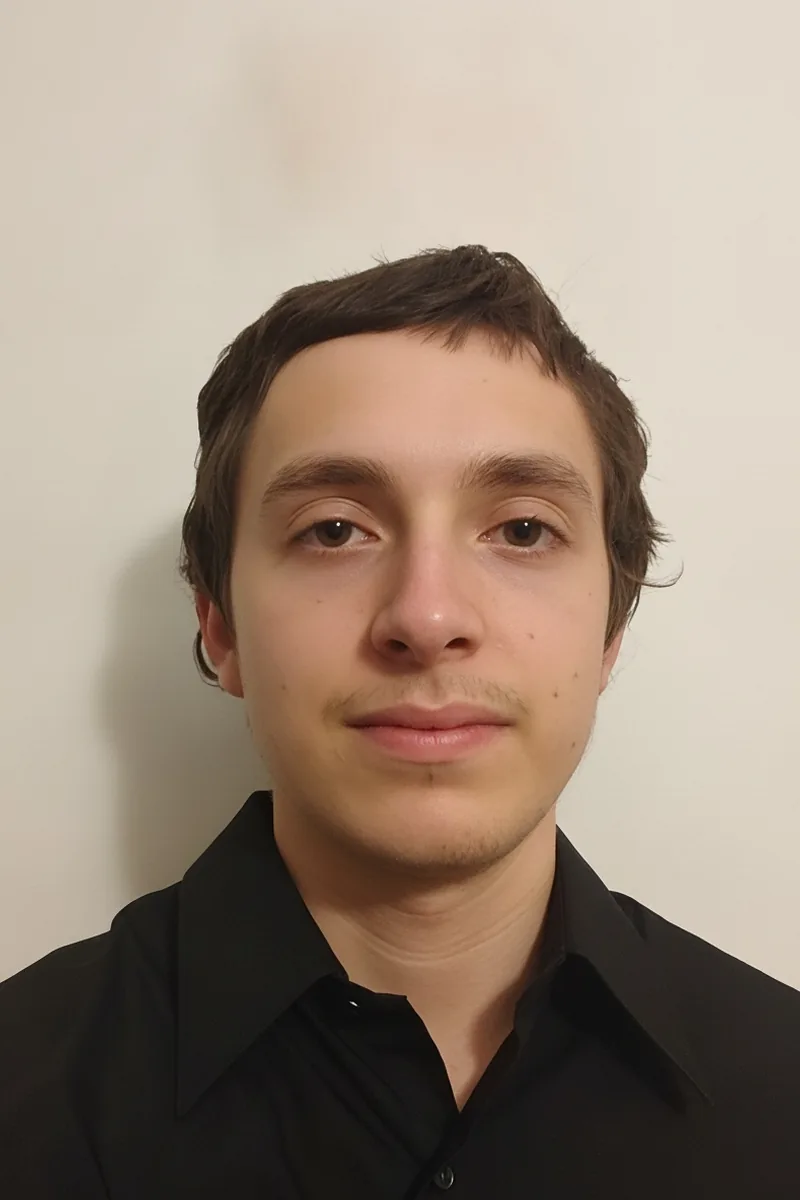
Three years of tutoring introductory physics while completing dual bachelor's degrees in physics and mathematics gave Justin a detailed map of exactly where students lose the thread — the jump from one-dimensional kinematics to rotational analogs, the shift from intuitive force reasoning to formal energy methods. His PhD in Computational Mathematics at the University of Chicago deepened that foundation, adding fluency with the differential equations and vector calculus that make the leap from algebra-based to calculus-based physics so steep. Rated 5.0 by students.

A chemistry degree from Yale means Zosia spent years in courses where physics does the heavy lifting — thermodynamics driving reaction spontaneity, quantum mechanics explaining atomic structure, electrostatics governing molecular interactions — so she knows these concepts from the inside out. She's particularly effective at teaching students to translate word-heavy problem statements into clean free-body diagrams or energy bar charts before touching an equation. Rated 4.9 by students.
College-level physics ramps up quickly, especially once calculus-based mechanics and electromagnetism enter the picture. Richard's time as a course assistant in Harvard's math department gave him deep comfort with the calculus underpinning topics like electric flux integrals and differential equations of motion. He teaches the physics and the math simultaneously, so students aren't left wondering where a derivation came from.
Three science-focused bachelor's degrees — including biology — meant Garrett sat through the full calculus-based physics sequence and kept coming back to it in physiology and physical chemistry, where concepts like fluid dynamics, pressure gradients, and energy transfer show up again and again. That repeated exposure across disciplines gives him an intuitive feel for when to apply conservation of energy versus momentum, or how to reason through a thermodynamics problem without getting lost in the formalism. His 1530 SAT speaks to the quantitative sharpness he brings to each session.
As a senior physics major at Yale, Ian tackles college-level topics like electromagnetism, rotational dynamics, and wave optics with the fluency of someone who uses them daily. He breaks intimidating derivations into logical steps, connecting the math to physical intuition so that concepts like Gauss's Law or Lagrangian mechanics actually make sense rather than feeling like symbol-pushing.
Engineering physics at Cornell means Daniel is taking the most mathematically demanding version of every physics course — mechanics, E&M, waves, thermo — and building the intuition to move fluidly between physical reasoning and formal derivation. He's particularly strong at teaching students how to set up problems from scratch, translating a word problem into a free-body diagram or energy equation before any numbers appear. Rated 5.0 by students.
Three physics-related bachelor's degrees give Avram an unusually deep undergraduate perspective on the subject — he's worked through mechanics, electromagnetism, and modern physics multiple times across different programs, which means he knows exactly where the conceptual gaps tend to hide. He breaks down wave phenomena and optics problems by connecting the math back to physical intuition, so equations feel like descriptions of real behavior rather than symbols to manipulate. His 1520 SAT reflects the quantitative precision he brings to problem solving.
Running an immunology lab at Columbia University Medical Center means Matthew applies physics daily in ways most tutors haven't — calibrating imaging equipment, analyzing force and pressure data in tissue samples, and troubleshooting instruments that depend on optics and electromagnetism. That hands-on fluency, combined with a physics degree and a 35 ACT, lets him teach college-level mechanics and E&M problems by connecting equations to the physical systems they actually describe.
College-level physics layers calculus and more rigorous problem-solving onto the conceptual foundations from high school, and Samantha's Cornell science background means she's fluent in both the math and the theory. She breaks down topics like rotational dynamics, electric fields, and thermodynamic cycles using visual models and step-by-step dimensional analysis that keep the problem-solving process clear.
College-level physics demands comfort with calculus-based problem solving, and Robert's dual background in electrical engineering and classroom teaching makes that transition smoother. He digs into topics like Gauss's law, rotational dynamics, and energy conservation by walking through the derivations rather than just handing students formulas to memorize. His engineering training at Duke means he can connect textbook problems to how these principles show up in real systems.
Dartmouth's Biology modified with Engineering track means Kiera doesn't just study physics concepts in isolation — she applies mechanics, thermodynamics, and wave behavior to engineering design problems and biological systems every semester. That dual framing makes her especially effective at unpacking the physical intuition behind equations, so students see what a formula actually describes before they start solving. Rated 5.0 by students.
Wall Street research demands the same quantitative rigor as a physics problem set — building models from raw data, pressure-testing assumptions, and reasoning through systems with multiple variables. Frank applies that analytical discipline to college physics topics like kinematics, energy conservation, and electromagnetism, teaching students to dissect a problem's structure before plugging anything into an equation. His MBA and years of tutoring physics at the AP and regents levels mean he's comfortable with both the math and the conceptual reasoning behind it.
Starting medical school this fall, Kelsey is actively deep in the physics that pre-med students find most demanding — optics, fluid dynamics, and the mechanics of how forces act on biological systems. Her cellular and molecular biology training means she naturally connects physics concepts like pressure gradients and wave behavior to the biological contexts where they actually matter. Holds a 5.0 rating.
Biology majors at Cornell still take calculus-based physics sequences, and Drishti has worked through the mechanics and electromagnetism problem sets that make those courses notoriously time-consuming — she knows exactly where the conceptual gaps hide. She breaks down force diagrams and energy conservation problems by connecting them back to the biological systems she studies, which gives pre-med and life-science students a way into physics that actually sticks. Rated 5.0 by students.
Applying to PhD programs in applied mathematics means Romeo spends his days inside the differential equations and vector calculus that college physics courses lean on hardest — setting up integrals for work-energy problems, solving second-order ODEs for oscillatory motion, handling the multivariable machinery behind electric flux and field calculations. That mathematical fluency lets him teach the physics and the math simultaneously, so students aren't stuck guessing which technique to apply when a problem requires both.
Victor's applied mathematics master's gives him a particular edge when college physics problems demand setting up and solving differential equations — modeling damped oscillations, calculating electric fields via integration, or working through projectile motion with drag. He teaches the mathematical machinery alongside the physical intuition, so students aren't stuck choosing between understanding the concept and actually getting through the calculation. Rated 5.0 by students.
Pre-med research at the Hospital for Special Surgery means Marcus regularly encounters the physics behind clinical tools — force mechanics in orthopedic procedures, pressure and fluid dynamics in imaging, energy transfer in therapeutic devices — giving him a concrete frame for the concepts that fill college physics problem sets. His Yale coursework in the sciences, plus a 33 ACT, reflect the quantitative chops needed to walk students through calculus-based mechanics and thermodynamics without glossing over the math.
MCAT physics preparation gave Benjamin a ground-up rebuild of mechanics, electromagnetism, and optics — the same core topics that dominate introductory college physics courses. He breaks down force diagrams and energy conservation problems by connecting the math to physical intuition, making problem sets feel less like formula hunts. Rated 5.0 by students.
Cornell's pre-med track put Emily through the full sequence of calculus-based physics alongside organic chemistry and biology, so she understands how physics concepts like wave optics, fluid pressure, and energy conservation show up not just on problem sets but across the sciences. She spent her senior year tutoring student-athletes in quantitative coursework, which sharpened her ability to break down intimidating multi-step problems into manageable physical reasoning. Rated 4.8 by students.
Currently pursuing a physics degree at Cornell, Michael works through the same mechanics, thermodynamics, and electromagnetism problem sets his students face — which means he knows exactly where the conceptual gaps tend to hide. He breaks problems down to their physical intuition first, making sure the math follows from understanding rather than formula-hunting. Rated 5.0 by students.
Teaching 7th grade science daily means Jay constantly translates abstract physics ideas — forces, energy, motion — into language that actually lands, a skill that's just as valuable when college-level problems pile on calculus and vector notation. His economics degree built the quantitative modeling instincts (optimization, graphical analysis, working through systems of equations) that map cleanly onto mechanics and thermodynamics problem sets. He's strongest at the problem-setup phase: figuring out what a question is really asking before diving into the math.
An applied math degree plus active graduate work in mathematics means Drisana doesn't flinch at the calculus-heavy lifting in college physics — setting up integrals for center-of-mass problems, solving second-order differential equations for oscillatory motion, or working through vector fields in electromagnetism. She also teaches statics, dynamics, and thermodynamics separately, so the core physics content isn't something she's borrowing from her math training alone. Rated 5.0 by students.
College-level physics demands comfort with calculus-based reasoning — deriving equations of motion, working through vector fields, or applying integration to find work and flux. Richard's graduate math training at CUNY and his experience tutoring physics since high school mean he can unpack both the mathematical machinery and the physical concepts driving each problem.
Lab work in immunology and genetics at Washington University in St. Louis means Colin has hands-on experience with the physics that underpins biological measurement — optics in microscopy, fluid dynamics in centrifugation, electromagnetic principles in gel electrophoresis. He pairs that practical grounding with extensive coursework in physics and chemistry, so he can walk through force diagrams or energy conservation problems while connecting them to systems students in the life sciences actually care about. His GRE scores in the 90th percentile speak to the quantitative chops behind those explanations.
Biomedical engineering sits squarely at the intersection of physics and biology — Robert's training means he's worked through mechanics, fluid dynamics, and electromagnetism not as abstract exercises but as tools for understanding things like blood flow, prosthetic design, and medical imaging systems. That applied perspective makes him especially useful for college physics students who struggle to see the point behind free-body diagrams or pressure calculations, because he can ground each concept in something tangible.
Biomedical engineering at the undergraduate level means Brandon solved college physics problems with actual design stakes — calculating stress on prosthetic joints, modeling fluid flow through artificial vessels, analyzing the electrical behavior of biosensors. That context makes him especially useful for students struggling to connect force diagrams and circuit equations to anything meaningful. Rated 5.0 by students.
An astrophysics degree means Jacob spent years grinding through the same calculus-based mechanics, electromagnetism, and thermodynamics that fill college physics syllabi — then kept going into orbital mechanics and stellar structure where those principles get pushed to extremes. That depth lets him trace a concept like angular momentum from a spinning wheel on a problem set all the way to collapsing neutron stars, giving students a visceral sense of why the physics works the way it does. His 1570 SAT reflects the quantitative precision he brings to breaking down multi-step problems.
Jamie's math degree gives him the calculus fluency that college physics requires, but it's his special education training that shapes how he actually teaches it — he's unusually good at diagnosing exactly where a student's understanding breaks down in multi-step problems like projectile motion or circuit analysis. He rebuilds that reasoning piece by piece, adjusting his explanations to match how each student actually thinks rather than defaulting to textbook language.
Studying physics as an undergrad and then pivoting to architecture gave Allison an unusual double fluency — she thinks about force distributions, torque, and energy transfer not just as textbook problems but as the principles holding buildings together. That perspective makes her especially effective at teaching mechanics and thermodynamics, because she can show students how abstract equations map onto physical structures they can actually picture. Holds a 5.0 rating from a 34 ACT scorer who's been tutoring math and physics for eight years.
A comparative literature degree might not scream physics, but Miguel's breadth across 44 subjects — from multivariable calculus and calculus-based mechanics to chemistry and biology — reveals someone who genuinely thinks across disciplines and connects mathematical reasoning to physical phenomena. He's particularly useful for students who can do the calculus but struggle to translate a word problem into a free-body diagram or an energy conservation equation, since his instinct is to slow down at the problem-setup stage and build the physical picture first.
Preparing for medical school while holding an economics degree gives Jeremy an unusual double lens on college physics — he's trained in the quantitative modeling and graph interpretation that economics demands, and he's currently re-engaging with mechanics, optics, and thermodynamics through his premed coursework. That combination means he knows which physics concepts feel abstract to students encountering them for the first time and can break problem setups into the same step-by-step logic he uses to tackle MCAT-level physical sciences.
A PhD student in mechanical engineering at Columbia, William has spent years neck-deep in the calculus-based physics that undergraduates are encountering for the first time — statics, dynamics, thermodynamics, fluid mechanics. His Berkeley engineering training plus a math minor means he can walk through the derivations and vector math that textbooks often rush past, especially when problems involve free-body diagrams or energy methods with multiple constraints. Holds a 5.0 rating.
Working in a biochemistry lab at NYU Medical Center while applying to medical school, Alex deals daily with the physics embedded in biological systems — pressure gradients, fluid dynamics, optics in microscopy — which keeps college-level concepts sharp and practically grounded. His Columbia biology TA experience taught him to spot the specific conceptual gaps that derail students mid-problem, especially in mechanics and thermodynamics where one misunderstood variable cascades through an entire solution. Rated 4.9 by students.
Neuroscience research at Johns Hopkins — where Caleigh earned national honors and a publication in orthopedics — required constant fluency in the physics of biological systems: electrical potentials across membranes, force mechanics in musculoskeletal modeling, and wave behavior in imaging techniques. That hands-on research background means she can walk through the math and the physical intuition behind problems in mechanics and electromagnetism, not just the textbook steps. Rated 5.0 by students.
Running supplemental instruction for a 650-student Differential Equations course taught Ron exactly where the math breaks down for physics students — setting up integrals for work-energy problems, handling vector components in electrostatics, navigating the calculus behind rotational inertia. Now heading into a physics PhD, he brings a recent, ground-level familiarity with the full sequence of calculus-based physics that keeps his explanations tuned to the spots where students actually get stuck.
Studying computer science at UCLA's engineering school means David takes physics courses alongside the engineers — calculus-based mechanics, electromagnetism, wave phenomena — and his 1550 SAT reflects the quantitative instincts he brings to solving those problems. He breaks down force diagrams and energy conservation scenarios with a programmer's precision, mapping out each step logically before plugging in numbers. Rated 4.8 by students.
College-level physics ramps up fast, layering calculus-based derivations onto concepts that were purely algebraic in high school. Kristen tackles this transition head-on, connecting differential equations to physical scenarios like oscillatory motion and electric fields so the math feels like a natural extension of the physics rather than a separate obstacle.
Neuroscience coursework is physics-heavy — from membrane potentials governed by electrostatics to fluid dynamics in circulatory systems — so Deana spent years applying mechanics, waves, and E&M concepts in biological contexts. She breaks down intimidating college physics problems by connecting the math to physical intuition, especially in areas like rotational dynamics and circuit analysis where students tend to lose the thread.
Ten years of teaching chemistry at the university level means Sourav has spent countless hours explaining the physics that chemistry students can't escape — thermodynamics, kinetics, wave behavior, and electrostatics all show up in his lectures before they ever appear on a physics problem set. That crossover gives him a sharp eye for where conceptual gaps form, especially when students try to apply energy conservation or force analysis without fully grasping the underlying reasoning. Rated 5.0 by students.
College-level physics demands comfort with calculus-based derivations that many students never fully developed in introductory courses — integrating force fields, applying differential equations to oscillations, or working through Gauss's law in three dimensions. Hillel's strong calculus and science background lets him unpack both the math and the physical reasoning behind each problem. He holds a 5.0 client rating.
Testimonials
Because the right College Physics tutor makes all the difference.
Average Session Rating – Based on 3.4M Learner Ratings
Nearby College Physics Tutors
Other Manhattan Tutors
Related Science Tutors in Manhattan
Frequently Asked Questions
College Physics usually covers mechanics (motion, forces, energy), waves and sound, thermodynamics, electricity and magnetism, and often introductory modern physics. The exact curriculum depends on your course and institution, but most courses emphasize both conceptual understanding and problem-solving skills. A tutor can help you master each unit's core principles and see how they connect to real-world applications—from how bridges handle stress to how electric circuits power everyday devices.
Physics becomes clearer when you can visualize what's happening. Tutors help by using diagrams, physical analogies, and step-by-step walkthroughs to make invisible forces tangible—for example, thinking of electric fields as invisible pushes on charged particles. Working through problems together and seeing how equations describe real phenomena helps bridge the gap between abstract math and physical intuition, making concepts stick much better than memorization alone.
Strong problem-solving starts with identifying what you know, what you're looking for, and which physics principles apply—not just plugging numbers into formulas. Tutors teach you to draw diagrams, check units, estimate whether your answer makes sense, and explain your reasoning at each step. This systematic approach not only helps you solve current problems but builds the scientific thinking skills you'll need in upper-level courses and beyond.
Yes. Tutors can help you understand the physics principles behind your experiments, interpret data, and write clear lab reports that explain your findings. They can also help you troubleshoot unexpected results and connect what you observed in the lab back to the theory you're learning in lecture—deepening your understanding of both the scientific method and the content itself.
These are common pain points in College Physics, and they're very teachable. Tutors break down unit conversion into a step-by-step process and show you how to set up equations so units cancel correctly. With practice and clear explanations, what feels confusing becomes routine—freeing up your mental energy to focus on the physics concepts themselves rather than getting stuck on the mechanics.
Your first session is about understanding where you are and where you want to go. Expect to discuss which topics are giving you trouble, what your course goals are, and how your tutor can best support your learning. You might work through a problem together to identify your specific challenges—whether that's conceptual gaps, problem-solving strategy, or test anxiety. This helps your tutor create a personalized plan for your next sessions.
Ideally, start 2-3 weeks before your exam to give yourself time to identify weak spots and practice problem-solving under realistic conditions. Tutors can help you create a study plan, work through practice exams, and target the concepts you find most challenging. Last-minute cramming rarely works for physics—consistent practice and understanding beat memorization every time.
Varsity Tutors connects you with tutors who have deep knowledge of College Physics and proven experience helping students master the subject. When you get matched with a tutor, you can review their background and qualifications to ensure they're the right fit for your needs. The best tutors not only know the material but can explain it clearly and adapt their teaching to how you learn best.
Let’s find your perfect tutor
Answer a few quick questions. We’ll recommend the right plan and match you with a top 5% tutor.