Award-Winning AP Calculus BC Tutors
serving Manhattan, NY
AP Calculus BC
Tutors in Manhattan
Private 1-on-1 tutoring, weekly live classes for academic support, test prep & enrichment, practice tests and diagnostics, and more to elevate grades and test scores.
Based on 3.4M Learner Ratings
UniversitiesSchools & Universities
DeliveredHours Delivered
ProficiencyGrowth in Proficiency
Who needs tutoring?
No obligation. Takes ~1 minute.
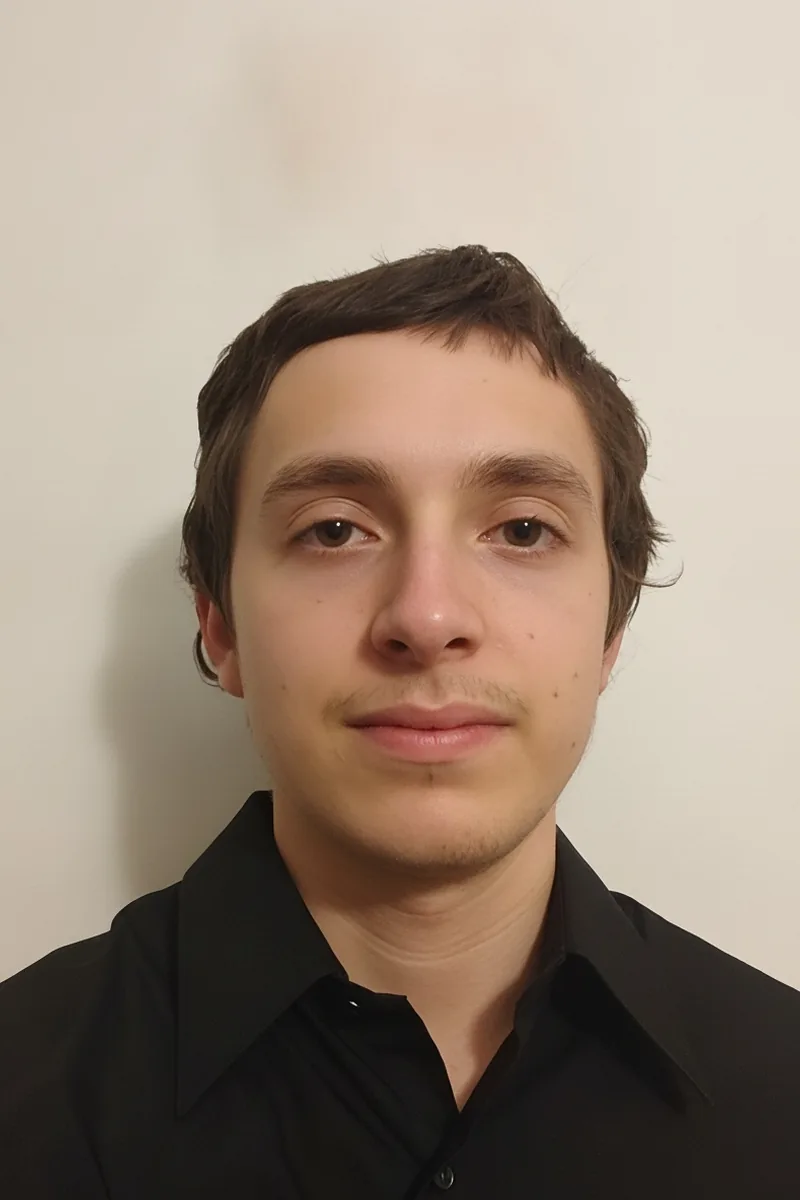
Justin's PhD work in Computational and Applied Mathematics at the University of Chicago means he doesn't just teach Taylor series and convergence — he builds on them daily in research involving image processing and climate modeling, where approximation methods have to actually hold up under real conditions. That perspective sharpens how he explains error bounds and series manipulation, grounding each technique in why it matters rather than just how to execute it on an exam. Rated 5.0 by students.
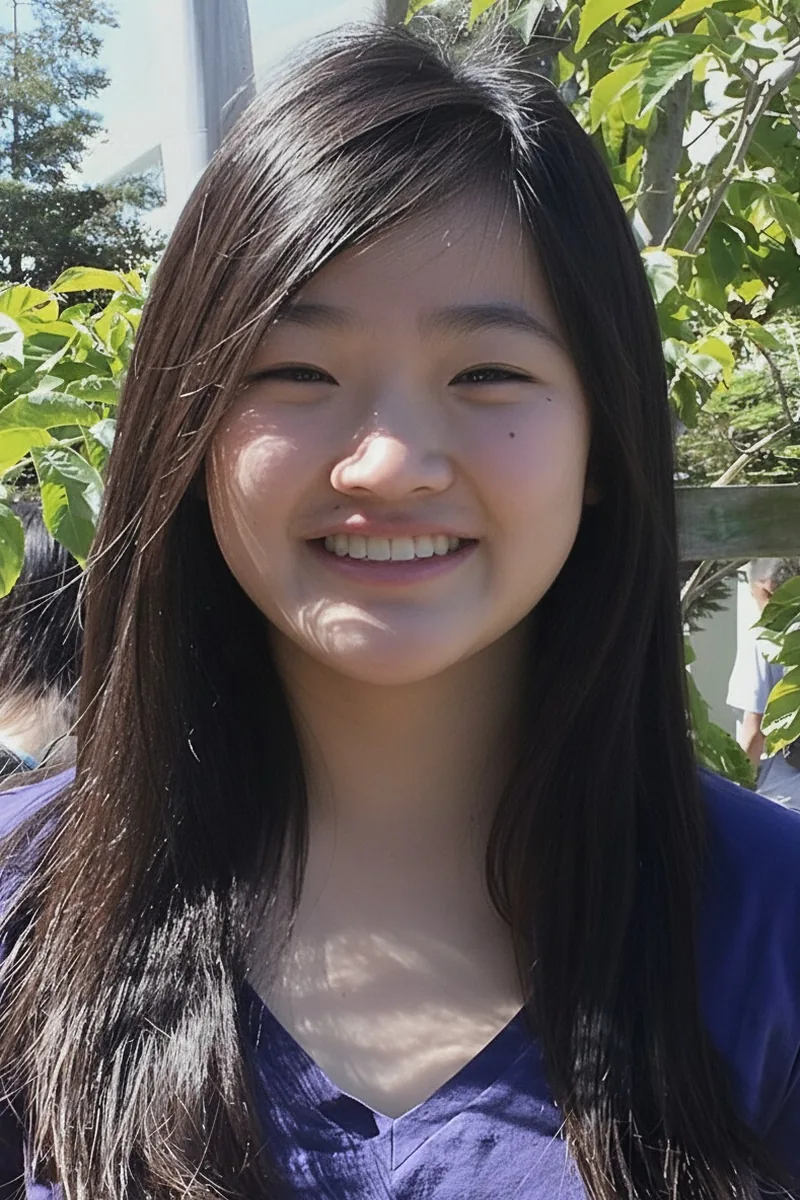
BC Calculus piles on series convergence, parametric equations, and polar coordinates on top of an already demanding AB curriculum. Julie's Princeton training in statistics and machine learning means she regularly uses advanced calculus as a tool, giving her an intuitive sense for which techniques apply where. She tackles integration strategies and Taylor series by connecting each method back to the core idea it extends.
A year as a course assistant in Harvard's math department teaching introductory calculus gave Richard a close-up view of exactly where students' AB foundations crack under the weight of BC material — particularly when series convergence and parametric functions demand a more flexible kind of reasoning. He breaks down topics like interval of convergence arguments and integration techniques by rebuilding the underlying logic rather than layering on new formulas. His perfect 1600 SAT and 36 ACT suggest the kind of precision he brings to each explanation.
Scoring a 36 on the ACT while studying Human Biology at Cornell means Sharan lives at the intersection of rigorous quantitative thinking and applied science — exactly where BC Calculus sits when series approximations and integration techniques start modeling real biological systems. She breaks down the AB-to-BC jump by treating topics like Taylor polynomials and convergence tests as logical extensions of limits and derivatives, not a separate universe of formulas to memorize. Rated 5.0 by students.
Biology majors at WashU don't just memorize — Laura's upper-level coursework in evolutionary modeling and physical chemistry means she's actively using integration techniques, differential equations, and series approximations to solve problems outside a math classroom. That cross-disciplinary fluency is especially useful for BC's trickiest conceptual leap: understanding what a Taylor polynomial actually approximates and why specific convergence tests apply in specific situations. Rated 5.0 by students.
Engineering physics at Cornell means Daniel is currently neck-deep in the math that BC Calculus builds toward — using series to model oscillating systems, applying integration techniques to energy problems, and solving differential equations that describe real physical behavior. That context gives him a clear picture of which BC skills actually matter and how to teach something like the ratio test or parametric arc length by grounding it in the AB intuition a student already carries. Rated 5.0 by students.
BC Calculus throws students into deep water fast — Taylor and Maclaurin series, parametric equations, and convergence tests all pile up in a single semester. Rahi's applied mathematics engineering background means he can unpack these topics by connecting them to the real-world modeling problems they were designed to solve. He builds each concept from its AB foundation so students see how the BC extensions actually work.
Managing an immunology research lab at Columbia means Matthew lives in the quantitative deep end — modeling biological systems, analyzing experimental data — and his physics degree built the calculus fluency that makes that possible. He's especially sharp on the BC topics that trip students up after AB: constructing Taylor series from scratch, navigating convergence tests systematically, and connecting parametric or polar problems back to the derivative logic underneath them.
Physics majors don't just take BC Calculus — they breathe it, using series expansions to model wave behavior, integration techniques to solve equations of motion, and parametric equations to describe trajectories. Kiran is finishing a physics and computer science double major at Stony Brook, which means topics like Taylor polynomials and convergence aren't abstract to him; they're tools he reaches for in his own coursework daily. His 34 ACT and 4.7 rating speak to an ability to make that applied intuition accessible to students still building their BC toolkit.
Series convergence tests, parametric equations, and polar coordinates are where BC diverges from AB — and where most students need the most targeted support. Drishti breaks down each new concept by connecting it to the AB foundations students already have, building intuition for topics like Taylor polynomials instead of treating them as isolated formulas.
Series convergence tests, parametric equations, and polar curves make BC the course where many strong calculus students first feel lost. Victor's graduate-level math training means he can unpack these topics by connecting them to the AB foundations students already have, building each new concept as a logical extension rather than an isolated technique.
Chemical engineering at Cornell throws BC-level calculus at you constantly — Jonathan uses series approximations in thermodynamics and integration techniques in transport phenomena, so topics like Taylor polynomial construction and convergence tests aren't abstract exercises for him. His dual major in computer science also sharpens the algorithmic thinking that makes tackling multi-step problems like the Lagrange error bound or parametric arc length feel systematic rather than overwhelming.
Currently pursuing a graduate degree in mathematics with an undergraduate foundation in applied math, Drisana lives in the world of series, convergence, and approximation theory daily — the exact terrain that separates BC from AB and trips most students up. She breaks down topics like the Lagrange error bound or ratio test by rebuilding the intuition from limits and derivatives, so the leap to BC-level reasoning feels earned rather than memorized. Her perfect 1600 SAT and 5.0 tutoring rating speak to how precisely she communicates that reasoning.
Most BC students can memorize which convergence test to apply but freeze when a series doesn't match a textbook template — Michael teaches the underlying logic so students can reason through ratio, root, and comparison tests on unfamiliar problems. His physics coursework at Cornell keeps him fluent in the series expansions and parametric models that BC covers, since those tools show up constantly in mechanics and wave analysis. Rated 5.0 by students.
Materials science PhD work is essentially calculus in disguise — Rona's research required series approximations for modeling crystalline structures and integration techniques for analyzing material properties under varying conditions. That background means she teaches BC topics like Taylor polynomial construction and convergence tests as tools she's actually relied on, tracing each one back to the AB derivative and integral reasoning that holds it together. Rated 4.9 by students.
Studying at Columbia while tutoring 34 subjects across math, science, and languages, Melody brings a cross-disciplinary versatility that's surprisingly useful when BC students ask 'when would I ever use this?' — she can actually answer that, pulling examples from earth science modeling or data analysis in sustainability research. Her 34 ACT and 4.9 rating from students speak to her ability to break down the leap from AB concepts into BC territory, particularly the shift from straightforward integration into series convergence and polynomial approximation.
BC Calculus piles on convergence tests, parametric equations, and polar curves right when students think they've mastered AB material. David tackles series and sequences by teaching the logic behind each convergence test so students can quickly identify which one applies, drawing on the rigorous math foundation he built studying computer science at UCLA's engineering school.
From Taylor series convergence to parametric and polar curve integration, AP Calculus BC covers territory that demands real fluency with limits and derivatives — not just procedural steps. Sabry's doctoral work in engineering required him to use these tools constantly, and he teaches the course with an eye toward both exam strategy and genuine understanding. Students leave sessions knowing not just how to evaluate an improper integral, but why the method works.
Jonny teaches across a wide spread of subjects — from creative writing to Spanish to algebra — which means he's had to build clear explanations for students at every level of math comfort, including those making the steep climb into BC territory with series, parametric equations, and advanced integration techniques. His 5.0 rating across forty subjects signals someone who adapts quickly to what a student actually needs, whether that's shoring up AB foundations or pushing through convergence tests and Taylor polynomial construction.
Series convergence tests, parametric equations, and polar coordinates are where AP Calc BC separates itself from AB — and where most students need the most targeted practice. Dana breaks these topics down by connecting them to the foundational calculus concepts students already know, building intuition for why Taylor series approximate functions or how integration techniques extend into new coordinate systems.
Series convergence tests, parametric equations, and integration by parts all pile up fast in BC Calculus, and the students who succeed are the ones who understand *why* each technique applies, not just *when*. Orlando digs into the logic behind Taylor series approximations and the Fundamental Theorem so that free-response problems feel like extensions of understanding rather than memorized procedures.
Earth and environmental engineering at Columbia requires modeling energy systems and fluid dynamics with the full BC toolkit — improper integrals, series approximations, differential equations — so Shin teaches these topics as working tools rather than abstract exercises. He's especially effective at demystifying convergence tests by mapping out the decision logic step by step, turning what feels like guesswork into a repeatable process. Holds a 5.0 rating from students.
Having completed Calculus I & II and Differential Equations as part of her civil engineering program at Villanova, Melanie knows exactly where BC's toughest transitions happen — particularly when students move from straightforward integration into series convergence and polynomial approximation, where the reasoning demands a different kind of discipline. She breaks down each convergence test by connecting it to the limit behavior students already understand from AB, making the logic feel cumulative rather than chaotic. Rated 5.0 by students.
Pursuing a master's in biology while holding a biochemistry degree means Thomas regularly uses integration techniques and series approximations in contexts like enzyme kinetics modeling and population dynamics — the same machinery that drives BC Calculus. He breaks down the transition from AB to BC by showing how topics like Taylor polynomials and convergence tests grow directly out of the limit and derivative reasoning students already trust. Rated 4.8 by students.
Actuarial science at Baruch College is essentially calculus with stakes — Kunal's coursework demands fluency with series, integration techniques, and convergence in contexts where approximation errors have real financial consequences. That training sharpens how he teaches BC-specific topics like Taylor polynomial construction and the ratio test, grounding each in the AB reasoning that makes them click rather than treating them as isolated procedures. His 1500 SAT and 33 ACT reflect the same precision he brings to breaking down the AB-to-BC jump.
Grace's 35 ACT composite signals serious quantitative chops, even though her Columbia coursework in American Studies and Latin American Studies sits squarely in the humanities — and that cross-disciplinary range is actually an asset when teaching BC, because she's practiced at making abstract ideas accessible to people who don't think in equations all day. She's especially deliberate about connecting new BC territory like series convergence and parametric derivatives back to the AB intuitions underneath, so students build understanding rather than just stockpiling formulas. Rated 5.0 by students.
Leonard's math degree from Columbia means he didn't just pass through BC topics like convergence tests and parametric derivatives — he studied the theory that holds them together, which shows when he traces a student's confusion with, say, the Lagrange error bound back to a shaky understanding of polynomial approximation from AB. He pushes students to defend every step of a solution, treating the reasoning behind a correct answer as more valuable than the answer itself. Rated 4.8 by students.
BC Calculus piles on topics like Taylor series, parametric equations, and polar coordinates at a pace that buries students who fall behind on even one unit. Nikhil breaks these concepts into logical steps, connecting each new idea back to the AB foundations so nothing feels like it appeared out of nowhere. His background as an NYU math major means the underlying theory is second nature.
Most BC students don't struggle with the mechanics of a new technique — they struggle with knowing *when* to deploy it, especially across convergence tests that all blur together. River, an NYU student who scored 1560 on the SAT, breaks down that decision-making process by teaching each test's underlying logic rather than just its formula. The playwriting training doesn't hurt either — building a proof or choosing an integration strategy is, at its core, structured storytelling.
Having dual-majored in math and computer science at RPI, Stephen treats BC's trickiest topics — convergence tests, Taylor series construction, parametric derivatives — as interconnected ideas rather than isolated procedures, tracing each one back to the core AB reasoning that makes it work. His 1550 SAT and 4.9 rating speak to an ability to make that kind of structural thinking accessible, especially when students hit the wall where memorized formulas stop being enough.
Biochemistry at Barnard means Meghna is actively using integration techniques and series approximations in her physical chemistry and quantitative biology coursework — the same tools that define the BC leap beyond AB. She breaks down topics like Taylor polynomial construction and convergence tests by connecting them to the derivative logic students already trust, so new material feels like a natural extension rather than a wall. Her 1520 SAT and 35 ACT reflect the kind of precise, cross-disciplinary reasoning she brings to each session.
Biochemistry at Columbia has Aaron working through the calculus that underpins kinetics and thermodynamics daily — the same integration techniques, series approximations, and differential equations that define BC beyond AB. His 36 ACT and 5.0 rating speak to how cleanly he breaks down dense material, and he's especially good at walking through the logic of convergence tests so students can reason through unfamiliar series instead of guessing which test to grab.
Before switching to economics at Columbia, Damani was on the pre-med track — meaning he pushed through the full calculus sequence, including the BC-level series and integration techniques that pre-med physics and chemistry demand. That recent experience means topics like convergence tests and parametric derivatives are still sharp, not dusty memories from years ago. Holds a 5.0 rating from students.
As a physics major at Columbia, Ariana uses BC-level calculus constantly — parametric motion in mechanics, series approximations in wave theory, differential equations in virtually everything — so she teaches these topics as interconnected tools rather than isolated chapters. Her 1570 SAT speaks to the precision she brings when walking through something like constructing a Taylor series from scratch or choosing the right convergence test for a tricky sum. She's especially strong at making the leap from AB material feel gradual, showing exactly where each new BC idea grows out of reasoning students already trust.
Convergence tests, Taylor series, and parametric/polar integration make BC the course where many strong calculus students first feel lost. Sean breaks each of these topics into decision frameworks — when to use the ratio test vs. comparison, how to set up arc length integrals — so the material feels systematic rather than overwhelming. His mathematics background means he can clarify the theory behind every technique.
Tatiana's academic path is rooted in English and writing — not engineering or physics — which means she teaches BC concepts like series convergence and integration techniques by emphasizing the logical structure of each argument rather than leaning on applied-science analogies. That clarity-first approach, sharpened by an MFA and years of breaking down complex ideas into precise language, translates surprisingly well when a student needs to understand *why* a ratio test concludes what it does. Rated 5.0 by students.
Double-majoring in applied mathematics and physics at RPI meant Daniel spent four years in courses where series convergence, parametric motion, and integration techniques weren't standalone topics but interconnected tools for solving real problems — exactly the perspective that makes BC's jump from AB feel coherent instead of overwhelming. He's particularly sharp at tracing a student's confusion with something like the Lagrange error bound back to the underlying approximation logic, then rebuilding the reasoning from there.
Three years of tutoring high school math means Shlomo has watched dozens of students make the AB-to-BC transition — and he knows the exact moments where topics like series convergence and parametric derivatives start to feel overwhelming. He breaks those moments down by tracing each new BC idea back to the limit and derivative reasoning students already trust, keeping the leap manageable. Rated 4.7 by students.
Dual-majoring in computer science and electrical engineering at NYU, Kirollos encounters series expansions and integration techniques in contexts like signal processing and algorithm analysis — which means BC topics like Taylor polynomials and convergence tests aren't abstract exercises for him but tools he's actively using in his coursework. He breaks down the jump from AB to BC by showing how parametric equations and polar curves grow directly out of the derivative and integral reasoning students already trust. Rated 4.9 by students.
Jillian's math degree gives her the formal grounding to teach BC's trickiest material — convergence criteria, polar area integrals, parametric derivatives — with actual mathematical reasoning behind each step rather than just memorized procedures. Where many students hit a wall is the sheer volume of series tests, and she breaks down the decision-making process so students can identify which test applies and why. Rated 4.9 by students.
Testimonials
Because the right AP Calculus BC tutor makes all the difference.
Average Session Rating – Based on 3.4M Learner Ratings
Practice AP Calculus BC
Free practice tests, flashcards, and AI tutoring for AP Calculus BC
Nearby AP Calculus BC Tutors
Other Manhattan Tutors
Related Math Tutors in Manhattan
Frequently Asked Questions
AP Calculus BC builds on AB concepts and includes limits, derivatives, integrals, differential equations, and sequences/series. The BC exam also covers parametric equations, polar coordinates, and vector-valued functions—material that goes beyond the AB curriculum. A tutor can help you master both the foundational calculus concepts and the advanced BC-specific topics to prepare you for the May exam.
Score improvement depends on your starting point and how consistently you work with a tutor. Students who struggle with conceptual understanding often see the biggest gains—moving from a 2 or 3 to a 4 or 5 is realistic with focused preparation. Personalized 1-on-1 instruction helps you identify exactly where you're losing points, whether it's on free-response questions, multiple-choice pacing, or specific topics like series convergence.
Students typically struggle most with series and convergence tests, parametric and polar calculus, and the relationship between derivatives and integrals. Many also find the free-response section challenging because it requires clear mathematical communication, not just correct answers. A tutor can break down these abstract concepts with targeted examples and help you practice explaining your reasoning clearly.
The AP Calculus BC exam has two sections: 45 minutes for 30 multiple-choice questions and 90 minutes for 6 free-response questions. On multiple-choice, aim to spend about 1.5 minutes per question, skipping difficult ones to return to later. For free-response, allocate roughly 15 minutes per question. Working with a tutor on practice tests helps you develop pacing strategies and identify which question types slow you down so you can adjust your approach.
Taking 4-6 full-length practice tests under timed conditions is ideal for most students preparing for AP Calculus BC. Space them out over your study period so you have time to review mistakes between attempts. A tutor can help you analyze your practice test results to spot patterns—whether you're making careless errors, misunderstanding concepts, or running out of time—so your study time targets your actual weak areas.
Free-response questions reward clear mathematical communication and correct setup as much as final answers. Practice writing out your reasoning step-by-step, even for calculations you could do mentally. A tutor can review your free-response work, show you what graders look for, and help you learn how to earn partial credit even if you make a computational mistake—a valuable skill that can boost your overall score.
Ideally, you're learning AP Calculus BC content throughout the school year in your course. If you're struggling with the material, connecting with a tutor early (September through December) gives you time to build strong foundations before the May exam. Even starting in January or February can help, though you'll want to move quickly through the curriculum and focus heavily on practice tests and weak areas.
Look for tutors with strong mathematics backgrounds—ideally college-level calculus experience or a degree in math, engineering, or a related field. They should understand the AP exam format, scoring rubric, and common student misconceptions. Varsity Tutors connects you with expert tutors who have proven success helping students master AP Calculus BC and can tailor instruction to your learning style and goals.
Let’s find your perfect tutor
Answer a few quick questions. We’ll recommend the right plan and match you with a top 5% tutor.