Award-Winning AP Biology Tutors
serving Albany, NY
AP Biology
Tutors in Albany
Private 1-on-1 tutoring, weekly live classes for academic support, test prep & enrichment, practice tests and diagnostics, and more to elevate grades and test scores.
Based on 3.4M Learner Ratings
UniversitiesSchools & Universities
DeliveredHours Delivered
ProficiencyGrowth in Proficiency
Who needs tutoring?
No obligation. Takes ~1 minute.
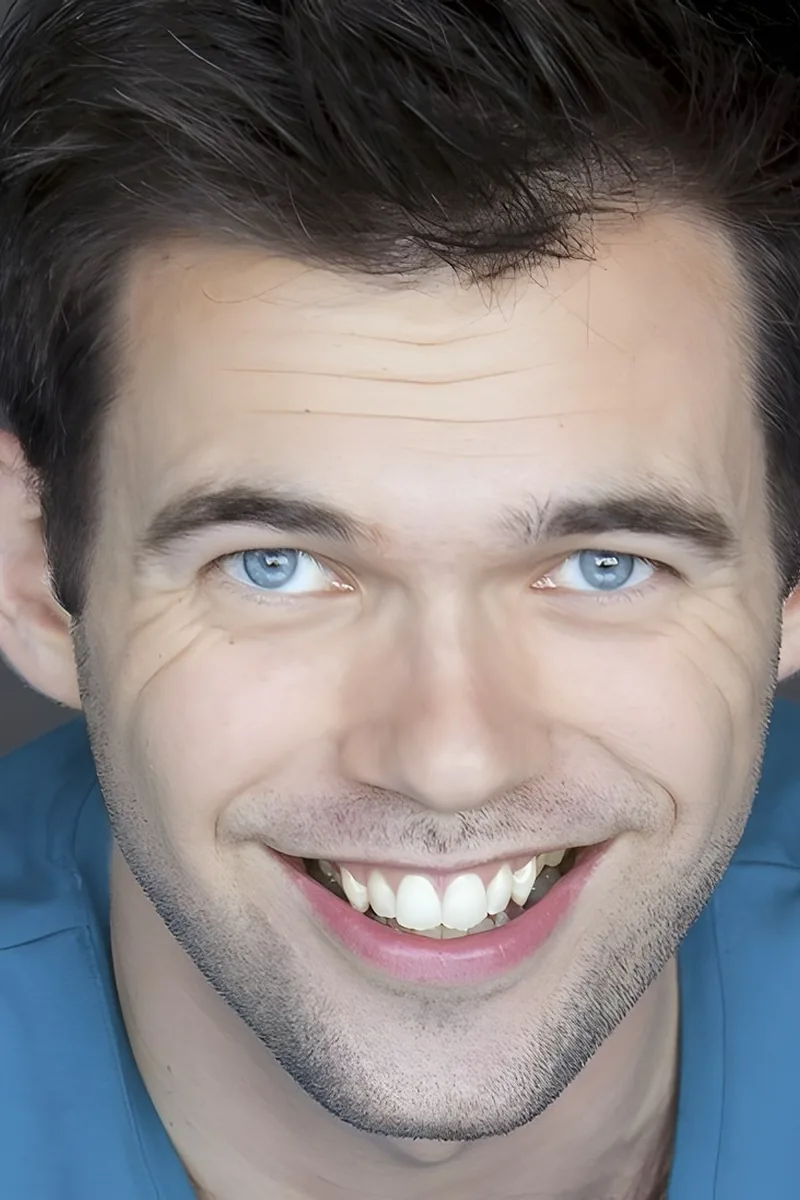
Stanford's Human Biology program with a bioinformatics and stem cell science concentration meant Matthew spent his coursework at the intersection of computation and living systems — analyzing gene expression data, studying cell differentiation pathways, and thinking about biology as information processing. That lens is especially useful for AP Bio's molecular biology and genetics units, where students need to trace how information encoded in DNA gets read, regulated, and occasionally misread. Rated 4.9 by students.

Cellular respiration, gene regulation, ecological energy flow — AP Biology demands that students think across scales, from molecules to ecosystems, often within a single free-response question. Sharan is deep in this material as a Human Biology major on the premed track at Cornell, and she unpacks complex processes like signal transduction by walking through each step with clear cause-and-effect reasoning.
Running an immunology lab at Columbia Medical Center means Matthew doesn't just remember AP Biology content — he uses cellular signaling, gene expression, and immune system mechanics in active research. He teaches the course's trickiest units, like cell communication and ecology data analysis, by connecting textbook diagrams to what actually happens at the bench. That real-world grounding is especially useful for the AP exam's experimental-design and data-interpretation questions.
Fourth-year med student at Albert Einstein College of Medicine, Michael has spent years applying the biology he first studied as a summa cum laude graduate in Biology from Yeshiva College — so AP Bio's units on genetics, cellular processes, and physiology aren't abstract for him, they're the foundation of his daily clinical work. His experience teaching MCAT prep for Kaplan means he's already coached students through the same high-stakes biological reasoning that AP Bio's free-response questions demand, especially the kind where you need to connect a molecular mechanism to an organism-level outcome.
Studying biology at Washington University in St. Louis means Laura encounters AP Bio topics like cell signaling, gene regulation, and metabolic pathways in her own coursework every week — so she knows which details matter at the AP level and which are just noise. Her 35 ACT reflects the same kind of precise, analytical reading that the exam's data-interpretation and experimental-design questions demand. Rated 5.0 by students.
Few tutors walk into AP Bio with the depth Kiera brings — she's studying ecology and evolutionary biology at Dartmouth while also doing engineering coursework, so topics like cellular respiration, gene expression, and phylogenetics are part of her daily academic life. She teaches students to think in the way the AP exam tests: interpreting experimental data, constructing explanations, and linking molecular details to big-picture biological concepts. She holds a 5.0 rating from past students.
Studying neuroscience at Penn means Daniel lives in the overlap between biology and chemistry that AP Bio's toughest units — signal transduction, nervous system function, and cellular communication — demand. He can trace a neural impulse from ion channel to synapse to behavioral response, which is exactly the kind of multi-step mechanistic reasoning the free-response questions reward. Rated 5.0 by students.
AP Bio covers an enormous range — from cellular respiration and photosynthesis to ecology and evolution — and the exam rewards students who can apply concepts to unfamiliar experimental scenarios. Kelsey's molecular biology degree gives her deep fluency with the hardest units on the curriculum, and she teaches students to read data tables and design experiments the way the College Board actually tests them.
Studying biological sciences at Cornell means Drishti is immersed in the same material AP Bio covers — from cell signaling cascades to gene regulation and evolutionary mechanisms. She breaks down the exam's notoriously dense free-response questions by teaching students how to connect molecular-level details to big-picture biological concepts. Rated 5.0 by students.
Between his biology degree from Washington University and lab work in immunology and genetics, Colin has lived the material that shows up on the AP Bio exam. He digs into the trickiest units — gene expression and regulation, cell signaling pathways, energy transfer in ecosystems — and teaches students to reason through experimental design questions the way a working scientist would.
The trickiest part of AP Bio for most students isn't memorizing content — it's learning to think across scales, like connecting what happens at a ribosome to what shows up in an organism's phenotype. Hali pairs her biology and microbiology knowledge with a visual arts background that makes her unusually good at sketching out processes like meiosis or energy flow through ecosystems so students can actually see how the pieces fit together. Rated 5.0 by students.
Andrew is living AP Biology's content right now — his biological sciences major at Cornell and his veterinary oncology research put him face-to-face with cell signaling, gene expression, and ecological dynamics on a weekly basis. He unpacks dense topics like cellular respiration and heredity by tying them to the lab work and clinical scenarios he's actively studying. That real-time connection to the material makes review sessions far more concrete than rereading a textbook.
Most of Adam's teaching centers on history, Spanish, and chemistry — but his broad science background and structured research skills from his library and information science master's give him a useful angle for AP Bio, especially when students need to organize massive amounts of content across units like ecology, evolution, and cellular processes. He's strong at teaching students how to pull key details from dense passages and data sets, which is exactly what the exam's grid-in and free-response questions demand.
Published research in orthopedics and national neuroscience honors from Johns Hopkins mean Caleigh has worked with biological systems at a level where she can unpack AP Bio's toughest concepts — like how neural signaling ties into feedback mechanisms, or how musculoskeletal structure reflects evolutionary pressures — from firsthand lab experience rather than textbook summaries. She's especially sharp on the intersection of anatomy and molecular biology, connecting protein-level details to organism-level function in the way the exam's free-response questions demand. Rated 5.0 by students.
I am a physician in training, living in New York City. I was born and grew up in Minneapolis, Minnesota. I lived in both Israel and Denmark growing up. I went to the University of Pennsylvania for college, where I majored in history and completed the pre-med curriculum. I graduated from Penn cum laude and went on to medical school at Tufts University in Boston. I went on to complete my internship and residency in internal medicine at The Mount Sinai Hospital in New York City. I continue to live in New York and am now completing a fellowship (speciality training) in gastroenterology on Long Island.
Five years of tutoring biology at every level — from middle school basics to college coursework — taught Alan how to calibrate explanations to exactly what a student is missing, whether that's the logic behind Hardy-Weinberg equilibrium or the steps of meiosis that make genetic variation possible. His biology degree from Hofstra's Honors Program included cell biology and molecular genetics, so the AP Bio curriculum sits squarely in content he's studied in depth. Holds a 5.0 rating.
The toughest part of AP Biology for most students isn't memorizing organelles — it's reasoning through experimental design and analyzing data on gene expression or population dynamics. David's science and engineering background at UCLA gives him the analytical lens to walk through those multi-step free-response questions in a way that clicks.
AP Biology's free-response questions reward students who can design experiments, interpret data, and write precise explanations — skills that go well beyond memorizing cell structures. Rukhsar's doctoral training in research methodology gives her a sharp eye for teaching experimental design and evidence-based reasoning, two areas where many AP Bio students lose easy points.
A biopsychology degree from Tufts means Elizabeth studied the nervous system, gene expression, and animal behavior at a level where she can unpack the connections between AP Bio's molecular units and the organism-level behavior questions that often trip students up. She's now in medical school at Hofstra, so the physiology and cellular processes on the exam are material she's actively building on — not reviewing from memory. Rated 5.0 by students.
Between her biology research at UC Berkeley and her premedical coursework, Chellam has tackled AP Biology content from multiple angles — cellular respiration in a lecture hall, gene expression in a research lab, and ecology out in the field. She unpacks dense topics like signal transduction pathways and evolutionary mechanisms by tying them to experiments and real biological systems students can visualize.
Rachel earned her biology degree and then went through medical school, which means she's encountered AP Biology's core concepts — cellular respiration, genetics, ecology, evolution — at progressively deeper levels. She knows exactly which details the AP exam emphasizes and where students tend to confuse similar processes, like the light-dependent reactions versus the Calvin cycle. Rated 5.0 by students.
AP Biology's free-response questions trip up students who know the science but struggle to articulate experimental design or analyze data in writing. Aaron pairs his own AP exam experience with sharp editorial instincts honed at Columbia's Daily Spectator, so he tackles both the content review and the communication skills the exam demands.
Holding a B.S. in Biology from Binghamton University, Gabrielle knows AP Bio inside and out — from the details of cellular respiration and photosynthesis to the big-picture thinking required for ecology and evolution free-response questions. She teaches students to link molecular-level processes to organism-level outcomes, which is exactly the kind of cross-scale reasoning the AP exam rewards.
As a premed student at Vassar, Grace is actively immersed in the biology that AP students are tested on — from cellular respiration and genetics to ecology and evolutionary mechanisms. She unpacks dense processes like the Krebs cycle by mapping out each step visually, turning what looks like a wall of vocabulary into a logical sequence students can actually trace through.
The free-response questions on the AP Bio exam reward students who can explain *why* a biological process works, not just label its steps — and that's where Umar's medical training comes in. His DO coursework means he's traced pathways like cellular respiration and signal transduction all the way to their clinical consequences, so he teaches concepts like feedback loops and enzyme regulation with a depth that makes the exam's multi-step reasoning questions feel manageable. Rated 5.0 by students.
Leonard's math degree from Columbia might seem like an unusual path into AP Bio, but it gives him a real edge on the quantitative reasoning the exam increasingly demands — chi-square tests, Hardy-Weinberg calculations, and interpreting data from experimental designs. He also teaches molecular biology and anatomy, so he can connect the math to the underlying biological concepts rather than treating them as separate skills. Rated 4.8 by students.
Scoring well on AP Biology means internalizing processes like cellular respiration, signal transduction, and gene regulation deeply enough to apply them in unfamiliar experimental scenarios. Thomas tackles this by teaching each system mechanistically — what's happening at the molecular level and why — an approach that comes naturally from his biochemistry and molecular biology training. Rated 4.8 by students.
Golddy's neuroscience degree from Johns Hopkins means she's studied the biology behind neural signaling, synaptic transmission, and cellular communication at a level that goes well beyond what AP Bio covers — which makes her especially sharp on the exam's units dealing with cell communication and feedback mechanisms. Her coursework also built fluency with experimental design and data interpretation, the skills that consistently trip students up on AP Bio's lab-based free-response questions. Rated 4.8 by students.
AP Biology's free-response questions demand more than recall — they require students to design experiments, interpret data, and connect cellular processes to organism-level outcomes. As a medical student who lives in this material, Tara knows which signaling pathways, gene expression details, and ecological concepts the exam emphasizes most. She teaches students to think like scientists when constructing their written answers.
Teaching across four countries — including stints in Austria and Japan — gave Jacquelyn a habit of explaining complex ideas to students with wildly different backgrounds, which translates well to AP Bio's dense vocabulary and layered concepts like photosynthesis pathways or ecological interactions. Her Columbia graduate work built strong analytical reading skills she now applies to helping students decode the data-heavy experimental passages the exam throws at them. Rated 4.9 by students.
Scoring well on the AP Bio exam means connecting big ideas across units — linking cellular respiration to ecology, or tracing how a gene mutation affects protein function, organism fitness, and population dynamics. Kelli's biochemistry degree gives her the molecular-level depth to explain these connections, and her med school experience means she knows exactly how the College Board tests experimental design and data interpretation.
Pre-med coursework at Macaulay Honors College means Amena is currently working through the same cell biology, genetics, and ecology material that AP Bio covers — so she's teaching from active knowledge rather than distant memory. Her biology degree at Brooklyn College pairs with a linguistics background that sharpens how she breaks down dense processes like photosynthesis or protein synthesis into clear, sequential explanations students can actually reproduce on free-response questions. Rated 5.0 by students.
Preparing for the AP Bio exam means mastering dense content — from cellular respiration pathways to ecology models — while also learning how to design experiments and analyze data under time pressure. Mary's pre-med trajectory and broad science background let her connect molecular-level details to big-picture biological themes, which is exactly how the AP exam's free-response questions are structured.
Alana's cellular and molecular biology degree means she's spent serious time with the content that trips up most AP Bio students — things like the mechanics of gene expression, protein folding, and how cells communicate through signal transduction cascades. She brings that molecular-level precision to teaching students how to construct the kind of detailed, process-driven explanations the exam's free-response questions demand. Rated 5.0 by students.
Psychology and biology overlap more than most students realize — AP Bio's units on the nervous system, animal behavior, and feedback loops all draw on the same material Yasmeen studied while earning her psychology degree. She's particularly good at breaking down how neurons fire, how hormones regulate behavior, and how organisms respond to environmental stimuli, which are exactly the kinds of processes students need to explain in detail on free-response questions.
Economics and English might seem far from AP Bio, but Dennis's dual-major background makes him unusually effective at the skill the exam actually tests hardest: constructing written arguments from data. Free-response questions in AP Bio reward students who can read a graph, identify a biological trend, and explain it in clear, structured prose — and that's where Dennis's 5.0 rating comes from.
Cornell's biological sciences program is lab-intensive and exam-heavy, and Jared graduated with the kind of deep familiarity with genetics, cellular energetics, and ecological modeling that AP Bio demands at every turn. He also TA'd an introductory science course there, lecturing weekly to undergraduates — so he's practiced at breaking down dense material like photosynthesis pathways or chi-square genetics problems into steps that actually make sense on a first pass. Rated 4.8 by students.
AP Biology's free-response questions demand more than memorized facts — they require students to design experiments, interpret data, and argue from evidence about topics like gene regulation and ecological dynamics. Mariam studied biology at the university level and digs into the reasoning behind cellular processes, heredity patterns, and evolutionary mechanisms so students can handle whatever the exam throws at them.
AP Bio covers a massive range, from molecular genetics to ecosystem dynamics, and the exam rewards students who can design experiments and interpret data, not just recall facts. Aaron is a biochemistry major on the pre-med track at Columbia, which means he lives in the overlap of biology and chemistry that defines the toughest AP Bio questions — gene expression, cellular respiration, enzyme kinetics.
Between her nutritional sciences degree and pre-med post-baccalaureate, Rachel has spent years immersed in the biology that AP Bio tests hardest — cellular respiration, signal transduction, gene regulation, and ecological dynamics. She knows which free-response question styles the exam favors and teaches students to construct answers that earn full credit by linking evidence to biological reasoning.
Testimonials
Because the right AP Biology tutor makes all the difference.
Average Session Rating – Based on 3.4M Learner Ratings
Practice AP Biology
Free practice tests, flashcards, and AI tutoring for AP Biology
Nearby AP Biology Tutors
Other Albany Tutors
Related Science Tutors in Albany
Frequently Asked Questions
Score improvements depend on your starting point and how consistently you engage with tutoring. Students who work with tutors typically see gains of 1-3 points on the AP scale (out of 5), though some improve more dramatically if they're addressing significant knowledge gaps. The key is identifying weak areas early—whether that's cellular respiration, genetics, or ecology—and building a focused study plan around those topics before test day.
Many students struggle with the sheer breadth of content—AP Biology covers everything from molecular biology to ecosystems—and distinguishing between what's tested heavily versus what's peripheral. The exam also requires applying concepts to new scenarios, not just memorizing facts. Additionally, the free-response section demands clear scientific communication, which trips up students who can identify correct answers but struggle to explain their reasoning in writing.
Ideally, students benefit most from tutoring that starts in the fall or early winter, giving 3-4 months to work through content systematically and leave time for practice tests and review. However, even starting in March or April can help if you focus on your weakest units and test-taking strategies. The earlier you identify gaps—through a diagnostic assessment or practice test—the more time you have to address them before the May exam.
Expert tutors help you master pacing (the multiple-choice section has 60 questions in 90 minutes), understand question formats, and develop a strategy for the free-response section. They'll teach you how to read questions carefully to avoid traps, manage time across different question types, and practice explaining concepts concisely under pressure. Many students also benefit from working through released AP exams with a tutor who can identify patterns in where you lose points.
Practice tests are essential—they help you identify weak units, get comfortable with the exam format, and build stamina for the full 3-hour test. Most tutors recommend taking at least 2-3 full practice exams, starting 6-8 weeks before the test, then reviewing every question you missed to understand why. This reveals whether you're struggling with content knowledge, test strategy, or both, so your tutoring can focus on what actually needs work.
Your first session typically involves assessing where you stand—reviewing your current grade, any practice test scores, and identifying which units feel strongest and weakest. Varsity Tutors connects you with tutors who will use this information to create a personalized study plan tailored to your timeline and goals. You'll also discuss test anxiety, pacing concerns, or any other challenges so your tutor can address them from day one.
Tutors working with Varsity Tutors have strong backgrounds in biology—many hold degrees in biology, biochemistry, or related sciences, and many have taught AP Biology or worked in scientific fields. They understand the AP curriculum deeply and know which concepts students typically find confusing. Beyond subject expertise, they're skilled at explaining complex material clearly and adapting their teaching to how you learn best.
Albany's 13 school districts offer AP Biology courses across many high schools, so you likely have access to classroom instruction and school-based resources. Connecting with a tutor supplements that classroom work by giving you personalized attention on your specific weak areas and customized test prep. Tutors can work around your school's pacing and curriculum, reinforcing what you're learning in class while focusing on exam strategy and practice.
Let’s find your perfect tutor
Answer a few quick questions. We’ll recommend the right plan and match you with a top 5% tutor.