Award-Winning AP Physics C: Mechanics Tutors
serving Albany, NY
AP Physics C: Mechanics
Tutors in Albany
Private 1-on-1 tutoring, weekly live classes for academic support, test prep & enrichment, practice tests and diagnostics, and more to elevate grades and test scores.
Based on 3.4M Learner Ratings
UniversitiesSchools & Universities
DeliveredHours Delivered
ProficiencyGrowth in Proficiency
Who needs tutoring?
No obligation. Takes ~1 minute.
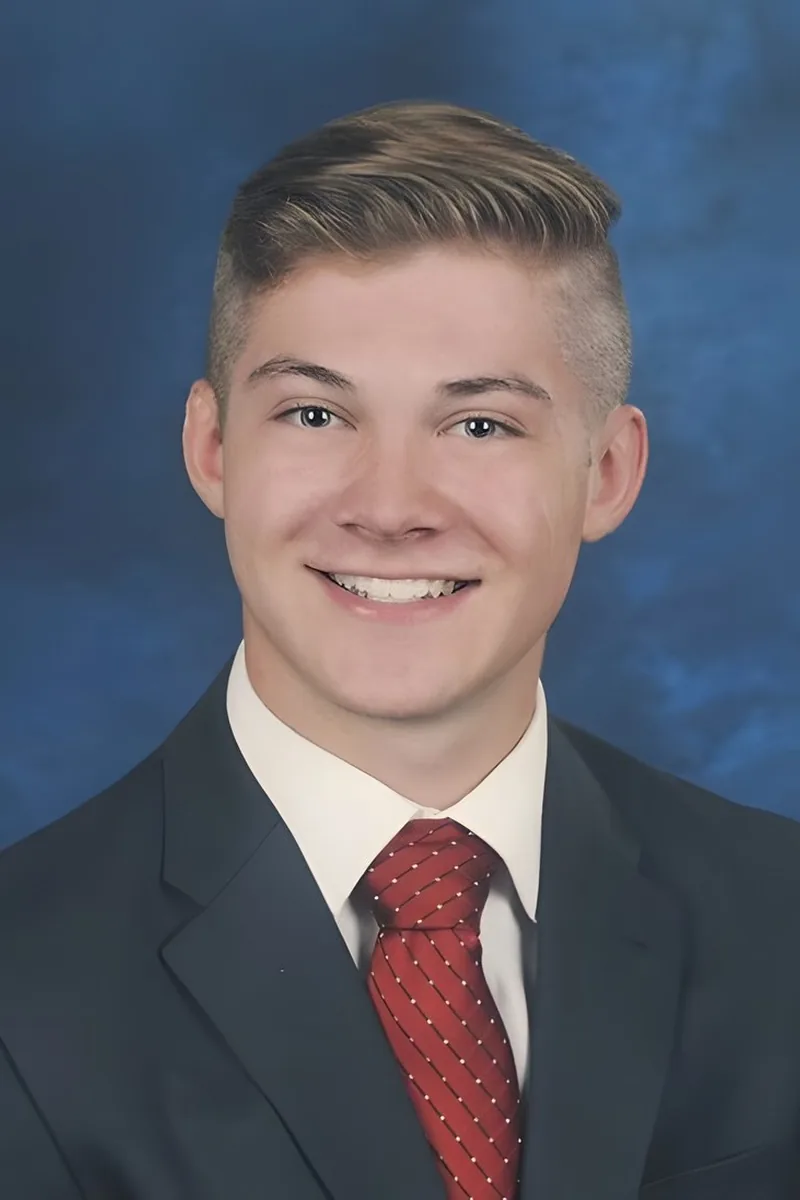
AP Physics C: Mechanics often trips up students who are comfortable with calculus in a math class but freeze when they need to apply it to a pulley system or a variable-force spring problem. Andrew pairs his strong math background — he's pursuing a double focus in finance and mathematics at Boston College — with hands-on physics tutoring across multiple levels, including the SAT Physics subject test. That cross-subject fluency means he can spot whether a student's stuck on the physics setup or the calculus execution and address the right one.

Three years of tutoring introductory physics students while completing dual bachelor's degrees in physics and mathematics — followed by a PhD in Computational Mathematics — means Justin has taught the calculus-based mechanics in AP Physics C from both sides of the chalkboard. He digs into the spots where students typically stall, like setting up angular momentum problems or knowing when a scenario calls for energy methods versus force analysis, and walks through the underlying math until the physics clicks. Rated 5.0 by students.
Double-majoring in physics and computer science at Stony Brook, Kiran lives in the calculus-based mechanics world daily — setting up work-energy integrals, deriving equations of motion, solving the same kinds of problems AP Physics C puts on the free-response section. His 34 ACT and physics coursework give him both the mathematical fluency and the physical intuition to explain why a particular integral applies to a given force scenario, not just how to evaluate it.
Biology majors at Cornell don't usually seek out calculus-based physics — but Drishti's 1500 SAT and her comfort across both AP Calculus BC and AP Physics C suggest she genuinely clicks with the quantitative side of science, not just the biological. She's especially useful for students who need someone to slow down on the free-body-diagram-to-integral pipeline, translating the physical setup into the calculus without assuming steps are obvious. Rated 5.0 by students.
Free-body diagrams, rotational inertia, and conservation of energy problems all require calculus-based reasoning that trips students up when they try to rely on formulas alone. Emily completed the full pre-med physics sequence at Cornell and spent her senior year tutoring calculus — two skills that converge directly in AP Physics C: Mechanics. She breaks multi-step problems into the underlying math so students see why the setup matters as much as the answer.
A PhD in Chemical and Biomolecular Engineering from Buffalo built on a nuclear engineering foundation means Sabry has spent years solving the calculus-heavy mechanics problems — work-energy integrals, rigid body torque derivations, variable-force differential equations — that AP Physics C tests in compressed form. He co-instructed both undergraduate and graduate physics and mechanics courses during his doctoral program, so he knows exactly where students confuse the physical setup with the mathematical execution and can address each independently.
UCLA's engineering curriculum has David solving the same calculus-based mechanics — work-energy integrals, variable-force problems, rotational inertia derivations — that the AP Physics C exam tests, and his computer science training adds a systematic, algorithmic approach to setting up multi-step free-response problems. He's especially sharp at teaching students to diagram a physical system, identify which conservation law applies, and then write the correct integral or derivative before calculating anything. Rated 4.8 by students.
Working as a postdoctoral researcher at Brookhaven National Laboratory while teaching university physics at Hofstra, Lindamulage lives in the world of Newtonian mechanics and calculus-based dynamics daily — not as textbook exercises, but as tools for active research. That depth shows when tackling AP Physics C: Mechanics topics like rotational inertia derivations or variable-force work integrals, where real-life examples from the lab make abstract setups feel grounded. Students get someone who can explain why a conservation law works the way it does, not just how to apply it on exam day.
Aaron's biochemistry program at Columbia requires the same calculus-based physics sequence that AP Physics C covers — kinematics, work-energy integrals, and Newton's laws in differential form — so he's recently worked through these problems under exam conditions himself. That recency is an asset: he remembers exactly where the free-response questions punish sloppy setup versus sloppy algebra, and he teaches students to distinguish between the two before they lose points on both. Rated 5.0 by students.
A neuroscience and biochemistry background might not scream physics, but Charles spent years modeling neural signal propagation and kinetic systems — work that demands the same calculus-based force and energy analysis AP Physics C: Mechanics tests. He's especially sharp on problems where students need to set up Newton's second law as a differential equation, since that's essentially what he did daily studying membrane dynamics and molecular interactions. Holds a 5.0 tutoring rating.
Timothy's physics degree means he's derived the equations of motion, set up torque integrals, and solved the calculus-based problems that AP Physics C: Mechanics throws at students — not as test prep, but as core coursework. His 32 ACT and 5.0 tutoring rating back up a teaching approach that zeroes in on free-body diagrams and getting the calculus setup right before ever plugging in numbers, particularly when problems shift from straightforward linear kinematics to the rotational scenarios that cost students the most points.
I am a Sophomore college student currently studying Mechanical Engineering at Stony Brook University. I strongly encourage and aims to motivate high school students to become leaders in their careers as engineers, expand the idea of engineering as a means of improving the quality of life, and increase the diversity of the engineering profession.
Hello, my name is Yosef and I would be happy to serve as a math tutor. I place strong emphasis on a good balance between knowledge of mathematical content and proficiency in problem-solving, reasoning, and conveying mathematical ideas in writing. There are times when a student needs to be informed of a solution, times when he or she also needs to hear the explanation of why the solution works, and times when he or she should be guided to finding the solution on his or her own. It is important for the tutor to recognize which approach is appropriate. Frequently, when students struggle, it is because they do not understand the notation or terminology in use. In such cases, it is important to reassure the student, reminding him or her that he or she is only struggling with understanding a single word, not the entire mathematical concept. As a rule, people perform better and are better motivated when they have self-confidence, not when the task ahead seems frighteningly daunting. It is also important to recognize that different students learn best through different means. As an example, some students are visual learners and can understand the material best through pictures and gestures. Other students learn best through hearing the procedures vocalized, while still others learn best through writing out the steps of the solution procedure. I know to adapt my teaching style to the individual student. with these considerations in mind, I promise to provide the best assistance that I can, taking your individual needs into consideration.
Decades of chemical engineering work gave Steven a particular fluency with the calculus-based mechanics that AP Physics C demands — he's applied Newton's laws, energy methods, and differential equations to real industrial systems, not just textbook scenarios. He explains each concept multiple ways, layering physical intuition with worked examples until the connection between the physics and the integral clicks. Rated 4.9 by students.
Bettina didn't just study mechanics in a textbook — she earned a PhD in mechanical engineering, meaning she's derived equations of motion for real systems where assumptions about friction, constraints, and rigid-body approximations actually matter. That depth shows up when she teaches AP Physics C: Mechanics topics like rotational dynamics and gravitational potential energy, because she can explain not just how to set up the integral but why that particular model fits the physical situation.
Holding dual degrees in mathematics and physics, Maxwell brings the rare ability to see both sides of every AP Physics C: Mechanics problem simultaneously — the physical intuition and the calculus machinery. Where many students stumble is in translating a free-body diagram into the correct line integral or second-order differential equation; Maxwell treats that translation step as the core skill to master, not an afterthought. Rated 5.0 by students, with a 1520 SAT backing up the quantitative chops.
Rice's mechanical engineering program puts Ashton through calculus-based statics, dynamics, and kinematics every semester — the same core mechanics that AP Physics C tests, just applied to real structural and machine systems. That daily exposure means he can spot whether a student's free-response mistake is a physics misread or a calculus execution error, and address the right one. His 32 ACT underscores the quantitative fluency backing his approach.
An applied physics degree means Karen didn't just study mechanics for an exam — she built her entire undergraduate education around the Newtonian framework, calculus-based problem-solving, and laboratory work that AP Physics C condenses into a single course. She's especially sharp at connecting real-world scenarios (a spinning figure skater, a car banking a curve) to the free-body diagrams and integrals students need to produce under timed conditions. Rated 5.0 by students.
Jonathan earned his PhD in physics, which means the calculus-based mechanics in AP Physics C — from deriving equations of motion for coupled oscillators to setting up torque integrals for non-uniform rigid bodies — is territory he's navigated at a research level. His teaching fellowship during graduate school had him running students through exactly these problems, building intuition for when to apply Newton's second law in differential form versus jumping straight to energy methods. Rated 5.0 by students.
A physics degree means Eitan has spent years inside the calculus-based mechanics framework — not just applying Newton's laws but deriving them from first principles, working through Lagrangian setups, and building physical intuition for when a problem calls for energy methods versus force analysis. He's particularly sharp on free-body diagrams that involve variable forces, where students often know the physics but stumble on setting up the correct integral bounds. Rated 5.0 by students.
John scored a 36 on the ACT and tutors the full calculus-to-physics pipeline — AP Calculus AB, AP Physics 1, and AP Physics C: Mechanics — so he sees exactly where students' math skills break down under the pressure of a mechanics problem. He teaches students to recognize which physical scenarios call for integration versus differentiation before they even write an equation, turning the free-response section into a series of deliberate decisions rather than panicked formula hunts. Rated 4.9 by students.
Richard holds both a B.S. in Math and a B.S. in Physics, which means the calculus and the mechanics aren't two separate languages for him — they developed together, and he teaches AP Physics C that way, treating the math as inseparable from the physical reasoning rather than an add-on. His graduate work in atmospheric sciences demanded constant modeling of force systems and fluid dynamics, so problems involving variable forces or energy conservation across complex scenarios are second nature. He can also tutor entirely in Spanish for bilingual students who think more clearly in their first language.
Data analytics trains you to model systems mathematically and interpret what the numbers actually mean — skills Vishank applies directly when tackling AP Physics C: Mechanics problems that require setting up kinematic equations or integrating variable forces. His coursework in calculus through linear algebra, combined with tutoring across both math and science, means he can diagnose whether a student's struggle on a free-response problem is a physics misunderstanding or a calculus execution error. Rated 4.9 by students.
Four years of teaching undergraduate physics labs at the University of Michigan — especially circuits, electromagnetism, and wave mechanics — gave Michael a sharp eye for where students' calculus intuition breaks down inside a physics problem. For AP Physics C: Mechanics, he zeroes in on that breakdown point: translating a physical setup (a block on a spring, a rotating disk with non-uniform mass) into the correct integral or differential equation. His PhD-level fluency means he can explain not just which formula applies, but why the math takes that particular form.
Testimonials
Because the right AP Physics C: Mechanics tutor makes all the difference.
Average Session Rating – Based on 3.4M Learner Ratings
Practice AP Physics C: Mechanics
Free practice tests, flashcards, and AI tutoring for AP Physics C: Mechanics
Nearby AP Physics C: Mechanics Tutors
Other Albany Tutors
Related Science Tutors in Albany
Frequently Asked Questions
AP Physics C: Mechanics focuses on kinematics, dynamics, energy, momentum, circular motion, and oscillations. The course emphasizes calculus-based problem-solving, requiring students to apply derivatives and integrals to physics concepts. For students in Albany preparing for the exam, mastering both conceptual understanding and mathematical techniques is essential, as the AP exam tests both computational skills and deep conceptual reasoning.
The main difficulty lies in integrating calculus with physics concepts—students must not only understand the physics but also apply calculus to solve problems efficiently. Many students struggle with pacing during the exam, as problems require multiple steps and careful mathematical work. Additionally, the course demands strong visualization skills to understand motion in different reference frames and coordinate systems, which can be overwhelming without guided practice.
Score improvement depends on your starting point and consistency with practice. Students who work with tutors typically see gains of 1-2 score points (on the 1-5 scale) over several months, though some students improve more dramatically if they address fundamental gaps early. The key is identifying weak areas—whether that's calculus application, problem-solving strategy, or specific topics like circular motion—and targeting them systematically with practice tests and guided problem-solving.
Ideally, students benefit most from tutoring during the school year as they progress through the curriculum, allowing tutors to reinforce concepts in real-time and prevent knowledge gaps from accumulating. However, students can also start tutoring in the spring for focused exam preparation, especially if they've already completed the course. For students in Albany schools with an average student-teacher ratio of 14.7:1, personalized 1-on-1 instruction can be particularly valuable for clarifying challenging calculus-physics connections that may not receive as much attention in larger classroom settings.
Your first session typically includes an assessment of your current understanding—your tutor will review your class notes, previous exams, or problem sets to identify which topics are solid and where gaps exist. Together, you'll discuss your goals (whether that's mastering specific units, improving problem-solving speed, or preparing for the May exam) and create a personalized study plan. This foundation helps your tutor tailor subsequent sessions to your learning pace and needs.
Effective strategies include reading questions carefully to identify what's being asked, drawing diagrams to visualize problems, and working through calculations step-by-step rather than rushing. Many students benefit from practicing with the official AP exam format and timing themselves to build pacing skills—the exam allows 90 minutes for 35 multiple-choice questions and 90 minutes for 3 free-response questions. Tutors can help you develop a personalized approach, such as tackling easier problems first or using specific problem-solving frameworks for different question types.
Practice tests are crucial—they help you identify weak topics, build familiarity with question formats, and develop time management skills under realistic exam conditions. Working through full-length practice tests every 2-3 weeks allows you to track progress and adjust your study focus. Tutors can review your practice test results with you, analyzing which problem types you struggle with and why, then targeting those areas in future sessions.
Varsity Tutors connects you with expert tutors who specialize in AP Physics C: Mechanics and understand the calculus-intensive nature of the course. The matching process considers your schedule, learning style, and specific goals—whether you need help with kinematics, energy conservation, or exam strategy. Once matched, you'll work with your tutor to establish a study plan tailored to your needs and timeline.
Let’s find your perfect tutor
Answer a few quick questions. We’ll recommend the right plan and match you with a top 5% tutor.