Award-Winning AP Biology Tutors
serving New York, NY
AP Biology
Tutors in New York
Private 1-on-1 tutoring, weekly live classes for academic support, test prep & enrichment, practice tests and diagnostics, and more to elevate grades and test scores.
Based on 3.4M Learner Ratings
UniversitiesSchools & Universities
DeliveredHours Delivered
ProficiencyGrowth in Proficiency
Who needs tutoring?
No obligation. Takes ~1 minute.
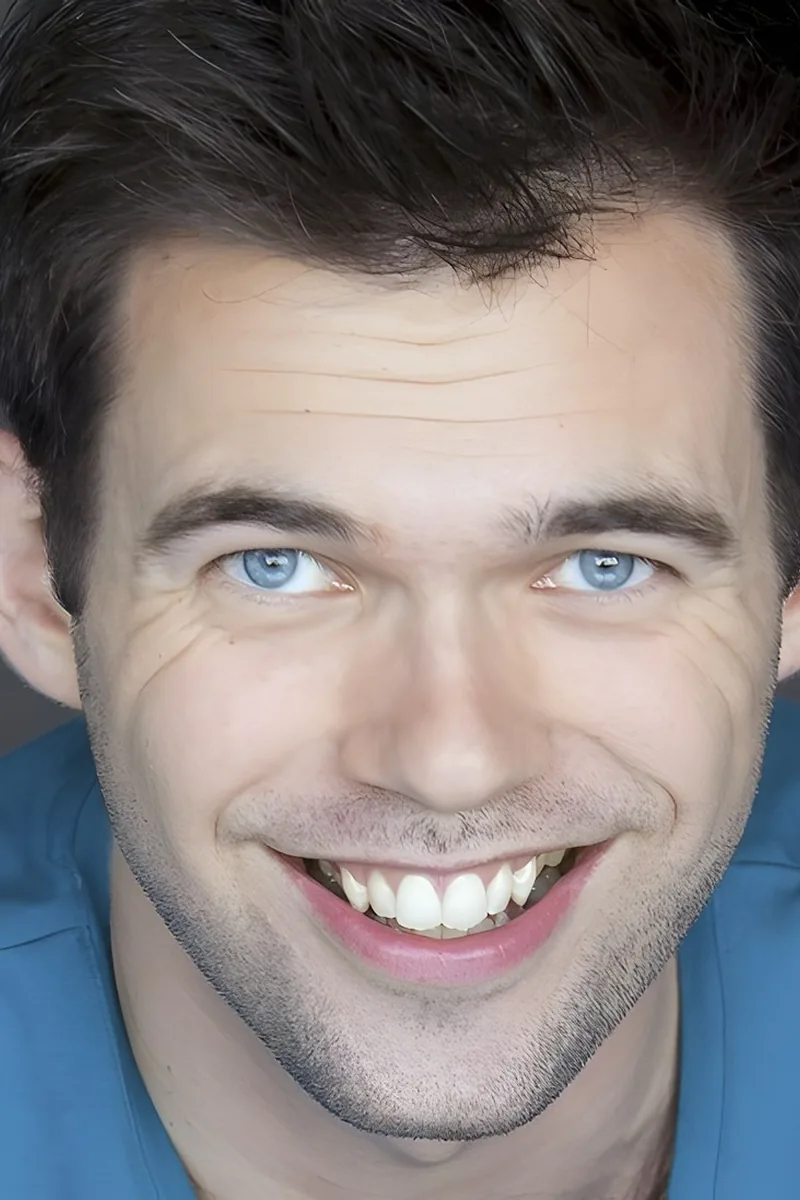
Stanford's Human Biology program with a bioinformatics and stem cell science concentration meant Matthew spent his coursework at the intersection of computation and living systems — analyzing gene expression data, studying cell differentiation pathways, and thinking about biology as information processing. That lens is especially useful for AP Bio's molecular biology and genetics units, where students need to trace how information encoded in DNA gets read, regulated, and occasionally misread. Rated 4.9 by students.

Running an immunology lab at Columbia Medical Center means Matthew doesn't just remember AP Biology content — he uses cellular signaling, gene expression, and immune system mechanics in active research. He teaches the course's trickiest units, like cell communication and ecology data analysis, by connecting textbook diagrams to what actually happens at the bench. That real-world grounding is especially useful for the AP exam's experimental-design and data-interpretation questions.
Studying neuroscience at Penn means Daniel lives in the overlap between biology and chemistry that AP Bio's toughest units — signal transduction, nervous system function, and cellular communication — demand. He can trace a neural impulse from ion channel to synapse to behavioral response, which is exactly the kind of multi-step mechanistic reasoning the free-response questions reward. Rated 5.0 by students.
Between his biology degree from Washington University and lab work in immunology and genetics, Colin has lived the material that shows up on the AP Bio exam. He digs into the trickiest units — gene expression and regulation, cell signaling pathways, energy transfer in ecosystems — and teaches students to reason through experimental design questions the way a working scientist would.
The trickiest part of AP Bio for most students isn't memorizing content — it's learning to think across scales, like connecting what happens at a ribosome to what shows up in an organism's phenotype. Hali pairs her biology and microbiology knowledge with a visual arts background that makes her unusually good at sketching out processes like meiosis or energy flow through ecosystems so students can actually see how the pieces fit together. Rated 5.0 by students.
Most of Adam's teaching centers on history, Spanish, and chemistry — but his broad science background and structured research skills from his library and information science master's give him a useful angle for AP Bio, especially when students need to organize massive amounts of content across units like ecology, evolution, and cellular processes. He's strong at teaching students how to pull key details from dense passages and data sets, which is exactly what the exam's grid-in and free-response questions demand.
The toughest part of AP Biology for most students isn't memorizing organelles — it's reasoning through experimental design and analyzing data on gene expression or population dynamics. David's science and engineering background at UCLA gives him the analytical lens to walk through those multi-step free-response questions in a way that clicks.
Published research in orthopedics and national neuroscience honors from Johns Hopkins mean Caleigh has worked with biological systems at a level where she can unpack AP Bio's toughest concepts — like how neural signaling ties into feedback mechanisms, or how musculoskeletal structure reflects evolutionary pressures — from firsthand lab experience rather than textbook summaries. She's especially sharp on the intersection of anatomy and molecular biology, connecting protein-level details to organism-level function in the way the exam's free-response questions demand. Rated 5.0 by students.
I am a physician in training, living in New York City. I was born and grew up in Minneapolis, Minnesota. I lived in both Israel and Denmark growing up. I went to the University of Pennsylvania for college, where I majored in history and completed the pre-med curriculum. I graduated from Penn cum laude and went on to medical school at Tufts University in Boston. I went on to complete my internship and residency in internal medicine at The Mount Sinai Hospital in New York City. I continue to live in New York and am now completing a fellowship (speciality training) in gastroenterology on Long Island.
Leonard's math degree from Columbia might seem like an unusual path into AP Bio, but it gives him a real edge on the quantitative reasoning the exam increasingly demands — chi-square tests, Hardy-Weinberg calculations, and interpreting data from experimental designs. He also teaches molecular biology and anatomy, so he can connect the math to the underlying biological concepts rather than treating them as separate skills. Rated 4.8 by students.
Scoring well on AP Biology means internalizing processes like cellular respiration, signal transduction, and gene regulation deeply enough to apply them in unfamiliar experimental scenarios. Thomas tackles this by teaching each system mechanistically — what's happening at the molecular level and why — an approach that comes naturally from his biochemistry and molecular biology training. Rated 4.8 by students.
Golddy's neuroscience degree from Johns Hopkins means she's studied the biology behind neural signaling, synaptic transmission, and cellular communication at a level that goes well beyond what AP Bio covers — which makes her especially sharp on the exam's units dealing with cell communication and feedback mechanisms. Her coursework also built fluency with experimental design and data interpretation, the skills that consistently trip students up on AP Bio's lab-based free-response questions. Rated 4.8 by students.
Rachel earned her biology degree and then went through medical school, which means she's encountered AP Biology's core concepts — cellular respiration, genetics, ecology, evolution — at progressively deeper levels. She knows exactly which details the AP exam emphasizes and where students tend to confuse similar processes, like the light-dependent reactions versus the Calvin cycle. Rated 5.0 by students.
AP Biology's free-response questions trip up students who know the science but struggle to articulate experimental design or analyze data in writing. Aaron pairs his own AP exam experience with sharp editorial instincts honed at Columbia's Daily Spectator, so he tackles both the content review and the communication skills the exam demands.
Between her biology research at UC Berkeley and her premedical coursework, Chellam has tackled AP Biology content from multiple angles — cellular respiration in a lecture hall, gene expression in a research lab, and ecology out in the field. She unpacks dense topics like signal transduction pathways and evolutionary mechanisms by tying them to experiments and real biological systems students can visualize.
A biopsychology degree from Tufts means Elizabeth studied the nervous system, gene expression, and animal behavior at a level where she can unpack the connections between AP Bio's molecular units and the organism-level behavior questions that often trip students up. She's now in medical school at Hofstra, so the physiology and cellular processes on the exam are material she's actively building on — not reviewing from memory. Rated 5.0 by students.
Psychology and biology overlap more than most students realize — AP Bio's units on the nervous system, animal behavior, and feedback loops all draw on the same material Yasmeen studied while earning her psychology degree. She's particularly good at breaking down how neurons fire, how hormones regulate behavior, and how organisms respond to environmental stimuli, which are exactly the kinds of processes students need to explain in detail on free-response questions.
Scoring well on the AP Biology exam means connecting cellular respiration to ecology, or linking gene regulation to evolution — the kind of cross-unit thinking that pure memorization can't produce. As a neuroscience graduate now in medical school at NYU, Rithu knows these systems deeply and teaches students to build the conceptual bridges the free-response questions demand.
AP Bio covers a massive range, from molecular genetics to ecosystem dynamics, and the exam rewards students who can design experiments and interpret data, not just recall facts. Aaron is a biochemistry major on the pre-med track at Columbia, which means he lives in the overlap of biology and chemistry that defines the toughest AP Bio questions — gene expression, cellular respiration, enzyme kinetics.
AP Biology's free-response questions demand more than memorized facts — they require students to design experiments, interpret data, and argue from evidence about topics like gene regulation and ecological dynamics. Mariam studied biology at the university level and digs into the reasoning behind cellular processes, heredity patterns, and evolutionary mechanisms so students can handle whatever the exam throws at them.
Between her biochemistry major and neural engineering research at Barnard, Meghna lives in the overlap of biology's hardest AP topics: cell signaling, gene expression, and metabolic pathways. She unpacks dense diagrams like the lac operon or oxidative phosphorylation by tying each step to a concrete molecular event, making the logic visible instead of just memorizable.
Graham's biology degree means he teaches AP Bio content — from enzyme regulation to population genetics — with the kind of underlying understanding that makes complex processes click rather than feel like disconnected facts. He zeroes in on the lab-based reasoning and data interpretation questions that trip students up most on exam day, walking through how to build the multi-step explanations that earn full credit on free-response prompts. Rated 5.0 by students.
Studying biology at Columbia means Michael is actively learning the same cellular and molecular processes — membrane transport, DNA replication, protein synthesis — that AP Biology students encounter on the exam. He breaks down each topic by walking through the underlying mechanisms, then connects them to the kind of experimental-design and data-interpretation questions the College Board favors.
I recently graduated from Vanderbilt University with a Bachelors in Neuroscience and Psychology as well as a pre-med specialization. I am currently applying to medical school, with the hope of matriculating in Fall 2027. Outside of my professional interests, I love trying new experiences and meetingand meeting new people. Tutoring is an excellent way for me to polish my teaching and communication skills, meet new and interesting students, and and stay current with my knowledge.
Maiya's neuroscience degree means she's studied the nervous system, cell signaling, and gene expression at a level where AP Bio's units on communication, cellular processes, and heredity feel like a natural extension of her own coursework. She's especially strong at teaching students to think about biological systems in terms of feedback and regulation — tracing how a signal at the cellular level produces a response at the organism level — which is the connective reasoning the exam's free-response questions consistently demand. Rated 5.0 by students.
Cellular respiration, gene regulation, ecological energy flow — AP Biology demands that students think across scales, from molecules to ecosystems, often within a single free-response question. Sharan is deep in this material as a Human Biology major on the premed track at Cornell, and she unpacks complex processes like signal transduction by walking through each step with clear cause-and-effect reasoning.
Fourth-year med student at Albert Einstein College of Medicine, Michael has spent years applying the biology he first studied as a summa cum laude graduate in Biology from Yeshiva College — so AP Bio's units on genetics, cellular processes, and physiology aren't abstract for him, they're the foundation of his daily clinical work. His experience teaching MCAT prep for Kaplan means he's already coached students through the same high-stakes biological reasoning that AP Bio's free-response questions demand, especially the kind where you need to connect a molecular mechanism to an organism-level outcome.
Studying biology at Washington University in St. Louis means Laura encounters AP Bio topics like cell signaling, gene regulation, and metabolic pathways in her own coursework every week — so she knows which details matter at the AP level and which are just noise. Her 35 ACT reflects the same kind of precise, analytical reading that the exam's data-interpretation and experimental-design questions demand. Rated 5.0 by students.
Few tutors walk into AP Bio with the depth Kiera brings — she's studying ecology and evolutionary biology at Dartmouth while also doing engineering coursework, so topics like cellular respiration, gene expression, and phylogenetics are part of her daily academic life. She teaches students to think in the way the AP exam tests: interpreting experimental data, constructing explanations, and linking molecular details to big-picture biological concepts. She holds a 5.0 rating from past students.
Studying biological sciences at Cornell means Drishti is immersed in the same material AP Bio covers — from cell signaling cascades to gene regulation and evolutionary mechanisms. She breaks down the exam's notoriously dense free-response questions by teaching students how to connect molecular-level details to big-picture biological concepts. Rated 5.0 by students.
AP Bio covers an enormous range — from cellular respiration and photosynthesis to ecology and evolution — and the exam rewards students who can apply concepts to unfamiliar experimental scenarios. Kelsey's molecular biology degree gives her deep fluency with the hardest units on the curriculum, and she teaches students to read data tables and design experiments the way the College Board actually tests them.
Andrew is living AP Biology's content right now — his biological sciences major at Cornell and his veterinary oncology research put him face-to-face with cell signaling, gene expression, and ecological dynamics on a weekly basis. He unpacks dense topics like cellular respiration and heredity by tying them to the lab work and clinical scenarios he's actively studying. That real-time connection to the material makes review sessions far more concrete than rereading a textbook.
Five years of tutoring biology at every level — from middle school basics to college coursework — taught Alan how to calibrate explanations to exactly what a student is missing, whether that's the logic behind Hardy-Weinberg equilibrium or the steps of meiosis that make genetic variation possible. His biology degree from Hofstra's Honors Program included cell biology and molecular genetics, so the AP Bio curriculum sits squarely in content he's studied in depth. Holds a 5.0 rating.
AP Biology's free-response questions reward students who can design experiments, interpret data, and write precise explanations — skills that go well beyond memorizing cell structures. Rukhsar's doctoral training in research methodology gives her a sharp eye for teaching experimental design and evidence-based reasoning, two areas where many AP Bio students lose easy points.
Holding a B.S. in Biology from Binghamton University, Gabrielle knows AP Bio inside and out — from the details of cellular respiration and photosynthesis to the big-picture thinking required for ecology and evolution free-response questions. She teaches students to link molecular-level processes to organism-level outcomes, which is exactly the kind of cross-scale reasoning the AP exam rewards.
AP Biology's free-response questions demand more than recall — they require students to design experiments, interpret data, and connect cellular processes to organism-level outcomes. As a medical student who lives in this material, Tara knows which signaling pathways, gene expression details, and ecological concepts the exam emphasizes most. She teaches students to think like scientists when constructing their written answers.
The free-response questions on the AP Bio exam reward students who can explain *why* a biological process works, not just label its steps — and that's where Umar's medical training comes in. His DO coursework means he's traced pathways like cellular respiration and signal transduction all the way to their clinical consequences, so he teaches concepts like feedback loops and enzyme regulation with a depth that makes the exam's multi-step reasoning questions feel manageable. Rated 5.0 by students.
As a premed student at Vassar, Grace is actively immersed in the biology that AP students are tested on — from cellular respiration and genetics to ecology and evolutionary mechanisms. She unpacks dense processes like the Krebs cycle by mapping out each step visually, turning what looks like a wall of vocabulary into a logical sequence students can actually trace through.
Teaching across four countries — including stints in Austria and Japan — gave Jacquelyn a habit of explaining complex ideas to students with wildly different backgrounds, which translates well to AP Bio's dense vocabulary and layered concepts like photosynthesis pathways or ecological interactions. Her Columbia graduate work built strong analytical reading skills she now applies to helping students decode the data-heavy experimental passages the exam throws at them. Rated 4.9 by students.
Scoring well on the AP Bio exam means connecting big ideas across units — linking cellular respiration to ecology, or tracing how a gene mutation affects protein function, organism fitness, and population dynamics. Kelli's biochemistry degree gives her the molecular-level depth to explain these connections, and her med school experience means she knows exactly how the College Board tests experimental design and data interpretation.
Testimonials
Because the right AP Biology tutor makes all the difference.
Average Session Rating – Based on 3.4M Learner Ratings
Practice AP Biology
Free practice tests, flashcards, and AI tutoring for AP Biology
Nearby AP Biology Tutors
Other New York Tutors
Related Science Tutors in New York
Frequently Asked Questions
Most students who work with expert tutors see meaningful improvement within 4-6 weeks of consistent practice. The amount of gain depends on your starting point—students scoring 1-2 typically focus on mastering foundational concepts, while those aiming for a 4 or 5 benefit from targeted practice on free-response questions and exam strategy.
Taking full-length practice tests under timed conditions is the most effective way to pinpoint gaps—aim for at least 3-4 practice exams before May. Once you complete a test, analyze which unit topics and question types caused mistakes, then prioritize those areas with your tutoring sessions to maximize review time.
Strong free-response answers require precise biological vocabulary and clear organization—tutors typically recommend spending 22-25 minutes per question, with time to outline your response first. Practicing with released AP exam questions and getting feedback on your answers helps you understand exactly what graders look for in terms of specificity and depth.
The exam has 90 minutes total: plan to spend roughly 50-55 minutes on the 60 multiple-choice questions and 35-40 minutes on the six free-response questions. A tutor can help you develop a pacing strategy during practice tests so timing doesn't become stressful on exam day.
For students in New York where most high schools follow a standard academic calendar, starting tutoring by February or early March gives you 8-10 weeks to address weak areas and refine your exam strategy. If you're taking the exam early or need more intensive support, connecting with a tutor sooner ensures you have adequate time to build confidence.
Units 5 (Heredity), 6 (Gene Expression), and 7 (Natural Selection) consistently trip up students because they require both conceptual understanding and the ability to apply knowledge to novel scenarios. Tutors often dedicate extra practice time to these units with worked examples and practice questions that build from simple to complex applications.
Varsity Tutors connects you with expert tutors who specialize in AP Biology and understand the specific format and rigor of the exam. You can start the process by sharing your goals and timeline, and we'll match you with a tutor who fits your learning style and schedule.
Let’s find your perfect tutor
Answer a few quick questions. We’ll recommend the right plan and match you with a top 5% tutor.