Award-Winning Latin Tutors
serving Newark, NJ
Latin
Tutors in Newark
Private 1-on-1 tutoring, weekly live classes for academic support, test prep & enrichment, practice tests and diagnostics, and more to elevate grades and test scores.
Based on 3.4M Learner Ratings
UniversitiesSchools & Universities
DeliveredHours Delivered
ProficiencyGrowth in Proficiency
Who needs tutoring?
No obligation. Takes ~1 minute.

Skylar took Latin through the graduate level at Johns Hopkins and earned a 5 on the AP Latin exam, so she knows the language from first-declension basics all the way through Vergil and Caesar at an advanced level. She breaks down complex constructions — ablative absolutes, indirect discourse, subjunctive clauses — by connecting grammar to the logic of what a Roman author is actually trying to say. That approach turns translation from guesswork into a skill students can repeat on any unseen passage.
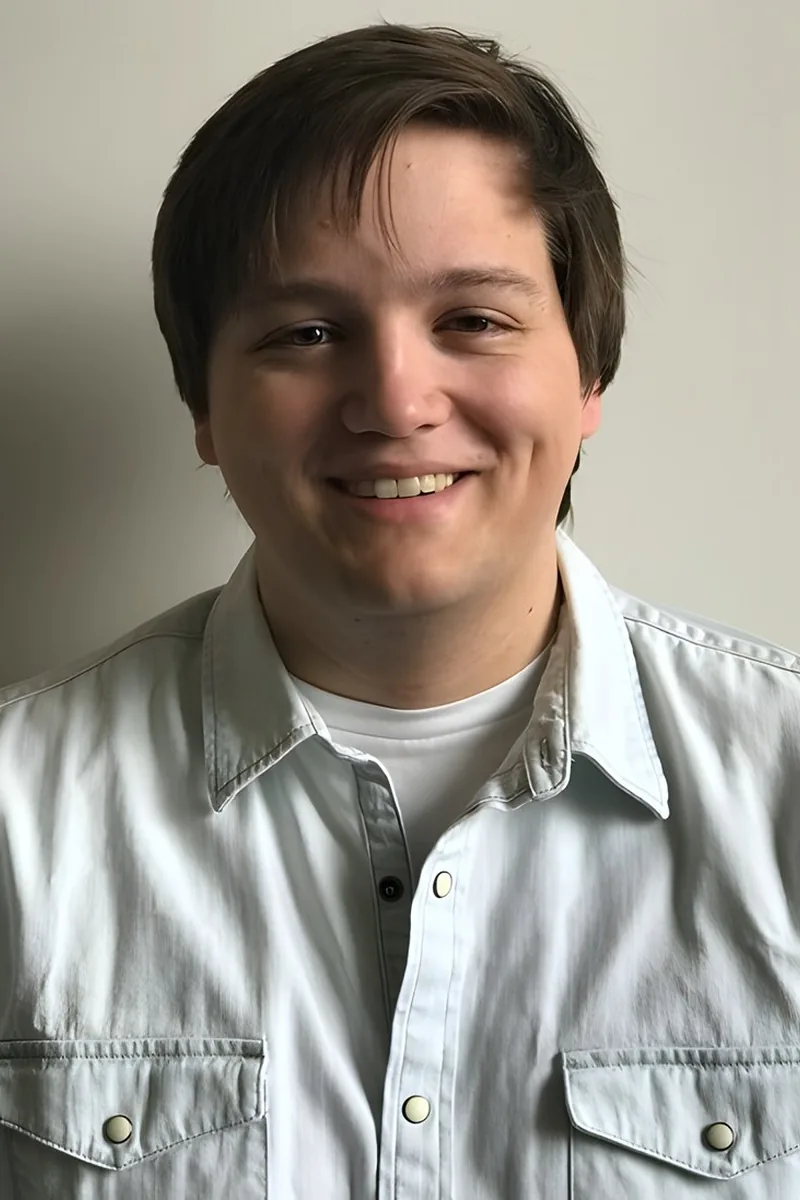
Having studied history at the undergraduate level and earned an MFA in creative writing, Sean brings a humanist's eye to Latin — he reads the language as literature, not just grammar puzzles, which makes translating passages from Caesar or Cicero feel like uncovering a story rather than solving a worksheet. He covers all four levels and leans on his strong grammar instincts (honed through years of teaching English syntax and editing essays) to break down tricky constructions like indirect statements and subjunctive clauses. Rated 5.0 by students.
I am a history-secondary education major, with a minor in psychology, and have experience teaching in the classroom at the secondary level. Therefore, I can bring new and proven methods to tutoring young students, as well as expertise within the subjects of history, writing and psychology. I am also a proven successful test taker, having scored a 2000 on my SAT exam, passed 4 AP Tests, passed the Praxis II exam, scored a 700 on a History SAT Subject Exam, and passed the EdTPA Teachers Proficiency Exam. Therefore I can teach skills and strategies for test taking to improve scores.
Leonard's math degree from Columbia might seem like an odd fit for Latin, but the same structural reasoning that powers algebraic proofs — isolating variables, applying rules in sequence, testing whether an answer holds up — maps directly onto parsing case endings and conjugating verbs. He leans into that logic-first approach, asking students to defend their translations and articulate *why* a noun is dative or a clause is purpose rather than result. Rated 4.8 by students.
Headed to Columbia's medical school, Tyler knows firsthand how Latin vocabulary threads through anatomy, pharmacology, and clinical terminology — but his Latin teaching goes beyond roots and prefixes into the grammatical scaffolding that makes the language work. He covers both Latin 1 and Latin 2, walking students through conjugation patterns and case usage with the same methodical approach he applies to his biology and standardized test prep.
Caroline's philosophy degree required close engagement with classical texts, and her coursework in ancient and medieval heritage gives her a strong working knowledge of Latin grammar, vocabulary, and sentence structure. She breaks down declensions and conjugations by linking them to the logic of how Romans actually constructed meaning, which makes paradigm charts feel less like rote memorization.
Latin's case system and verb conjugations can feel overwhelming until someone maps out the patterns clearly. Zora teaches declensions and syntax by showing how each grammatical structure signals meaning in a sentence, turning translation from a guessing game into a systematic process of decoding.
Paula's psychology and communication studies background means she's constantly bumping into Latin roots — in clinical terminology, rhetorical frameworks, and the academic vocabulary that underpins both fields. She leans on that familiarity to make vocabulary acquisition and grammatical patterns feel connected to words students already use, turning declension drills into something closer to code-breaking. Rated 4.8 by students.
Forgetting about right and wrong answers is where Latin actually starts — William treats translation as an act of interpretation, encouraging students to play with how a sentence's meaning shifts depending on how they read a subjunctive or resolve an ambiguous ablative. His BA in Classical Languages and Literature means he's spent years inside the original texts, not just parsing grammar exercises, and he also reads Ancient Greek, which sharpens his eye for the cross-linguistic patterns that make Latin's structures click. He covers all four levels plus the SAT Subject Test in Latin.
Between his psychology studies at Yale and his German coursework through level four, Stephen has built the kind of cross-linguistic awareness that makes Latin's grammatical architecture feel less foreign — German's case system in particular maps closely onto Latin's noun declensions. He also prepared for the SAT Subject Test in Latin, which means he's drilled the vocabulary, syntax, and translation speed that classroom exams and standardized assessments both demand.
Studying Dante in Bologna under a leading scholar meant David wasn't just translating Italian — he was working backward through the Latin literary tradition that shaped every line of the *Commedia*. That immersion, combined with his coursework in philosophy and European history, gave him a reader's intuition for how Latin syntax builds meaning across long, layered sentences. He covers Latin 1 and 2 and holds a 5.0 rating.
Philosophy and Latin are deeply entangled — Adam's degree means he's spent years encountering Latin terminology, logical structures, and the classical texts where Western philosophical traditions actually originated. He teaches Latin 1 through 3 with a focus on how grammatical concepts like subjunctive mood and indirect discourse carry philosophical nuance, so students learn to read with precision rather than just decode words. His background in Greek reinforces that classical-languages fluency.
Having tutored high school Latin students while studying English and journalism at the University of Pennsylvania, Amy knows how to bridge the gap between memorizing paradigm charts and actually reading Latin with confidence. She zeroes in on building the kind of grammatical intuition — recognizing how a subjunctive signals purpose, or why word order shifts in poetry — that turns translation from a grind into something that clicks.
Paul teaches Latin 1, Latin 2, and AP Latin, and his background across French and multiple classical languages gives him a sharp eye for the comparative grammar patterns that make Latin's inflection system easier to internalize. His 1570 SAT reflects the kind of close, precise reading that Latin translation demands — picking apart how word order, case endings, and subordinate clauses signal meaning in ways English never has to. He grounds each lesson in building fluency with specific constructions rather than rote memorization of paradigm charts.
Classics majors don't just dabble in Latin — Rebecca is building her entire undergraduate degree around the language and its literary tradition, covering all four levels plus AP. That depth means she can walk a first-year student through basic conjugation patterns and then, in the next session, tackle the syntactic complexity of reading Vergil or Cicero in the original. Rated 5.0 by students.
Testimonials
Because the right Latin tutor makes all the difference.
Average Session Rating – Based on 3.4M Learner Ratings
Nearby Latin Tutors
Other Newark Tutors
Related Languages Tutors in Newark
Frequently Asked Questions
Varsity Tutors matches Newark students with expert Latin tutors for 1-on-1 instruction. We pair each student with a tutor based on their specific needs, learning style, and goals.
Whether you need homework help, exam prep, or want to get ahead, our Latin tutors are ready to help.
Common challenges include gaps from earlier material, difficulty with specific concepts, and trouble applying learning to new problems. These issues can snowball quickly in Latin.
A tutor identifies where you're stuck, fills in gaps, and provides targeted practice. The 1-on-1 format means you get help exactly where you need it.
Tutors work with your student's actual coursework—homework assignments, class notes, and upcoming tests. This keeps tutoring directly relevant to what's happening in the classroom.
When you share information about your student's school and curriculum, we can match you with a tutor who has relevant experience.
All tutors complete background checks, credential verification, and teaching evaluation. Many of our Latin tutors hold advanced degrees or have years of teaching experience.
You can review tutor profiles to find someone with the right background for your student's level and needs.
Many students see improved grades within a few weeks, along with better understanding of Latin concepts and more confidence tackling challenging material.
Tutors track progress and adjust their approach to ensure continued improvement.
Most students benefit from 1-2 sessions per week. More frequent sessions help if your student is significantly behind or has an important exam coming up.
Your tutor can recommend a schedule based on your student's specific situation and goals.
Tutoring is purchased in packages of hours, with rates varying by tutor experience. Varsity Tutors offers several options to fit different budgets and needs.
You can discuss pricing during your consultation to find what works best.
Your tutor will assess where your student is, discuss goals, and start working on priority areas. Most students bring current homework or upcoming test material to focus on.
By the end, you'll have a clear sense of how the tutor can help and a plan for moving forward.
Let’s find your perfect tutor
Answer a few quick questions. We’ll recommend the right plan and match you with a top 5% tutor.