Award-Winning Reading Tutors
serving Jersey City, NJ
Reading
Tutors in Jersey City
Private 1-on-1 tutoring, weekly live classes for academic support, test prep & enrichment, practice tests and diagnostics, and more to elevate grades and test scores.
Based on 3.4M Learner Ratings
UniversitiesSchools & Universities
DeliveredHours Delivered
ProficiencyGrowth in Proficiency
Who needs tutoring?
No obligation. Takes ~1 minute.
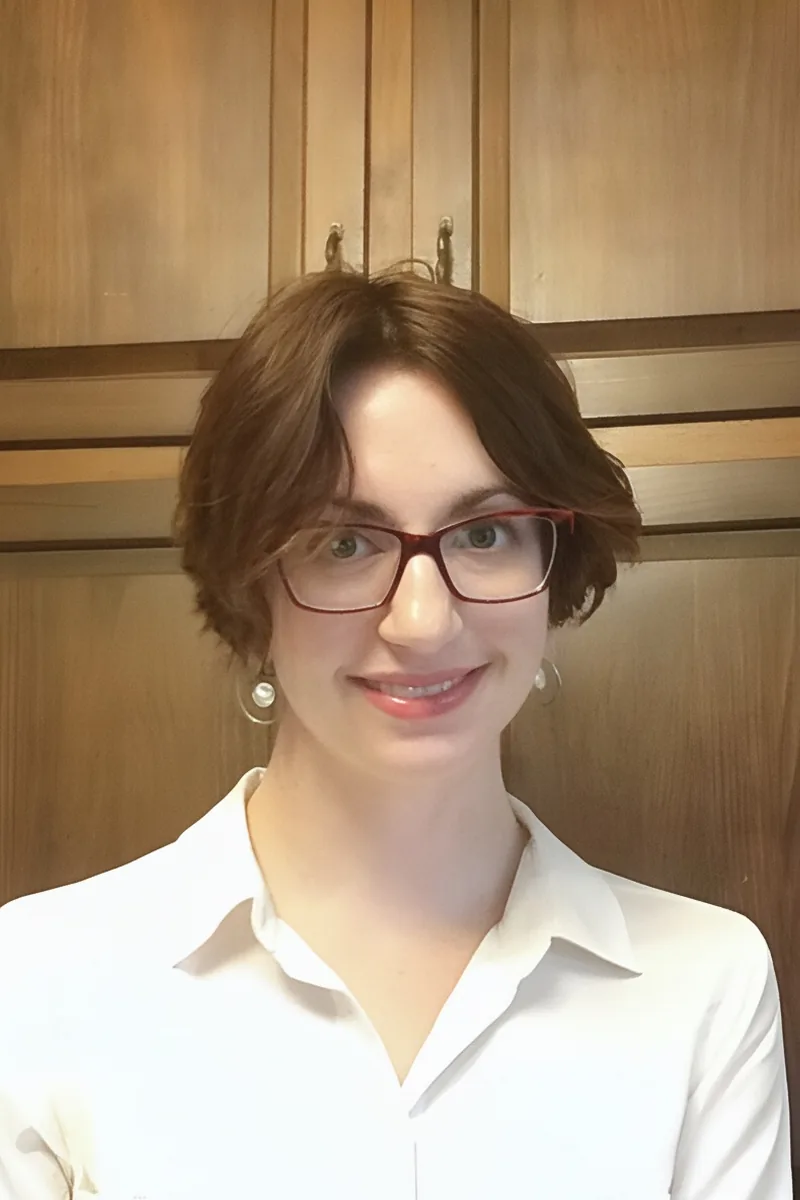
I am comfortable with a wide range of subjects, but I have a particular fondness for history and literature, and I am particularly experienced at helping students with their writing. I'm currently working my way through the required courses to apply to Medical School, and I'm excited to share my newfound passion for the sciences with younger students. I believe that academic success can lead students to personal growth as well as a brighter future. I enjoy helping my students achieve their goals, whether they are seeking to master a subject they find challenging or improve their scores on a standardized test. When I'm not studying (or at the lab) myself, I'm either at dance class, cooking a large meal for my friends, or appreciating the arts at a performance, gallery, or museum.
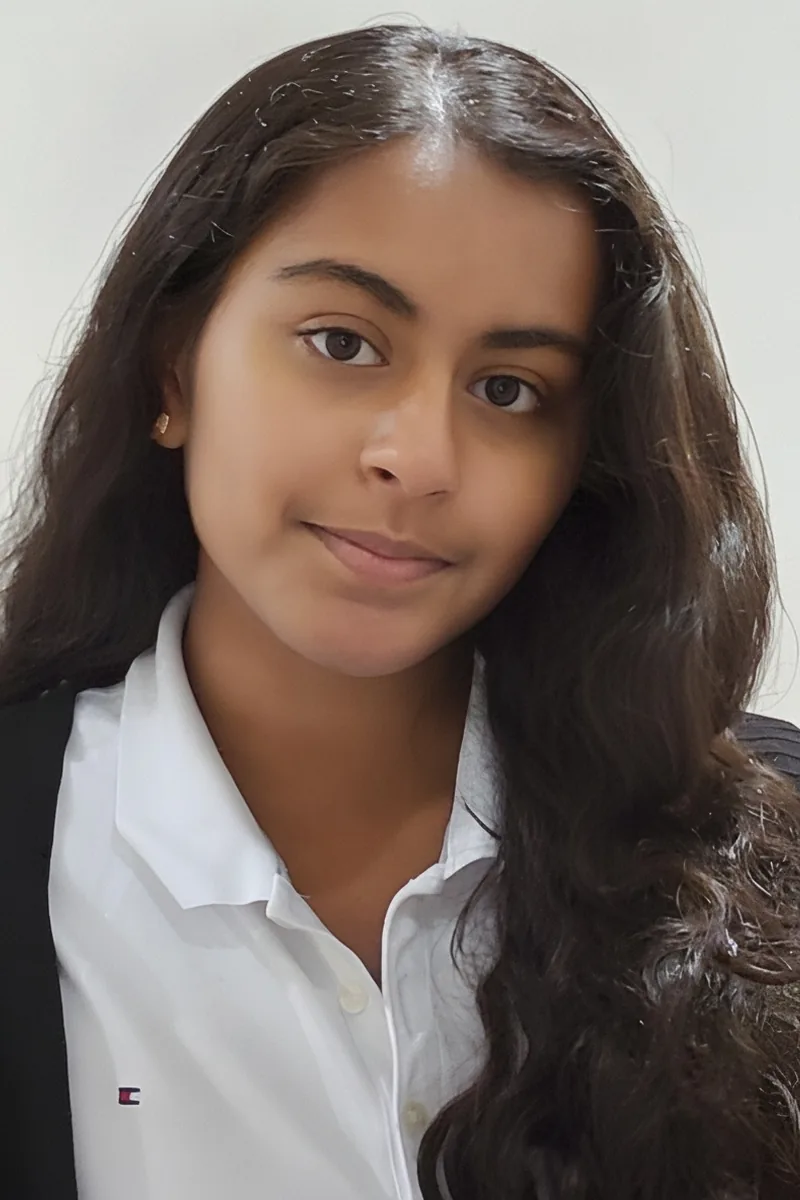
I am a sophomore at NYU studying computer and data science. Although math is a big part of my life given my major, science, history and English take up very big spaces in my life. I am a voracious reader, taking the time to expand my knowledge in a wide variety of subjects. Fun fact: I was initially a politics major until I became enamored with the way problem solving is presented in computer science! As a result of my wide variety of interests, I am versatile in tutoring any subject (my strength being English, History, and Math). Please do not hesitate to contact me regarding any consultation! I am here for your success.
I'm a rising junior at Rutgers majoring in English with a minor is Pyschology. I'm also planning on applying to the Graduate School of Education so I've taken a lot of classes related to that as well. I've been tutoring for most of my academic career, but currently I work as a paid tutor at my school's writing center during the school year, helping students who struggle with college level writing. Most of the students I tutor tend to be international students so I have a good amount of experience working with students who speak English as a second language. Obviously I tutor writing, but I also love working with literature because I love stories and I love how different people experience those stories in different ways, which I feel also reflect my "teaching philosophy". Everyone understands things in different ways, but sometimes knowledge is presented in a way that is not easily understood. My job is to bridge that gap, so to speak. Outside of school, I I like reading, writing (which sounds a lot like the stuff I do in school, now that I think about it), watching TV, movies, and YouTube videos, browsing the internet, and walking around my neighborhood.
I'm working with a student, I'll ask more questions at the beginning of the session to get a good idea of where the student stands and where there are some gaps. One of the biggest things I've noticed (especially in math!) is that if there isn't a good foundation, you won't be able to finish the whole house (i.e., your learning objective). By asking questions, we'll be able to fill in a few of those gaps and be more successful in your learning project!
I am currently pursuing my doctorate in Italian Studies at Columbia.
I am a patient and passionate tutor with the belief that any student can succeed in reaching their full potential with the right tools, guidance, and practice. As an admitted medical school student, I have a strong biology/chemistry and test prep foundation.
I am a passionate educator with a Bachelor's degree in Politics from Princeton University with minors in American Studies and Asian American Studies. I have over 2 years of tutoring experience in subjects such as AP Human Geography, AP U.S. Government & Politics, and AP World History. I also have a great deal of experience coaching public speaking, debate, and other oratory arts. My approach focuses on relating the erudite content of courses to the lived experiences of students. More than just knowing the hard information, my job is to help you truly understand the material. How has it shaped the world you live in? How does it affect you today? Who were the people underneath history's greatest figures? I am confident that with my help, any student can become passionate about the littlest things in their studies. If you are looking for a tutor who imbues a session with a great deal of respect, humor, and enthusiasm, I am the right one for you.
I am currently pursuing a dual degree in Computer Science and Data Science through the Honors College at Rutgers University. With years of hands-on experience tutoring students in math, coding, science, and test prep, I bring a passionate, adaptable approach to teaching that meets each student exactly where they are. I've worked with students of all ages, from teaching over 40 kids how to swim to mentoring peers in advanced coding and math concepts. My tutoring journey began with helping classmates grasp difficult concepts in calculus and computer science, and it grew into a love for making complex ideas feel intuitive and engaging. Whether breaking down multivariable calculus, guiding students through their first lines of code, or preparing them for standardized exams like the SAT, I focus on building confidence and curiosity alongside academic skill. I tutor a wide range of subjects, including Pre-Algebra through Calculus III, Linear Algebra, High School Biology, Python, Java, R, and SAT Math and Reading. My favorite subjects to tutor are math and programming, because they offer students a toolkit to solve real-world problems, build cool projects, and think creatively about how the world works. My teaching philosophy centers on empowerment and active learning. I believe students succeed when they feel safe to ask questions, explore solutions, and connect learning to their interests. I prioritize understanding over memorization, and I tailor every session to the student's pace, goals, and learning style. Outside of academics, I'm a gym enthusiast training for my first powerlifting competition, a software developer building real-world applications, and a multi-time hackathon winner. I bring that same energy and drive into every tutoring session, aiming not just to teach, but to inspire.
As an English undergrad who devours everything from contemporary fiction to critical essays, Amy knows that strong reading starts with learning to hear what a writer is actually doing — tracking tone shifts, catching implied arguments, noticing when a metaphor is carrying more weight than it looks. She brings that close-reading instinct to every session, teaching students to engage with a text actively rather than letting their eyes drift across the page. Her 1500 SAT speaks to the kind of careful, strategic reading she passes along.
Virginia Woolf's stream-of-consciousness prose doesn't exactly read itself — and Alex's English Literature training at Brown means he spent four years learning to stay with difficult, layered writing until it opens up. He brings that same patience and close-reading discipline to students who need to slow down, track what's happening sentence by sentence, and build the confidence to tackle passages that feel intimidating at first glance.
For younger readers, Lauren breaks comprehension into concrete, repeatable skills — identifying main ideas, making predictions, and connecting what's on the page to what they already know. She's taught reading in after-school programs and at a private college prep school, and considers it the subject where she's had the most impact. Her approach builds independence so students carry those strategies into every class, not just English.
Pursuing a dual degree in biostatistics and public health at Brown means Joyce toggles daily between two very different reading demands — dense epidemiological studies where every data point matters and policy briefs where persuasion hides inside neutral-sounding language. She teaches students to recognize that same shift: when a passage requires slow, precise extraction of facts versus when it's building toward an argument they need to evaluate. Her biology background adds a practical layer for students tackling science-heavy nonfiction passages.
Strong reading comprehension isn't just about understanding what a passage says — it's about recognizing how an author builds an argument or controls tone through word choice and structure. Emily's international affairs coursework at Princeton requires exactly this kind of analytical reading across dense, complex texts, and she translates those strategies into concrete techniques younger readers can use immediately.
Comprehension isn't passive — it requires active strategies like annotating, predicting, and questioning the text in real time. Michele teaches readers at every level to slow down and engage with what's actually on the page, whether that's a standardized test passage or a dense chapter in a textbook. Over a decade of language instruction has given her a toolkit for readers who are falling behind and those who just need to read more critically.
Struggling readers often aren't missing vocabulary — they're missing a strategy for pulling meaning out of dense or unfamiliar texts. Noah teaches active reading techniques like annotation, paragraph summarization, and identifying an author's purpose, skills he refined across philosophy, politics, and economics coursework that required absorbing hundreds of pages weekly. He adjusts the complexity of practice passages to match each student's current level and build confidence steadily.
Struggling readers often aren't missing vocabulary — they're missing a strategy for tracking what a passage is actually doing paragraph by paragraph. Grant unpacks reading comprehension as an active process: annotating for argument structure, distinguishing main claims from supporting details, and recognizing tone shifts. His experience preparing eighth-graders for private school entrance exams and coaching SAT and ACT reading sections means he's adapted these techniques for a wide range of ages and skill levels.
Strong reading skills aren't just about decoding words — they're about asking the right questions of a text before, during, and after engaging with it. Alison's History & Literature degree gave her deep practice in active reading strategies like annotation, contextual inference, and identifying an author's purpose. She brings that same curiosity-driven approach to students working on everything from standardized test passages to full-length novels.
Peace treats reading as an active skill — annotating for structure, identifying an author's rhetorical moves, and distinguishing between what a passage says and what it implies. Her English BA and 1570 SAT score reflect the kind of close-reading fluency she now teaches to students tackling dense nonfiction and literary texts alike.
Five years teaching lower elementary students gave Jessica a sharp eye for the moment a young reader starts guessing instead of actually tracking meaning — and she knows how to pull them back with phonics drills, retelling prompts, and vocabulary work tailored to what each kid actually finds interesting. Her political science and urban studies background means she's comfortable with nonfiction too, so she can bridge the gap between early storybook reading and the informational texts that start showing up in later grades.
Strong readers don't just decode words — they track an author's argument, spot implicit assumptions, and connect ideas across paragraphs. Mackenzie sharpens these skills by teaching students to annotate actively and ask targeted questions of a text rather than passively highlighting. Her background spans political theory, French-language texts, and literary analysis, so she's practiced at breaking down challenging material across disciplines.
Studying International Relations and Arabic in college meant Noah was constantly reading across registers — diplomatic cables, foreign policy analyses, texts in a language built on root patterns that demand precise attention to every word. That cross-genre discipline shows up in how he teaches comprehension: breaking a passage into its argument structure, teaching students to track what's being claimed versus what's being assumed. Rated 4.8 by students.
For younger readers building fluency or older students tackling dense nonfiction, Belinda adjusts her approach to match what's actually hard for each person — whether that's decoding vocabulary in context, tracking an author's argument across paragraphs, or making inferences from implicit details. Her neuroscience training gives her a practical understanding of how comprehension works cognitively, which shapes how she teaches annotation and active reading strategies.
Graduate-level philosophy at The New School means Tim spends his days untangling arguments written by thinkers who deliberately make readers work for meaning — Hegel, Heidegger, dense legal and moral theory where every clause matters. That training in careful, logical reading translates well to teaching students how to follow an author's reasoning through a passage, spot where the main claim actually lives, and stop treating paragraphs as walls of undifferentiated text. His 1540 SAT confirms the approach holds up under timed pressure, too.
A theatre and history double major who went on to earn a master's in Special Education, Blake knows how to make a text come alive — and how to adapt that experience for readers who process language differently. He breaks passages into manageable pieces, teaching students to track what's happening structurally before worrying about interpretation, so even dense or unfamiliar material starts to feel approachable. Rated 5.0 by students.
I'm recent college graduate with academic experience across the board, including history (my major), data analysis (my minor), music, sociology, Spanish, and math, and I love sharing what I know with other students. Before college, I wrote many a college application essay and took practice test upon practice test for the SAT, SAT subject tests, AP tests, and ACTs. I was greatly helped by my academic mentors back then and would love to help you out now if you need assistance with that process.
Between a psychology degree and osteopathic medical training, Jasen has spent years absorbing material where every sentence matters — clinical texts, research studies, case histories dense with detail. He teaches students to read the same way: slowing down to track an author's reasoning, pulling meaning from context, and distinguishing the central argument from background noise. Rated 4.9 by students.
An avid reader who devours books across science, politics, and fiction, Ian treats reading as an active skill — teaching students to annotate, predict, and question a text rather than passively scan pages. His biology and political science coursework at UIUC means he's comfortable breaking down everything from dense nonfiction to narrative prose. Rated 5.0 by students.
Struggling readers often need someone who can pinpoint exactly where comprehension breaks down — is it vocabulary, decoding, or losing the thread of a longer passage? Rosie's training in special education and executive functioning gives her diagnostic instincts that most tutors lack. She builds fluency and comprehension together, using leveled texts and targeted questioning to move students from hesitant to confident.
Struggling readers often stall not because they can't decode words but because they lack strategies for tracking an author's argument or identifying what a passage is really asking them to understand. Rachel teaches active annotation, inference-building, and how to distinguish main ideas from supporting details — skills that transfer directly to standardized tests and classroom reading alike.
After a year of AmeriCorps literacy tutoring with 5th graders, Sarah understands exactly where reading comprehension breaks down — whether it's unfamiliar vocabulary, losing track of a passage's main argument, or struggling to make inferences from context. She teaches active reading strategies like annotation, prediction, and summarization that turn passive page-scanning into genuine understanding. Her graduate work in Elementary Education at Columbia keeps her current on evidence-based literacy methods.
An English degree from Macalester means Zoe spent four years doing the kind of sustained, analytical reading that most students don't encounter until college — pulling apart essays, novels, and criticism to figure out how a writer builds meaning across a full text. She brings that literary training down to earth in sessions, teaching readers how to track tone, follow an argument's thread, and know when a passage is doing something more than what it says on the surface. Rated 4.9 by students.
Students who struggle with reading comprehension often skip the step that matters most: identifying what a passage is actually arguing before diving into the details. Robert teaches an active-reading method — annotating for claims, evidence, and counterarguments — that he refined while prepping dozens of students for the SAT and Regents exams. It turns passive page-scanning into a skill that transfers across every subject.
For younger or struggling readers, comprehension often breaks down not at the word level but at the inferencing level — understanding what a passage implies rather than just what it states. Ema developed her approach to reading instruction while teaching middle schoolers in Plainfield, NJ, where she learned to ask targeted questions that push students to think beyond the literal text. She holds a 5.0 rating from her students.
A biology degree and a master's in Education gave Arun two distinct reading modes — the careful, detail-heavy parsing that scientific texts demand and the broader analytical approach that comes from studying how people actually learn. He teaches students to switch between those gears deliberately, adjusting how closely they read based on whether a passage needs them to extract specific data or follow a larger argument. Rated 4.6 by students.
When a student says they "don't like reading," it usually means they've never been shown how to engage actively with a text — predicting, questioning, connecting ideas across paragraphs. Emma pairs her genuine enthusiasm for books with concrete comprehension strategies like annotation and summarization that turn passive page-turning into real understanding. She's rated 5.0 by students and adapts her approach to each reader's level.
A triple BA holder who lives across literature, political science, and the humanities, Manuel reads like a generalist in the best sense — pulling meaning from essays, fiction, persuasive writing, and informational texts with equal comfort. He teaches students to identify what a writer is doing structurally — how a claim gets set up, where a counterargument hides, why a particular detail was chosen — so that comprehension becomes an active skill rather than passive page-scanning. Rated 5.0 by students.
Strong readers don't just decode words — they track arguments, anticipate shifts, and ask questions of the text as they go. Andrew builds these active reading habits by teaching students to annotate strategically and identify how authors structure their claims. His experience spans standardized reading comprehension and longer-form literary analysis, so he adjusts his approach to whatever the student is actually reading for.
Stronger reading comprehension isn't just about reading more slowly — it's about knowing what to look for, like how a passage's opening sentence often frames its entire argument. Adwait teaches active annotation strategies and question-prediction techniques that turn passive reading into a skill students can apply across subjects, from English class to standardized tests.
I'm a recent graduate of Lehigh University who is extremely excited to begin tutoring. I was initially admitted into Lehigh's school of business and spent a year there before realizing my need to pursue my true passion for English. I graduated in only three and a half years with a Bachelor's degree in English as well as a minor in creative writing. Through my time at school I have peer edited countless papers, critiqued works of fiction, and written a considerable amount of my own material.
Something Nora picked up from teaching kids as young as six is that reading confidence often hinges on one overlooked skill — whether it's tracking a character's motivation across chapters, connecting unfamiliar vocabulary to words they already use in conversation, or simply knowing when a sentence needs a second pass. Her computer science training actually reinforces this: she approaches comprehension as a logical sequence students can learn to follow, breaking passages into smaller pieces until the meaning clicks. Rated 4.9 by students.
Testimonials
Because the right Reading tutor makes all the difference.
Average Session Rating – Based on 3.4M Learner Ratings
Nearby Reading Tutors
Other Jersey City Tutors
Related English Tutors in Jersey City
Frequently Asked Questions
Varsity Tutors matches Jersey City students with expert Reading tutors for 1-on-1 instruction. We pair each student with a tutor based on their specific needs, learning style, and goals.
Whether you need homework help, exam prep, or want to get ahead, our Reading tutors are ready to help.
Common challenges include gaps from earlier material, difficulty with specific concepts, and trouble applying learning to new problems. These issues can snowball quickly in Reading.
A tutor identifies where you're stuck, fills in gaps, and provides targeted practice. The 1-on-1 format means you get help exactly where you need it.
Tutors work with your student's actual coursework—homework assignments, class notes, and upcoming tests. This keeps tutoring directly relevant to what's happening in the classroom.
When you share information about your student's school and curriculum, we can match you with a tutor who has relevant experience.
All tutors complete background checks, credential verification, and teaching evaluation. Many of our Reading tutors hold advanced degrees or have years of teaching experience.
You can review tutor profiles to find someone with the right background for your student's level and needs.
Many students see improved grades within a few weeks, along with better understanding of Reading concepts and more confidence tackling challenging material.
Tutors track progress and adjust their approach to ensure continued improvement.
Most students benefit from 1-2 sessions per week. More frequent sessions help if your student is significantly behind or has an important exam coming up.
Your tutor can recommend a schedule based on your student's specific situation and goals.
Tutoring is purchased in packages of hours, with rates varying by tutor experience. Varsity Tutors offers several options to fit different budgets and needs.
You can discuss pricing during your consultation to find what works best.
Your tutor will assess where your student is, discuss goals, and start working on priority areas. Most students bring current homework or upcoming test material to focus on.
By the end, you'll have a clear sense of how the tutor can help and a plan for moving forward.
Let’s find your perfect tutor
Answer a few quick questions. We’ll recommend the right plan and match you with a top 5% tutor.