Award-Winning Math Tutors
serving Jersey City, NJ
Math
Tutors in Jersey City
Private 1-on-1 tutoring, weekly live classes for academic support, test prep & enrichment, practice tests and diagnostics, and more to elevate grades and test scores.
Based on 3.4M Learner Ratings
UniversitiesSchools & Universities
DeliveredHours Delivered
ProficiencyGrowth in Proficiency
Who needs tutoring?
No obligation. Takes ~1 minute.

A strong grasp of arithmetic properties, fractions, and order of operations makes every future math course easier — and that's exactly where Smriti zeroes in. Her approach connects each concept to practical scenarios, like budgeting or measurement, so the reasoning behind the rules clicks before students move on to harder material.
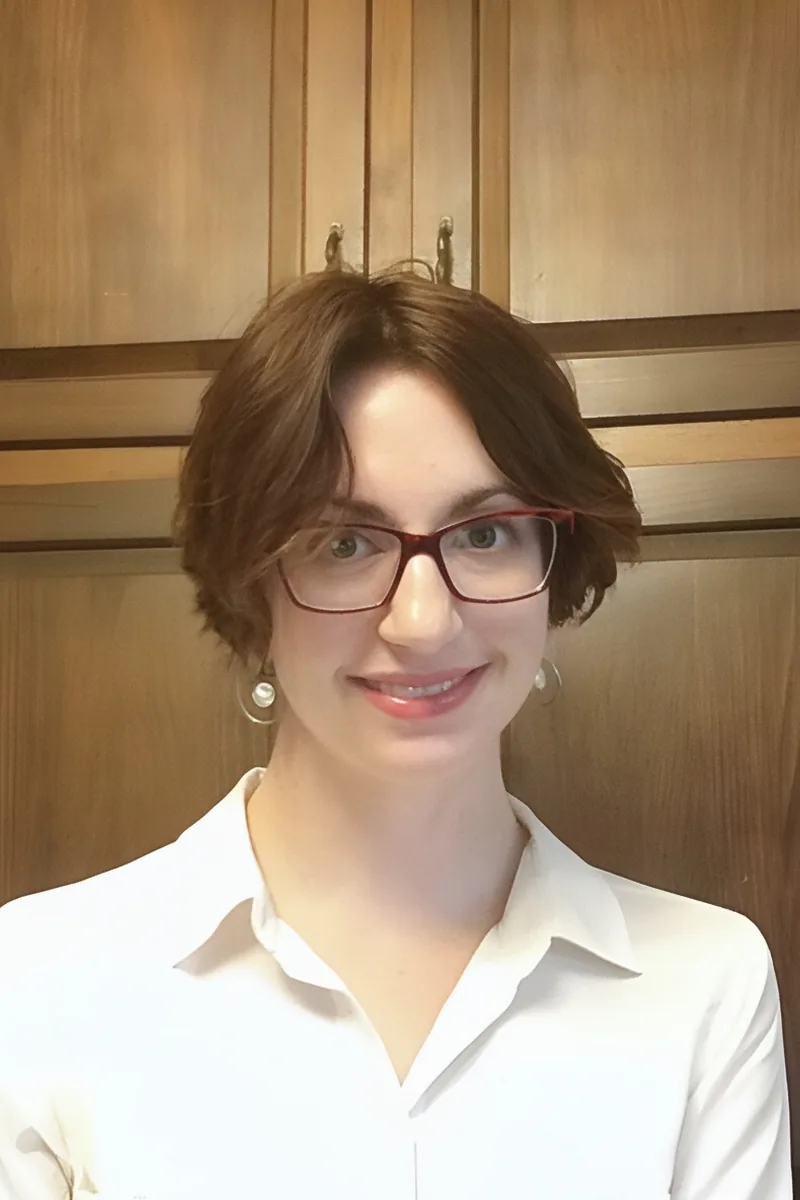
Ruby teaches math across levels from arithmetic through calculus, with a particular strength in translating word problems into equations — the step where most students get stuck. Her current pre-med science coursework keeps her math skills sharp and applied, since she regularly uses algebra and quantitative reasoning in lab and lecture. She approaches each concept by building intuition for what an operation actually means before moving to procedural steps.
I am currently working towards a doctorate in medicine from New Jersey Medical School. Throughout high school, college, and graduate school, I have tutored students ranging in age from elementary school to college freshmen in a variety of subjects particularly math and science. My favorite subject to tutor is math because it is very methodical and visual. Having a passion to help others, I am drawn to tutoring for the opportunity to share my knowledge with others. My family and friends have described me as being patient, compassionate, and personableall of the qualities that I believe I bring to my students. Outside of tutoring, I like Notre Dame football, dogs (especially my family's German Shepherd!), yoga, cooking, and reading.
From long division to limits, Keerthana covers a wide math range — a natural fit for someone pursuing computer and data science at NYU. She's especially good at identifying the exact concept where a student's understanding breaks down, then rebuilding from that point with clearer explanations and targeted practice problems. Her 4.9 rating speaks to how well that diagnostic approach works across grade levels.
While English is Noreen's primary strength, she scored a 1470 on the SAT, which required solid command of algebra, data analysis, and problem-solving fundamentals. She's a good fit for students who need help with foundational math concepts and benefit from a tutor who explains things patiently and in multiple ways. Her writing center experience has made her especially attuned to figuring out where understanding breaks down.
Gaps in earlier math tend to snowball — a shaky grasp of fractions makes algebra harder, which makes everything after algebra feel impossible. Emily's first move is identifying exactly where those gaps are through targeted questions, then rebuilding the specific skills a student actually needs rather than re-teaching entire courses. She covers topics from arithmetic and pre-algebra through calculus, with a 5.0 rating across her math students.
From pre-algebra fundamentals through calculus, Anurag covers the full math pipeline and knows exactly where students tend to hit walls — fractions turning into anxiety about rational expressions, or coordinate geometry suddenly requiring algebraic proof. His approach is to trace each new topic back to the earlier concept it depends on, filling gaps before they compound. He scored 1420 on the SAT, reflecting strong quantitative reasoning.
While math isn't Nicole's doctoral specialty, her background includes coursework in calculus and algebra, and her analytical training in a Columbia PhD program sharpens the logical thinking that math problem-solving requires. She's particularly effective at walking through word problems and helping students translate abstract notation into steps that actually make sense.
Teaching math across two university departments — one in mathematics, one in engineering — means Dilruba can show students multiple solution paths for the same problem, whether it's simplifying expressions, solving equations, or interpreting word problems. That dual perspective is especially useful for students who've been told there's only one "right way" to work through a problem and shut down when that way doesn't click.
As a tutor with a Bachelor's degree in Mechanical Engineering from MIT, I bring over two years of experience in tutoring high school students in subjects such as AP Chemistry, AP Biology, and various math courses, including SAT Math. My passion for chemistry ignited in high school, where I scored a five on the AP exam, and I've since dedicated myself to helping students grasp complex concepts through a blend of theoretical understanding and practical problem-solving. I believe in tailoring my lessons to meet individual student needs, fostering a supportive environment where they feel comfortable engaging with the material. Outside of academics, I enjoy coding and robotics, which I incorporate into my tutoring to inspire younger students. My goal is to empower each student to achieve their academic goals while fostering a genuine love for learning.
I am a graduate of Columbia University, where I earned a degree in Biomedical Engineering. My academic journey, coupled with my diverse professional experiences in project management, consulting, and teaching, has fueled my passion for education and helping students unlock their potential. Over the years, I have worked as a TA, guided students in STEM subjects, and currently tutor a variety of topics, including mathematics, science, and SAT preparation. Among the subjects I tutor, I find immense joy in teaching science and mathematics. Breaking down complex concepts into relatable, digestible ideas and watching students gain confidence in their abilities is incredibly rewarding. My tutoring philosophy is rooted in patience, adaptability, and collaborationI strive to meet students where they are and tailor each session to their unique needs and learning styles. Outside of tutoring, I enjoy exploring the world through travel, baking creative treats, and indulging in thought-provoking films. These hobbies enrich my perspective and creativity, which I often bring into my sessions to make learning engaging and relevant. Education is a gateway to empowerment, and I'm dedicated to helping my students walk through that gateway with confidence and curiosity.
From fraction operations in elementary school to limits in AP Calculus, Natalia has taught the entire K–12 math pipeline, which means she can trace a student's confusion back to its root quickly. She's especially sharp at identifying when a current struggle — say, with proportional reasoning or algebraic manipulation — stems from a gap two grade levels back. That diagnostic eye lets her fix the real problem instead of just patching the homework.
I am currently pursuing a dual degree in Computer Science and Data Science through the Honors College at Rutgers University. With years of hands-on experience tutoring students in math, coding, science, and test prep, I bring a passionate, adaptable approach to teaching that meets each student exactly where they are. I've worked with students of all ages, from teaching over 40 kids how to swim to mentoring peers in advanced coding and math concepts. My tutoring journey began with helping classmates grasp difficult concepts in calculus and computer science, and it grew into a love for making complex ideas feel intuitive and engaging. Whether breaking down multivariable calculus, guiding students through their first lines of code, or preparing them for standardized exams like the SAT, I focus on building confidence and curiosity alongside academic skill. I tutor a wide range of subjects, including Pre-Algebra through Calculus III, Linear Algebra, High School Biology, Python, Java, R, and SAT Math and Reading. My favorite subjects to tutor are math and programming, because they offer students a toolkit to solve real-world problems, build cool projects, and think creatively about how the world works. My teaching philosophy centers on empowerment and active learning. I believe students succeed when they feel safe to ask questions, explore solutions, and connect learning to their interests. I prioritize understanding over memorization, and I tailor every session to the student's pace, goals, and learning style. Outside of academics, I'm a gym enthusiast training for my first powerlifting competition, a software developer building real-world applications, and a multi-time hackathon winner. I bring that same energy and drive into every tutoring session, aiming not just to teach, but to inspire.
A strong math tutor spots exactly where a student's reasoning breaks down — whether it's fraction operations, variable manipulation, or translating word problems into equations. Matt teaches across algebra and calculus, so he understands how earlier skills feed into later ones and can pinpoint gaps that hold students back. His 1530 SAT score speaks to his own quantitative fluency.
Four years of volunteer SAT tutoring for high schoolers gave Renee a sharp sense of where students lose the thread in multi-step problems — and her own 1530 SAT score confirms she knows the math cold. Her PhD training in literary analysis might seem unrelated, but it built the kind of careful, systematic reasoning that makes untangling a tricky word problem or setting up an equation from scratch feel methodical rather than chaotic.
From pre-algebra fundamentals through calculus, Akarsh covers a wide range of math — and his science background means he constantly ties abstract procedures to real applications. Whether a student is stuck on fraction operations or working through integration by parts, he breaks each problem into logical steps that build genuine number sense.
Erika covers math from pre-algebra fundamentals through calculus, with particular strength in the middle and high school range where gaps in foundational skills tend to snowball. She diagnoses exactly where a concept breaks down — whether it's fraction operations, equation balancing, or function behavior — and rebuilds understanding from that point. Her experience teaching test prep in Vietnam also means she knows how to connect classroom math to standardized exam formats.
From arithmetic fundamentals through algebra and into calculus, Marc covers a wide swath of math and zeroes in on the reasoning behind each procedure. His approach to a problem like factoring quadratics, for instance, is to show why the method works — not just drill the steps — so students can adapt when a test throws them a curve. A 1550 SAT score backs up his comfort with quantitative thinking at every level.
From fraction operations in pre-algebra to limits in calculus, Pranav covers the full arc of middle and high school math. He earned a 1580 SAT largely on the strength of his quantitative reasoning, and he uses that same problem-solving instinct to show students why a method works — not just which formula to reach for. When a concept like factoring or function transformations isn't landing, he reworks the explanation until it does.
Studying applied mathematics at Stanford means Alex lives in the world of numbers daily — from arithmetic fundamentals through calculus and beyond. He breaks down word problems by teaching students to identify what's actually being asked before jumping into computation, a habit that clears up confusion across every math level. Rated 4.8 by students.
Kyle's an English major at Yale, not a math specialist — but his 35 ACT means he clearly knows how to work through quantitative problems efficiently and under pressure. He's strongest with students who understand the concepts but freeze up on test day or lose points to careless errors, because he built his own score through deliberate strategy rather than natural math instinct.
Studying Applied and Computational Mathematics at Caltech, Samuel breaks down everything from fraction operations to polynomial functions by connecting each concept to the reasoning behind it. He served as a teaching assistant for a discrete mathematics course and ran an SAT prep class in high school, so he's comfortable adapting explanations to whatever level a student needs.
Scott scored a 1580 on the SAT, which means the math section is second nature to him — from proportional reasoning and linear equations through the trickier quadratic and data-analysis problems that trip students up. He breaks word problems into smaller logical steps so the underlying math becomes visible before a student ever picks up a calculator.
From pre-algebra through calculus, Calleigh has tutored nearly every level of math and knows exactly where students tend to lose the thread — whether it's fractions, negative numbers, or the jump to abstract reasoning. Her economics coursework at Yale keeps her sharp on quantitative problem-solving, and she's skilled at reframing a confusing concept until it clicks.
Whether it's fraction operations tripping up a middle schooler or a high schooler struggling to connect graphs to equations, Elijah zeroes in on the specific conceptual gap rather than re-teaching an entire unit. His biochemistry degree required math through calculus, giving him a clear picture of how arithmetic, algebra, and geometry build on each other. He holds a 5.0 rating from students.
Scoring a 1590 on the SAT means Isaiah had to master every math concept the test throws at students, from proportional reasoning to quadratic modeling. He breaks down word problems by teaching students to identify what the question is actually asking before touching any numbers. His approach emphasizes translating English into math — the skill that trips up most students regardless of their comfort with computation.
From simplifying algebraic expressions to working through derivatives, Samica approaches math by identifying exactly where a student's reasoning breaks down and rebuilding from that point. Her finance and analytics background at Wharton keeps her fluent in applied math — she regularly uses the same algebra, functions, and calculus concepts she teaches.
Alex's primary expertise is in the humanities, but his 1540 SAT score reflects strong quantitative reasoning, and he teaches math at the foundational and intermediate levels. He's especially effective with students who think of themselves as "not math people" — his background in education and clear communication style makes abstract concepts like proportional reasoning and algebraic problem-solving feel more approachable.
From pre-algebra fundamentals through calculus, Czarina covers the full arc of high school math with the fluency of someone who scored 770 on SAT Math and earned a 770 on the Math 2 Subject Test. She's especially sharp at identifying the specific step where a concept breaks down — whether that's fraction operations, trigonometric identities, or limits — and rebuilding understanding from that point.
From fraction operations in middle school to function notation in high school, Krupa pinpoints exactly where a student's understanding breaks down and rebuilds from that spot. Her teaching experience spans pre-algebra through calculus, which means she can show how each concept connects to what comes next rather than treating every topic as isolated. That forward-looking perspective keeps students from hitting the same wall twice.
While English is Amy's primary focus, she scored a 1500 on the SAT and tutors both algebra and calculus, so she's comfortable with math at the middle and high school level. She's especially effective with students who think of themselves as "English people" and need someone who can explain mathematical reasoning in plain, patient language.
Paige's theater degree from Yale required more analytical rigor than most people expect — structuring arguments, analyzing texts quantitatively, and managing the technical side of production all demand precise, step-by-step thinking that maps well onto solving math problems. She's especially effective at reframing a confusing problem in plain language, a skill sharpened by years of translating dense academic material into something an audience can follow.
River covers math from foundational arithmetic through calculus, but the approach stays consistent: figure out exactly where a student's reasoning breaks down and rebuild from that point. A 1570 SAT scorer, River is comfortable moving between topics like fractions, proportional reasoning, and basic algebraic thinking depending on what a student needs most. The psychology training also means a sharp eye for math anxiety and how to work around it.
Having scored a 1570 on the SAT and taken coursework spanning middle school math through calculus, Grace is equally comfortable explaining how to set up a proportion as she is walking through a derivative — and her education minor at Stanford means she's trained in how to actually teach it, not just do it. Her experience directing an after-school academic program gave her a sharp sense for when a student is nodding along but not truly following, so she slows down and rebuilds the reasoning rather than pushing forward.
An electrical engineering major at Princeton uses math constantly — from linear algebra and differential equations to the applied calculus behind circuit analysis. Sabrina connects abstract math concepts to tangible problems, which is especially useful for students who keep asking "when will I ever use this?" Her 5.0 rating speaks to how well that approach lands.
While creative writing is Mati's primary expertise, her counseling and tutoring work spans math support for elementary and middle school students who struggle with the subject — especially those with learning differences that make traditional instruction frustrating. She breaks problems into smaller logical steps and uses visual and hands-on approaches to make concepts like fractions, place value, and word problems more concrete.
Lauren scored a 34 ACT and 1530 SAT, so she's comfortable with math concepts from basic operations through early calculus. She's particularly effective at translating word problems into equations — a skill that trips up students who understand procedures but freeze when problems are framed in context. Her education background means she adapts explanations quickly when one approach isn't clicking.
A tutor who has taught math to students as young as six and as advanced as college-level, Sharon adjusts her explanations to match how each learner thinks about numbers. Whether the topic is fractions, ratios, or early algebraic thinking, she connects abstract operations to concrete reasoning so the logic behind each step is clear.
Between her bachelor's in mathematics and the quantitative demands of medical training, Janet has spent years making numbers make sense to herself and others. She tackles everything from fractions and proportional reasoning to pre-algebra concepts, building each lesson around the specific gap a student is trying to close.
From arithmetic fundamentals through calculus, Akanksha covers the full math pipeline and knows exactly where the common breakdowns happen — fractions that never fully clicked, negative-number errors that snowball into algebra confusion, or a shaky grasp of function notation. Her experience teaching math at both Kumon and Cornell's STEP program means she's seen these gaps across every age group and knows how to close them.
Testimonials
Because the right Math tutor makes all the difference.
Average Session Rating – Based on 3.4M Learner Ratings
Practice Math
Free practice tests, flashcards, and AI tutoring for Math
Nearby Math Tutors
Other Jersey City Tutors
Related Math Tutors in Jersey City
Frequently Asked Questions
Varsity Tutors matches Jersey City students with expert Math tutors for 1-on-1 instruction. We pair each student with a tutor based on their specific needs, learning style, and goals.
Whether you need homework help, exam prep, or want to get ahead, our Math tutors are ready to help.
Common challenges include gaps from earlier material, difficulty with specific concepts, and trouble applying learning to new problems. These issues can snowball quickly in Math.
A tutor identifies where you're stuck, fills in gaps, and provides targeted practice. The 1-on-1 format means you get help exactly where you need it.
Tutors work with your student's actual coursework—homework assignments, class notes, and upcoming tests. This keeps tutoring directly relevant to what's happening in the classroom.
When you share information about your student's school and curriculum, we can match you with a tutor who has relevant experience.
All tutors complete background checks, credential verification, and teaching evaluation. Many of our Math tutors hold advanced degrees or have years of teaching experience.
You can review tutor profiles to find someone with the right background for your student's level and needs.
Many students see improved grades within a few weeks, along with better understanding of Math concepts and more confidence tackling challenging material.
Tutors track progress and adjust their approach to ensure continued improvement.
Most students benefit from 1-2 sessions per week. More frequent sessions help if your student is significantly behind or has an important exam coming up.
Your tutor can recommend a schedule based on your student's specific situation and goals.
Tutoring is purchased in packages of hours, with rates varying by tutor experience. Varsity Tutors offers several options to fit different budgets and needs.
You can discuss pricing during your consultation to find what works best.
Your tutor will assess where your student is, discuss goals, and start working on priority areas. Most students bring current homework or upcoming test material to focus on.
By the end, you'll have a clear sense of how the tutor can help and a plan for moving forward.
Let’s find your perfect tutor
Answer a few quick questions. We’ll recommend the right plan and match you with a top 5% tutor.