Award-Winning Pre-Calculus Tutors
serving Lincoln, NE
Pre-Calculus
Tutors in Lincoln
Private 1-on-1 tutoring, weekly live classes for academic support, test prep & enrichment, practice tests and diagnostics, and more to elevate grades and test scores.
Based on 3.4M Learner Ratings
UniversitiesSchools & Universities
DeliveredHours Delivered
ProficiencyGrowth in Proficiency
Who needs tutoring?
No obligation. Takes ~1 minute.
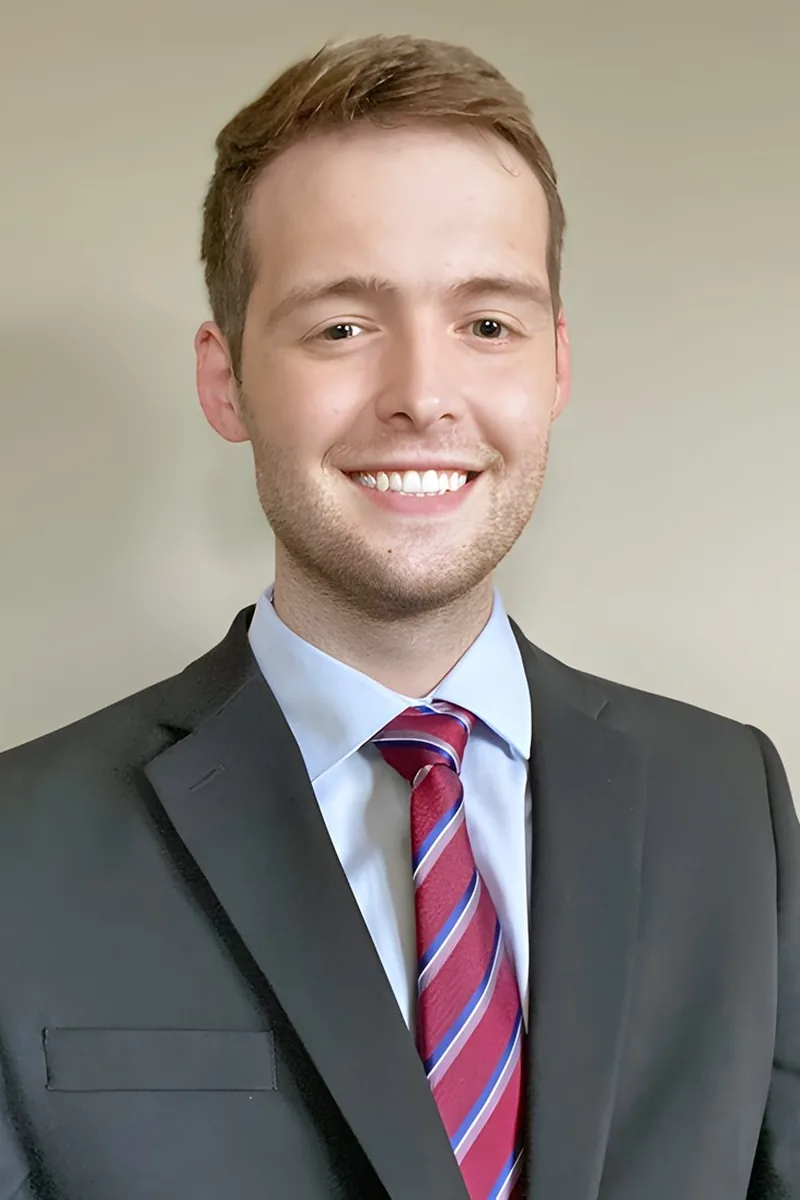
Geology and biochemistry pull from pre-calculus in ways most students don't expect — modeling mineral decay with exponential functions, mapping crystal structures with trigonometric relationships, and analyzing reaction rates through logarithmic curves. Aaron tackles these topics with the dual-science perspective of someone who actually uses them in lab work, which makes the jump from algebraic manipulation to functional reasoning feel grounded. His 32 ACT and 5.0 rating from students back that up.

Chemical engineering at Michigan means Edward is constantly manipulating the exact function families pre-calculus introduces — rational expressions for reaction rates, exponential models for heat transfer, trigonometric functions for signal analysis — so he teaches them as working tools rather than abstract definitions. His 36 ACT and 1520 SAT reflect genuine mathematical fluency, and his engineering training gives him a knack for showing students how graph behavior and algebraic structure connect, especially when tackling transformations and composite functions.
Electrical engineering at the undergraduate level means Oluwatosin spent semesters immersed in sinusoidal analysis, complex number arithmetic, and the polar-rectangular conversions that pre-calculus students often find disorienting — these weren't abstract exercises but daily tools for circuit and signal work. He tackles the course by bridging the gap between algebraic mechanics and the functional reasoning calculus will demand, especially around trigonometric identities and graph transformations. Rated 4.8 by students.
An engineering technology degree means Jeremy spent semesters grinding through the exact transition pre-calculus represents — moving from algebraic manipulation into the trigonometric, exponential, and rational function reasoning that engineering coursework demands daily. He tackles the course by showing how each new concept threads back to algebra students already understand, making topics like composite functions and asymptotic behavior feel like natural extensions rather than brand-new territory. His 32 ACT confirms the quantitative chops behind that bridge-building approach.
Trigonometric identities, rational functions, and the unit circle can feel like a wall of disconnected formulas without someone who explains the reasoning behind them. Matthew genuinely considered switching his major to mathematics because he loves finding the structure underneath these topics. He walks students through Pre-Calculus with an eye toward what's coming in Calculus, so nothing feels like busywork.
Kevin's competition math background gives him an unusual edge in Pre-Calculus — he's used to attacking problems involving sequences, series, and trigonometric manipulations from angles most textbooks never cover. That depth, combined with a 35 ACT and Stanford CS coursework heavy in mathematical foundations, means he can explain why a parametric equation behaves the way it does, not just how to graph it.
A year as a course assistant in Harvard's math department teaching introductory calculus gave Richard a sharp sense of exactly which pre-calculus skills — polynomial end behavior, composite functions, rate-of-change intuition — students need locked down before day one of calc. He teaches those topics with that forward view, connecting each piece to where it's actually headed so nothing feels like busywork. His 36 ACT and 1600 SAT confirm the quantitative range behind that perspective.
As a Course Assistant for Harvard's introductory calculus sequence, Sanjana sees exactly where pre-calculus gaps — shaky grasp of limits intuition, weak trigonometric identities, or incomplete understanding of function transformations — trip students up once the pace accelerates. She teaches those topics with that forward view, building each concept so it holds weight in the calculus course that's coming next. Holds a 5.0 rating and a 1560 SAT.
A mechanical engineering degree from WashU (magna cum laude) means Caroline spent years where pre-calculus wasn't a course — it was the baseline language for everything from thermodynamic cycles to stress analysis, with polar coordinates, parametric equations, and trig identities showing up in nearly every problem set. She zeroes in on the conceptual leap from manipulating expressions to thinking in terms of function behavior, which is exactly where most students stall before calculus. Holds a 5.0 rating and a 1560 SAT.
Andrew's PhD in biomedical engineering means he's pushed well past calculus into differential equations and multivariable territory — so he teaches pre-calculus with a clear map of where every topic is headed and why it matters. He's particularly sharp on the transition points that trip students up, like moving from memorizing trig ratios to actually understanding the unit circle as a geometric argument. Rated 4.9 by students.
Doing research in Spectral Graph Theory at MIT means Enrico encounters the full toolkit of pre-calculus — eigenvalue behavior, polynomial roots, matrix transformations — at a level where shaky fundamentals would be immediately exposed. He teaches the course by making definitions click intuitively, so that concepts like composite functions or rational expressions feel like natural extensions of algebra rather than arbitrary new rules. His 36 ACT, 1570 SAT, and 5.0 rating confirm the depth behind that intuition.
The jump from algebra to calculus-readiness often stalls at one specific point: understanding how functions actually behave — why a rational expression blows up near an asymptote, how composite functions layer transformations, what makes polynomial end behavior predictable. Samuel tackles that conceptual bridge head-on, drawing on his applied mathematics training at Caltech where these ideas aren't theoretical warm-ups but working tools. His 1550 SAT confirms the quantitative sharpness behind his teaching.
Environmental engineering coursework — modeling pollutant dispersion, watershed flow rates, decay of contaminants — runs on exactly the exponential, logarithmic, and trigonometric functions that pre-calculus introduces. Kate teaches these topics with the instinct of someone who's built real models around them through both her bachelor's and master's work, connecting each function family to the physical behavior it describes. Her 1580 SAT and 4.9 rating confirm the precision she brings to every session.
Everything in Pre-Calculus — trigonometric identities, rational functions, limits intuition — exists to set students up for calculus, but most courses don't make that connection explicit. Annie does, because she's already on the other side of it: her engineering program at Cornell showed her exactly which Pre-Calc skills matter most and where gaps tend to cause trouble later.
The jump to pre-calculus is where many students first encounter limits of their algebraic intuition — rational functions behave strangely, trigonometric identities pile up, and sequences suddenly matter. Emily tackles these topics by emphasizing the graphical and conceptual logic underneath, drawing on a math background that earned her a 1590 SAT and a 36 ACT.
Materials science relies heavily on the mathematics pre-calculus teaches — modeling crystal lattice structures with trigonometry, describing diffusion rates through exponential functions, analyzing stress-strain curves as polynomial behavior. Jennifer brings that applied perspective to her tutoring, connecting abstract function families to the physical phenomena they actually describe. Her 1550 SAT and 5.0 rating confirm the quantitative depth behind her explanations.
Researching cosmic ray acceleration at Princeton's astrophysics department meant Dennis had to model particle behavior using the exact toolkit pre-calculus teaches — parametric equations, vector components, and the interplay between exponential and trigonometric functions. He brings that research intuition to sessions, breaking down how and why transformations reshape a graph or how polar and rectangular forms connect, so the material clicks as a coherent system rather than a checklist. A 36 ACT and 4.7 rating back up the depth of understanding he brings.
Testimonials
Because the right Pre-Calculus tutor makes all the difference.
Average Session Rating – Based on 3.4M Learner Ratings
Practice Pre-Calculus
Free practice tests, flashcards, and AI tutoring for Pre-Calculus
Nearby Pre-Calculus Tutors
Other Lincoln Tutors
Related Math Tutors in Lincoln
Frequently Asked Questions
Varsity Tutors matches Lincoln students with expert Pre-Calculus tutors for 1-on-1 instruction. We pair each student with a tutor based on their specific needs, learning style, and goals.
Whether you need homework help, exam prep, or want to get ahead, our Pre-Calculus tutors are ready to help.
Common challenges include gaps from earlier material, difficulty with specific concepts, and trouble applying learning to new problems. These issues can snowball quickly in Pre-Calculus.
A tutor identifies where you're stuck, fills in gaps, and provides targeted practice. The 1-on-1 format means you get help exactly where you need it.
Tutors work with your student's actual coursework—homework assignments, class notes, and upcoming tests. This keeps tutoring directly relevant to what's happening in the classroom.
When you share information about your student's school and curriculum, we can match you with a tutor who has relevant experience.
All tutors complete background checks, credential verification, and teaching evaluation. Many of our Pre-Calculus tutors hold advanced degrees or have years of teaching experience.
You can review tutor profiles to find someone with the right background for your student's level and needs.
Many students see improved grades within a few weeks, along with better understanding of Pre-Calculus concepts and more confidence tackling challenging material.
Tutors track progress and adjust their approach to ensure continued improvement.
Most students benefit from 1-2 sessions per week. More frequent sessions help if your student is significantly behind or has an important exam coming up.
Your tutor can recommend a schedule based on your student's specific situation and goals.
Tutoring is purchased in packages of hours, with rates varying by tutor experience. Varsity Tutors offers several options to fit different budgets and needs.
You can discuss pricing during your consultation to find what works best.
Your tutor will assess where your student is, discuss goals, and start working on priority areas. Most students bring current homework or upcoming test material to focus on.
By the end, you'll have a clear sense of how the tutor can help and a plan for moving forward.
Let’s find your perfect tutor
Answer a few quick questions. We’ll recommend the right plan and match you with a top 5% tutor.