Award-Winning College Chemistry Tutors
serving Lincoln, NE
College Chemistry
Tutors in Lincoln
Private 1-on-1 tutoring, weekly live classes for academic support, test prep & enrichment, practice tests and diagnostics, and more to elevate grades and test scores.
Based on 3.4M Learner Ratings
UniversitiesSchools & Universities
DeliveredHours Delivered
ProficiencyGrowth in Proficiency
Who needs tutoring?
No obligation. Takes ~1 minute.
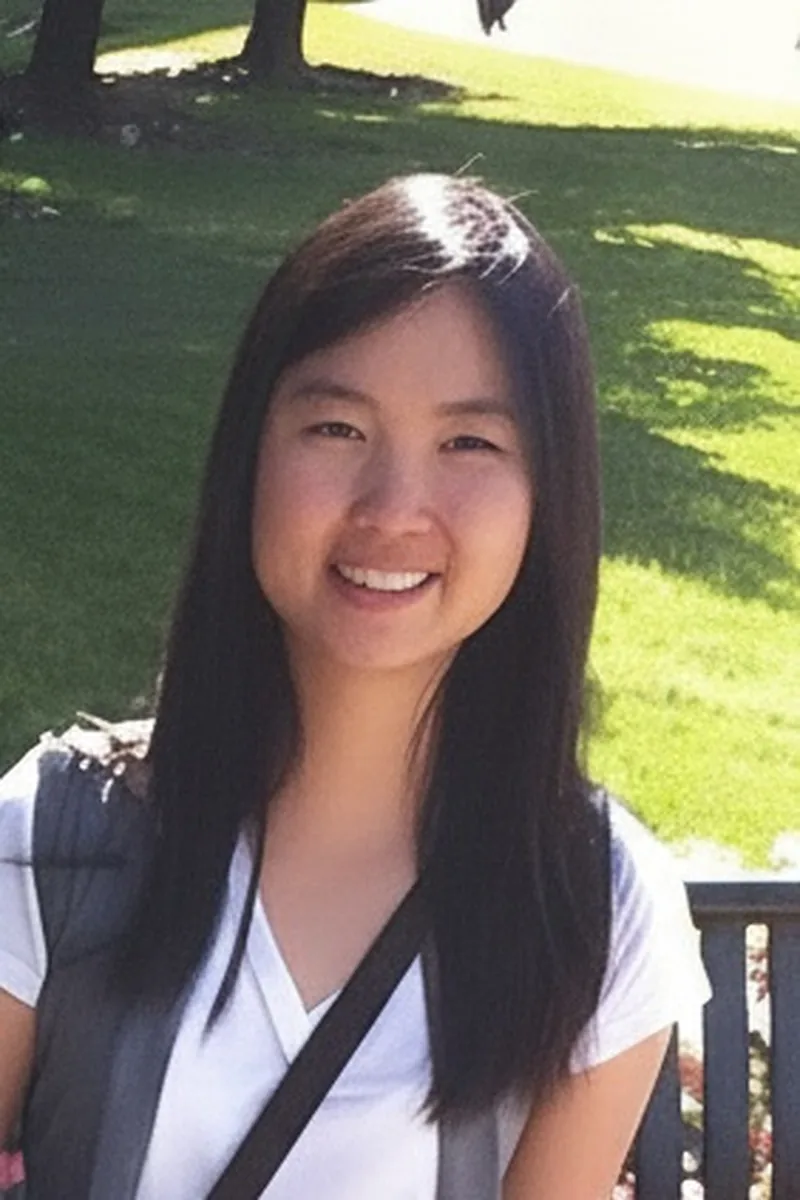
Heading to medical school after earning her chemistry degree, Natalie has the kind of recent, hands-on fluency with gen chem topics — electron configurations, solution stoichiometry, acid-base titrations — that comes from having just worked through the full sequence herself. She teaches by zeroing in on the specific step where a problem stops making sense, whether that's setting up an ICE table or tracking oxidation states through a redox reaction. Rated 4.8 by students.

Organic reaction mechanisms, thermodynamic versus kinetic control, and multi-step synthesis problems demand more than memorization — they require a framework for thinking through electron movement and molecular behavior. Maggie studied Molecular, Cellular, and Developmental Biology as an undergraduate and now applies that foundation daily in her Stanford medical program. She unpacks each mechanism by tracing exactly why electrons move where they do, making complex transformations feel logical.
Going through med school means Amanda has seen what happens when gen chem concepts like acid-base equilibria and reaction thermodynamics aren't truly understood — they unravel in biochemistry, pharmacology, and every clinical science that follows. She teaches college chemistry by grounding each topic in the bigger picture of where it leads, using her biology degree and 4.2 GPA from Alabama to zero in on the quantitative reasoning — electron configurations, enthalpy calculations, equilibrium expressions — that students need to own rather than just survive.
Li's doctoral-level medical coursework means she's encountered college chemistry concepts like acid-base equilibria, solution chemistry, and reaction energetics in clinical contexts where getting the chemistry wrong has real consequences. Her microbiology and anatomy teaching background also means she can ground abstract gen chem topics — like intermolecular forces or oxidation states — in the biological systems students will see again in upper-level courses.
General chemistry at the college level demands comfort with both conceptual reasoning and quantitative problem-solving — balancing redox half-reactions one day, then interpreting molecular orbital diagrams the next. Kate's master's work in environmental engineering required deep fluency in chemical thermodynamics and kinetics, and she brings that applied perspective to topics like enthalpy calculations, acid-base equilibria, and electrochemistry.
Sung earned his B.S. in Chemistry, which means he can unpack topics like thermodynamics, equilibrium constants, and molecular orbital theory with real depth rather than surface-level definitions. He connects abstract concepts — like why Gibbs free energy determines spontaneity — to concrete problem-solving strategies that stick. Rated 5.0 by students.
Thermodynamics, equilibrium constants, and reaction kinetics demand more than memorizing formulas — they require thinking about why a reaction proceeds the way it does. Garrett's coursework in physical chemistry and organic chemistry means he can unpack the energy landscapes and molecular interactions behind each concept. He connects general chemistry principles to their applications in biochemistry and physiology, which makes abstract ideas click faster.
Neuroscience at Yale meant David couldn't just skim gen chem — he needed concepts like electrochemistry, molecular bonding, and reaction thermodynamics to stick, because they showed up again in every neurobiology and biochemistry course that followed. Now pursuing graduate work in bioethics, he teaches college chemistry by linking each topic to the bigger scientific picture, so students see why mastering something like intermolecular forces or acid-base equilibria pays off well beyond the final exam. Rated 5.0 by students.
Chemical and biomolecular engineering at MIT means Natasha uses general chemistry concepts — equilibrium, kinetics, electrochemistry — as daily tools, not just exam topics. She talks through reaction mechanisms and stoichiometry problems out loud with students, treating each session more like a collaborative lab meeting than a lecture. Rated 4.9 by students.
I've been working with students for over seven years, from middle school all the way through college, across subjects like math, calculus, statistics, linear algebra, chemistry, and physics, with a lot of SAT and ACT prep mixed in. My background is perhaps a little unconventional. I have two bachelor's degrees, one in Engineering and one in Communication Studies, plus a Master's in Design. That combination means I can guide you through challenging technical material and communicate it in a way that is easy to grasp. What I care most about is helping students get to a place where they don't need me anymore. I know that sounds like a strange thing for a tutor to say, but I think it's the right goal. I'm not here to walk you through steps to copy down. I want you to understand why something works, because that's what holds up under pressure, on a test you haven't seen before. If you're ready to ace that test or prove that theorem that's been bugging you, reach out and let's work together
Having studied biology alongside organic chemistry and physical chemistry, Ade knows how college chemistry concepts like electron configuration, molecular geometry, and reaction stoichiometry thread through the rest of a science degree — and where students lose the plot when those ideas get abstract. He tackles the subject by anchoring each new topic to concrete examples from the lab bench, making the jump from Lewis structures to real molecular behavior feel less like a leap of faith.
Going from a Penn undergrad to medical school means Jessica sat through college chemistry twice — once as a prerequisite and again when biochemistry and pharmacology demanded she actually internalize concepts like reaction energetics, acid-base equilibria, and molecular interactions at a deeper level. That second pass gave her a clear sense of which gen chem topics students need to truly own versus merely survive, and she teaches accordingly. Rated 4.8 by students.
When college chemistry students feel overwhelmed, it's usually because topics like gas laws, equilibrium, and stoichiometry are piling up faster than they can organize the connections between them — and untangling that clutter is where Rachel excels. Her science background across biology, anatomy, and physiology means she's applied gen chem principles in multiple contexts, so she can show how a concept like acid-base behavior or molecular polarity actually functions beyond the textbook chapter it first appears in.
Testimonials
Because the right College Chemistry tutor makes all the difference.
Average Session Rating – Based on 3.4M Learner Ratings
Nearby College Chemistry Tutors
Other Lincoln Tutors
Related Science Tutors in Lincoln
Frequently Asked Questions
Varsity Tutors matches Lincoln students with expert College Chemistry tutors for 1-on-1 instruction. We pair each student with a tutor based on their specific needs, learning style, and goals.
Whether you need homework help, exam prep, or want to get ahead, our College Chemistry tutors are ready to help.
Common challenges include gaps from earlier material, difficulty with specific concepts, and trouble applying learning to new problems. These issues can snowball quickly in College Chemistry.
A tutor identifies where you're stuck, fills in gaps, and provides targeted practice. The 1-on-1 format means you get help exactly where you need it.
Tutors work with your student's actual coursework—homework assignments, class notes, and upcoming tests. This keeps tutoring directly relevant to what's happening in the classroom.
When you share information about your student's school and curriculum, we can match you with a tutor who has relevant experience.
All tutors complete background checks, credential verification, and teaching evaluation. Many of our College Chemistry tutors hold advanced degrees or have years of teaching experience.
You can review tutor profiles to find someone with the right background for your student's level and needs.
Many students see improved grades within a few weeks, along with better understanding of College Chemistry concepts and more confidence tackling challenging material.
Tutors track progress and adjust their approach to ensure continued improvement.
Most students benefit from 1-2 sessions per week. More frequent sessions help if your student is significantly behind or has an important exam coming up.
Your tutor can recommend a schedule based on your student's specific situation and goals.
Tutoring is purchased in packages of hours, with rates varying by tutor experience. Varsity Tutors offers several options to fit different budgets and needs.
You can discuss pricing during your consultation to find what works best.
Your tutor will assess where your student is, discuss goals, and start working on priority areas. Most students bring current homework or upcoming test material to focus on.
By the end, you'll have a clear sense of how the tutor can help and a plan for moving forward.
Let’s find your perfect tutor
Answer a few quick questions. We’ll recommend the right plan and match you with a top 5% tutor.