Award-Winning Pre-Calculus Tutors
serving Omaha, NE
Pre-Calculus
Tutors in Omaha
Private 1-on-1 tutoring, weekly live classes for academic support, test prep & enrichment, practice tests and diagnostics, and more to elevate grades and test scores.
Based on 3.4M Learner Ratings
UniversitiesSchools & Universities
DeliveredHours Delivered
ProficiencyGrowth in Proficiency
Who needs tutoring?
No obligation. Takes ~1 minute.
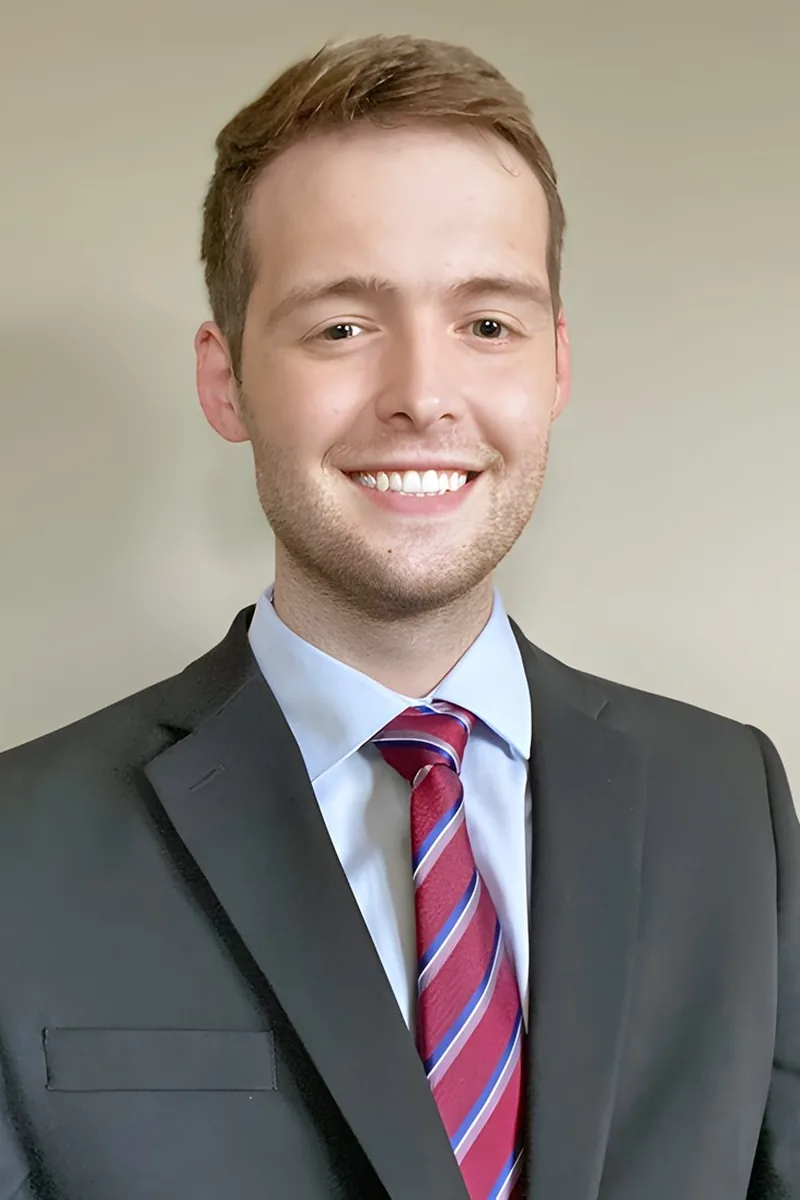
Geology and biochemistry pull from pre-calculus in ways most students don't expect — modeling mineral decay with exponential functions, mapping crystal structures with trigonometric relationships, and analyzing reaction rates through logarithmic curves. Aaron tackles these topics with the dual-science perspective of someone who actually uses them in lab work, which makes the jump from algebraic manipulation to functional reasoning feel grounded. His 32 ACT and 5.0 rating from students back that up.

Chemical engineering at Michigan means Edward is constantly manipulating the exact function families pre-calculus introduces — rational expressions for reaction rates, exponential models for heat transfer, trigonometric functions for signal analysis — so he teaches them as working tools rather than abstract definitions. His 36 ACT and 1520 SAT reflect genuine mathematical fluency, and his engineering training gives him a knack for showing students how graph behavior and algebraic structure connect, especially when tackling transformations and composite functions.
Electrical engineering at the undergraduate level means Oluwatosin spent semesters immersed in sinusoidal analysis, complex number arithmetic, and the polar-rectangular conversions that pre-calculus students often find disorienting — these weren't abstract exercises but daily tools for circuit and signal work. He tackles the course by bridging the gap between algebraic mechanics and the functional reasoning calculus will demand, especially around trigonometric identities and graph transformations. Rated 4.8 by students.
An engineering technology degree means Jeremy spent semesters grinding through the exact transition pre-calculus represents — moving from algebraic manipulation into the trigonometric, exponential, and rational function reasoning that engineering coursework demands daily. He tackles the course by showing how each new concept threads back to algebra students already understand, making topics like composite functions and asymptotic behavior feel like natural extensions rather than brand-new territory. His 32 ACT confirms the quantitative chops behind that bridge-building approach.
Trigonometric identities, rational functions, and the unit circle can feel like a wall of disconnected formulas without someone who explains the reasoning behind them. Matthew genuinely considered switching his major to mathematics because he loves finding the structure underneath these topics. He walks students through Pre-Calculus with an eye toward what's coming in Calculus, so nothing feels like busywork.
The leap from trig identities to limits can feel abrupt if the underlying logic of functions isn't solid. Pranav tackles Pre-Calculus by connecting topics like rational functions, polar coordinates, and sequences back to the graphical intuition students already have. As a Biomedical Engineering student at Johns Hopkins, he uses these tools daily and can show students why each concept matters beyond the textbook.
Environmental engineering coursework — modeling pollutant dispersion, watershed flow rates, decay of contaminants — runs on exactly the exponential, logarithmic, and trigonometric functions that pre-calculus introduces. Kate teaches these topics with the instinct of someone who's built real models around them through both her bachelor's and master's work, connecting each function family to the physical behavior it describes. Her 1580 SAT and 4.9 rating confirm the precision she brings to every session.
Fred's aerospace engineering degree from Princeton meant living inside the math that pre-calculus students are just meeting — parametric equations describing flight paths, trigonometric models for oscillating systems, and the limit-adjacent thinking that bridges algebra to calculus. He teaches the course knowing exactly which concepts will matter most once students cross into derivatives and integrals, and he builds that forward-looking intuition into every session. His 1550 SAT confirms the quantitative depth behind the approach.
The jump into pre-calculus — trigonometric identities, limits, and complex functions — trips up even strong math students who breezed through earlier courses. Julia breaks these topics into logical building blocks, connecting each new idea back to the algebra and geometry students already know. Her Stanford coursework in economics and quantitative methods keeps her sharp on exactly the kind of function analysis pre-calc demands.
A math degree from Penn means Ben didn't just pass through pre-calculus — he built everything that came after on top of it, from linear algebra to multivariable calculus. That depth lets him teach topics like rational functions and trigonometric identities by revealing the structural logic underneath, so students carry real understanding into calculus instead of a fragile set of memorized steps. Holds a 5.0 rating.
Having scored 5s on both AP Calculus BC and AP Physics C while at a Harvard-track pace of 16 AP courses, Derek built the kind of deep pre-calculus fluency — limits of rational expressions, trigonometric manipulation, composite function analysis — that only comes from leaning on those tools constantly across multiple disciplines. His computer science major adds a distinctive angle: he teaches sequences, recursive definitions, and function behavior through the algorithmic thinking that makes those concepts precise rather than fuzzy. A 1550 SAT and 4.9 rating round out the picture.
Kevin's competition math background gives him an unusual edge in Pre-Calculus — he's used to attacking problems involving sequences, series, and trigonometric manipulations from angles most textbooks never cover. That depth, combined with a 35 ACT and Stanford CS coursework heavy in mathematical foundations, means he can explain why a parametric equation behaves the way it does, not just how to graph it.
Pre-calc is where math pivots from computation to conceptual thinking — suddenly students need to analyze function behavior, understand transformations, and reason about limits informally. Zofia's approach zeroes in on building that analytical shift, especially around trigonometric functions and their graphs, so that calculus feels like a natural continuation rather than a cliff.
Harvard's History of Science program is surprisingly math-heavy — Erica spent semesters tracing how logarithmic scales, conic sections, and trigonometric models evolved from practical tools into the abstract framework students now encounter in pre-calculus. That historical lens gives her a distinctive way of teaching function families: she builds intuition for why a concept was invented before drilling the mechanics of how to use it. Rated 4.9 by students.
Doing research in Spectral Graph Theory at MIT means Enrico encounters the full toolkit of pre-calculus — eigenvalue behavior, polynomial roots, matrix transformations — at a level where shaky fundamentals would be immediately exposed. He teaches the course by making definitions click intuitively, so that concepts like composite functions or rational expressions feel like natural extensions of algebra rather than arbitrary new rules. His 36 ACT, 1570 SAT, and 5.0 rating confirm the depth behind that intuition.
As a Course Assistant for Harvard's introductory calculus sequence, Sanjana sees exactly where pre-calculus gaps — shaky grasp of limits intuition, weak trigonometric identities, or incomplete understanding of function transformations — trip students up once the pace accelerates. She teaches those topics with that forward view, building each concept so it holds weight in the calculus course that's coming next. Holds a 5.0 rating and a 1560 SAT.
A mechanical engineering degree from WashU (magna cum laude) means Caroline spent years where pre-calculus wasn't a course — it was the baseline language for everything from thermodynamic cycles to stress analysis, with polar coordinates, parametric equations, and trig identities showing up in nearly every problem set. She zeroes in on the conceptual leap from manipulating expressions to thinking in terms of function behavior, which is exactly where most students stall before calculus. Holds a 5.0 rating and a 1560 SAT.
Testimonials
Because the right Pre-Calculus tutor makes all the difference.
Average Session Rating – Based on 3.4M Learner Ratings
Practice Pre-Calculus
Free practice tests, flashcards, and AI tutoring for Pre-Calculus
Nearby Pre-Calculus Tutors
Other Omaha Tutors
Related Math Tutors in Omaha
Frequently Asked Questions
Pre-Calculus bridges algebra and calculus by covering functions, trigonometry, sequences, series, and exponential/logarithmic equations. Mastering these topics is essential because calculus builds directly on your understanding of function behavior, transformations, and rates of change. A tutor can help you see how these concepts connect rather than treating them as isolated procedures, which makes the transition to Calculus much smoother.
Many students struggle with the shift from procedural math (following steps) to conceptual understanding (knowing why those steps work). Word problems, graphing transformations, trigonometric identities, and multi-step equations are frequent pain points. Personalized 1-on-1 instruction helps you identify gaps in foundational skills while building confidence in problem-solving strategies that apply across different problem types.
Word problems require translating real-world situations into mathematical equations—a skill that takes practice and strategy. A tutor can teach you to break problems into manageable steps: identify what you know, define variables clearly, set up equations, and verify your answer makes sense. Working through problems with guided feedback helps you recognize patterns and build the confidence to tackle unfamiliar scenarios.
Graphing helps you visualize function behavior—seeing how equations translate to shapes on a coordinate plane is crucial for understanding limits, continuity, and calculus concepts later. Many students memorize transformation rules without truly understanding them. Personalized instruction focuses on building that visual intuition through interactive practice, so you can confidently sketch and interpret graphs rather than just following formulas.
Your first session is about building a personalized plan. A tutor will assess your current understanding, identify specific challenges (whether it's trig identities, function composition, or test anxiety), and learn your learning style. From there, you'll work together on targeted strategies tailored to your goals—whether that's improving your grade, preparing for an exam, or building confidence for Calculus.
Math anxiety often stems from feeling lost or pressured to memorize without understanding. Personalized tutoring creates a judgment-free space where you can ask questions, work at your own pace, and see patterns emerge rather than memorizing isolated facts. As you experience success solving problems you previously found intimidating, your confidence naturally builds—and that confidence carries into tests and future math courses.
Varsity Tutors connects you with expert tutors who understand Pre-Calculus curriculum and can work with your schedule. Whether you need help with specific topics like trigonometry or exponential functions, or you want ongoing support throughout the year, personalized instruction adapts to your pace and learning style. You'll get one-on-one attention that's simply not possible in a classroom with a 15:1 student-teacher ratio.
Showing work demonstrates your reasoning and helps identify where mistakes happen—not just what the answer is. Many students skip steps or rush, losing points even when they understand the concept. A tutor teaches you to organize your work clearly, explain your reasoning, and use problem-solving strategies that are easy to follow. This builds better habits and often improves grades significantly.
Let’s find your perfect tutor
Answer a few quick questions. We’ll recommend the right plan and match you with a top 5% tutor.