Award-Winning Biostatistics Tutors
serving Minneapolis, MN
Biostatistics
Tutors in Minneapolis
Private 1-on-1 tutoring, weekly live classes for academic support, test prep & enrichment, practice tests and diagnostics, and more to elevate grades and test scores.
Based on 3.4M Learner Ratings
UniversitiesSchools & Universities
DeliveredHours Delivered
ProficiencyGrowth in Proficiency
Who needs tutoring?
No obligation. Takes ~1 minute.

Bioengineering lab courses at UIC's Honors College don't let you hand-wave through your data — Shouvik has had to choose appropriate statistical tests for biological experiments, interpret p-values from tissue engineering datasets, and justify sample sizes in formal reports. That firsthand experience with real biological variability makes him effective at teaching concepts like hypothesis testing, descriptive statistics, and study design. Rated 4.9 by students.
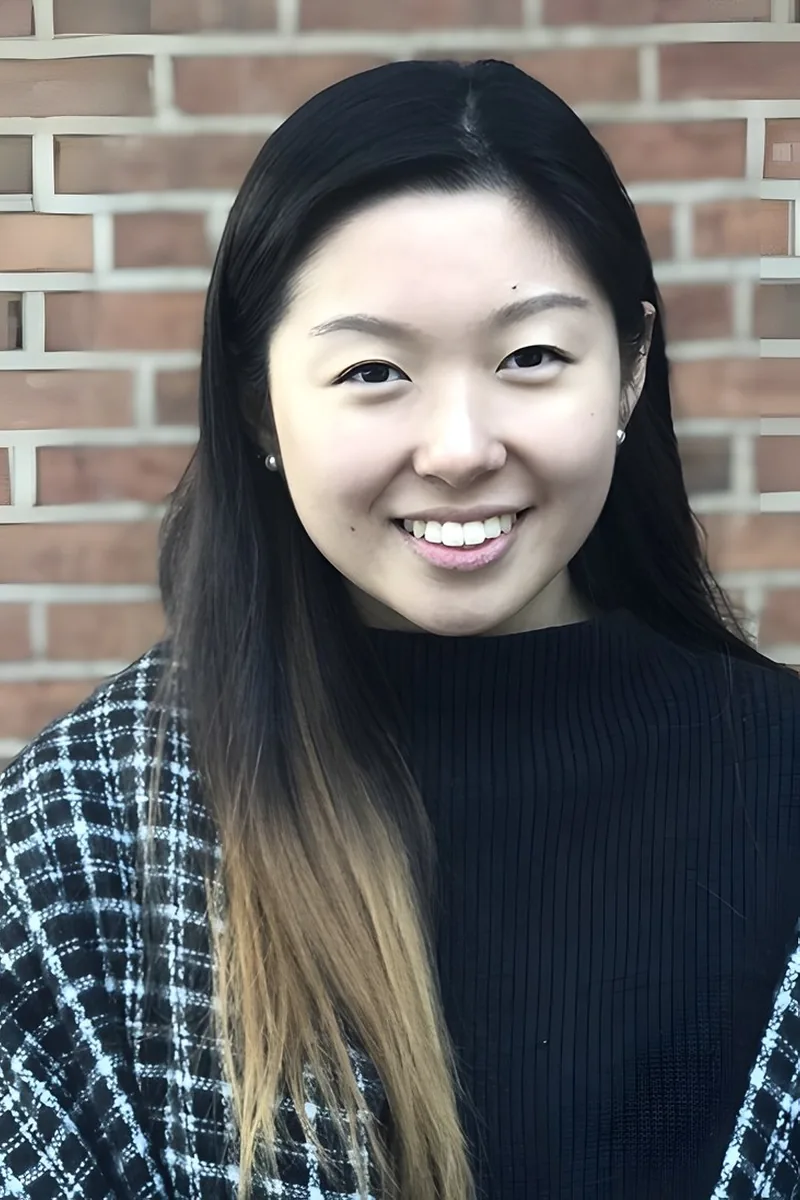
Studying behavioral neuroscience at Lehigh and now pursuing a Master's in Public Health at George Washington, Katherine has lived inside biostatistics — from chi-square tests and logistic regression to survival analysis and epidemiological study design. She teaches the subject the way she learned to use it: tied to real research questions about populations and health outcomes, so formulas stop feeling arbitrary and start making sense.
Medical school trains you to read studies critically — picking apart odds ratios, questioning sample sizes, and spotting when a confidence interval undermines a paper's bold conclusion. Sanjul, now in his final year of osteopathic medical training with a biology foundation, brings that clinical lens to biostatistics concepts like hypothesis testing, relative risk, and regression modeling. Rated 5.0 by students.
Engineering coursework at MIT forced Natasha to build statistical models from biological and chemical datasets — the kind where understanding variance, distributions, and experimental design isn't optional but essential to getting meaningful results. Her chemical and biomolecular engineering background means she teaches biostatistics concepts like regression and hypothesis testing through the lens of someone who's actually had to defend her statistical choices in lab reports and research. Rated 4.9 by students.
Alex's master's thesis at Rice centered on environmental statistics, giving him direct experience with the tools that define biostatistics: survival analysis, logistic regression, study design, and interpreting odds ratios in research contexts. He unpacks statistical software output and walks through the logic behind each test so students understand both the math and the methodology.
Graduate coursework in global health and population at Harvard means Sarah's biostatistics training is rooted in real epidemiological research — calculating measures of association, building regression models, and interpreting results in the context of population-level health questions. Her undergraduate biology degree adds fluency with the scientific reasoning behind study design, so she can unpack why a particular statistical test fits a given dataset rather than just drilling the formula. Rated 5.0 by students.
Studying biology at Duke while conducting field research on Hawaiian monk seals meant Emma had to grapple with real ecological datasets — the kind where choosing between a t-test and a Mann-Whitney U actually changes your conclusions. That hands-on experience with biological data analysis, paired with her 4.9 rating from students, makes her especially effective at teaching the statistical reasoning behind study design and data interpretation.
Applying to medical school while pursuing a Master's in Public Health means Jakobi is knee-deep in the kind of data analysis biostatistics courses demand — study design, hypothesis testing, and interpreting results in health contexts. His biology degree gives him the scientific grounding to explain why a particular statistical method fits a biological question, whether students are wrestling with relative risk calculations or figuring out when to use a t-test versus ANOVA.
Preparing for medical school means Serena has worked through the full gauntlet of premed coursework — and biostatistics sits right at the intersection of her biology degree and the quantitative reasoning she's built through years of tutoring math from algebra through calculus. She breaks down concepts like study design, measures of central tendency, and statistical significance by keeping the biological question front and center, so the formulas serve the science rather than the other way around. Holds a 5.0 rating from students.
Biology coursework generates the kind of data — population counts, gene expression levels, epidemiological surveys — where understanding which statistical test to run matters as much as understanding the biology itself. Ade's biology degree means he teaches concepts like probability distributions, measures of central tendency, and hypothesis testing by starting from the biological question rather than the formula sheet, so the reasoning behind each method clicks before the calculations begin.
Teaching AP Chemistry, Honors Biology, and Anatomy & Physiology every day means Samuel is constantly working with the kinds of experimental data that biostatistics is built to analyze — comparing treatment groups, interpreting variability in lab results, and evaluating whether observed differences are real or just noise. His master's in science education sharpens how he breaks down concepts like descriptive statistics, probability, and hypothesis testing so they feel like practical tools rather than abstract formulas. Rated 4.9 by students.
Kimanthi's biomedical engineering training at Duke meant designing experiments that demanded careful statistical thinking — selecting appropriate tests, calculating power, and interpreting results from biological datasets. Now in medical school, she teaches biostatistics concepts like hypothesis testing and regression by grounding them in the clinical and laboratory scenarios where they actually come up. Rated 5.0 by students.
Testimonials
Because the right Biostatistics tutor makes all the difference.
Average Session Rating – Based on 3.4M Learner Ratings
Nearby Biostatistics Tutors
Other Minneapolis Tutors
Related Science Tutors in Minneapolis
Frequently Asked Questions
Biostatistics combines statistical theory with biological applications, and students often find the transition from pure statistics to real-world health data challenging. Common pain points include understanding hypothesis testing in clinical contexts, interpreting confidence intervals for treatment effects, and applying regression models to biological variables. Many students also struggle with the conceptual leap from memorizing formulas to recognizing which statistical method fits a specific research question—this requires seeing the underlying logic rather than just procedural steps.
Personalized 1-on-1 instruction allows tutors to identify exactly where your understanding breaks down—whether it's in the statistical foundation, the biological application, or the interpretation of results. Expert tutors can connect abstract concepts like p-values and effect sizes to real research scenarios, help you work through complex datasets step-by-step, and build problem-solving strategies tailored to your learning style. This individualized approach is especially valuable in biostatistics, where seeing the pattern between the math and the biological question transforms abstract procedures into meaningful analysis.
While biostatistics relies on foundational mathematics, you don't necessarily need advanced calculus—most biostatistics courses focus on applied statistics rather than mathematical proofs. However, comfort with algebra, basic probability concepts, and working with data sets is helpful. If you have gaps in these areas, Varsity Tutors can connect you with tutors who help you strengthen prerequisites while also building your biostatistics understanding so you don't fall behind.
Yes. Many tutors who specialize in biostatistics are experienced with statistical software commonly used in public health and medical research. They can guide you through coding, data manipulation, running analyses, and interpreting software output—helping you understand both the conceptual statistics and the practical implementation. This bridges the gap between theory and the real data analysis work you'll do in courses or research settings.
Absolutely. Graduate-level biostatistics is increasingly rigorous, and students pursuing advanced degrees in public health, medicine, epidemiology, or related fields often benefit from personalized tutoring. Expert tutors can help with advanced topics like survival analysis, longitudinal data methods, causal inference, and study design—as well as help you prepare for comprehensive exams or strengthen your statistical foundation for dissertation research. Varsity Tutors connects you with tutors who work at that level of complexity.
Math anxiety often stems from feeling lost or pressured to memorize without understanding. With personalized tutoring, you work at your own pace, ask questions without judgment, and gradually build competence through guided practice. As you start solving problems correctly and recognizing patterns, confidence naturally grows. Tutors help you separate procedural skills from conceptual understanding, reduce the cognitive overload, and develop strategies that make biostatistics feel more manageable and less intimidating.
Varsity Tutors matches you with expert tutors who specialize in biostatistics and understand your specific learning goals—whether you're taking an undergraduate course, preparing for graduate admissions, or conducting research. The matching process considers your schedule, learning style, and academic level, ensuring you work with someone well-suited to help you succeed. You can get started by sharing what you need help with, and we'll connect you with the right tutor.
Let’s find your perfect tutor
Answer a few quick questions. We’ll recommend the right plan and match you with a top 5% tutor.