Award-Winning AP Biology Tutors
serving Minneapolis, MN
AP Biology
Tutors in Minneapolis
Private 1-on-1 tutoring, weekly live classes for academic support, test prep & enrichment, practice tests and diagnostics, and more to elevate grades and test scores.
Based on 3.4M Learner Ratings
UniversitiesSchools & Universities
DeliveredHours Delivered
ProficiencyGrowth in Proficiency
Who needs tutoring?
No obligation. Takes ~1 minute.
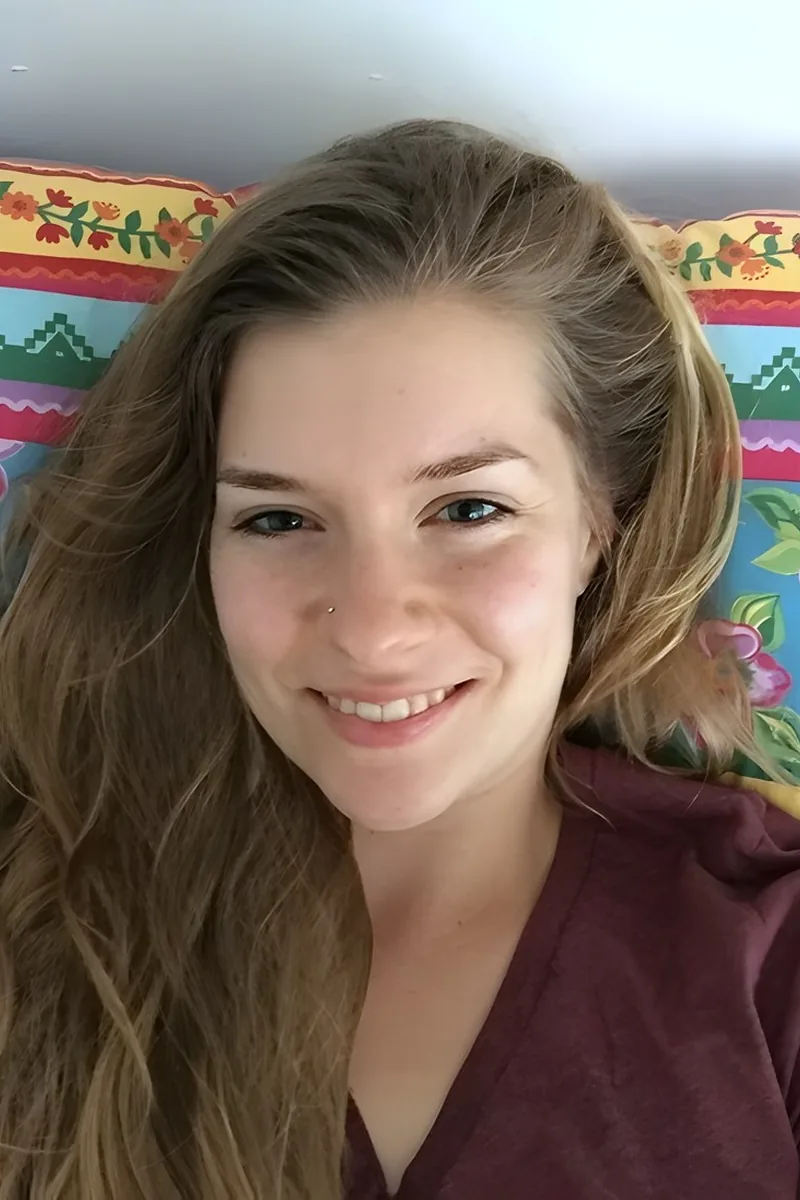
Between her biology degree, veterinary training, and active cancer research, Marika has cycled through AP Bio's core content — cell signaling, gene expression, ecology, evolution — at progressively deeper levels for years. That depth lets her explain a concept like oxidative phosphorylation in three different ways until one lands. She also coaches students on the free-response writing style the exam rewards, where precise use of biological vocabulary makes or breaks a score.

Between his biology degree with a biochemistry concentration and his MCAT preparation, Mikkel has been through the core AP Bio content multiple times at increasing depth — from cellular respiration and signal transduction to ecology and evolutionary mechanisms. He knows which free-response question styles the exam favors and teaches students to construct the kind of precise, evidence-based explanations that earn full marks.
Srini is studying molecular biophysics at Brown, which means AP Bio topics like cell signaling cascades, gene expression, and membrane transport aren't just exam material — they're his daily coursework. He unpacks the why behind each biological process, connecting molecular details to the big-picture themes the AP exam rewards. Rated 4.8 by students.
Owen is a neuroscience major at Brown, which means AP Biology's toughest units — cell signaling, gene expression, and cellular energetics — overlap directly with material he's studied at the college level. He teaches students to think like the exam demands: interpreting experimental data, constructing explanations using evidence, and connecting molecular-scale processes to organism-level outcomes.
As a neuroscience major on the pre-med track at Vanderbilt, Eileen lives inside the material AP Biology tests: cell signaling, gene expression, metabolic pathways, and evolutionary mechanisms. She unpacks dense topics like the lac operon or oxidative phosphorylation by sketching out each step visually, turning overwhelming detail into a logical sequence students can actually reconstruct on exam day.
Brown's Health and Human Biology concentration has Nova deep in the cellular and molecular content that AP Bio tests hardest — but her real edge is on the SAT Subject Test in Biology E/M, which means she's drilled the kind of rapid concept application the AP exam's multiple-choice section demands. She scored a 1530 SAT and holds a 5.0 rating, and she approaches the evolution and ecology units by tying them back to the human biology lens that makes abstract population dynamics feel concrete.
Cell and molecular biology was Emily's concentration at Duke, where she graduated summa cum laude — so the AP Bio units on gene expression, cell communication, and the central dogma aren't review material she's recalling vaguely, they're concepts she studied at an advanced level and now revisits daily as a Columbia medical student. She's especially sharp at teaching students to diagram signal transduction pathways and trace how a single mutation can ripple through protein function, cell behavior, and organism-level phenotype — the kind of multi-scale reasoning that separates 4s from 5s on the exam. Rated 5.0 by students.
A human biology degree from Cornell plus current graduate work in human development means Jonathan has studied the organism-level physiology and developmental processes that AP Bio's later units build toward — growth, reproduction, and how organisms maintain homeostasis through feedback mechanisms. He's particularly good at teaching students to read experimental data and construct the kind of evidence-based arguments the free-response section demands, a skill sharpened by his own med school prep and 1550 SAT analytical training. Rated 4.9 by students.
Graduate research in Chemical and Physical Biology at Vanderbilt meant Dennis spent years at the intersection of chemistry and living systems — dissecting metabolic pathways, protein interactions, and cellular energetics at a level that makes AP Bio's toughest biochemistry content second nature. His biochemistry undergraduate degree adds even more depth to the molecular biology and genetics units, where he can unpack processes like enzyme kinetics or gene regulation by grounding them in the actual chemistry students rarely get to see in a high school course. Rated 5.0 by students.
AP Bio covers an enormous range — from molecular genetics to ecosystem dynamics — and the exam tests whether students can apply concepts to unfamiliar experimental scenarios. JF's mathematical and computational science training at Stanford sharpens the data-analysis and graph-interpretation skills that the redesigned AP Bio exam leans on heavily. That analytical lens turns intimidating free-response questions into structured problem-solving exercises.
Todd's undergraduate biology degree from UIUC gives him the content foundation for AP Bio, but it's his 33 ACT and analytical training through his University of Chicago graduate work that sharpen how he teaches the exam's trickiest skill: translating dense lab data into clear, structured free-response answers. He zeroes in on the units where students lose the most points — cellular energetics and heredity — and builds the kind of process-level reasoning that turns memorized pathways into usable knowledge on test day.
A neuroscience degree plus a master's in biotechnology means Rithi has spent serious time with the molecular and cellular content that trips up most AP Bio students — think signal transduction pathways, gene regulation, and how neurons actually fire. She's now in medical school at Robert Wood Johnson, so she's applying these concepts daily at a level well beyond what the exam demands, which makes her especially sharp at unpacking the mechanistic "explain how" questions the free-response section loves to ask.
Saniya's neuroscience degree at Rhodes College required her to learn biology from the molecular scale up — gene expression, cell signaling, neural communication — which means she's tackled AP Bio's toughest conceptual territory in a context where every pathway had to connect to a bigger physiological story. She's continued auditing advanced coursework in anatomy, histology, and embryology since graduating, so the organism-level units on body systems and development are still sharp. Rated 5.0 by students.
Laura's economics background might seem like an odd fit for AP Bio, but it actually sharpens one of the exam's trickiest skills: interpreting data sets, reading graphs under pressure, and constructing logical arguments from evidence — exactly what the free-response section demands. She also tutors the SAT Bio Subject Test and college biology, so she's comfortable with content from ecology and population dynamics to cellular processes. Rated 5.0 by students.
Testimonials
Because the right AP Biology tutor makes all the difference.
Average Session Rating – Based on 3.4M Learner Ratings
Practice AP Biology
Free practice tests, flashcards, and AI tutoring for AP Biology
Nearby AP Biology Tutors
Other Minneapolis Tutors
Related Science Tutors in Minneapolis
Frequently Asked Questions
Score improvement depends on your starting point and how consistently you engage with tutoring. Students who work with tutors on targeted content gaps and test-taking strategies often see meaningful gains—typically 1-3 points on the AP scale. The key is identifying which units and question types challenge you most (like genetics, ecology, or data analysis questions) and practicing them strategically before the exam.
Most students find units 5-7 particularly demanding: Unit 5 (Heredity) involves complex genetics problems and Punnett squares, Unit 6 (Gene Expression) requires understanding molecular processes that feel abstract, and Unit 7 (Natural Selection) combines math with conceptual reasoning. Additionally, the free-response questions on photosynthesis and cellular respiration trip up many students because they require both detailed knowledge and clear scientific communication. A tutor can help you tackle these challenging units with targeted practice.
The AP Biology exam gives you 3 hours for both multiple-choice and free-response sections. A smart strategy is to spend about 1 minute per multiple-choice question (90 minutes total for 60 questions), which leaves you roughly 20 minutes per free-response question. Many students lose points by rushing through the MC section without fully reading each question. Working with a tutor on practice tests helps you develop a pacing rhythm and identify where you typically get stuck, so you can adjust your timing on exam day.
Aim for 4-6 full-length practice tests spaced throughout your study timeline. Taking them under timed, test-like conditions helps you build stamina and identify patterns in your mistakes. It's not just about the number—it's about reviewing each test carefully to understand why you missed questions and which content areas need more focus. Many students benefit from taking one practice test, doing targeted review with a tutor on weak areas, then taking another test a few weeks later to measure progress.
These questions test both your science knowledge and your ability to interpret experimental results quickly under pressure. You need to understand what's being measured, read graphs accurately, and draw conclusions—all while managing time. The challenge is that the data might relate to photosynthesis, enzyme kinetics, or population dynamics, but the underlying skills are the same. Tutors who specialize in AP Biology can walk you through the specific question types, teach you to scan graphs efficiently, and help you practice explaining what data means in biological terms.
Free-response questions reward clear, organized answers that show your reasoning. Students often lose points because they don't explain the connection between concepts or they rush through without addressing all parts of the question. Practice writing full responses (not just bullet points), have a tutor review them for clarity and completeness, and learn the specific language AP readers expect. Focus on Unit 1 (biochemistry), Unit 3 (photosynthesis/cellular respiration), and Unit 6 (gene expression) FRQs, as these appear consistently and require detailed scientific communication.
Varsity Tutors connects you with expert tutors who specialize in AP Biology and understand the specific curriculum and exam format. Whether you're in Minneapolis or nearby areas, you can get matched with a tutor who fits your learning style and schedule. Look for tutors with strong AP Biology credentials and experience helping students tackle challenging units like genetics and molecular biology. Many students find that even a few months of focused 1-on-1 tutoring before the May exam makes a significant difference.
Let’s find your perfect tutor
Answer a few quick questions. We’ll recommend the right plan and match you with a top 5% tutor.