Award-Winning AP Calculus BC Tutors
serving Savannah, GA
AP Calculus BC
Tutors in Savannah
Private 1-on-1 tutoring, weekly live classes for academic support, test prep & enrichment, practice tests and diagnostics, and more to elevate grades and test scores.
Based on 3.4M Learner Ratings
UniversitiesSchools & Universities
DeliveredHours Delivered
ProficiencyGrowth in Proficiency
Who needs tutoring?
No obligation. Takes ~1 minute.
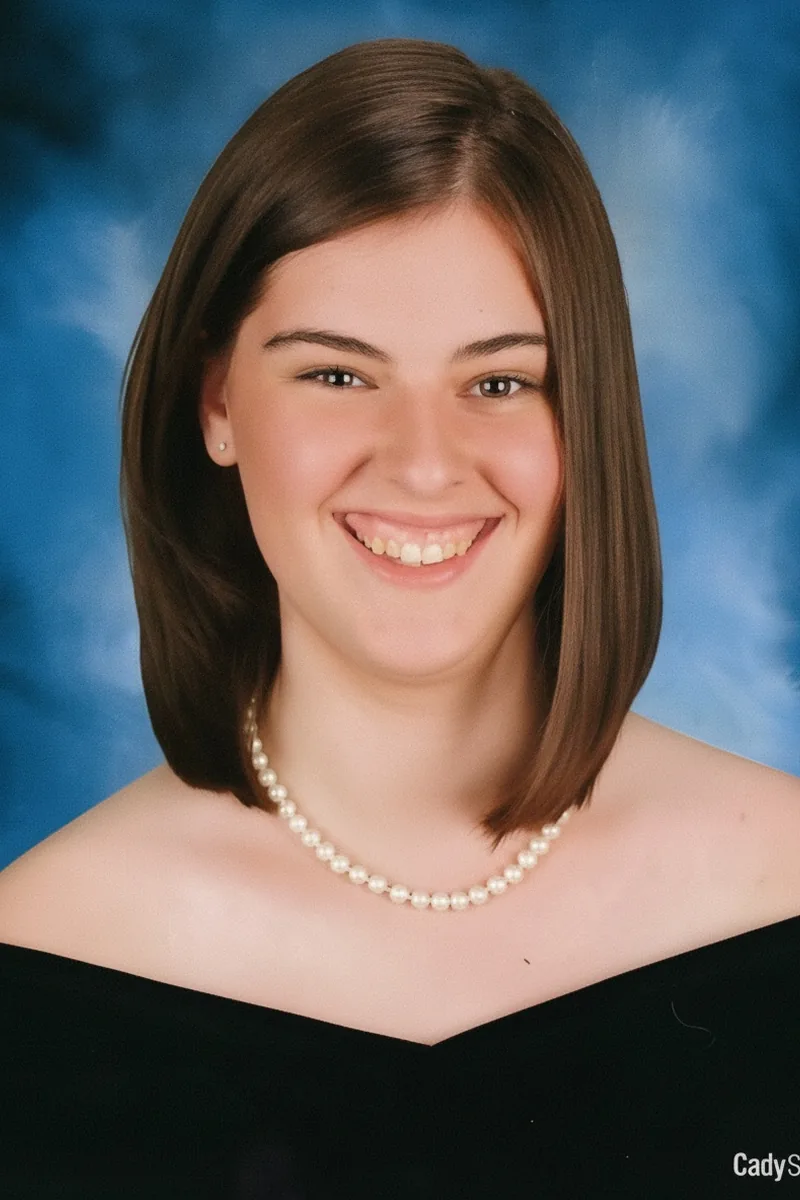
Majoring in both psychology and mathematics at UGA's honors college — with awards for her math coursework — Hailey has the formal training to teach BC topics like series convergence and Taylor polynomial construction with real precision, not just memorized procedures. She's especially effective at tracing where a BC struggle actually originates in shaky AB reasoning, whether that's a limits gap hiding behind a failed ratio test or weak integration mechanics stalling out on improper integrals. Her 1570 SAT and 5.0 tutoring rating back that up.
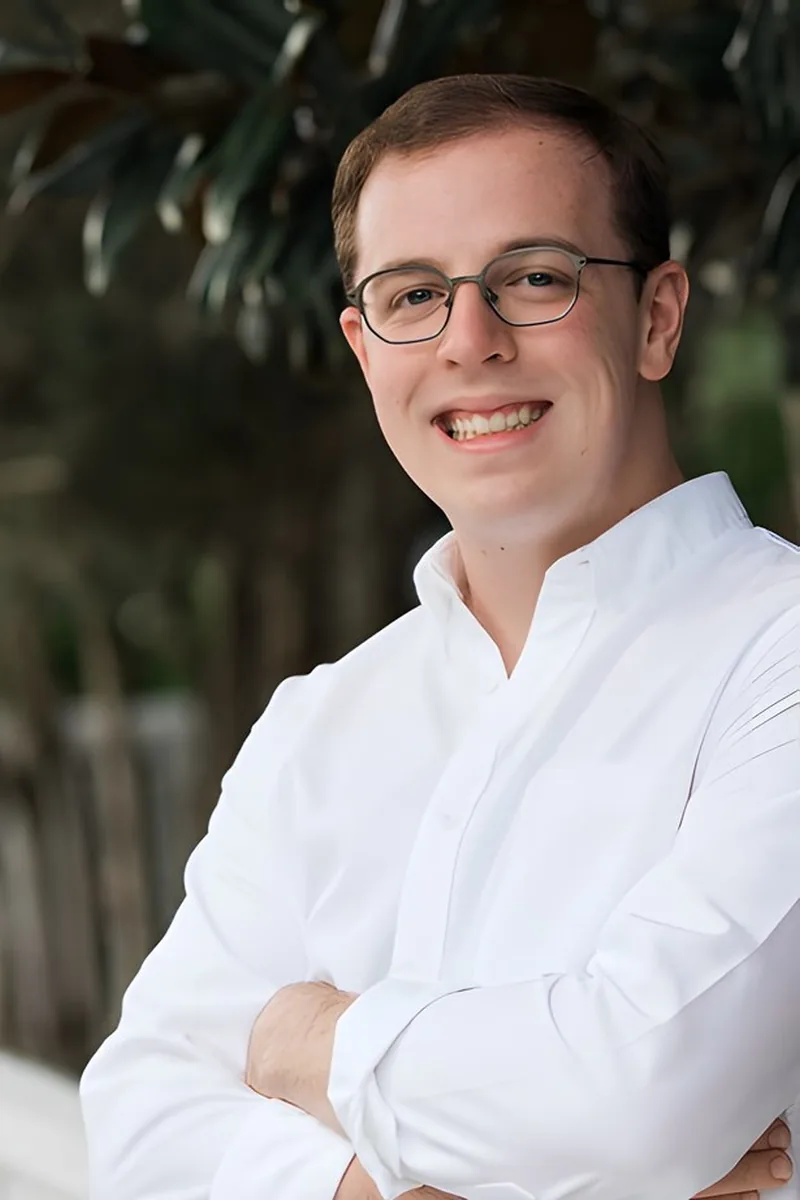
BC Calculus layers convergence tests, parametric equations, and polar curves on top of an already demanding AB foundation, and the pace leaves little room to fall behind. Carson's daily work in advanced mathematics at the University of Chicago means series, Taylor polynomials, and integration techniques are tools he uses constantly — not distant memories from a textbook. He also keeps a curated bank of problems and exam strategies tailored to the BC format.
Biochemistry coursework at UGA means Aditya regularly encounters differential equations and integration techniques in contexts like enzyme kinetics and reaction modeling — so when he teaches BC topics like improper integrals or series approximations, he can ground them in problems that actually use the math. His 1580 SAT speaks to the kind of precision that matters when students hit the trickiest BC material, like constructing error bounds or navigating convergence criteria where one misread condition derails the whole argument.
I am a 3rd year bio major at GT with minors in biochemistry and computer science. My tutoring subjects are math, bio, and chem. I have tutored for a few years, and I have also TAed! My favorite subjects are general chemistry and molecular biology (: My personal belief is that anyone can enjoy a subject once they truly understand it.
Scoring a perfect 1600 on the SAT and a 35 on the ACT through self-study alone, Dhruv developed a structured, methodical approach to learning dense material — exactly the kind of discipline BC Calculus rewards when students hit the wall of series convergence and parametric integration. He breaks down topics like interval-of-convergence arguments and polar area setups by isolating the specific AB skill each one builds on, so nothing feels like it appeared out of thin air. Rated 4.9 by students.
Majoring in mathematics at Georgia Tech, Sally is immersed in the rigorous proof-based thinking that makes BC's trickier concepts — like constructing Taylor series from scratch or reasoning through interval of convergence arguments — feel like familiar territory rather than memorized recipes. She's especially strong at showing how BC builds directly on AB foundations, so topics like integration by parts or the ratio test land as logical next steps. Rated 4.9 by students.
Most BC students can follow a Taylor polynomial procedure on the board but freeze when an FRQ asks them to justify convergence or estimate error — that gap between mimicking steps and actually reasoning through series is where Joshua zeroes in. His computer science training at Georgia Tech means he thinks algorithmically about problems like convergence tests, breaking each one into a clear decision sequence rather than a memorized checklist.
Two years of tutoring students across every math level — from elementary arithmetic through AP — gave Akshadha a sharp eye for the specific algebra and AB-level gaps that quietly sabotage students once BC introduces improper integrals or the Lagrange error bound. Her biology background also means she can ground abstract series and integration problems in tangible contexts like population modeling and growth rate analysis. Rated 4.9 by students.
Georgia Tech's Computational Media program is math-heavy — Regina's coursework in calculus and algorithm design means she's worked through every BC topic from convergence tests to parametric equations in contexts where getting the reasoning wrong breaks actual code. She breaks down the leap from AB to BC by treating series and advanced integration techniques as extensions of tools students already trust, not a separate universe of formulas. Rated 5.0 by students.
BC Calculus layers convergence tests, parametric equations, and polar curves on top of an already demanding AB foundation — and the pacing leaves little room to fall behind. Matthew's biochemistry background means he routinely used Taylor series and integration techniques in contexts like reaction kinetics, so he teaches these topics with the fluency of someone who actually applied them. Rated 5.0 by students.
I have tutored and/or taught mathematics since 2009. I have received graduate degrees in mathematics from Clark Atlanta University and the University of Florida. I am very patient with my students and strive to develop their skills, strategies and critical thinking.
When students hit BC's convergence tests and feel like they're just memorizing a checklist of names — ratio, root, integral, comparison — Samuel reframes each test as a question about how a series behaves, turning rote steps into genuine reasoning. His applied mathematics coursework means he's actively using Taylor series and parametric models in contexts where getting the convergence wrong isn't just a lost point but a broken solution. That perspective, plus a 1590 SAT reflecting sharp quantitative instincts, keeps his teaching grounded in understanding rather than procedure-shuffling.
Series convergence, parametric equations, and polar curves make BC the course where strong calculus students finally have to slow down and think carefully. Anthony earned his BS in physics and math from Yale, where these concepts weren't just exercises — they were the language of electromagnetism and classical mechanics. He teaches BC topics by connecting each technique to why it exists and when it matters.
Biomedical engineering at Cornell throws parametric modeling, series approximations, and heavy integration at Annie every semester — BC Calculus is essentially the prerequisite language for her entire degree. Her year as a teaching assistant for introductory biology sharpened her instinct for spotting exactly where a student's reasoning goes sideways, whether it's a shaky limit concept underneath a convergence test or a misread of how polar area integrals accumulate. Rated 4.9 by students.
Convergence tests, parametric equations, and Taylor series expansions are where BC separates from AB — and where many students start to feel lost. Rithi breaks these topics into intuitive steps, connecting new concepts back to the foundational calculus reasoning students already have. Her 1550 SAT and deep STEM background reflect the kind of mathematical fluency that makes those connections clear.
BC Calculus layers convergence tests, parametric equations, and polar curves on top of an already demanding AB foundation, and the pacing leaves little room to fall behind. Vinson earned a 36 ACT and National AP Scholar distinction while building the kind of deep mathematical fluency that makes series analysis and integration techniques click. He breaks each new BC topic into the AB concept it extends, so the jump never feels arbitrary.
Most BC students can follow a convergence test step by step but freeze when asked to choose which test to apply — that decision-making is where Nima, a physics major heading to Duke on a full merit scholarship, spends most of his teaching energy. His physics training means he treats series and parametric equations as descriptions of real motion and real forces, which gives students an intuitive anchor when the abstraction piles up. A 1580 SAT and 4.7 rating back up his ability to make that AB-to-BC jump feel manageable.
Studying applied physics at Cornell, Ritesh encounters BC-level calculus constantly — parametric motion in mechanics, series approximations in wave theory, integration techniques in electromagnetism — so he teaches these topics as interconnected tools rather than isolated chapters. He's especially sharp at walking through the logic of convergence tests, where students often memorize steps without understanding which test to reach for and why. His 1440 SAT and 4.6 rating speak to that clarity.
BC Calculus layers convergence tests, parametric equations, and polar curves on top of an already demanding AB foundation, and keeping all of it organized is half the battle. Tessa's approach is to unpack each new topic by tying it back to core ideas students already understand — showing, for instance, how Taylor series are really just an extension of local linearity. She's a math major at Yale with a 4.9 client rating.
Studying applied mathematics at Stanford means Alex isn't just recalling BC topics from a past exam — he's actively using series, parametric equations, and advanced integration in his current coursework, which keeps his explanations sharp and grounded in how the math actually behaves. He's especially good at tracing a tricky convergence test or Lagrange error bound back to the core AB reasoning that makes it click. Rated 4.8 by students.
Chemical and biomolecular engineering at Johns Hopkins means Joshitha is actively using series approximations and integration techniques in thermodynamics and transport courses — so when she teaches Taylor polynomial construction or walks through convergence test logic, it comes from current, hands-on application rather than distant memory. Her 1580 SAT and 5.0 tutoring rating back up an approach that prioritizes building problem-solving intuition over drilling formulas.
Notre Dame's Science-Computing program front-loads calculus-heavy coursework — Aidan moved through multivariable calc and differential equations while simultaneously applying integration techniques and series in his science courses, so BC topics like Taylor polynomials and convergence tests landed as tools he actually needed, not just exam hurdles. He's especially sharp at tracing where a BC struggle — say, setting up an integral in polar coordinates or choosing the right convergence test — traces back to an AB concept that needs reinforcing. His 35 ACT and premed science background keep explanations precise and grounded.
Biomedical engineering at Johns Hopkins means Bidyut uses series approximations and differential equations to model biological systems — the same convergence tests and integration techniques that define the BC curriculum beyond AB. He's especially sharp at showing how a topic like Taylor polynomial error bounds connects back to the derivative reasoning students already trust, turning what feels like a wall of new material into a logical extension. Holds a 5.0 rating and a 36 ACT composite.
Testimonials
Because the right AP Calculus BC tutor makes all the difference.
Average Session Rating – Based on 3.4M Learner Ratings
Practice AP Calculus BC
Free practice tests, flashcards, and AI tutoring for AP Calculus BC
Nearby AP Calculus BC Tutors
Other Savannah Tutors
Related Math Tutors in Savannah
Frequently Asked Questions
Varsity Tutors matches Savannah students with expert AP Calculus BC tutors for 1-on-1 instruction. We pair each student with a tutor based on their specific needs, learning style, and goals.
Whether you need homework help, exam prep, or want to get ahead, our AP Calculus BC tutors are ready to help.
Common challenges include gaps from earlier material, difficulty with specific concepts, and trouble applying learning to new problems. These issues can snowball quickly in AP Calculus BC.
A tutor identifies where you're stuck, fills in gaps, and provides targeted practice. The 1-on-1 format means you get help exactly where you need it.
Tutors work with your student's actual coursework—homework assignments, class notes, and upcoming tests. This keeps tutoring directly relevant to what's happening in the classroom.
When you share information about your student's school and curriculum, we can match you with a tutor who has relevant experience.
All tutors complete background checks, credential verification, and teaching evaluation. Many of our AP Calculus BC tutors hold advanced degrees or have years of teaching experience.
You can review tutor profiles to find someone with the right background for your student's level and needs.
Many students see improved grades within a few weeks, along with better understanding of AP Calculus BC concepts and more confidence tackling challenging material.
Tutors track progress and adjust their approach to ensure continued improvement.
Most students benefit from 1-2 sessions per week. More frequent sessions help if your student is significantly behind or has an important exam coming up.
Your tutor can recommend a schedule based on your student's specific situation and goals.
Tutoring is purchased in packages of hours, with rates varying by tutor experience. Varsity Tutors offers several options to fit different budgets and needs.
You can discuss pricing during your consultation to find what works best.
Your tutor will assess where your student is, discuss goals, and start working on priority areas. Most students bring current homework or upcoming test material to focus on.
By the end, you'll have a clear sense of how the tutor can help and a plan for moving forward.
Let’s find your perfect tutor
Answer a few quick questions. We’ll recommend the right plan and match you with a top 5% tutor.