Award-Winning Science Tutors
serving Columbus, GA
Science
Tutors in Columbus
Private 1-on-1 tutoring, weekly live classes for academic support, test prep & enrichment, practice tests and diagnostics, and more to elevate grades and test scores.
Based on 3.4M Learner Ratings
UniversitiesSchools & Universities
DeliveredHours Delivered
ProficiencyGrowth in Proficiency
Who needs tutoring?
No obligation. Takes ~1 minute.
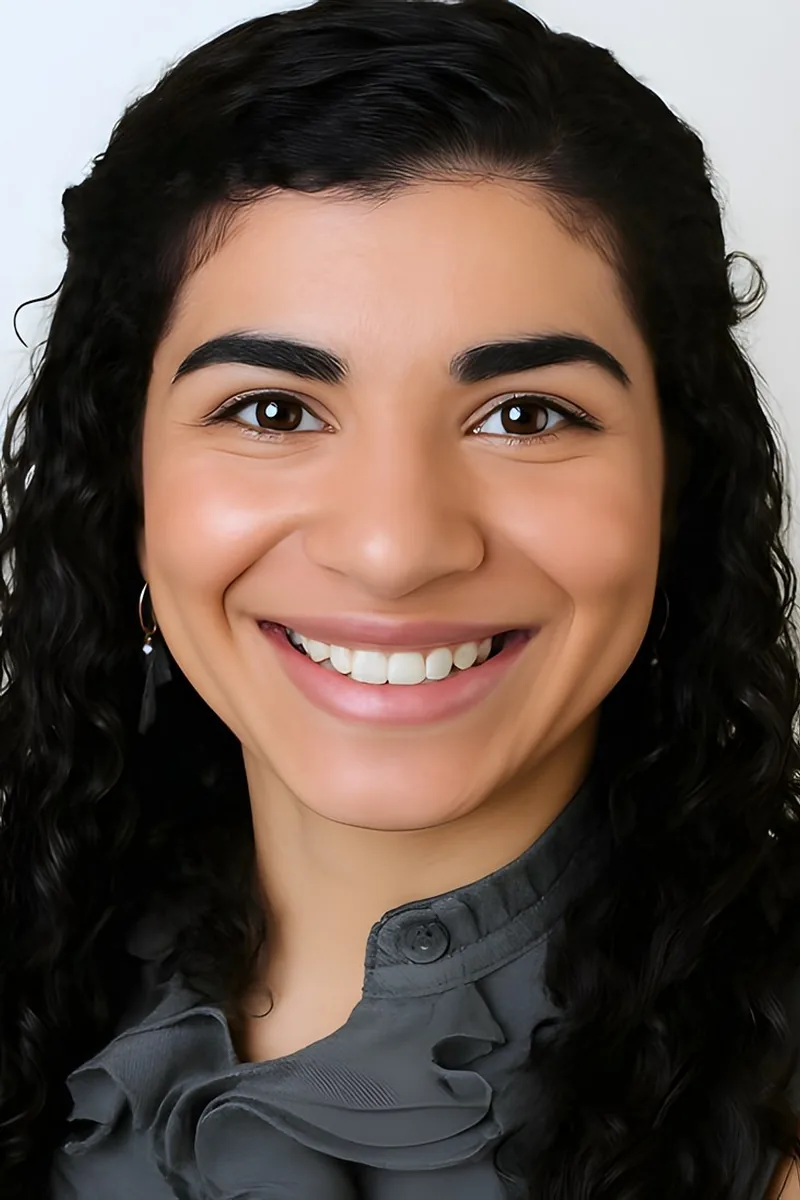
Having studied both psychology and communication, Paula picked up real research skills — designing studies, interpreting data sets, and understanding how biological systems interact with behavior — that she now brings directly into science sessions. She's particularly good at walking students through experiment design and helping them articulate conclusions clearly, since her communication training makes her sharp at translating technical findings into plain language. Rated 4.8 by students.

Biology, chemistry, and organic chemistry all live on Alina's subject list — so when a science question crosses disciplinary lines, she can trace the connection instead of stopping at the chapter boundary. Her neuroscience-focused biology degree at UGA means she's especially sharp on topics where chemistry meets living systems, like cellular respiration, enzyme kinetics, and molecular signaling. Rated 5.0 by students.
An MIT math degree and a PhD track in operations research at Georgia Tech mean Isabella has spent years inside labs and classrooms where the scientific method isn't a textbook concept — it's a daily practice of modeling real systems, testing assumptions, and interpreting results. She's especially strong on the quantitative backbone of science: reading data tables, understanding units, and translating observations into precise claims. Rated 5.0 by students.
A history degree might not scream 'science tutor,' but Jean's Latin American History work at Duke required evaluating competing sources of evidence and constructing cause-and-effect arguments from incomplete data — the same intellectual moves students need when designing experiments or explaining why results turned out the way they did. Her 1500 SAT also confirms she can handle the data interpretation and evidence-based reasoning that science coursework demands.
A neurobiology degree from Harvard means Marion doesn't just know science — she's spent years designing experiments, interpreting data, and thinking like a researcher. She brings that lens to everything from cell biology and genetics to chemistry stoichiometry, teaching students to reason through problems instead of memorizing isolated facts. Her high school teaching experience means she also knows exactly where the curriculum tends to lose people.
Five years of research studying language recovery after stroke gave Erica hands-on experience with the scientific method — designing experiments, interpreting data, and understanding biological systems at the cellular level. She brings that real lab background into science tutoring, breaking down concepts in biology, anatomy, and experimental design so students can reason through problems instead of just memorizing terms.
Cognitive science at Brown is essentially science taught sideways — Alice's coursework spans neuroscience, experimental design, and statistical analysis, all grounded in the same hypothesis-testing and data-interpretation skills that general science classes demand. Her background running studies on human cognition means she can walk students through designing experiments, reading results, and understanding why controls matter, not just what they are.
A neuroscience major at WashU with coursework in biomedical physics, Ethan lives at the intersection of biology, chemistry, and physics daily. He connects abstract scientific concepts — like cellular respiration or intermolecular forces — to tangible examples that make the material easier to reason through on exams.
An anthropology degree is essentially a science degree in disguise — Rebecca spent her undergrad learning ethnographic research methods, forming hypotheses about human behavior, and analyzing qualitative and quantitative data to support or discard those hypotheses. That training means she can walk students through the full arc of scientific inquiry, from asking a testable question to interpreting what the results actually tell you, with the kind of cross-disciplinary examples that make abstract concepts tangible.
Scoring a perfect 36 on the ACT — including the Science section — Ilesh treats scientific reasoning as a skill in reading data, identifying variables, and evaluating experimental design. His engineering training at Georgia Tech reinforced the quantitative and analytical thinking that underpins physics, chemistry, and biology coursework. He breaks down complex problems into smaller, logical steps that build genuine understanding.
Between her neuroscience major, chemistry minor, and post-graduation coursework in anatomy, physiology, and histology, Saniya has an unusually broad science background that spans multiple disciplines. She's especially strong at explaining how biology, chemistry, and physics overlap — like how ion channels involve all three — which gives students a deeper grasp of whatever science course they're tackling.
Neuroscience sits at the intersection of biology, chemistry, and physics, so Bona doesn't just know one branch of science — she's spent years connecting concepts across all three. At Northwestern's pre-med program, she digs into everything from cellular respiration and neuroanatomy to organic chemistry reaction pathways. That cross-disciplinary perspective makes her especially effective at showing students how scientific ideas link together rather than existing in isolated chapters.
Robert approaches science the way he approaches any dense text: by breaking it into claims, evidence, and reasoning. His background is in writing and political science rather than a lab science, so he's strongest at teaching students how to read scientific passages, interpret data tables, and articulate findings clearly — the exact skills that standardized tests and middle school science courses demand.
Wei's background is rooted in language and linguistics rather than a lab science, so she's especially effective with the reading-heavy side of science — interpreting experiment descriptions, understanding vocabulary-dense textbook passages, and breaking down how scientific arguments are structured. For students whose science struggles are really comprehension struggles, that distinction matters.
Morgan's coursework in environmental science, earth science, and biology — plus a 34 ACT that includes the data-heavy Science section — means she can break down topics from genetics to ecological cycles with both content knowledge and strong analytical reading skills. Her English background is actually an asset here: science exams and lab work demand precise language, careful reading of prompts, and the ability to articulate conclusions clearly, all areas where she's rated 5.0 by students.
Vignesh pairs his biology background — he also tutors AP Biology — with a drill-until-it-clicks approach to scientific reasoning, whether that's balancing chemical equations or interpreting data from lab experiments. His 5.0 rating from students speaks to how well that repetition-based method actually sticks.
Running experiments in an MBA program looks different than a chemistry lab — Juliana's coursework in data-driven decision making at Tulane means she regularly builds hypotheses, tests them against real datasets, and interprets whether the results actually support a conclusion. That process mirrors exactly what science students need to do when designing experiments, reading graphs, and writing up findings. Her 5.0 rating suggests she makes that analytical framework accessible rather than intimidating.
Currently on the pre-health track with a Biology major at Washington University, Abigail lives in science coursework daily — from cellular biology to chemistry labs. She unpacks scientific concepts by tying them to real processes students can visualize, like explaining osmosis through what actually happens to a cell in saltwater rather than just defining the term on a worksheet.
Emily's SAT score of 1480 required strong performance on evidence-based reasoning questions — interpreting graphs, evaluating experimental claims, and distinguishing correlation from causation — all skills that map directly onto general science coursework. Her Spanish degree also trained her to decode unfamiliar terminology by breaking words into roots and prefixes, which is half the battle when students face a wall of scientific vocabulary they've never seen before.
Jenna's triple science-and-policy background means she approaches science tutoring through clear reasoning and evidence evaluation rather than rote memorization of facts. She's best suited for students who need to strengthen scientific literacy — interpreting data, understanding experimental design, and writing lab reports with precision.
Tigist approaches elementary and middle school science by anchoring abstract ideas — the water cycle, states of matter, simple machines — to hands-on examples and everyday observations. Her background in urban education means she's practiced at making scientific vocabulary and the scientific method accessible to students who might not see themselves as 'science kids.'
Chris approaches science the same way he approaches engineering problems at Cornell — by asking what's actually happening and why, not just which formula to plug numbers into. He's particularly strong at teaching students to interpret experimental setups, analyze data tables, and connect observations back to underlying principles in physics and related disciplines.
The scientific method sounds simple on paper, but actually designing a fair experiment or interpreting data from a lab report trips up more students than most teachers realize. Ominira teaches science by walking through real examples — analyzing variables in a plant growth experiment, or tracing energy flow through a food web — so the vocabulary and concepts land in context rather than as isolated definitions.
Working as an international banker at Goldman Sachs and the World Bank meant Denise spent years doing exactly what science demands — collecting data, testing assumptions, and revising conclusions when the numbers didn't add up. She brings that same analytical rigor to teaching students how to interpret graphs, control variables, and explain experimental outcomes in precise language. Her Wharton economics training keeps the quantitative side of science — calculations, unit relationships, proportional reasoning — feeling approachable rather than intimidating.
Merav approaches science the way she approaches any good story: by asking questions and following the evidence. Her psychology minor at Northwestern gave her a solid grounding in the scientific method, experimental design, and data interpretation, which she now applies to making topics like life science, earth science, and basic chemistry click for younger learners.
Ten years of tutoring across subjects from math to literature has given Sydney a knack for spotting exactly where a student's understanding breaks down — a skill that matters in science, where one shaky concept (say, not really getting what a variable is) can derail an entire unit on experimental design. Her Spanish degree trained her to decode unfamiliar terminology through Latin roots, and her psychology coursework means the scientific method isn't abstract theory but something she's actually applied. Rated 4.9 by students.
As an Academic Fellow at Rice, Maddie tutors peers in chemistry and biochemistry — so she's comfortable explaining everything from atomic structure to reaction kinetics at multiple levels of depth. Her 34 ACT includes strong science reasoning, and she's particularly good at teaching students how to read data tables and experimental setups carefully before jumping to conclusions.
A PhD in mechanical engineering gave Bettina deep fluency across physics, chemistry, and applied math — the exact subjects that underpin most middle and high school science curricula. She unpacks concepts like energy conservation, force diagrams, and wave behavior by connecting them to tangible, real-world examples students can visualize. Her breadth across AP Physics 1, AP Physics 2, and AP Physics C means she can scale explanations to any level.
Sixteen years of schooling across Atlanta and Athens left John with a habit of questioning how information is presented — a useful instinct when science asks students to evaluate claims, spot weak evidence, and distinguish what data actually proves from what it merely suggests. His English and history training at UGA means he's especially strong on the literacy-heavy side of science: parsing dense textbook passages, interpreting diagrams, and writing lab conclusions that communicate results clearly.
Political science might not scream 'science tutor,' but Matthew's coursework in research methodology and statistical analysis — plus his self-described commitment to staying sharp in concrete, quantitative subjects — means he can walk students through hypothesis formation, data interpretation, and experimental design with real confidence. He treats science problems the way he'd treat a policy question: what's the claim, what's the evidence, and does the logic actually hold up?
Actuarial work is applied science at its core — building models, testing assumptions against real data, and quantifying uncertainty — and David spent years doing exactly that after earning his mathematics degree from Vanderbilt. He's strongest on the quantitative side of science: interpreting graphs, working through unit conversions, and teaching students to distinguish what an experiment's numbers actually prove versus what they merely suggest. Rated 5.0 by students.
Few science tutors bring the range Christopher does: a biochemistry and cell biology degree, a neuroscience minor, and an MD from Baylor, covering everything from molecular biology to human physiology to organic chemistry. He connects scientific concepts to tangible examples — explaining osmosis through kidney function, or chemical bonding through drug design — so that abstract ideas land concretely. His time as a neuroscience TA at Rice also sharpened his ability to teach experimental design and data interpretation, skills that show up across every science course.
A double major in psychology and mathematics, Hailey has designed and run social psychology experiments — meaning she's practiced the full scientific cycle (hypothesis, controlled variables, data collection, statistical analysis) in a real research setting, not just on worksheets. That combination of quantitative rigor and hands-on lab experience makes her especially effective at walking students through experimental design and interpreting what results actually tell you. She holds a 5.0 rating.
Working as a research associate in a cancer biology lab gives Yasheen a perspective on science that most tutors can't offer: she uses the scientific method every day, designing experiments and analyzing real data. She brings that same inquiry-driven approach to topics like cell biology, chemical reactions, and ecology, making abstract concepts tangible by tying them to how scientists actually think.
Brian's economics and data analytics training grounds him in the scientific method's quantitative side — forming hypotheses, reading graphs, and interpreting experimental results. He's strongest at teaching students to extract meaning from data tables and charts, a skill that runs through every branch of science from biology labs to physics experiments.
Undergraduate research in neuroscience gave Josh hands-on experience with the scientific method — designing experiments, interpreting data, and distinguishing correlation from causation. He brings that real-lab perspective to topics like cell biology, chemistry fundamentals, and experimental design, making abstract concepts concrete through the studies he's actually run.
A practicing attorney who graduated magna cum laude from Notre Dame Law School, James brings the same rigorous evidence-evaluation skills to science that he uses in the courtroom — picking apart claims, weighing data, and demanding that conclusions actually follow from the facts. He's especially useful for students who need to sharpen their ability to interpret experimental results and articulate cause-and-effect relationships in clear, precise language.
A physics and astronomy degree means Jonathan spent years doing science the way it's actually done — designing experiments, interpreting messy data, and revising hypotheses when results don't cooperate. He brings that mindset to tutoring, whether a student is balancing chemical equations, analyzing force diagrams, or learning to read a graph critically. Science stops feeling like memorization when someone can explain why the rules exist.
As a published astrophysicist who studies planet-forming disks around young stars, Alexandra teaches science the way she practices it: observe something, ask a question, then use math and logic to chase down the answer. She covers physics, earth science, and general scientific reasoning, and she's especially strong at explaining how to read graphs, interpret data, and think through experimental design.
History teachers run on the same core skill science demands — weighing evidence, questioning sources, and building an argument from what the data actually shows rather than what you assumed going in. Alison applies that same investigative mindset to science topics like the scientific method and experimental design, walking students through how to form a testable hypothesis and figure out what their results mean. Her 5.0 rating speaks to how well that approach lands, even outside her home discipline.
Testimonials
Because the right Science tutor makes all the difference.
Average Session Rating – Based on 3.4M Learner Ratings
Practice Science
Free practice tests, flashcards, and AI tutoring for Science
Nearby Science Tutors
Other Columbus Tutors
Related Science Tutors in Columbus
Frequently Asked Questions
Varsity Tutors matches Columbus students with expert Science tutors for 1-on-1 instruction. We pair each student with a tutor based on their specific needs, learning style, and goals.
Whether you need homework help, exam prep, or want to get ahead, our Science tutors are ready to help.
Common challenges include gaps from earlier material, difficulty with specific concepts, and trouble applying learning to new problems. These issues can snowball quickly in Science.
A tutor identifies where you're stuck, fills in gaps, and provides targeted practice. The 1-on-1 format means you get help exactly where you need it.
Tutors work with your student's actual coursework—homework assignments, class notes, and upcoming tests. This keeps tutoring directly relevant to what's happening in the classroom.
When you share information about your student's school and curriculum, we can match you with a tutor who has relevant experience.
All tutors complete background checks, credential verification, and teaching evaluation. Many of our Science tutors hold advanced degrees or have years of teaching experience.
You can review tutor profiles to find someone with the right background for your student's level and needs.
Many students see improved grades within a few weeks, along with better understanding of Science concepts and more confidence tackling challenging material.
Tutors track progress and adjust their approach to ensure continued improvement.
Most students benefit from 1-2 sessions per week. More frequent sessions help if your student is significantly behind or has an important exam coming up.
Your tutor can recommend a schedule based on your student's specific situation and goals.
Tutoring is purchased in packages of hours, with rates varying by tutor experience. Varsity Tutors offers several options to fit different budgets and needs.
You can discuss pricing during your consultation to find what works best.
Your tutor will assess where your student is, discuss goals, and start working on priority areas. Most students bring current homework or upcoming test material to focus on.
By the end, you'll have a clear sense of how the tutor can help and a plan for moving forward.
Let’s find your perfect tutor
Answer a few quick questions. We’ll recommend the right plan and match you with a top 5% tutor.