Award-Winning Science Tutors
serving Atlanta, GA
Science
Tutors in Atlanta
Private 1-on-1 tutoring, weekly live classes for academic support, test prep & enrichment, practice tests and diagnostics, and more to elevate grades and test scores.
Based on 3.4M Learner Ratings
UniversitiesSchools & Universities
DeliveredHours Delivered
ProficiencyGrowth in Proficiency
Who needs tutoring?
No obligation. Takes ~1 minute.
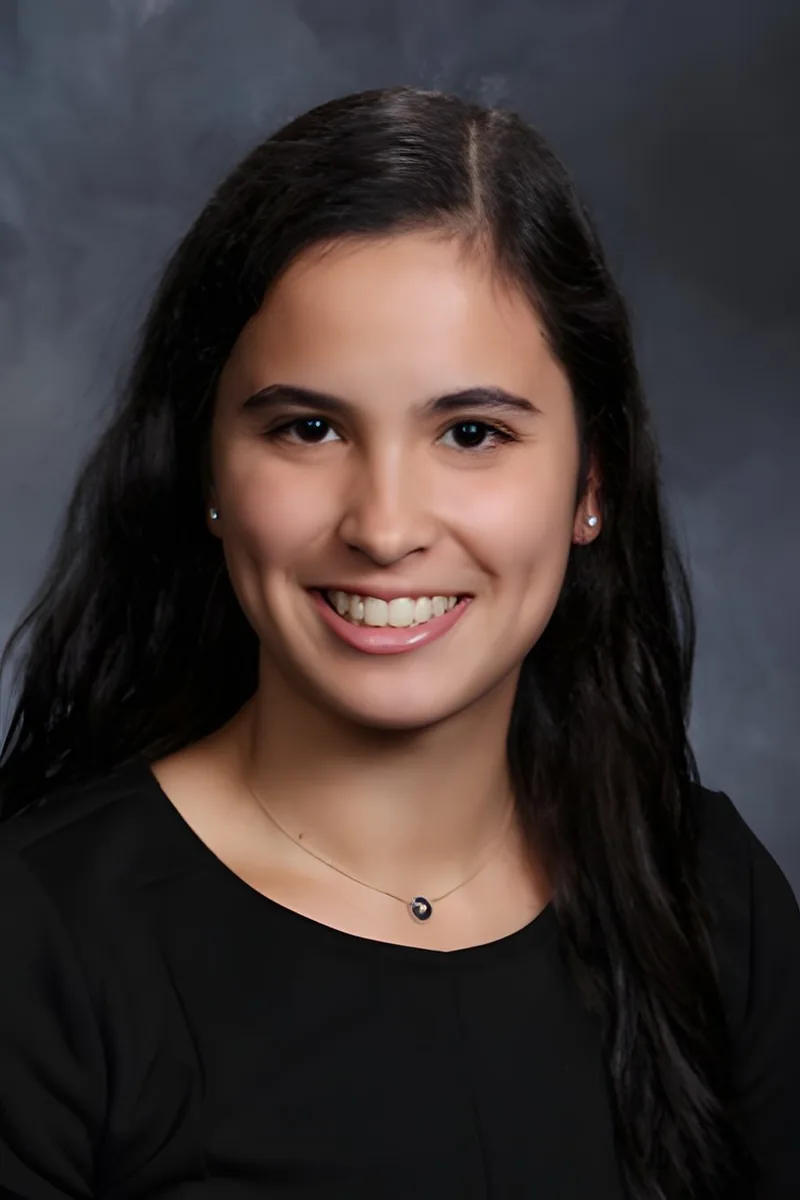
An MIT math degree and a PhD track in operations research at Georgia Tech mean Isabella has spent years inside labs and classrooms where the scientific method isn't a textbook concept — it's a daily practice of modeling real systems, testing assumptions, and interpreting results. She's especially strong on the quantitative backbone of science: reading data tables, understanding units, and translating observations into precise claims. Rated 5.0 by students.

A history degree might not scream 'science tutor,' but Jean's Latin American History work at Duke required evaluating competing sources of evidence and constructing cause-and-effect arguments from incomplete data — the same intellectual moves students need when designing experiments or explaining why results turned out the way they did. Her 1500 SAT also confirms she can handle the data interpretation and evidence-based reasoning that science coursework demands.
A neurobiology degree from Harvard means Marion doesn't just know science — she's spent years designing experiments, interpreting data, and thinking like a researcher. She brings that lens to everything from cell biology and genetics to chemistry stoichiometry, teaching students to reason through problems instead of memorizing isolated facts. Her high school teaching experience means she also knows exactly where the curriculum tends to lose people.
Cognitive science at Brown is essentially science taught sideways — Alice's coursework spans neuroscience, experimental design, and statistical analysis, all grounded in the same hypothesis-testing and data-interpretation skills that general science classes demand. Her background running studies on human cognition means she can walk students through designing experiments, reading results, and understanding why controls matter, not just what they are.
Scoring a perfect 36 on the ACT — including the Science section — Ilesh treats scientific reasoning as a skill in reading data, identifying variables, and evaluating experimental design. His engineering training at Georgia Tech reinforced the quantitative and analytical thinking that underpins physics, chemistry, and biology coursework. He breaks down complex problems into smaller, logical steps that build genuine understanding.
Robert approaches science the way he approaches any dense text: by breaking it into claims, evidence, and reasoning. His background is in writing and political science rather than a lab science, so he's strongest at teaching students how to read scientific passages, interpret data tables, and articulate findings clearly — the exact skills that standardized tests and middle school science courses demand.
Running experiments in an MBA program looks different than a chemistry lab — Juliana's coursework in data-driven decision making at Tulane means she regularly builds hypotheses, tests them against real datasets, and interprets whether the results actually support a conclusion. That process mirrors exactly what science students need to do when designing experiments, reading graphs, and writing up findings. Her 5.0 rating suggests she makes that analytical framework accessible rather than intimidating.
The scientific method sounds simple on paper, but actually designing a fair experiment or interpreting data from a lab report trips up more students than most teachers realize. Ominira teaches science by walking through real examples — analyzing variables in a plant growth experiment, or tracing energy flow through a food web — so the vocabulary and concepts land in context rather than as isolated definitions.
A PhD in mechanical engineering gave Bettina deep fluency across physics, chemistry, and applied math — the exact subjects that underpin most middle and high school science curricula. She unpacks concepts like energy conservation, force diagrams, and wave behavior by connecting them to tangible, real-world examples students can visualize. Her breadth across AP Physics 1, AP Physics 2, and AP Physics C means she can scale explanations to any level.
As an Academic Fellow at Rice, Maddie tutors peers in chemistry and biochemistry — so she's comfortable explaining everything from atomic structure to reaction kinetics at multiple levels of depth. Her 34 ACT includes strong science reasoning, and she's particularly good at teaching students how to read data tables and experimental setups carefully before jumping to conclusions.
A double major in psychology and mathematics, Hailey has designed and run social psychology experiments — meaning she's practiced the full scientific cycle (hypothesis, controlled variables, data collection, statistical analysis) in a real research setting, not just on worksheets. That combination of quantitative rigor and hands-on lab experience makes her especially effective at walking students through experimental design and interpreting what results actually tell you. She holds a 5.0 rating.
Few science tutors bring the range Christopher does: a biochemistry and cell biology degree, a neuroscience minor, and an MD from Baylor, covering everything from molecular biology to human physiology to organic chemistry. He connects scientific concepts to tangible examples — explaining osmosis through kidney function, or chemical bonding through drug design — so that abstract ideas land concretely. His time as a neuroscience TA at Rice also sharpened his ability to teach experimental design and data interpretation, skills that show up across every science course.
Actuarial work is applied science at its core — building models, testing assumptions against real data, and quantifying uncertainty — and David spent years doing exactly that after earning his mathematics degree from Vanderbilt. He's strongest on the quantitative side of science: interpreting graphs, working through unit conversions, and teaching students to distinguish what an experiment's numbers actually prove versus what they merely suggest. Rated 5.0 by students.
A practicing attorney who graduated magna cum laude from Notre Dame Law School, James brings the same rigorous evidence-evaluation skills to science that he uses in the courtroom — picking apart claims, weighing data, and demanding that conclusions actually follow from the facts. He's especially useful for students who need to sharpen their ability to interpret experimental results and articulate cause-and-effect relationships in clear, precise language.
As a published astrophysicist who studies planet-forming disks around young stars, Alexandra teaches science the way she practices it: observe something, ask a question, then use math and logic to chase down the answer. She covers physics, earth science, and general scientific reasoning, and she's especially strong at explaining how to read graphs, interpret data, and think through experimental design.
A chemical and biomolecular engineering degree from Georgia Tech plus graduate research at ETH Zurich means Matthew can teach science at virtually any level, from introductory concepts like states of matter to college-level thermodynamics and cellular biology. He connects abstract scientific principles to tangible examples — how enzymes work in your digestive system, or why a bridge stays standing — so the reasoning clicks, not just the vocabulary.
Biomedical engineering gave Michael a rare vantage point on science: he's applied biology, chemistry, and physics to real problems like modeling how forces travel through prosthetic limbs. When a student is wrestling with Newton's laws or cellular respiration, he connects the concept to something tangible so it stops feeling like abstract vocabulary to memorize.
Anna's PhD work in English at UVa might not scream science, but her dissertation research demanded the same core skills science coursework tests: reading dense material critically, synthesizing evidence from multiple sources, and constructing arguments that hold up under scrutiny. She's especially useful for students who can handle the concepts but struggle to write clear lab reports, explain experimental reasoning in complete paragraphs, or decode the heavy academic language in science textbooks.
Studying biochemistry and molecular biology means Aditya lives in the overlap between chemistry, biology, and physics every day. He's especially sharp at explaining concepts like cellular respiration, chemical bonding, and enzyme kinetics — the kinds of topics where students often memorize diagrams without understanding the underlying logic.
A finance major spends more time than most people realize working with quantitative models, data interpretation, and hypothesis-driven analysis — skills Victor now applies when walking students through topics like energy systems, experimental design, and reading scientific graphs. His 32 ACT confirms he can handle the cross-disciplinary reasoning science demands, and his coursework in accounting and financial modeling trained him to trace cause-and-effect through numbers rather than just memorize outcomes.
Pursuing a PhD in biomedical science at Morehouse School of Medicine means Eugene lives inside scientific inquiry — designing experiments, analyzing data, and connecting molecular-level processes to larger biological systems. He unpacks core science concepts like the scientific method, energy transfer, and cell biology by tying them to real research examples rather than abstract definitions. Students get someone who can make the material feel like discovery instead of memorization.
A biochemistry degree from Georgia Tech means Adel has lived in the overlap of biology, chemistry, and physics — and he teaches each one by connecting concepts rather than isolating them. Whether a student is struggling with balancing chemical equations, understanding cell respiration, or applying Newton's laws, he unpacks the reasoning behind each step. Rated 5.0 by students across subjects.
Heading to Columbia medical school means Tyler has spent years immersed in the biological and physical sciences — not just memorizing content, but learning to design experiments, interpret results, and connect mechanisms across disciplines like chemistry, physics, and biology. A 35 ACT confirms he handles data interpretation and scientific reasoning at a high level, and his experience as a college biology TA means he's already practiced at spotting where students' understanding breaks down and reworking explanations on the fly.
A chemistry degree means Yilin has spent real time in labs — balancing equations, running titrations, and writing up results — so she teaches science as something you do, not just something you read about. Her psychology training adds a second layer: research design, statistical analysis, and understanding how to control variables in an experiment. That dual background, plus a 5.0 rating, makes her especially effective when students need to connect hands-on science to the reasoning behind it.
Law school at Emory drills a specific skill that maps well onto science: reading dense material, identifying what counts as evidence, and poking holes in weak reasoning. Matt applies that same discipline when walking students through topics like experimental design or data interpretation, treating each science problem like a case where the conclusion has to be earned through logic. His political science background also means he's comfortable with the research and argumentation side of lab write-ups.
Jordan's triple major in creative writing, international studies, and arts built a habit of synthesizing information across disciplines — useful in science, where students often need to pull together concepts from biology, earth science, and basic chemistry to answer a single question. A 32 ACT confirms comfort with the data interpretation and passage-based reasoning that science coursework increasingly demands, and Jordan's writing background makes lab reports and scientific explanations a natural extension of skills already in the toolkit.
I'm always up for the challenge of changing my methods of instruction and breaking down topics to foster a deeper understanding of a subject. On a different note, I generally spend my spare time playing lacrosse or running outdoors when possible. I also play the violin with a school quartet, and teach lessons to beginning students working through the Suzuki program.
Early science is as much about reading comprehension and clear communication as it is about content — interpreting diagrams, understanding vocabulary, and explaining observations in complete thoughts. Jennifer's English and communications background makes her especially effective at teaching kids to articulate scientific ideas and make sense of informational texts in subjects like life science and earth science.
I'm a 25 year old recent J.D. graduate of Georgia State College of Law. I attended Emory University for my undergraduate studies where I was awarded a double major in Political Science and History. Currently I am interning with CAIR as I prepare for the February Georgia Bar Exam.
As an honors student at KU who earned a 33 ACT, Emily has the analytical chops to walk students through the trickiest parts of science — particularly reading data tables, interpreting experimental setups, and figuring out what a set of results actually proves. Her strong reading and writing background also makes her a natural fit for the literacy-heavy side of science, like pulling key information from dense textbook passages or writing up lab conclusions that go beyond restating numbers.
Travis's engineering coursework spans physics, chemistry, biology, and electrical circuit analysis, giving him an unusually broad science foundation. He unpacks scientific concepts by connecting them to real systems — explaining thermodynamics through engines, or cellular biology through biomedical applications — which makes abstract ideas concrete and easier to retain.
An economics degree builds surprisingly transferable science skills — reading graphs, isolating variables, and testing whether data actually supports a conclusion — and Chandler's 1560 SAT confirms he can handle the quantitative and analytical reasoning science coursework demands. His teaching credential means he knows how to walk students through designing a fair experiment or interpreting results step by step, not just hand them the answer. Holds a 5.0 rating.
Nuclear and radiological engineering sits at the intersection of physics, chemistry, and biology — so Corey doesn't just know these subjects in isolation. Whether a student is struggling with energy conservation, chemical bonding, or unit conversions, he unpacks the underlying logic and ties it back to real-world applications like radiation dosimetry and reactor design.
Arin approaches science tutoring the way she approaches any dense material — by teaching students how to break it apart, identify key relationships, and explain concepts back in their own words. Her sociology training means she's comfortable with research methods, data interpretation, and the scientific reasoning skills that underpin coursework across biology, earth science, and general science classes.
I am working as a program manager at a local non-profit organization in Miami. Outside of academia and work my interests are singing karaoke with friends, swimming, watching movies, and reading about environmental and social justice issues. In the past I have tutored public health topics (including epidemiology) online, taught environmental science and history courses, and tutored students in-person on ACT prep, biology, voice lessons, and Spanish language. My clients have been middle school, high school, university, and graduate students. My favorite subjects to tutor are those that I myself had to work the hardest to conquer (ACT, Spanish fluency, epidemiology and chemistry)! I love teaching these subjects because through my own struggle to achievement I have developed especially effective methods for my clients to succeed as well. My teaching style is based upon working with clients to develop individualized study methods. I am a tutor who is patient, caring, and committed to seeing you exceed your goals. Don't hesitate to contact me if you are searching for a tutor with these qualities.
Sociology is fundamentally a science — Audrey's Penn coursework in research methods, survey design, and statistical analysis means she's spent years doing exactly what science classes ask students to do: form hypotheses, collect data, and figure out what the results actually prove. She's especially strong at walking students through how to set up a fair experiment and interpret graphs, since those skills are baked into every sociology study she's read or designed. Rated 4.8 by students.
A master's in mathematics and statistics means Xihao has spent years doing exactly what science courses ask students to do — collect data, identify patterns, calculate rates, and determine whether results are statistically meaningful or just noise. He digs into the quantitative backbone of science, from unit conversions and graphing relationships to interpreting experimental data with real statistical rigor. Rated 4.7 by students.
A math and computer science degree means Jade spent years doing what science courses ultimately ask students to do: collect information, identify patterns, and test whether a model actually holds up. She's especially strong on the quantitative pieces — reading data tables, converting units, working through rate and proportion problems — where students who are comfortable with the concepts still lose points on execution.
Jen's law school training at Georgia State is essentially a masterclass in building arguments from evidence — identifying what supports a claim, what undermines it, and what's missing — which is exactly how students need to think when evaluating hypotheses and interpreting experimental results. Her Georgia Tech honors coursework and co-op experience also gave her hands-on exposure to the quantitative and analytical reasoning that science demands, from reading data tables to explaining cause-and-effect relationships clearly.
I'm Ryan, and I'm dedicated to empowering you and your words as much as possible. I even got an English degree from Davidson College to back it up. I've also worked as a College Advisor, so I have experience filling out hundreds of FAFSAs and college applications, editing quite a bit of last-minute essays, and assisting students in the best strategies for the ACT/SAT. I hope to help you present and uncover all your truths!
Testimonials
Because the right Science tutor makes all the difference.
Average Session Rating – Based on 3.4M Learner Ratings
Practice Science
Free practice tests, flashcards, and AI tutoring for Science
Nearby Science Tutors
Other Atlanta Tutors
Related Science Tutors in Atlanta
Frequently Asked Questions
Many Atlanta students struggle with connecting abstract scientific concepts to real-world applications, especially in physics and chemistry where visualization is critical. Lab skills and data interpretation are also common pain points, particularly as students progress to high school sciences. Personalized tutoring helps bridge these gaps by breaking down complex topics into digestible pieces and providing targeted practice in areas where students need it most.
Tutors working with Varsity Tutors are familiar with Georgia's K-12 Science Standards and the specific expectations across Atlanta's 19 school districts. Whether your student is working through middle school life science, high school biology, chemistry, or physics, tutors can align their instruction with what's being taught in the classroom while filling knowledge gaps. This ensures students get support that directly strengthens their performance in class.
In a typical Atlanta classroom with a 12.7:1 student-teacher ratio, teachers must pace lessons for the whole group, which can leave some students behind or unchallenged. Personalized 1-on-1 instruction allows tutors to adjust explanations on the fly, spend extra time on difficult concepts like stoichiometry or photosynthesis, and move faster through material a student already understands. This targeted approach leads to deeper understanding and stronger retention than one-size-fits-all classroom learning.
Students typically see improvements in both understanding and grades within the first few weeks of consistent tutoring. Common gains include higher test scores, improved lab report quality, better problem-solving skills, and increased confidence asking questions in class. The timeline varies based on the student's starting point and frequency of sessions, but most students show measurable progress in their next assessment after establishing a regular tutoring routine.
Varsity Tutors connects students with tutors across all major science disciplines: biology, chemistry, physics, earth science, environmental science, and anatomy & physiology. Whether your student needs help with foundational middle school science, AP-level courses, or test prep for the SAT/ACT science sections, tutors can provide expert support tailored to the specific subject and level.
The first session is focused on assessment and connection. The tutor will discuss your student's current science class, specific challenges, and learning goals—whether that's improving a grade, preparing for an exam, or building foundational skills. They'll likely work through a few problems or concepts to understand your student's learning style and knowledge gaps, then create a personalized plan for future sessions.
Yes. Beyond explaining concepts, tutors help students develop critical lab skills like proper experimental design, data collection, analysis, and report writing. They can walk through how to form hypotheses, interpret results, and draw evidence-based conclusions—skills that are essential for success in high school and AP science courses. This practical preparation often translates to better performance in actual lab work and on assessments.
Varsity Tutors makes it easy to get matched with an expert tutor in your area. Simply tell us your student's grade level, the specific science subject they need help with, and your availability. We'll connect you with a qualified tutor who has experience teaching that subject and can work with your schedule. You can start with an initial session to make sure it's a good fit before committing to ongoing tutoring.
Let’s find your perfect tutor
Answer a few quick questions. We’ll recommend the right plan and match you with a top 5% tutor.