Award-Winning Middle School Math Tutors
serving Columbus, GA
Middle School Math
Tutors in Columbus
Private 1-on-1 tutoring, weekly live classes for academic support, test prep & enrichment, practice tests and diagnostics, and more to elevate grades and test scores.
Based on 3.4M Learner Ratings
UniversitiesSchools & Universities
DeliveredHours Delivered
ProficiencyGrowth in Proficiency
Who needs tutoring?
No obligation. Takes ~1 minute.
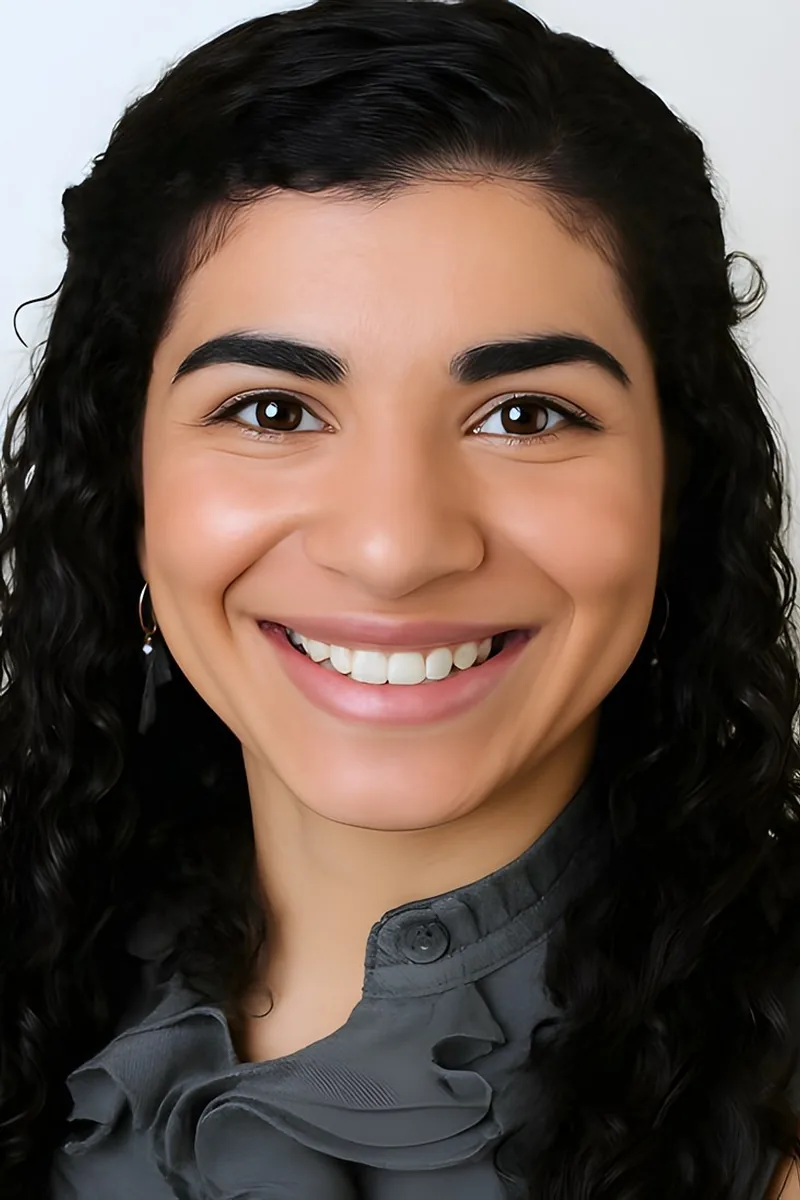
Getting past the Jeopardy! Online Test takes quick mental math and pattern recognition — two skills Paula now brings to teaching middle schoolers topics like ratios, integer operations, and basic geometry. Her psychology background also gives her a read on how students process new information, so she adjusts her explanations based on what's actually clicking rather than just repeating the same steps louder. Rated 4.8 by students.
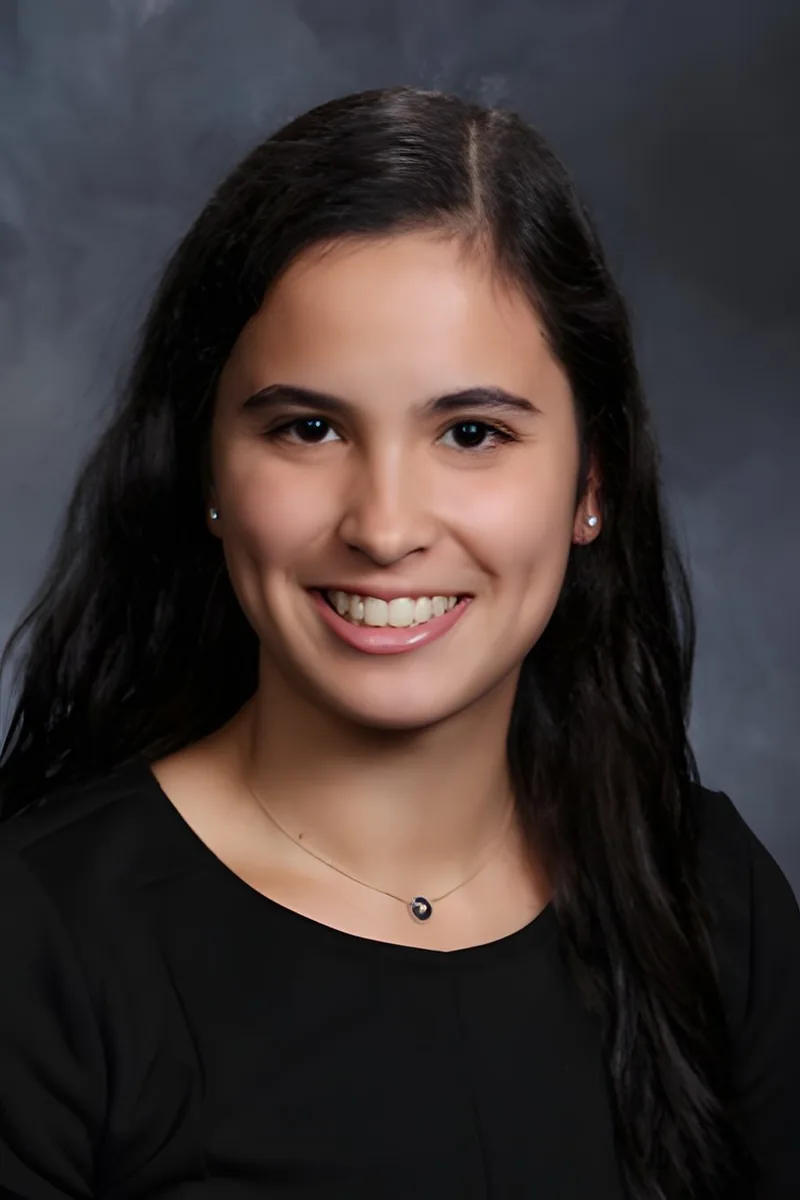
Teaching math to middle schoolers at gifted summer programs taught Isabella that this age group thrives when they understand the "why" behind a procedure, not just the steps. She digs into topics like ratios, proportional reasoning, and introductory linear relationships with the depth you'd expect from someone who earned a math degree at MIT. Her 5.0 rating speaks to how well that approach lands with younger students.
The jump from elementary arithmetic to middle school math trips up a lot of students, especially when ratios, proportional reasoning, and negative numbers enter the picture. Jean tackles these sticking points by linking new concepts to real-world scenarios that make the logic click. Her patient, structured teaching style keeps students from falling behind during these critical bridge years.
The jump from arithmetic to middle school math trips up a lot of students, especially when fractions, ratios, and proportional reasoning start appearing in word problems. Rebecca treats each of these as a puzzle to decode rather than a procedure to memorize, building the kind of number sense that carries into algebra and beyond.
From fractions and decimals to early equation-solving, middle school math covers a huge range of skills that all need to feel solid before high school hits. Alice taught at a math learning center for K-12 students and brings a conversational style — she'll find the explanation angle that actually makes sense to your kid rather than repeating the same textbook approach.
Fractions, ratios, and proportional reasoning trip up a lot of middle schoolers because the numbers stop feeling concrete. Bona breaks these concepts down using real-world examples and visual models, building the kind of number sense that makes pre-algebra feel like a natural next step.
Ratios, proportional reasoning, and integer operations can feel like disconnected topics in middle school math unless someone ties them together. Saniya connects each concept to the next — showing, for example, how understanding negative numbers makes solving two-step equations intuitive. She earned a 33 ACT and 1460 SAT, so she knows exactly where these foundational skills lead.
Morgan's English major might not scream math, but a 34 ACT means she's sharp with the quantitative reasoning that drives middle school topics like expressions, order of operations, and early algebraic thinking. She's especially good at walking through word problems — translating messy real-world language into clean mathematical setups, which is exactly where her reading skills become a secret weapon. Rated 5.0 by students.
The jump from arithmetic to middle school math — fractions, proportions, basic geometry, negative numbers — is often less about difficulty and more about confidence. Juliana adapts her explanations to match how each student thinks, a skill she honed teaching across disciplines at Northwestern. Her 5.0 rating speaks to how well that approach lands with younger learners.
Between ratios, proportional reasoning, and early equation-solving, middle school math is where students either build real number sense or start faking it. Vignesh's approach is heavy on practice — he assigns problems that gradually increase in difficulty so students internalize methods rather than just mimicking steps from class. His background in finance gives him a knack for making word problems feel grounded in real situations.
Studying both Computer Science and Education at Cornell, Chris is training to be a math teacher — so middle school topics like ratios, geometry basics, and early algebraic expressions are material he's learning to teach systematically, not just solve. His engineering college coursework means he can trace exactly how today's pre-algebra concepts feed into the math students will need in high school and beyond. Rated 5.0 by students.
Fractions, ratios, and proportional reasoning can feel like a maze when students first encounter them in middle school. Abigail breaks these concepts down using real-world examples — like scaling recipes or calculating percentages — so the logic behind the math clicks before students ever touch a formula.
From ratios and proportions to coordinate graphing, middle school math piles on new concepts fast, and gaps from earlier years can quietly compound. Sydney has spent over a decade tutoring students of all ages and specializes in identifying exactly where understanding breaks down. Her experience with diverse learners means she adapts explanations on the fly — whether a student needs a visual model or a real-world analogy to grasp fraction operations.
The jump from arithmetic to proportional reasoning, basic equations, and coordinate graphing is one of the biggest conceptual leaps in a student's math journey. David breaks these ideas down by connecting them to patterns students already recognize, building the algebraic thinking they'll need before they ever see a formal algebra course. His 5.0 rating speaks to how well that approach lands.
Working in a cancer biology research lab means Yasheen does math every day that started with the exact skills middle schoolers are learning — manipulating variables, reading graphs, and reasoning through multi-step problems. Her Yale biology training built those habits through constant repetition, so she can pinpoint the underlying logic when a student gets stuck on something like solving equations or working with ratios. Rated 5.0 by students.
Fractions, ratios, and integer operations click faster when a student sees how the pieces connect — and Christopher's volunteer tutoring with middle school-aged kids gave him a clear sense of where students typically get stuck. His Rice University science background means he can tie concepts like proportional reasoning and basic statistics to real examples that make the math feel purposeful.
Fractions, ratios, and early equation-solving can feel like a sudden jump from elementary arithmetic — Maddie bridges that gap by connecting each new concept to something concrete students already understand. She taught algebra and geometry to middle schoolers as an assistant teacher in her high school's math department, so she knows exactly where the common stumbling blocks are.
Fractions, ratios, and pre-algebra concepts click faster when a student sees how each idea connects to the next — and Addison maps those connections clearly. As a biochemistry major at Rice who graduated from a competitive STEM magnet school, she knows exactly which middle school math skills become critical later and builds fluency in them early.
The jump from arithmetic to algebraic thinking is one of the biggest shifts a student makes, and it usually happens in middle school. Jonathan tackles this by connecting new ideas — variables, proportional reasoning, basic graphing — to concrete situations students already understand. His liberal arts training makes him especially good at explaining abstract concepts in plain, intuitive language.
Fitting equations to spectroscopic data from baby stars is Alexandra's day job as a PhD astronomer — which means the proportional reasoning, graphing, and equation-solving that middle schoolers are learning isn't abstract to her; it's the same toolkit she uses to decode the universe. She brings that real-world fluency to tutoring, making it easy to show a sixth or seventh grader exactly what a variable *does* rather than just how to solve for one. Rated 4.9 by families.
Fractions, ratios, and proportions click faster when a student sees how they connect to real situations — and Jennifer is especially good at building those bridges. Her pre-med coursework at the University of Georgia demands constant applied math, so she brings practical examples into every session. Rated 5.0 by students.
I am an accomplished educator with years of experience in the Atlanta Metropolitan School System. I am a visionary who promotes innovation and stimulates others to collectively reach common goals of student achievement and family engagement in the community. In addition, I am an effective communicator, cultivating responsive relationships with diverse populations. I promote self-sufficiency, independence, and enhance the overall well-being of youth and families.
The transition from arithmetic to algebraic thinking is where middle school math gets interesting — and where a lot of students start losing confidence. Shih breaks down concepts like proportional reasoning and integer operations into concrete steps, connecting each new idea back to what a student already knows so the logic clicks before the procedures pile up.
Fractions, ratios, and proportional reasoning are the concepts that tend to separate students who feel confident in math from those who start to dread it. Matthew tackles these topics by finding concrete examples a middle schooler can grab onto — splitting a recipe, comparing speeds, scaling a drawing — before moving into the abstract notation. His 5.0 client rating speaks to how well that approach lands.
Middle school is where math shifts from computation to reasoning — proportional thinking, integer operations, and early algebraic expressions can feel like a completely different subject overnight. Jessica tackles that transition by connecting new ideas to the arithmetic students already know, building confidence before layering on complexity. Her recent experience as a student herself keeps her tuned in to where kids tend to get stuck.
The transition in middle school math — from straightforward arithmetic to variables, proportional reasoning, and early algebraic thinking — is one of the biggest conceptual leaps students face. Michael approaches these topics by building number sense first, making sure operations with fractions, decimals, and integers feel intuitive before layering on equations and graphing.
The jump from arithmetic to pre-algebra trips up a lot of middle schoolers — suddenly there are variables, negative numbers, and coordinate planes where there used to be straightforward computation. Adam tackles these transitions by connecting new concepts back to the number sense students already have, making ideas like proportional reasoning and integer operations feel like natural extensions rather than alien territory.
The middle school math years pile on new concepts fast: ratios, proportional reasoning, negative numbers, and the first real taste of algebraic expressions. Joseph tackles each topic by tying it to problems students can picture, turning abstract fraction operations or coordinate graphing into something that clicks rather than something to dread. His 5.0 rating speaks to how well that approach lands with younger learners.
Fractions, ratios, and proportions click faster when a student sees how they connect to real measurement and data — something Brittany does naturally after years of quantitative work in biology labs. She breaks down pre-algebra concepts like integer operations and basic equations into clear, repeatable steps that build genuine number sense. Rated 4.9 by students and families.
Fractions, ratios, and proportional reasoning tend to be the concepts where middle schoolers first feel math getting "hard" — and where small gaps can snowball fast. Benjamin's computer science background means he breaks problems into logical steps, teaching students to think systematically about operations rather than relying on shortcuts that fall apart later.
Chiquita's path through law school and a UCLA translation certificate trained her to be precise with rules and structure — skills she now applies to breaking down fraction operations, decimal conversions, and early equation-solving for middle schoolers. Translating between languages and translating a word problem into a mathematical expression turn out to require the same careful attention to what each piece means. Rated 5.0 by students.
The jump from fifth-grade math to middle school topics like ratios, proportional reasoning, and coordinate graphing can feel sudden. Rinky has spent years working specifically with this age group, finding ways to make abstract ideas click through examples that match each student's interests. Her 5.0 rating speaks to how well that approach lands with younger learners.
Having a younger brother recently in high school keeps Adel connected to what middle schoolers actually struggle with — integer operations one week, proportional reasoning the next, then suddenly pre-algebra expressions. He tackles each topic by tying it to something concrete, whether that's using sports stats to teach ratios or cooking measurements to make fractions click.
Fractions, ratios, and proportional reasoning are the make-or-break skills of middle school math, and a student who truly owns them will sail through algebra later. Sasha approaches these topics with concrete examples — unit rates in recipes, percentages in sports stats — before moving to the abstract notation. Her 4.9 rating speaks to how well she connects with younger learners navigating math that's getting more demanding.
The leap from arithmetic to algebraic thinking is the defining challenge of middle school math — variables replace specific numbers, and proportional reasoning replaces simple multiplication. Monisola, a state-certified math teacher with a master's in math education, tackles this transition by anchoring new concepts in problems students already know how to solve, then gradually increasing abstraction. She's particularly sharp at identifying the exact moment a student's understanding breaks down in topics like ratios, integer operations, or equation solving.
The jump from arithmetic to algebraic thinking trips up a lot of middle schoolers — suddenly they're solving for unknowns, graphing on coordinate planes, and working with ratios in ways that feel abstract. Shivam connects these concepts to real-world scenarios like budgeting and sports stats, making the logic behind proportions and integer operations click. His patient, structured approach keeps students from falling behind before high school math ramps up.
I'm always up for the challenge of changing my methods of instruction and breaking down topics to foster a deeper understanding of a subject. On a different note, I generally spend my spare time playing lacrosse or running outdoors when possible. I also play the violin with a school quartet, and teach lessons to beginning students working through the Suzuki program.
The jump from arithmetic to algebraic thinking is one of the biggest conceptual leaps in a student's math education — variables, proportional reasoning, and negative numbers all arrive at once. Yilin tackles these transitions by building number sense first, making sure students understand why operations work before layering on pre-algebra notation. Her 5.0 rating speaks to how well that approach clicks with middle schoolers.
Fractions, decimals, ratios, and early equation work — middle school math is deceptively high-stakes because gaps here snowball into struggles in algebra and beyond. Dhruv's approach zeroes in on the specific skill a student is missing, whether that's fraction operations or translating word problems into expressions, and rebuilds confidence from that exact point.
I'm a 25 year old recent J.D. graduate of Georgia State College of Law. I attended Emory University for my undergraduate studies where I was awarded a double major in Political Science and History. Currently I am interning with CAIR as I prepare for the February Georgia Bar Exam.
Testimonials
Because the right Middle School Math tutor makes all the difference.
Average Session Rating – Based on 3.4M Learner Ratings
Nearby Middle School Math Tutors
Other Columbus Tutors
Related Math Tutors in Columbus
Frequently Asked Questions
Varsity Tutors matches Columbus students with expert Middle School Math tutors for 1-on-1 instruction. We pair each student with a tutor based on their specific needs, learning style, and goals.
Whether you need homework help, exam prep, or want to get ahead, our Middle School Math tutors are ready to help.
Common challenges include gaps from earlier material, difficulty with specific concepts, and trouble applying learning to new problems. These issues can snowball quickly in Middle School Math.
A tutor identifies where you're stuck, fills in gaps, and provides targeted practice. The 1-on-1 format means you get help exactly where you need it.
Tutors work with your student's actual coursework—homework assignments, class notes, and upcoming tests. This keeps tutoring directly relevant to what's happening in the classroom.
When you share information about your student's school and curriculum, we can match you with a tutor who has relevant experience.
All tutors complete background checks, credential verification, and teaching evaluation. Many of our Middle School Math tutors hold advanced degrees or have years of teaching experience.
You can review tutor profiles to find someone with the right background for your student's level and needs.
Many students see improved grades within a few weeks, along with better understanding of Middle School Math concepts and more confidence tackling challenging material.
Tutors track progress and adjust their approach to ensure continued improvement.
Most students benefit from 1-2 sessions per week. More frequent sessions help if your student is significantly behind or has an important exam coming up.
Your tutor can recommend a schedule based on your student's specific situation and goals.
Tutoring is purchased in packages of hours, with rates varying by tutor experience. Varsity Tutors offers several options to fit different budgets and needs.
You can discuss pricing during your consultation to find what works best.
Your tutor will assess where your student is, discuss goals, and start working on priority areas. Most students bring current homework or upcoming test material to focus on.
By the end, you'll have a clear sense of how the tutor can help and a plan for moving forward.
Let’s find your perfect tutor
Answer a few quick questions. We’ll recommend the right plan and match you with a top 5% tutor.