Award-Winning AP Biology Tutors
serving Columbus, GA
AP Biology
Tutors in Columbus
Private 1-on-1 tutoring, weekly live classes for academic support, test prep & enrichment, practice tests and diagnostics, and more to elevate grades and test scores.
Based on 3.4M Learner Ratings
UniversitiesSchools & Universities
DeliveredHours Delivered
ProficiencyGrowth in Proficiency
Who needs tutoring?
No obligation. Takes ~1 minute.

Saniya's neuroscience degree at Rhodes College required her to learn biology from the molecular scale up — gene expression, cell signaling, neural communication — which means she's tackled AP Bio's toughest conceptual territory in a context where every pathway had to connect to a bigger physiological story. She's continued auditing advanced coursework in anatomy, histology, and embryology since graduating, so the organism-level units on body systems and development are still sharp. Rated 5.0 by students.
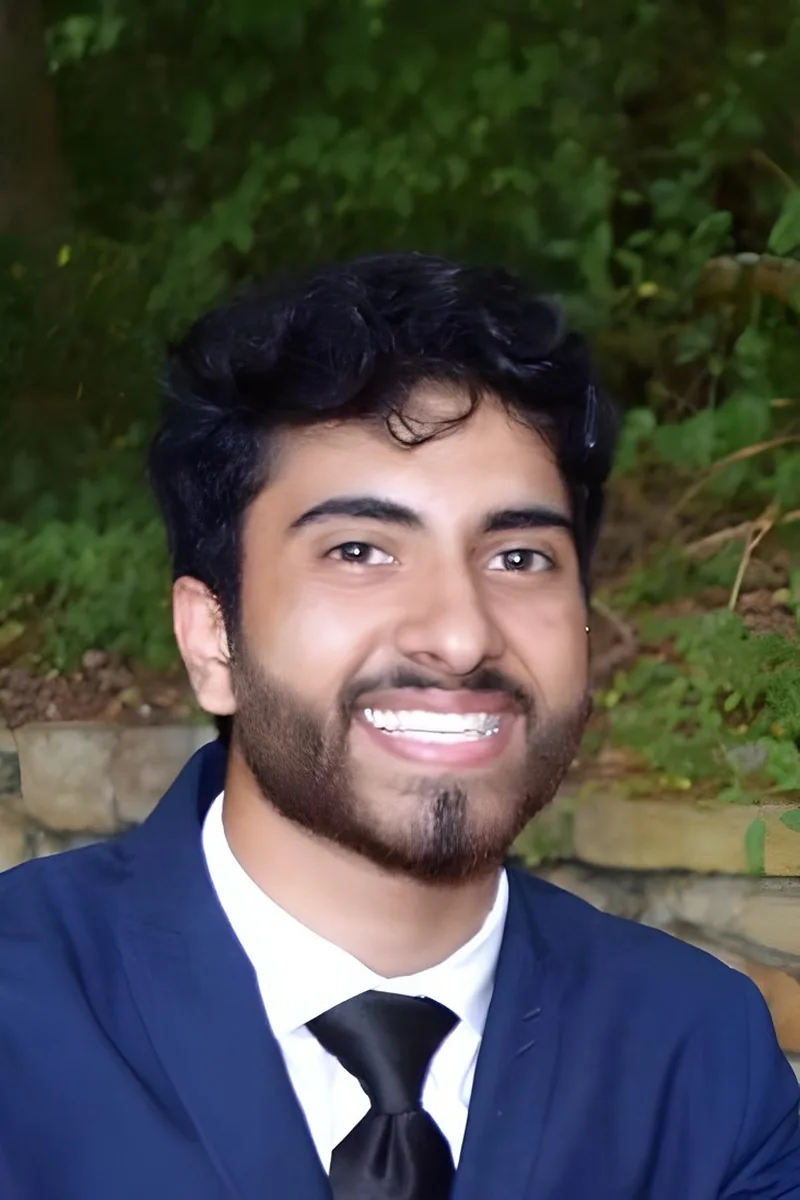
AP Bio covers an enormous range — from cellular respiration pathways to population genetics to signal transduction — and the exam rewards students who can apply concepts, not just recall them. Vignesh breaks each unit into its core mechanisms and then runs practice with free-response and data-analysis questions until students can explain processes like photosynthesis or gene expression under timed conditions. His science background complements a study approach built on high-volume repetition.
Brittany earned her biology degree at UGA and currently conducts stem cell research, so AP Bio topics like cell signaling, gene expression, and cellular energetics are part of her daily work. She teaches students to think like the exam demands — designing experiments, analyzing data sets, and constructing explanations that earn full free-response credit. That blend of active research experience and exam strategy makes a real difference on test day.
Northwestern's pre-med biology track puts Manideep through the same cellular processes, genetics, and physiology that AP Bio tests — except at a pace and depth that makes the AP curriculum feel manageable by comparison. He also TAs university science courses, so he's practiced at spotting exactly where a student's understanding of something like mitosis or protein synthesis goes fuzzy and rebuilding it on the spot. Rated 5.0 by students.
I am a 3rd year bio major at GT with minors in biochemistry and computer science. My tutoring subjects are math, bio, and chem. I have tutored for a few years, and I have also TAed! My favorite subjects are general chemistry and molecular biology (: My personal belief is that anyone can enjoy a subject once they truly understand it.
While Sally's primary expertise is mathematics, her Science, Technology, & Culture concentration at Georgia Tech means she's studied how biological concepts intersect with quantitative and analytical reasoning — which is useful for the data-interpretation and chi-square analysis questions that trip up many AP Bio students. She's strongest on the math-heavy side of the course, like calculating Hardy-Weinberg equilibrium frequencies or interpreting graphical data in ecology experiments, and rated 4.9 by students.
Scoring a perfect 5 on the AP Biology exam through self-study required Dhruv to build his own systems for mastering dense material — from cellular respiration pathways to gene regulation to ecological modeling. He teaches students how to organize that volume of content and, more importantly, how to apply it to the experiment-based free-response questions that determine exam scores.
Studying for AP Bio while already knowing what the exam actually tests makes a huge difference. Vraj earned his biology degree at Emory and is now in medical school, so he knows which cellular respiration pathways, genetics problems, and experimental design concepts the College Board emphasizes most heavily. He teaches students to connect themes across units — like how signal transduction links to gene expression links to evolution — instead of memorizing each topic in isolation.
I am interesting in reading, Zumba, sewing and growing.
Cognitive science sits at the intersection of biology and psychology, and Victor's coursework at UGA meant studying how neural signaling, gene expression, and evolutionary pressures shape cognition — topics that overlap directly with AP Bio's units on communication, heredity, and natural selection. He's especially good at unpacking the behavioral biology questions students tend to rush through, connecting animal behavior and nervous system function back to the underlying molecular mechanisms the exam expects in free-response answers.
Two years of tutoring students from wildly different academic backgrounds — including refugees building science literacy from scratch — taught Akshadha how to explain concepts like cellular respiration or gene expression without assuming any prior knowledge, then layer complexity on top. Her biology degree means she's comfortable across all eight AP Bio units, but she's especially sharp on anatomy and physiology connections, like tracing how a mutation at the molecular level produces a visible change in an organism's phenotype. Rated 4.9 by students.
I am a certified biology and social studies teacher for grades 7-12. My time teaching has been both rewarding and challenging. One of my focuses as a lead science teacher was to work with students on college readiness. From ACT prep to rigorous lab based science instruction, we saw students grow five points on the ACT and increased the pass rate on the state exam. As my time with Teach for America comes to an end, I am excited to continue my commitment to education with Varsity Tutors. Currently I am working on a Master’s in Public Health at Emory University.
As a pre-med biology major at Emory, Ibaad is currently taking the same cell biology, genetics, and ecology coursework that AP Bio draws from — so he knows exactly which concepts are clicking in lecture and which ones need extra time to land. He's particularly good at breaking down the heredity and evolution units, where students have to connect molecular-level details like gene expression back to population-scale patterns. Rated 4.9 by students.
I am a 4th year medical student who has been tutoring since college. I love working with people and teaching students. I have a strong background in the sciences and look forward to helping make science easy for everyone. I look forward to working with you.
AP Biology's free-response questions demand more than recall — they require students to design experiments, interpret data, and connect concepts across units like cell signaling, gene expression, and ecology. Naomi's medical school training sharpened exactly these skills, and she teaches students to think like scientists when tackling multi-part prompts. She breaks down each unit's big ideas so the connections between, say, cellular respiration and feedback mechanisms click on exam day.
As a passionate educator pursuing a Doctorate in Medicine and a Bachelor's in Literature from Dartmouth College, I have over 5 years of experience tutoring subjects such as Biology, Psychology, and test prep (ACT/MCAT/USMLE). I look forward to connecting!
Cell and molecular biology was Emily's concentration at Duke, where she graduated summa cum laude — so the AP Bio units on gene expression, cell communication, and the central dogma aren't review material she's recalling vaguely, they're concepts she studied at an advanced level and now revisits daily as a Columbia medical student. She's especially sharp at teaching students to diagram signal transduction pathways and trace how a single mutation can ripple through protein function, cell behavior, and organism-level phenotype — the kind of multi-scale reasoning that separates 4s from 5s on the exam. Rated 5.0 by students.
As a premed biosciences student at Rice University, Jessy is actively working through the same molecular biology, genetics, and physiology content that AP Bio covers — which means she can pinpoint exactly where textbook explanations lose students and rephrase them on the fly. She recently peer-tutored classmates through AP-level coursework in high school and earned a 34 ACT, so she understands both the science and the test-taking strategy behind interpreting data sets and constructing free-response answers. Rated 5.0 by students.
Ruthie studied the biological basis of behavior in college, which means she didn't just memorize AP Bio content like cell signaling and genetics — she had to apply it to understand how nervous systems produce behavior, how neurotransmitters cross synapses, and how gene expression shapes organisms at every level. That interdisciplinary angle is especially useful for the exam's ecology and evolution units, where students need to connect molecular mechanisms to organism-level outcomes. Rated 5.0 by students.
Graduate research in Chemical and Physical Biology at Vanderbilt meant Dennis spent years at the intersection of chemistry and living systems — dissecting metabolic pathways, protein interactions, and cellular energetics at a level that makes AP Bio's toughest biochemistry content second nature. His biochemistry undergraduate degree adds even more depth to the molecular biology and genetics units, where he can unpack processes like enzyme kinetics or gene regulation by grounding them in the actual chemistry students rarely get to see in a high school course. Rated 5.0 by students.
AP Bio covers a staggering range — from cellular respiration pathways to ecology population models to gene regulation — and the exam rewards students who can analyze data, not just recall facts. Kate's science background and engineering training make her especially sharp on the quantitative side of the course, including Chi-square analysis, Hardy-Weinberg calculations, and interpreting experimental results.
AP Biology's free-response questions demand more than memorized facts — they want students to design experiments, interpret data, and argue from evidence about topics like gene regulation or ecosystem dynamics. Andrew's ongoing work in biochemical laboratories means he teaches these skills from firsthand experience, walking students through cellular respiration or signal transduction the way a researcher actually thinks about them.
Owen is a neuroscience major at Brown, which means AP Biology's toughest units — cell signaling, gene expression, and cellular energetics — overlap directly with material he's studied at the college level. He teaches students to think like the exam demands: interpreting experimental data, constructing explanations using evidence, and connecting molecular-scale processes to organism-level outcomes.
Srini is studying molecular biophysics at Brown, which means AP Bio topics like cell signaling cascades, gene expression, and membrane transport aren't just exam material — they're his daily coursework. He unpacks the why behind each biological process, connecting molecular details to the big-picture themes the AP exam rewards. Rated 4.8 by students.
The free-response questions on the AP Bio exam reward students who can explain *why* a process works, not just label its steps — and Rebecca's biology degree means she's spent years building that kind of mechanistic thinking around topics like gene regulation, cellular energetics, and ecological dynamics. She also brings strong writing chops from her English and composition background, which turns out to be a real advantage when students need to construct clear, logical explanations under time pressure. Rated 5.0 by students.
AP Bio covers an enormous range — from molecular genetics to ecosystem dynamics — and the exam tests whether students can apply concepts to unfamiliar experimental scenarios. JF's mathematical and computational science training at Stanford sharpens the data-analysis and graph-interpretation skills that the redesigned AP Bio exam leans on heavily. That analytical lens turns intimidating free-response questions into structured problem-solving exercises.
Cellular respiration, gene regulation, ecological energy flow — AP Biology demands that students think across scales, from molecules to ecosystems, often within a single free-response question. Sharan is deep in this material as a Human Biology major on the premed track at Cornell, and she unpacks complex processes like signal transduction by walking through each step with clear cause-and-effect reasoning.
Christina's computer science background gives her an unusual edge for AP Bio's data analysis and experimental design questions — she's comfortable with statistical reasoning, interpreting graphs, and the kind of algorithmic thinking that makes tracing metabolic pathways or gene expression cascades more systematic. Her ACT score of 34 also signals strong science reading skills, which matters for an exam where decoding dense passages and pulling evidence from figures is half the battle.
Testimonials
Because the right AP Biology tutor makes all the difference.
Average Session Rating – Based on 3.4M Learner Ratings
Practice AP Biology
Free practice tests, flashcards, and AI tutoring for AP Biology
Nearby AP Biology Tutors
Other Columbus Tutors
Related Science Tutors in Columbus
Frequently Asked Questions
Varsity Tutors matches Columbus students with expert AP Biology tutors for 1-on-1 instruction. We pair each student with a tutor based on their specific needs, learning style, and goals.
Whether you need homework help, exam prep, or want to get ahead, our AP Biology tutors are ready to help.
Common challenges include gaps from earlier material, difficulty with specific concepts, and trouble applying learning to new problems. These issues can snowball quickly in AP Biology.
A tutor identifies where you're stuck, fills in gaps, and provides targeted practice. The 1-on-1 format means you get help exactly where you need it.
Tutors work with your student's actual coursework—homework assignments, class notes, and upcoming tests. This keeps tutoring directly relevant to what's happening in the classroom.
When you share information about your student's school and curriculum, we can match you with a tutor who has relevant experience.
All tutors complete background checks, credential verification, and teaching evaluation. Many of our AP Biology tutors hold advanced degrees or have years of teaching experience.
You can review tutor profiles to find someone with the right background for your student's level and needs.
Many students see improved grades within a few weeks, along with better understanding of AP Biology concepts and more confidence tackling challenging material.
Tutors track progress and adjust their approach to ensure continued improvement.
Most students benefit from 1-2 sessions per week. More frequent sessions help if your student is significantly behind or has an important exam coming up.
Your tutor can recommend a schedule based on your student's specific situation and goals.
Tutoring is purchased in packages of hours, with rates varying by tutor experience. Varsity Tutors offers several options to fit different budgets and needs.
You can discuss pricing during your consultation to find what works best.
Your tutor will assess where your student is, discuss goals, and start working on priority areas. Most students bring current homework or upcoming test material to focus on.
By the end, you'll have a clear sense of how the tutor can help and a plan for moving forward.
Let’s find your perfect tutor
Answer a few quick questions. We’ll recommend the right plan and match you with a top 5% tutor.