Award-Winning Geometry Tutors
serving Columbus, GA
Geometry
Tutors in Columbus
Private 1-on-1 tutoring, weekly live classes for academic support, test prep & enrichment, practice tests and diagnostics, and more to elevate grades and test scores.
Based on 3.4M Learner Ratings
UniversitiesSchools & Universities
DeliveredHours Delivered
ProficiencyGrowth in Proficiency
Who needs tutoring?
No obligation. Takes ~1 minute.
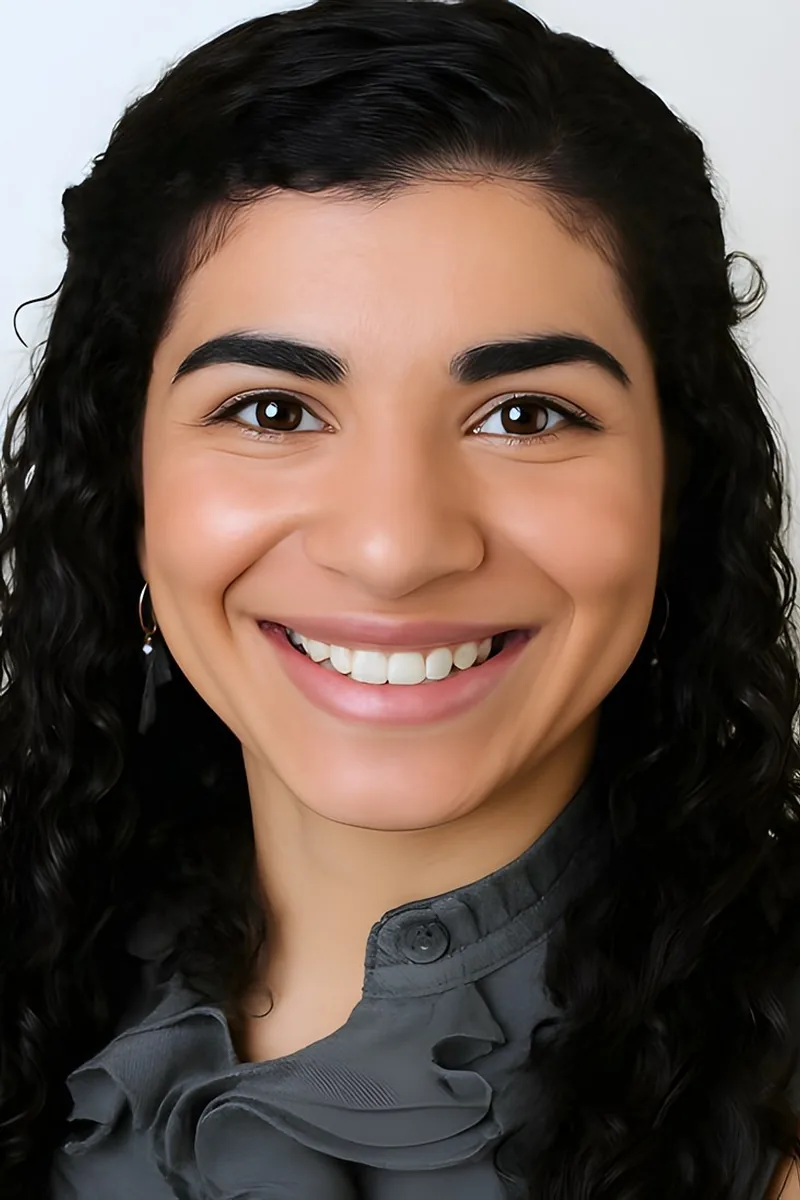
Proofs are where most geometry students freeze up — the leap from calculating angles to constructing logical arguments feels like a different subject entirely. Paula bridges that gap by connecting each theorem back to something visual and concrete, whether it's triangle congruence or parallel line relationships. Her psychology background gives her a sharp read on where a student's reasoning breaks down.
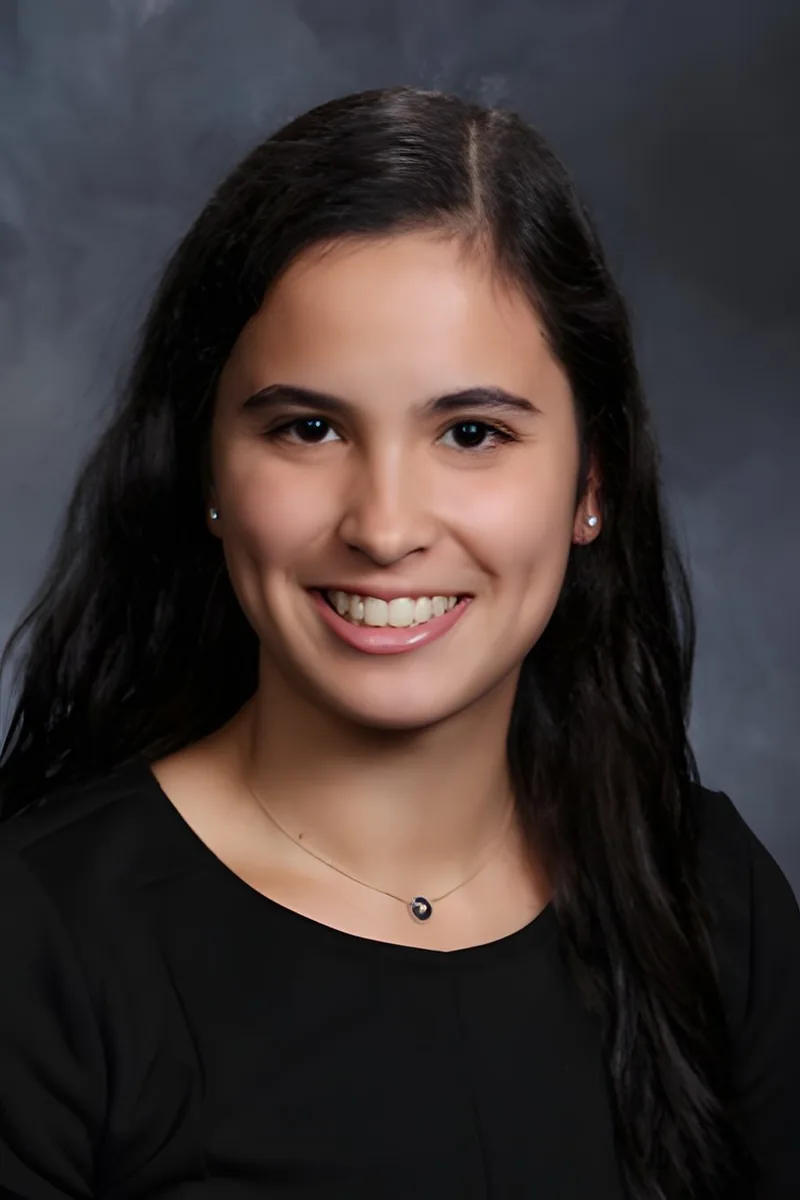
Proofs are usually where geometry students panic — the jump from calculating angles to constructing logical arguments feels like a different subject entirely. Isabella's MIT math training means formal reasoning is second nature to her, and she walks students through how to build a proof step by step, connecting geometric intuition to the structured logic on the page. She also covers coordinate geometry and triangle congruence with the same emphasis on understanding over memorization.
Proofs are usually the first place geometry students get stuck, because suddenly math requires written logical arguments instead of calculations. Saniya teaches students to map out each proof like a chain of evidence — identifying given information, choosing the right theorems, and linking steps until the conclusion follows naturally. She applies the same structured thinking to congruence, similarity, and coordinate geometry problems.
Proofs are usually the first place geometry students feel lost, because suddenly math requires written arguments instead of calculations. Morgan, an English major at Washington University in St. Louis, is unusually well-equipped for this — she teaches students to build geometric proofs the same way you'd build a persuasive essay, with each statement logically supporting the next. She also covers coordinate geometry, triangle congruence, and circle theorems.
Theater training is essentially geometry in motion — Merav's MFA work involved blocking scenes on stage grids, calculating sightlines, and reasoning about spatial relationships between performers and set pieces in three dimensions. That constant practice with angles, symmetry, and proportion gives her an unusually intuitive way of teaching concepts like transformations and triangle properties, grounding abstract theorems in physical space students can visualize. Rated 5.0 by students.
Training to become a high school math and CS teacher at Cornell's College of Engineering, Chris approaches geometry with an educator's instinct for where students get stuck — particularly on proof construction, where knowing *why* a logical step follows matters more than memorizing theorem names. His computer science background reinforces that structured thinking: building a two-column proof isn't so different from debugging a program, where every line needs to hold up to scrutiny. Rated 5.0 by students.
Working in a cancer biology lab at Yale means Yasheen reads complex diagrams daily — cell structures, tissue cross-sections, molecular models — all of which demand the same spatial reasoning that geometry problems test. She applies that pattern-recognition instinct to teaching students how to break apart overlapping figures and trace logical chains through multi-step proofs involving congruence and parallel lines. Rated 5.0 by students.
Years of actuarial work gave David a habit of thinking precisely about shapes, areas, and spatial relationships — skills that translate directly to geometry topics like circle theorems, polygon properties, and volume calculations. His Vanderbilt math degree means he can unpack the reasoning behind each theorem rather than just handing students formulas to memorize. Rated 5.0 by students.
Proofs are where most geometry students lose confidence, because the logic feels completely different from the arithmetic they're used to. Christopher approaches them as structured arguments — a skill he sharpened through years of scientific reasoning in his biochemistry and medical training at Rice and Baylor. He breaks each proof into small logical steps so students can see why a conclusion follows, not just that it does.
Proofs trip up a lot of Geometry students because they require a completely different kind of thinking — logical argumentation rather than computation. Josh's neuroscience background trained him to build precise, step-by-step reasoning chains, which translates directly to teaching students how to structure two-column proofs and apply congruence theorems. He also tackles the spatial reasoning side, from triangle similarity to circle theorems, making sure the visual and logical pieces click together.
A physics and astronomy degree means Jonathan spent years working with vectors, angles of incidence, and orbital paths — all of which are geometry problems dressed up in scientific language. He unpacks the reasoning behind constructions and triangle properties by tying them to the spatial thinking he already does instinctively, making abstract diagrams feel more concrete. His liberal arts training also sharpened the logical argumentation skills that carry students through two-column proofs.
Proofs are where most geometry students hit a wall, because suddenly math asks them to construct logical arguments instead of just computing answers. Carson approaches geometry the way his University of Chicago coursework demands: axioms first, then building toward triangle congruence, similarity, circle theorems, and coordinate geometry through careful reasoning. That proof-writing skill transfers directly to every future math class.
Proofs are usually the first place geometry students panic, because suddenly math asks them to argue logically instead of just compute. Alexandra's background in both creative writing and hard science gives her a rare ability to teach proof construction as structured storytelling — each theorem building on the last. She covers everything from triangle congruence to circle theorems with that same emphasis on reasoning.
Proofs are usually the first time a math student has to build a logical argument instead of just computing an answer, and that transition trips up even strong students. Matthew walks through each proof as a chain of reasoning — given, therefore, because — making triangle congruence and parallel-line theorems feel less like memorization and more like detective work. His Georgia Tech engineering background means spatial reasoning is second nature to him.
Proofs are usually where geometry students panic, but they're really just arguments built one logical step at a time. Michael tackles congruence, similarity, and angle relationships by walking through the reasoning behind each theorem rather than just stating it. His engineering training makes spatial reasoning second nature, which translates well to helping students visualize transformations and constructions.
Proofs are the part of geometry that trips up even strong math students, because suddenly the answer isn't a number — it's an argument. Aditya walks through each proof as a logical chain, teaching students to identify which theorems apply and how to structure their reasoning from given information to conclusion.
Proofs are where most geometry students panic, because suddenly math requires building a logical argument instead of just computing an answer. John's legal training — constructing and deconstructing arguments daily in law school — gives him an unusual edge when teaching students to reason through congruence, similarity, and angle relationships step by step.
Pre-med students rarely think of geometry as relevant to their path, but Jessica's chemistry and biology minor work at Mercer meant constantly interpreting molecular geometries, bond angles, and spatial arrangements — skills that map directly onto teaching circle theorems, angle relationships, and properties of polygons. She approaches the subject with a focus on building visual intuition first, then layering in the formal reasoning that makes proof-based problems manageable.
An acting MFA might seem unrelated to geometry, but Joseph's training in blocking and stage movement is fundamentally about understanding spatial relationships — where bodies are in relation to each other, how angles of approach change a scene's dynamics, and how to visualize three-dimensional space on a flat stage floor. He brings that spatial intuition to teaching transformations, reflections, and rotational symmetry, making abstract concepts feel physical and concrete. Rated 5.0 by students.
Every proof and postulate in geometry trains the kind of spatial reasoning that Ziad relies on as a working mechanical engineer. He teaches students to visualize angle relationships, congruence, and similarity by tying them to tangible design problems — like how knowing properties of parallel lines cut by a transversal applies to drafting in AutoCAD. That connection between abstract shapes on paper and real-world structures makes the logic click.
Proofs are where most geometry students panic, but they're really just structured arguments — something Adam's Public Relations training makes him unusually good at teaching. He walks through triangle congruence, parallel line theorems, and circle properties by showing students how to build a logical chain from givens to conclusion, one claim at a time.
Accounting majors spend their days making sure every number lines up and every relationship balances — and that same precision is exactly what geometry's measurement problems demand. Shivam applies that detail-oriented thinking to area, surface area, and volume calculations, where one misread dimension or forgotten unit conversion can derail an entire problem. He's particularly effective with students who understand the concepts but keep losing points on the execution.
Computer engineering coursework drills you on logic gates and Boolean reasoning — chains of if-then statements that either hold or break — and Sasha brings that exact mindset to geometric proofs, where every step has to follow airtight from the last. She's especially effective at teaching students how to read a diagram and identify which relationships (supplementary angles, parallel line cut by a transversal, triangle congruence shortcuts) actually move the proof forward. Rated 4.9 by students.
Proofs are where most geometry students panic — the leap from calculating angles to constructing logical arguments feels like a different subject entirely. Varshini tackles proofs by teaching students to map out what they know before writing a single statement, turning an intimidating blank page into a clear chain of reasoning. Her math minor at UAB means the formal logic behind congruence, similarity, and circle theorems is second nature.
Two master's degrees in math education and a state teaching certification mean Monisola has taught geometry across enough classrooms to know exactly where students stall — and it's almost always the transition from memorizing postulates to actually constructing a proof. She breaks that barrier by treating each proof like a paragraph with a thesis, evidence, and conclusion, drawing on her economics background to frame geometric reasoning as building a logical case. Rated 4.8 by students.
A biochemistry degree from Georgia Tech means Adel spent years interpreting molecular geometries — bond angles, tetrahedral structures, spatial orientations — before ever picking up a geometry textbook to tutor. That three-dimensional intuition carries over directly when he teaches students to reason through angle relationships, triangle congruence, and the logic behind two-column proofs. Rated 5.0 by students.
Proofs are usually the first place students encounter math as logical argument rather than calculation, and that shift can feel disorienting. Jesse walks through each proof — congruence, similarity, parallel line theorems — as a chain of reasoning, showing how each step follows inevitably from the last. His background in theoretical physics makes rigorous logical structure second nature.
Proofs are usually the make-or-break moment in geometry, and Sahar tackles them by teaching students to map out logical chains before writing a single statement. She also reinforces spatial reasoning through triangle congruence, circle theorems, and coordinate geometry problems that tie visual intuition to algebraic precision.
Biology majors don't usually get credit for geometric thinking, but Elizabeth's lab work at Campbell — measuring cross-sections under microscopes, sketching cellular structures, interpreting symmetry in organisms — builds exactly the kind of spatial intuition that makes circle theorems and properties of polygons click. She teaches students to actually see what a diagram is telling them before jumping into calculations, which is usually where geometry problems start to fall apart.
Proof-writing is usually what separates students who coast through Geometry from those who hit a wall. Sally approaches proofs as logical arguments rather than fill-in-the-blank exercises, teaching students to identify which triangle congruence theorem or parallel-line property actually advances the argument. Her math training at Georgia Tech keeps her comfortable with formal reasoning at every level.
Self-studying eight AP exams to perfect scores takes a specific kind of discipline — breaking unfamiliar material into logical steps and building understanding from scratch — and that's exactly the skill Dhruv brings to geometry, where students often need someone who can explain *why* a theorem works before showing how to apply it. He's especially effective on circle theorems and arc-angle relationships, topics where memorizing formulas without understanding their derivations leads to constant mistakes on tests. Rated 4.9 by students.
A math and special education triple major who went on to earn a law degree, Loretta brings an unusual combination to geometry: she understands both the logical structure of two-column proofs and how to adapt explanations for students who process spatial reasoning differently. She breaks down constructions and angle relationships with the same precision she uses to build legal arguments — step by step, with nothing assumed.
Proofs trip up most geometry students because they require a completely different kind of thinking — logical chains instead of computation. Taylor approaches geometric reasoning the same way a scientist builds an argument: identify what you know, state your assumptions, and connect them step by step. That analytical training from a chemistry degree at Georgia College translates surprisingly well to angle relationships, congruence, and similarity.
Proofs are usually the first place geometry students feel lost, because suddenly math requires structured logical arguments instead of computation. Corey teaches proof-writing as a skill that mirrors engineering problem-solving: identify what you know, state what you need, and build a chain of reasoning one justified step at a time. He also covers coordinate geometry and triangle relationships with the precision his technical background demands.
A chemistry degree builds a surprising amount of geometric intuition — TieuAnh spent years reasoning about molecular geometry, bond angles, and three-dimensional spatial arrangements of atoms before ever picking up a protractor. She brings that same attention to shape and structure when teaching circle theorems and properties of polygons, making the jump from flat diagrams to spatial reasoning feel natural.
Proofs are usually the first time a math class asks students to explain *why* something is true, not just compute an answer. Joshua approaches Geometry by walking through the logical chain — from postulates to angle relationships to triangle congruence — so that writing a two-column proof feels like building an argument rather than filling in blanks. He's deliberate about pacing, giving each theorem time to sink in before stacking another on top.
Proofs are usually the first place Geometry students feel lost, because suddenly math requires written arguments instead of calculations. Kayla approaches them as logical puzzles, teaching students to chain together angle relationships and congruence criteria one step at a time. Her engineering background means spatial reasoning is second nature to her.
Having completed Calculus 1, 2, 3, and linear algebra through dual enrollment while still in high school, Jackson built the kind of deep mathematical fluency that makes geometry's logical structure feel intuitive — particularly when problems require chaining together theorems about parallel lines, triangle properties, or circle relationships. He approaches proofs the way a computer science student approaches code: each step must follow necessarily from the last, with no hand-waving allowed. Rated 5.0 by students.
Hello! My name is Elsa, and I'm passionate about helping students gain confidence and clarity in mathematics. I hold a Master of Science in Statistics from the Georgia Institute of Technology and a Bachelor's in Mathematics. Over the past few years, I've tutored students from K12 through college-level math, including algebra, calculus, geometry, and statistics, both in-person and online. As a native French speaker, I also enjoy helping students improve their French language skills or supporting bilingual learners who feel more comfortable learning math in French. My goal is always to make learning engaging, approachable, and empowering!
Proofs are usually the first place geometry students feel lost, because the class suddenly asks them to argue logically rather than just compute. Burhanuddin approaches geometric reasoning the way his Georgia Tech physics training taught him to think — start from what you know, identify relationships, and build a clear chain of logic. He also covers coordinate geometry and triangle properties with an emphasis on understanding over memorization.
Testimonials
Because the right Geometry tutor makes all the difference.
Average Session Rating – Based on 3.4M Learner Ratings
Practice Geometry
Free practice tests, flashcards, and AI tutoring for Geometry
Nearby Geometry Tutors
Other Columbus Tutors
Related Math Tutors in Columbus
Frequently Asked Questions
Varsity Tutors matches Columbus students with expert Geometry tutors for 1-on-1 instruction. We pair each student with a tutor based on their specific needs, learning style, and goals.
Whether you need homework help, exam prep, or want to get ahead, our Geometry tutors are ready to help.
Common challenges include gaps from earlier material, difficulty with specific concepts, and trouble applying learning to new problems. These issues can snowball quickly in Geometry.
A tutor identifies where you're stuck, fills in gaps, and provides targeted practice. The 1-on-1 format means you get help exactly where you need it.
Tutors work with your student's actual coursework—homework assignments, class notes, and upcoming tests. This keeps tutoring directly relevant to what's happening in the classroom.
When you share information about your student's school and curriculum, we can match you with a tutor who has relevant experience.
All tutors complete background checks, credential verification, and teaching evaluation. Many of our Geometry tutors hold advanced degrees or have years of teaching experience.
You can review tutor profiles to find someone with the right background for your student's level and needs.
Many students see improved grades within a few weeks, along with better understanding of Geometry concepts and more confidence tackling challenging material.
Tutors track progress and adjust their approach to ensure continued improvement.
Most students benefit from 1-2 sessions per week. More frequent sessions help if your student is significantly behind or has an important exam coming up.
Your tutor can recommend a schedule based on your student's specific situation and goals.
Tutoring is purchased in packages of hours, with rates varying by tutor experience. Varsity Tutors offers several options to fit different budgets and needs.
You can discuss pricing during your consultation to find what works best.
Your tutor will assess where your student is, discuss goals, and start working on priority areas. Most students bring current homework or upcoming test material to focus on.
By the end, you'll have a clear sense of how the tutor can help and a plan for moving forward.
Let’s find your perfect tutor
Answer a few quick questions. We’ll recommend the right plan and match you with a top 5% tutor.