Award-Winning Pre-Calculus Tutors
serving Columbus, GA
Pre-Calculus
Tutors in Columbus
Private 1-on-1 tutoring, weekly live classes for academic support, test prep & enrichment, practice tests and diagnostics, and more to elevate grades and test scores.
Based on 3.4M Learner Ratings
UniversitiesSchools & Universities
DeliveredHours Delivered
ProficiencyGrowth in Proficiency
Who needs tutoring?
No obligation. Takes ~1 minute.
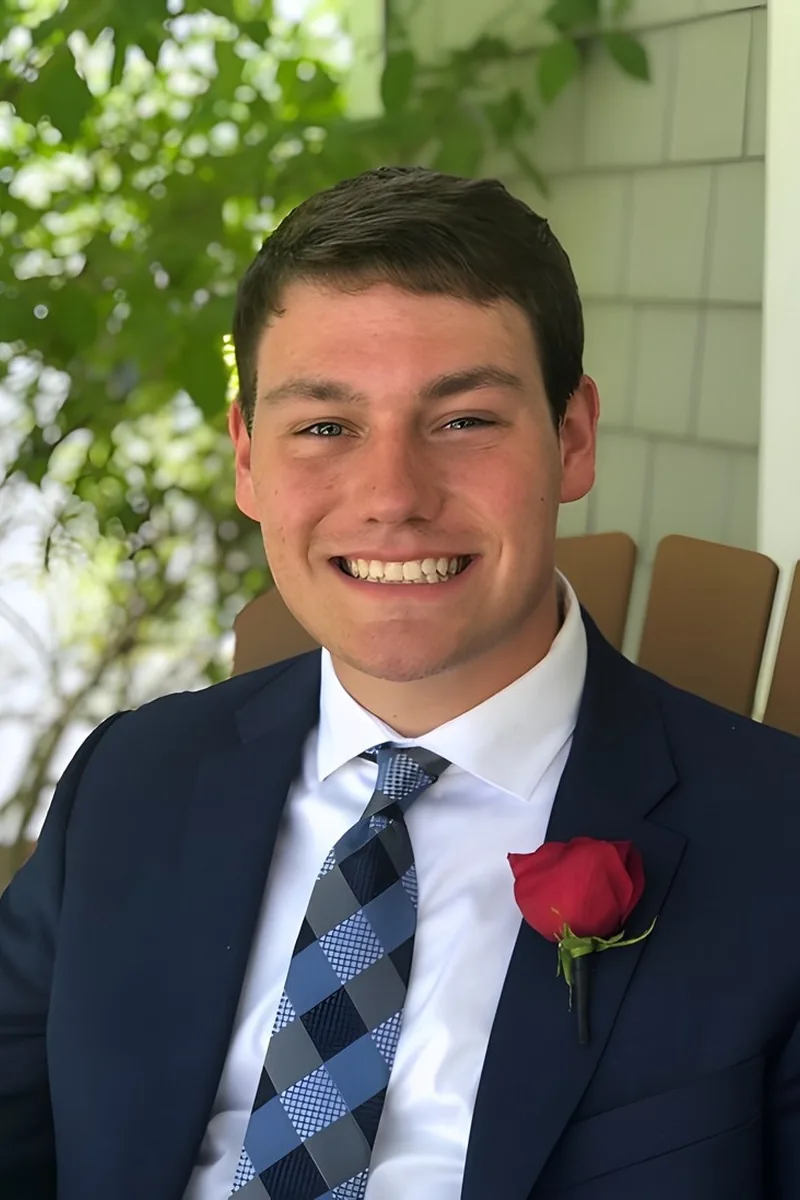
The leap from trig identities to limits and series in pre-calculus trips up students who never built real intuition for how functions behave. Ethan's neuroscience coursework at WashU demands heavy quantitative analysis, so he teaches pre-calc concepts like composite functions, polar coordinates, and asymptotic behavior with the fluency of someone who uses them daily.

The jump to pre-calculus trips up a lot of students right around trigonometric identities and limits, where the problems stop looking like anything they've seen before. Saniya approaches these topics by tying them back to the unit circle and function behavior, making the patterns visible instead of forcing rote memorization. Her 5.0 rating speaks to how well that approach clicks.
The jump into pre-calculus — limits, trigonometric identities, polar coordinates — demands a kind of abstract reasoning that many students haven't needed before. Morgan has studied math through Calculus 2 and knows exactly where pre-calc concepts are headed, which lets her explain not just the how but the why behind each technique. Her 5.0 rating speaks to how clearly she communicates those connections.
The jump into pre-calculus often feels overwhelming because it piles on new function types — polynomial, rational, exponential, logarithmic — all at once. Chris approaches it by teaching students to read the structure of each function family so they can sketch behavior and solve equations without relying on rote memorization. His computer science background at Cornell means he's comfortable with the abstract reasoning that pre-calc demands.
The jump to pre-calculus trips up a lot of students because it layers trigonometric identities, limits intuition, and function transformations on top of everything they've already learned. Yasheen's biology work at Yale required fluency in these exact tools — modeling growth curves, interpreting periodic functions, analyzing rates of change — so she teaches them with real context attached. She's particularly effective at connecting the graphical, numerical, and algebraic representations that pre-calc demands.
Dual-majoring in mathematics and psychology at UGA — with awards for her math coursework — Hailey knows pre-calculus from the inside, not as a distant memory. She's especially sharp on the transition points where students stall: building intuition for how polynomial end behavior works, why composite functions chain the way they do, and what's actually happening when a graph undergoes a sequence of transformations. Her 1570 SAT and 5.0 rating back that up.
Jonathan's physics and astronomy degree means he learned pre-calculus concepts the way they were meant to be used — trigonometric functions describing orbital motion, conic sections mapping planetary paths, and logarithmic scales measuring stellar brightness. That applied perspective lets him teach topics like polar coordinates and function transformations by connecting them to the physical systems they actually describe. He emphasizes building the reasoning skills to tackle unfamiliar problems, not just replicating textbook steps.
The jump from algebra to calculus is where most students lose their footing, and pre-calculus is the bridge that either holds or collapses. Alexandra tackles the trickiest parts — limits intuition, polar coordinates, parametric equations, and the behavior of rational functions — by connecting each one to the physical systems she models in her astrophysics research.
Chemical and biomolecular engineering at Georgia Tech meant Matthew spent four years where pre-calculus wasn't a class — it was the toolkit. Rational functions modeled reaction rates, trigonometric identities simplified wave equations, and logarithmic scaling made sense of kinetic data long before any textbook told him to memorize them. That applied instinct, backed by a 34 ACT and a 5.0 rating, lets him teach the "why" behind each topic in a way that sticks.
Biochemistry lab work at UGA means Aditya regularly encounters the exponential and logarithmic relationships that pre-calculus students are seeing for the first time — reaction rate curves, concentration decay, dose-response models all depend on fluency with function families and their transformations. He zeros in on the moment where algebra ends and functional reasoning begins, walking through how to read and manipulate graphs rather than just solve for x. His 1580 SAT confirms the mathematical precision behind that approach.
The jump from algebra to calculus hinges on whether a student truly understands limits, trigonometric identities, and the behavior of different function families. John approaches pre-calculus as calculus preparation in disguise, making sure each concept — from polar coordinates to sequences — is solid enough to support what comes next.
Prosthetics design at Georgia Tech puts Michael in constant contact with the biomechanical math that pre-calculus is really building toward — sinusoidal gait models, parametric curves describing joint motion, and the trigonometric relationships that govern how forces transfer through an artificial limb. He teaches topics like function transformations and trig identities by connecting them to the physical systems he's engineering, which turns abstract graph behavior into something students can visualize. His 34 ACT reflects the quantitative instincts behind that applied approach.
Fluid dynamics and heat transfer — Ziad's engineering specialties — are built entirely on the differential equations that grow out of pre-calculus concepts like limits, continuity, and the behavior of trigonometric and exponential functions. That means he teaches topics like rational functions and asymptotic behavior with the intuition of someone who's seen exactly where they lead in applied math. Rated 4.8 by students.
Manideep's pre-med coursework at Northwestern leans hard on the quantitative skills that live in pre-calculus — exponential and logarithmic modeling for pharmacokinetics, trigonometric reasoning for physics prerequisites, function composition for multivariable relationships. He breaks down each topic by building from the algebra students already know, making the leap to abstract function behavior feel manageable rather than overwhelming. Rated 5.0 by students.
The jump to pre-calculus is where many students first encounter the idea that a single function can be transformed, composed, and inverted — and that's before limits even enter the picture. Adel breaks down topics like trigonometric identities and sequences so that each concept builds logically toward calculus readiness rather than feeling like an isolated formula to memorize.
With two master's degrees in math education and years teaching every level from elementary through calculus, Monisola knows exactly which algebraic skills need to be rock-solid before students can tackle trigonometric identities, rational functions, or logarithmic properties. She zeroes in on the specific gaps — often in function notation or domain reasoning — that quietly derail students once pre-calculus ramps up. Rated 4.8 by students.
I am a 3rd year bio major at GT with minors in biochemistry and computer science. My tutoring subjects are math, bio, and chem. I have tutored for a few years, and I have also TAed! My favorite subjects are general chemistry and molecular biology (: My personal belief is that anyone can enjoy a subject once they truly understand it.
Sasha's computer engineering degree means she built fluency in pre-calculus material — complex number arithmetic, polar representations, sinusoidal analysis — by actually using it to design digital systems, not just to pass an exam. That engineering instinct shows up in how she teaches: she'll trace a concept like function composition or sequence behavior back to its mechanical logic so students can reconstruct it under pressure. Her 1570 SAT and 4.9 rating confirm the precision behind that approach.
Accounting majors at UGA don't just crunch numbers — they model revenue curves, depreciation schedules, and growth projections that rely on the same exponential, logarithmic, and polynomial functions pre-calculus students are learning for the first time. Shivam teaches those function families by connecting them to the financial contexts where he actually works with them, which gives abstract graphs and transformations a concrete anchor. His broad math teaching range, from elementary through calculus, means he knows exactly which algebra gaps to patch before moving forward.
Leah's neurobiology degree required fluency in the exact mathematical modeling that pre-calculus introduces — exponential decay for neural signal attenuation, logarithmic scales for stimulus-response curves, and trigonometric functions for oscillatory brain activity. She teaches these topics by grounding them in the biological systems where she first encountered them, which gives abstract function families a tangible purpose. Rated 5.0 by students.
Theoretical particle physics — Jesse's area of graduate research — runs on the mathematical machinery that pre-calculus assembles: complex exponentials, trigonometric identities, and the behavior of functions as they approach limits. Having also studied computer science as an undergrad, he tackles topics like parametric equations and polar coordinates by connecting the algebraic structure to the computational logic underneath, which tends to make the abstract pieces snap into place faster.
A math major at Georgia Tech, Sally teaches pre-calculus as someone actively building on it — her coursework in linear algebra and multivariable calculus means she remembers exactly where topics like function composition and trigonometric identities tripped her up and what finally made them stick. She zeroes in on the conceptual bridges between algebra and calculus, particularly how transformations and rational function behavior set up everything students will see next. Rated 4.9 by students.
Having completed Calculus 1, 2, 3, and linear algebra through dual enrollment while still in high school, Jackson learned pre-calculus concepts so thoroughly that he can trace exactly where each one resurfaces — how polynomial end behavior sets up limits, how trig identities become integration tools, how sequences seed the logic of series convergence. That forward-looking perspective lets him teach topics like rational functions and the unit circle with real specificity about what matters most. Rated 5.0 by students, with a 1590 SAT confirming the mathematical depth behind his approach.
After an 11-year hiatus, I am excited to return to one-on-one tutoring in high school and college-level precalculus, calculus, and physics. My goal is to build students' confidence in subjects that often feel overwhelming by identifying the root of their challenges - whether it's a forgotten foundational skill or a mismatch in teaching and learning styles - and helping them work through those roadblocks with clarity and patience. I discovered my passion for tutoring in high school through volunteer mentoring and later assisted classmates in physics at my teacher's request. Since then, I have supported students in courses ranging from geometry to upper-level calculus. I am currently tutoring while pursuing my next full-time opportunity, most recently having worked for a railroad construction products supplier.
A Master's in Statistics from Georgia Tech means Elsa didn't just pass through pre-calculus — she built an entire graduate career on the function behavior, limit intuition, and data modeling that starts there. She's especially sharp on the transition points where students stumble: moving from polynomial algebra to rational function analysis, or connecting unit circle geometry to the identities that calculus will demand. Her ability to teach in both English and French also makes her a strong fit for bilingual learners navigating technical math vocabulary for the first time.
Nuclear engineering at Tech means Corey spent his undergrad immersed in the differential equations and wave mechanics that pre-calculus is quietly building toward — so when he teaches topics like sinusoidal modeling or exponential decay, he knows exactly where each concept lands in the bigger picture. His current Medical Physics master's work keeps him actively using polar coordinates, complex number operations, and function transformations in contexts like radiation dosimetry and imaging physics. That ongoing fluency lets him show students the structural logic connecting pre-calc topics instead of presenting them as isolated chapters to survive.
Having tutored every level of math from algebra through single-variable calculus at Mathnasium, Burhanuddin knows exactly where pre-calc students get stuck — usually at the jump from manipulating expressions to reasoning about function behavior, especially with rational functions and trigonometric graphs. His physics training at Georgia Tech means he naturally ties these concepts to real applications, turning abstract curve sketching into something students can visualize and predict. Holds a 5.0 rating and a 35 ACT.
Georgia Tech's computer science curriculum throws students into discrete math and linear algebra early, but it's the pre-calculus layer — function composition, sequences, and trigonometric reasoning — that Joshua keeps returning to when debugging algorithms or modeling computational behavior. He takes a deliberately patient approach to building each concept, walking through the algebra underneath before introducing new abstractions so nothing feels like a sudden leap. His CS training means he's especially sharp on recursive sequences and piecewise-defined functions, two areas where programming intuition actually helps.
I am interesting in reading, Zumba, sewing and growing.
Preparing for pharmacy school means TieuAnh is deep in the chemistry and quantitative reasoning that depend on pre-calculus fluency — dosage calculations built on exponential and logarithmic models, reaction kinetics shaped by rate functions, and the trigonometric foundations that run through physics prerequisites. Her chemistry degree gives her a concrete frame for teaching topics like function transformations and composite functions, since she can point to exactly where each one shows up in the sciences. She approaches the course as a bridge-builder, connecting the algebra students already have to the calculus they'll need next.
The jump from Algebra 2 to Pre-Calculus trips students up when trigonometric identities, polar coordinates, and limit intuition all arrive at once. Darien tackles each concept by building from what students already know about functions and graphs, extending familiar ideas into new territory rather than treating every topic as brand new. His 5.0 rating speaks to how well that approach lands.
The leap from algebra to calculus runs straight through pre-calc, and students who don't build real intuition around trigonometric identities, limits, and function transformations tend to struggle later. Caitlyn approaches each concept by connecting it to what a student already knows, building upward rather than dumping new rules on top of shaky ground.
The jump into pre-calculus is where many students first encounter the abstract thinking that college math demands — polar coordinates, conic sections, and the unit circle can all feel disconnected without the right framing. Akshadha tackles each of these by tying them back to graphical intuition, so students actually see why identities and transformations work before they're asked to apply them at speed.
An aerospace engineering degree followed by a mechanical engineering master's means Cole has spent years relying on the pre-calculus toolkit — parametric equations for trajectory modeling, trigonometric functions for force resolution, conic sections for orbital mechanics — long before teaching it. He tackles the course by reverse-engineering each topic from the engineering problems where it actually matters, which turns abstract curve-sketching and identity work into something students can visualize. Holds a 5.0 rating.
As a computer science student, Rohan writes code that depends on the same function logic pre-calculus teaches — composing functions, tracing recursive sequences, and predicting how inputs map to outputs through transformations. He brings that programmer's instinct for step-by-step reasoning to topics like trigonometric identities and polynomial behavior, breaking each problem into smaller pieces students can debug one at a time. His 31 ACT confirms solid quantitative grounding across the board.
The jump from algebra to pre-calculus is where a lot of students lose their footing — suddenly they're juggling rational expressions, composite functions, and trigonometric graphs all at once. Bridgette's math degree means she can trace each of those topics back to the algebraic building blocks students already understand, turning what feels like a flood of disconnected rules into a coherent progression toward calculus.
Mechanical systems engineering is essentially applied pre-calculus — Zachary's coursework had him decomposing forces with trigonometry, modeling oscillations with sinusoidal functions, and analyzing motion through parametric equations before calculus ever entered the picture. That hands-on engineering context lets him teach topics like conic sections and function transformations by connecting them to physical systems students can visualize. His 32 ACT confirms the quantitative grounding behind his approach.
Having been a math major at Boston College before switching to computer science, Alexander spent semesters deep in the function analysis, trigonometric reasoning, and limit-adjacent thinking that define pre-calculus — it's the territory where his two fields overlap most. He tackles topics like rational functions and composite transformations by emphasizing the algebraic intuition students already have, then stretching it toward calculus-ready thinking. Rated 5.0 by students.
Before switching to computer science, Daniel was pursuing a mathematics major, so topics like trigonometric identities, polar coordinates, and limits aren't abstract exercises for him — they're territory he's covered in depth. He connects pre-calculus concepts to the bigger picture of what's coming in calculus, so students understand why they're learning each technique and how it fits together.
Daniel's math degree means he didn't just pass through pre-calculus — he built on it through differential equations and Calculus II, so he knows exactly which skills in polynomial behavior, rational expressions, and trig identities actually matter when the difficulty ramps up. He tackles the course by connecting each new concept back to the algebra underneath it, making the jump from manipulating equations to analyzing functions feel like a natural progression rather than a sudden leap.
Testimonials
Because the right Pre-Calculus tutor makes all the difference.
Average Session Rating – Based on 3.4M Learner Ratings
Practice Pre-Calculus
Free practice tests, flashcards, and AI tutoring for Pre-Calculus
Nearby Pre-Calculus Tutors
Other Columbus Tutors
Related Math Tutors in Columbus
Frequently Asked Questions
Varsity Tutors matches Columbus students with expert Pre-Calculus tutors for 1-on-1 instruction. We pair each student with a tutor based on their specific needs, learning style, and goals.
Whether you need homework help, exam prep, or want to get ahead, our Pre-Calculus tutors are ready to help.
Common challenges include gaps from earlier material, difficulty with specific concepts, and trouble applying learning to new problems. These issues can snowball quickly in Pre-Calculus.
A tutor identifies where you're stuck, fills in gaps, and provides targeted practice. The 1-on-1 format means you get help exactly where you need it.
Tutors work with your student's actual coursework—homework assignments, class notes, and upcoming tests. This keeps tutoring directly relevant to what's happening in the classroom.
When you share information about your student's school and curriculum, we can match you with a tutor who has relevant experience.
All tutors complete background checks, credential verification, and teaching evaluation. Many of our Pre-Calculus tutors hold advanced degrees or have years of teaching experience.
You can review tutor profiles to find someone with the right background for your student's level and needs.
Many students see improved grades within a few weeks, along with better understanding of Pre-Calculus concepts and more confidence tackling challenging material.
Tutors track progress and adjust their approach to ensure continued improvement.
Most students benefit from 1-2 sessions per week. More frequent sessions help if your student is significantly behind or has an important exam coming up.
Your tutor can recommend a schedule based on your student's specific situation and goals.
Tutoring is purchased in packages of hours, with rates varying by tutor experience. Varsity Tutors offers several options to fit different budgets and needs.
You can discuss pricing during your consultation to find what works best.
Your tutor will assess where your student is, discuss goals, and start working on priority areas. Most students bring current homework or upcoming test material to focus on.
By the end, you'll have a clear sense of how the tutor can help and a plan for moving forward.
Let’s find your perfect tutor
Answer a few quick questions. We’ll recommend the right plan and match you with a top 5% tutor.