Award-Winning AP Environmental Science Tutors
serving Tampa, FL
AP Environmental Science
Tutors in Tampa
Private 1-on-1 tutoring, weekly live classes for academic support, test prep & enrichment, practice tests and diagnostics, and more to elevate grades and test scores.
Based on 3.4M Learner Ratings
UniversitiesSchools & Universities
DeliveredHours Delivered
ProficiencyGrowth in Proficiency
Who needs tutoring?
No obligation. Takes ~1 minute.
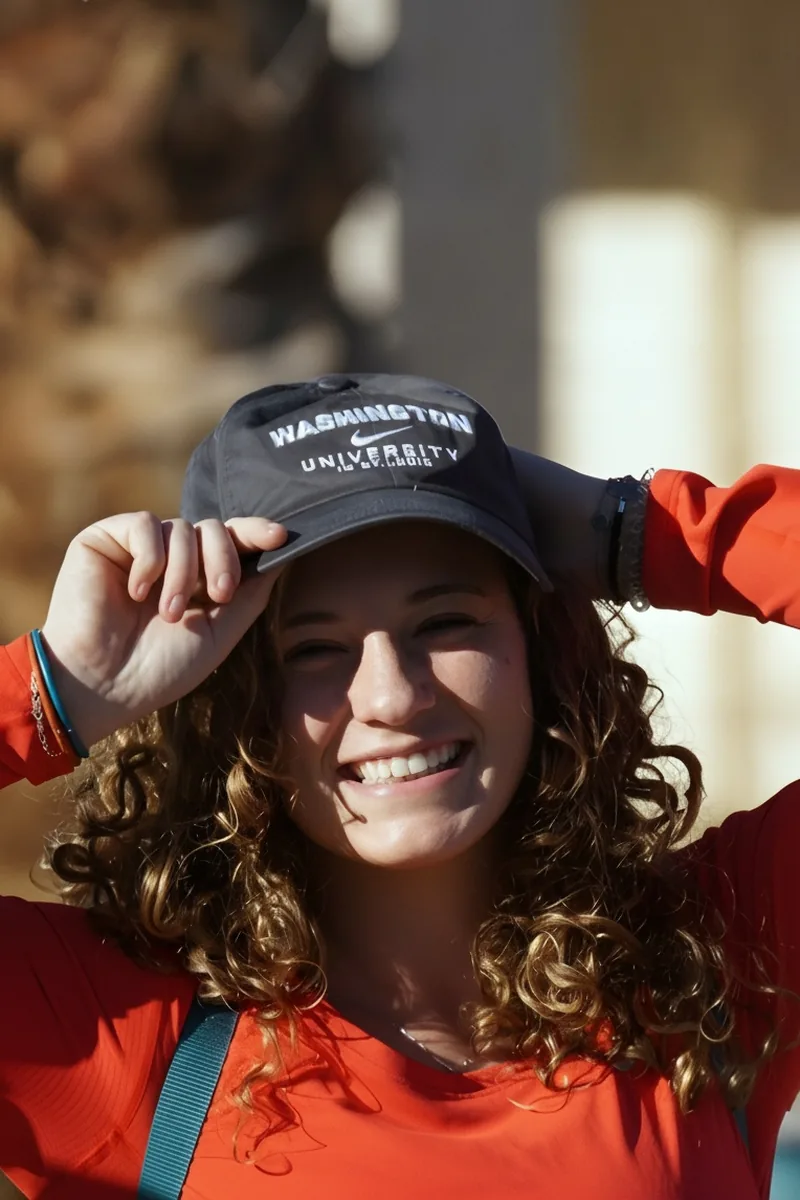
An anthropology degree might seem like an unusual background for APES, but it's surprisingly relevant — Libby understands human-environment interactions, resource use patterns, and cultural dimensions of environmental policy, which are exactly the themes the exam's free-response questions probe. She teaches students to think about ecological problems through the lens of human systems, connecting topics like land use, pollution, and sustainability to the societal forces driving them. Rated 5.0 by students.

Neuroscience teaches you to think about interconnected systems — how a single disruption cascades through networks of dependent processes — and Ankit applies that same framework to APES topics like trophic cascades, biogeochemical disruptions, and feedback loops in climate systems. His dual background in neuroscience and computer science at Duke, combined with a perfect 36 ACT, means he's comfortable with both the conceptual modeling and the quantitative problem-solving the exam demands.
Political science might seem distant from APES, but Emily's government background is a real asset for the policy-heavy free-response questions — evaluating legislation like the Clean Air Act, weighing economic trade-offs of resource management, and constructing evidence-based arguments about environmental regulation. She pairs that with a 34 ACT and the visual-thinking skills of a trained photographer, which means she's unusually effective at teaching students to extract information from the data tables, diagrams, and graphs the exam relies on. Rated 5.0 by students.
Brett earned three bachelor's degrees and a master's in biology, which means topics like biogeochemical cycles, ecosystem energy flow, and population ecology aren't just APES vocabulary for him — they're concepts he studied repeatedly across multiple degree programs. He brings that layered understanding to the lab-design and data-analysis questions where students need to explain mechanisms, not just label diagrams. Rated 5.0 by students.
Stanford's Science, Technology, and Society major sits at the exact intersection APES lives in — where ecological science meets human systems, policy decisions, and technological trade-offs. Rithika's IB and National AP Scholar background means she's already navigated the kind of interdisciplinary, essay-heavy exams that APES models itself on, and she uses that experience to teach students how to connect scientific evidence to real-world environmental consequences in their free-response answers.
Biology majors have a built-in advantage on APES because so much of the course — population ecology, biogeochemical cycles, biodiversity — is rooted in the life sciences Jenna studies every day. She connects that biological grounding to the environmental policy and human-impact questions the exam layers on top, and teaches students to write FRQ answers that trace ecological cause-and-effect rather than just list vocabulary. Rated 5.0 by students.
Finance majors learn to model complex systems with multiple interacting variables — resource scarcity, cost-benefit trade-offs, long-term risk — and Rinky applies that same analytical framework to APES topics like resource depletion, environmental cost analysis, and sustainability trade-offs that show up heavily in free-response prompts. Her 1520 SAT and 5.0 tutoring rating speak to the precision she brings when walking through the data-interpretation and calculation questions that surprise students expecting a soft science course.
A physics degree builds the kind of systems thinking that translates directly to APES — understanding energy budgets, thermodynamic constraints on ecosystems, and how to set up the quantitative problems around resource depletion or atmospheric carbon that the exam loves to test. Nima applies that physics-trained rigor to topics like global energy flow and climate modeling, where students who only memorize vocabulary tend to lose points on calculation-heavy free-response questions.
Biochemistry gives Don a molecular-level understanding of the processes APES only scratches the surface of — he can explain why dissolved oxygen drops downstream of a nutrient spill by walking through the actual chemistry of eutrophication and aerobic decomposition, not just labeling a diagram. That depth, plus a 35 ACT and 5.0 rating from students, makes him especially sharp on the exam's quantitative pieces like calculating biomass transfer between trophic levels or interpreting water quality data sets.
Geophysics sits at the intersection of earth systems and physical processes — so when Derrick teaches APES topics like plate tectonics, soil formation, or how geological activity shapes resource distribution, he's drawing on coursework that goes well beyond the AP curriculum. He also brings strong math and physics chops to the quantitative side of the exam, tackling energy budget calculations and atmospheric modeling problems that pure memorization won't solve. Rated 5.0 by students.
Running a marine biology summer camp means Zoey has taught kids to trace real ecological relationships — predator-prey dynamics, nutrient runoff in coastal systems, habitat loss from human development — which map directly onto the APES curriculum's core units. Her master's in marine biology gives her the field-level understanding of biodiversity, conservation, and ecosystem interactions that turns abstract exam topics into concrete examples students actually remember. Rated 4.9 by students.
Sofia's ecology concentration at the University of Chicago means AP Environmental Science isn't a subject she just studied — it's her field. She unpacks FRQ-heavy topics like biogeochemical cycles, biodiversity loss, and energy resource tradeoffs with the depth of someone who does research in a neurobiology lab and thinks about ecosystems professionally. That firsthand scientific context makes the difference between memorizing vocabulary and actually understanding environmental systems.
Studying Human Biology at Stanford with a concentration in health policy gives Jake a direct line into the APES units on public health, pollution, and environmental legislation — he understands how ecological disruptions translate into real human consequences, which is exactly the kind of reasoning the free-response section rewards. His 34 ACT and 5.0 tutoring rating back up an approach that emphasizes connecting biological systems to their policy implications rather than treating each unit as isolated material.
Chemical engineering coursework at Princeton drills material and energy balances — tracking what flows in, what transforms, and what flows out — which maps directly onto APES topics like biogeochemical cycles, pollution transport, and energy resource calculations. Satya applies that systems-level thinking to the exam's quantitative questions, breaking down ecological footprint math and efficiency problems with an engineer's precision. A perfect 36 ACT score speaks to the data-interpretation and scientific reasoning skills the free-response section demands.
Katie holds a master's in science education and a bachelor's in natural resources and conservation — meaning she didn't just study APES topics like land use, biodiversity, and resource management as exam content; they were her actual field of study. She teaches students to think in cause-and-effect chains across units, connecting deforestation to soil erosion to water quality decline, which is exactly the kind of multi-step reasoning the free-response rubrics reward. Rated 5.0 by students.
Training as a family medicine resident means Jordan regularly encounters the real-world health consequences of environmental issues — lead exposure, air quality-driven asthma, waterborne illness — which gives her a clinical lens on APES units covering pollution, toxicology, and human impact that most tutors can't offer. She teaches students to think through dose-response relationships and environmental health data the way a physician evaluates a patient, building the cause-and-effect reasoning that free-response questions reward. Rated 5.0 by students.
Eileen's neuroscience coursework at Vanderbilt — tracing how disruptions propagate through biological systems — gives her a useful lens for APES topics like bioaccumulation, feedback loops in climate systems, and how environmental toxins affect organisms at multiple scales. She scored a 36 on the ACT and brings that same precision to the data-interpretation and calculation questions that catch students off guard on exam day.
Chemical and biomolecular engineering coursework covers thermodynamics, mass balances, and reaction kinetics — the same principles underlying APES topics like energy transfer through trophic levels, pollutant fate in water systems, and carbon cycle calculations. Akshaya uses that engineering lens to demystify the quantitative free-response problems where students need to set up unit conversions and efficiency calculations under time pressure. Rated 4.8 by students.
Testimonials
Because the right AP Environmental Science tutor makes all the difference.
Average Session Rating – Based on 3.4M Learner Ratings
Practice AP Environmental Science
Free practice tests, flashcards, and AI tutoring for AP Environmental Science
Nearby AP Environmental Science Tutors
Other Tampa Tutors
Related Science Tutors in Tampa
Frequently Asked Questions
Score improvement depends on your starting point and commitment level, but many students see meaningful gains with focused preparation. If you're starting from a 2-3, reaching a 4 is realistic with consistent study. Students already scoring 3-4 often push to a 4-5 by targeting weak content areas and mastering free-response writing. The key is identifying exactly where you're losing points—whether it's Unit 1 concepts like photosynthesis and energy flow, or Unit 8 global issues—and drilling those specific topics with practice tests to build confidence.
The AP Environmental Science exam covers eight units: Unit 1 (Energy and Ecosystems), Unit 2 (The Living World), Unit 3 (Populations), Unit 4 (Earth Systems and Resources), Unit 5 (Land and Water Use), Unit 6 (Energy Resources and Consumption), Unit 7 (Atmospheric Pollution and Climate Change), and Unit 8 (Human Impact on the Environment). The exam is 70% multiple-choice and 30% free-response, with a heavy emphasis on data interpretation, graphing skills, and understanding cause-and-effect relationships in environmental systems. Many students in Tampa find units on water systems and climate change particularly challenging due to their complexity.
The three free-response questions (worth 70 points combined) require you to demonstrate deep understanding and analytical skills. Start by reading each question carefully—many ask you to "explain," "analyze," or "predict," which require different types of responses. Allocate roughly 20-25 minutes per question, and structure your answer with clear topic sentences and evidence-based explanations. A strong approach is to identify the concept being tested (like nutrient cycling or carrying capacity), explain the underlying science, and then apply it to the specific scenario. Practice tests are essential here—aim to complete at least 5-10 full free-response sets before test day to build speed and clarity in your writing.
You have roughly 90 minutes for 80 multiple-choice questions, which breaks down to about 67 seconds per question. This tight pacing is a common challenge for AP Environmental Science students. The strategy is to move quickly through questions you recognize (often Unit 1 and Unit 2 content) in under a minute, giving yourself extra time for data interpretation questions and scenario-based questions that require more analysis. If a question stumps you after 60 seconds, mark it and move on—you can return at the end if time permits. Practicing with timed sections helps you develop a rhythm and identify which question types consistently slow you down.
Most students struggle with three key areas: (1) quantitative concepts like calculating biomass transfer between trophic levels, NPP vs GPP, and energy efficiency, (2) climate science including greenhouse gas mechanisms and feedback loops, and (3) data interpretation questions that require you to read graphs, tables, and charts accurately. Students in Tampa often report that Unit 7 (Atmospheric Pollution and Climate Change) requires the most careful study because it combines complex chemistry with systems thinking. Unit 3 (Populations) is another stumbling block due to population models and growth equations. Targeted tutoring on these units, combined with repeated practice with similar question types, makes a significant difference in test day performance.
Most students benefit from 3-4 months of consistent preparation, dedicating 5-8 hours per week to reviewing content, completing practice problems, and taking full-length practice tests. If you're starting later in the year, focus first on high-value units (Units 1-3 and Unit 7) that appear frequently on the exam, then work backward. In your final 2-3 weeks, shift to full-length practice tests and targeted review of your weakest areas. A typical study schedule might look like: weeks 1-8 learning content and completing practice sets, weeks 9-12 taking full-length practice tests and analyzing mistakes, and the final week reviewing weak topics and building test-day confidence. Consistency matters more than cramming.
Varsity Tutors connects you with tutors who specialize in AP Environmental Science and understand exactly where students typically struggle. A tutor can help you develop a personalized study plan based on your current level, break down complex topics like nutrient cycles or population dynamics into understandable pieces, and provide targeted feedback on your free-response writing. Tutors also help you build test-taking strategies—like how to manage timing on the multiple-choice section, how to avoid common mistakes on quantitative problems, and how to structure high-scoring free-response answers. For students in Tampa juggling multiple classes and activities, personalized 1-on-1 instruction makes it easier to stay on track and address weak areas before test day.
Let’s find your perfect tutor
Answer a few quick questions. We’ll recommend the right plan and match you with a top 5% tutor.