Award-Winning AP Environmental Science Tutors
serving Orlando, FL
AP Environmental Science
Tutors in Orlando
Private 1-on-1 tutoring, weekly live classes for academic support, test prep & enrichment, practice tests and diagnostics, and more to elevate grades and test scores.
Based on 3.4M Learner Ratings
UniversitiesSchools & Universities
DeliveredHours Delivered
ProficiencyGrowth in Proficiency
Who needs tutoring?
No obligation. Takes ~1 minute.
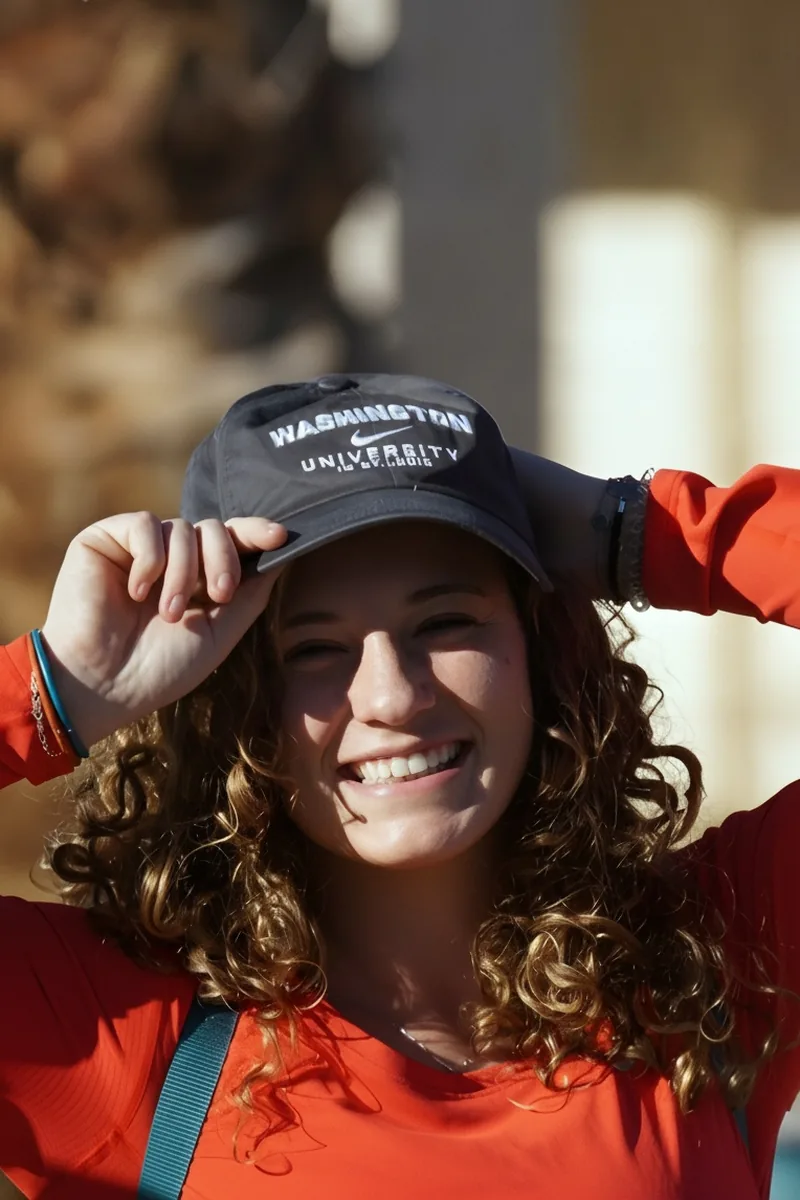
An anthropology degree might seem like an unusual background for APES, but it's surprisingly relevant — Libby understands human-environment interactions, resource use patterns, and cultural dimensions of environmental policy, which are exactly the themes the exam's free-response questions probe. She teaches students to think about ecological problems through the lens of human systems, connecting topics like land use, pollution, and sustainability to the societal forces driving them. Rated 5.0 by students.

Neuroscience teaches you to think about interconnected systems — how a single disruption cascades through networks of dependent processes — and Ankit applies that same framework to APES topics like trophic cascades, biogeochemical disruptions, and feedback loops in climate systems. His dual background in neuroscience and computer science at Duke, combined with a perfect 36 ACT, means he's comfortable with both the conceptual modeling and the quantitative problem-solving the exam demands.
Political science might seem distant from APES, but Emily's government background is a real asset for the policy-heavy free-response questions — evaluating legislation like the Clean Air Act, weighing economic trade-offs of resource management, and constructing evidence-based arguments about environmental regulation. She pairs that with a 34 ACT and the visual-thinking skills of a trained photographer, which means she's unusually effective at teaching students to extract information from the data tables, diagrams, and graphs the exam relies on. Rated 5.0 by students.
Brett earned three bachelor's degrees and a master's in biology, which means topics like biogeochemical cycles, ecosystem energy flow, and population ecology aren't just APES vocabulary for him — they're concepts he studied repeatedly across multiple degree programs. He brings that layered understanding to the lab-design and data-analysis questions where students need to explain mechanisms, not just label diagrams. Rated 5.0 by students.
Stanford's Science, Technology, and Society major sits at the exact intersection APES lives in — where ecological science meets human systems, policy decisions, and technological trade-offs. Rithika's IB and National AP Scholar background means she's already navigated the kind of interdisciplinary, essay-heavy exams that APES models itself on, and she uses that experience to teach students how to connect scientific evidence to real-world environmental consequences in their free-response answers.
Biology majors have a built-in advantage on APES because so much of the course — population ecology, biogeochemical cycles, biodiversity — is rooted in the life sciences Jenna studies every day. She connects that biological grounding to the environmental policy and human-impact questions the exam layers on top, and teaches students to write FRQ answers that trace ecological cause-and-effect rather than just list vocabulary. Rated 5.0 by students.
Chemical engineering coursework at Princeton drills material and energy balances — tracking what flows in, what transforms, and what flows out — which maps directly onto APES topics like biogeochemical cycles, pollution transport, and energy resource calculations. Satya applies that systems-level thinking to the exam's quantitative questions, breaking down ecological footprint math and efficiency problems with an engineer's precision. A perfect 36 ACT score speaks to the data-interpretation and scientific reasoning skills the free-response section demands.
Studying neuroscience at Vanderbilt means Elliot spends his coursework tracing how organisms respond to environmental stressors at the biological level — a perspective that sharpens his teaching of APES topics like toxicology, bioaccumulation, and dose-response relationships. His chemistry minor adds depth when unpacking biogeochemical cycles and the math behind pollution concentration problems, areas where students who rely on vocabulary alone tend to lose free-response points.
Pharmacy students spend semesters on toxicology, chemical fate in biological systems, and dose-response relationships — concepts Amy applies directly to APES units on pollution, bioaccumulation, and human health impacts. Her biology minor at Northeastern reinforces the ecological side, from nutrient cycling to population dynamics, and a 1550 SAT signals the quantitative precision needed for the exam's calculation-heavy free-response questions. Rated 4.9 by students.
Studying Human Biology at Stanford with a concentration in health policy gives Jake a direct line into the APES units on public health, pollution, and environmental legislation — he understands how ecological disruptions translate into real human consequences, which is exactly the kind of reasoning the free-response section rewards. His 34 ACT and 5.0 tutoring rating back up an approach that emphasizes connecting biological systems to their policy implications rather than treating each unit as isolated material.
Chemical and biomolecular engineering coursework covers thermodynamics, mass balances, and reaction kinetics — the same principles underlying APES topics like energy transfer through trophic levels, pollutant fate in water systems, and carbon cycle calculations. Akshaya uses that engineering lens to demystify the quantitative free-response problems where students need to set up unit conversions and efficiency calculations under time pressure. Rated 4.8 by students.
Kourtney is earning her MPH in Environmental Systems and Human Health at Oregon Health and Science University, which means AP Environmental Science overlaps directly with what she studies at the graduate level. She tackles the trickiest APES topics — biogeochemical cycles, environmental legislation, and free-response data analysis — with the depth of someone who lives this material daily.
Eileen's neuroscience coursework at Vanderbilt — tracing how disruptions propagate through biological systems — gives her a useful lens for APES topics like bioaccumulation, feedback loops in climate systems, and how environmental toxins affect organisms at multiple scales. She scored a 36 on the ACT and brings that same precision to the data-interpretation and calculation questions that catch students off guard on exam day.
Studying biological sciences means Liana is learning the underlying mechanisms — cellular respiration, nutrient cycling, population growth models — that APES questions are built on, rather than encountering them as isolated vocabulary terms. She breaks down topics like energy flow and species interactions using the same biological logic her college coursework demands, which pays off on free-response questions that ask students to explain processes rather than just name them. Rated 4.9 by students.
A history and political science background turns out to be a real asset for the APES units on environmental legislation, resource policy, and the human-systems questions that dominate the free-response section — Andrew can explain why the Clean Air Act matters in both a political and ecological context. He also tutors across math and science, so he's comfortable walking through the quantitative problems like resource depletion rates and energy calculations that trip up students who expected a purely memorization-based course.
As a PhD student researching microbial ecology, Isaac lives the material that AP Environmental Science covers — biogeochemical cycles, ecosystem dynamics, biodiversity loss, and human impact on natural systems. He brings current research context into exam prep, connecting FRQ strategies to the kind of scientific reasoning the College Board actually rewards. His 5.0 rating speaks to how well that approach lands with students.
Shawn's master's in chemistry gives him a molecular-level understanding of the processes that drive APES content — ocean acidification equilibria, nitrogen fixation pathways, ozone depletion mechanisms — so he can explain the why behind environmental phenomena instead of just naming them. He also teaches the course's surprisingly tricky math, from parts-per-million conversions to energy budget calculations, with the comfort of someone who's done far harder stoichiometry. Rated 4.9 by students.
Supervising an AmeriCorps conservation program in New Mexico means Rachel doesn't just teach APES concepts like land management, resource depletion, and habitat restoration — she manages real projects dealing with them daily. Her Johns Hopkins master's in Environmental Health Sciences adds the scientific rigor behind topics like pollution pathways and risk assessment, while her public health training sharpens the kind of systems-level thinking the exam's free-response questions demand.
Testimonials
Because the right AP Environmental Science tutor makes all the difference.
Average Session Rating – Based on 3.4M Learner Ratings
Practice AP Environmental Science
Free practice tests, flashcards, and AI tutoring for AP Environmental Science
Nearby AP Environmental Science Tutors
Other Orlando Tutors
Related Science Tutors in Orlando
Frequently Asked Questions
AP Environmental Science is a comprehensive exam that tests your understanding of Earth's systems, human impact on the environment, and sustainability solutions. The exam covers eight major units: energy resources and consumption, the atmosphere, freshwater systems, ocean systems, biodiversity, populations and communities, land use and agriculture, and human impacts on the environment. You'll need to understand both the science concepts and their real-world applications, with questions testing your ability to analyze environmental data and propose solutions to ecological problems.
The exam has two sections: a 90-minute multiple-choice section (80 questions) and a 90-minute free-response section (3 questions). The multiple-choice questions test your conceptual understanding and data analysis skills, while the free-response questions require you to explain environmental concepts, interpret graphs and data, and design solutions to environmental problems. Success requires both solid content knowledge and strong test-taking strategies, particularly learning to manage your time across the different question types.
Many students struggle with the breadth of content—eight units covering everything from atmospheric chemistry to population ecology—and connecting concepts across different systems. The data analysis component is another challenge; you'll need to interpret graphs, calculate percentages, and understand statistical relationships. Additionally, the free-response section requires you to synthesize information and explain your reasoning clearly, which takes practice to master alongside managing test anxiety during the timed exam.
Score improvement depends on your starting point and commitment level, but students typically see meaningful gains when they work with a tutor to identify weak content areas and develop targeted study strategies. Many students improve by 1-2 score points (on the 1-5 scale) over several months of focused preparation, especially when combining tutoring with consistent practice tests and review. Your tutor can help you pinpoint whether you need more conceptual understanding, better test-taking strategies, or both.
Your first session is about getting to know you and understanding your goals. Your tutor will assess your current knowledge of AP Environmental Science concepts, review your past test scores or practice test results if available, and identify which units or question types are most challenging for you. Together, you'll create a personalized study plan that focuses on your specific needs, whether that's building foundational content knowledge, improving data interpretation skills, or developing stronger free-response answers.
Most students benefit from starting preparation 3-4 months before the exam, dedicating 5-8 hours per week to studying alongside tutoring sessions. This timeline allows you to work through all eight units systematically, take multiple practice tests, and refine your weak areas. If you're starting closer to exam day, more intensive study sessions may be needed. Your tutor can help you create a realistic timeline based on your current knowledge and score goals.
Practice tests are essential—they help you understand the exam format, identify content gaps, and build test-taking stamina for the full 3-hour exam. Taking full-length practice tests under timed conditions every 2-3 weeks allows you to track your progress and see which units need more review. Your tutor can help you analyze your practice test results to determine whether errors stem from content misunderstanding, careless mistakes, or pacing issues, then adjust your study strategy accordingly.
Look for tutors with strong backgrounds in environmental science, biology, chemistry, or earth science—ideally with experience teaching or tutoring AP-level content. Your tutor should understand the specific demands of the AP exam format and be able to explain complex environmental systems clearly. Varsity Tutors connects you with expert tutors who have proven success helping students master AP Environmental Science content and improve their exam performance.
Let’s find your perfect tutor
Answer a few quick questions. We’ll recommend the right plan and match you with a top 5% tutor.