Award-Winning AP Environmental Science Tutors
serving Sarasota, FL
AP Environmental Science
Tutors in Sarasota
Private 1-on-1 tutoring, weekly live classes for academic support, test prep & enrichment, practice tests and diagnostics, and more to elevate grades and test scores.
Based on 3.4M Learner Ratings
UniversitiesSchools & Universities
DeliveredHours Delivered
ProficiencyGrowth in Proficiency
Who needs tutoring?
No obligation. Takes ~1 minute.
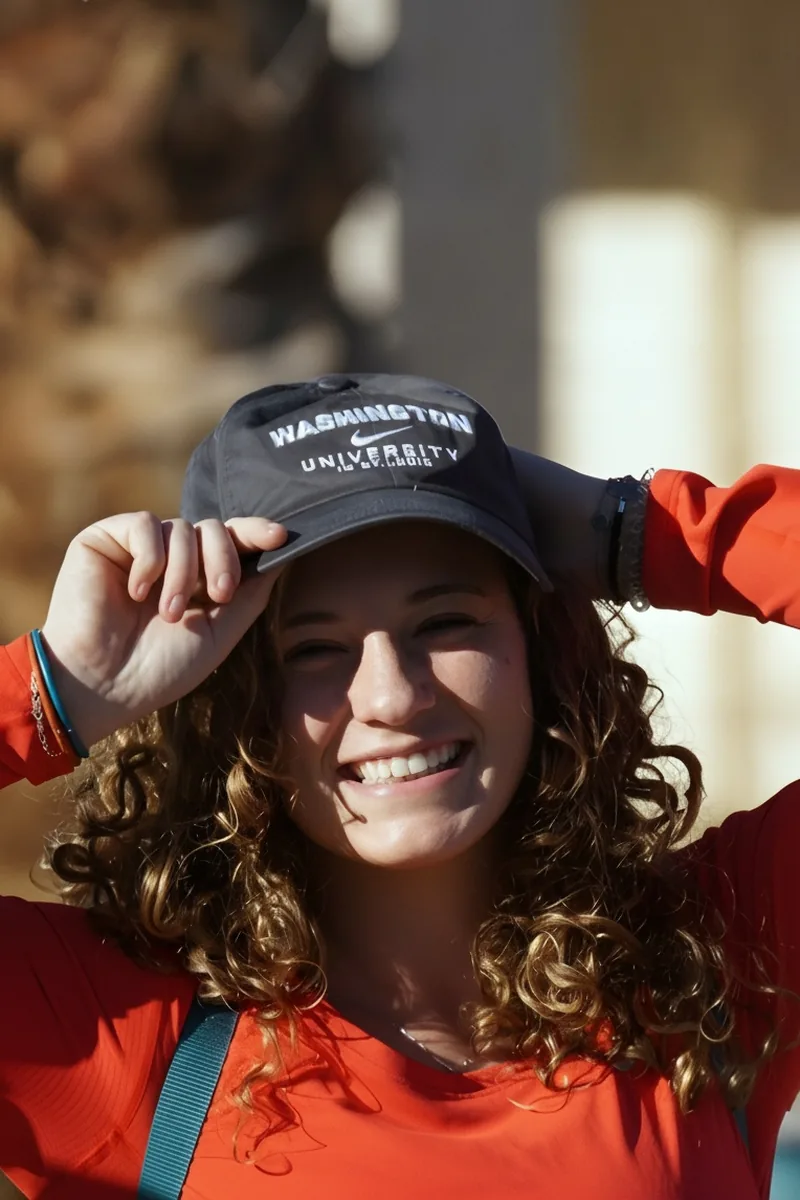
An anthropology degree might seem like an unusual background for APES, but it's surprisingly relevant — Libby understands human-environment interactions, resource use patterns, and cultural dimensions of environmental policy, which are exactly the themes the exam's free-response questions probe. She teaches students to think about ecological problems through the lens of human systems, connecting topics like land use, pollution, and sustainability to the societal forces driving them. Rated 5.0 by students.

Neuroscience teaches you to think about interconnected systems — how a single disruption cascades through networks of dependent processes — and Ankit applies that same framework to APES topics like trophic cascades, biogeochemical disruptions, and feedback loops in climate systems. His dual background in neuroscience and computer science at Duke, combined with a perfect 36 ACT, means he's comfortable with both the conceptual modeling and the quantitative problem-solving the exam demands.
Political science might seem distant from APES, but Emily's government background is a real asset for the policy-heavy free-response questions — evaluating legislation like the Clean Air Act, weighing economic trade-offs of resource management, and constructing evidence-based arguments about environmental regulation. She pairs that with a 34 ACT and the visual-thinking skills of a trained photographer, which means she's unusually effective at teaching students to extract information from the data tables, diagrams, and graphs the exam relies on. Rated 5.0 by students.
Brett earned three bachelor's degrees and a master's in biology, which means topics like biogeochemical cycles, ecosystem energy flow, and population ecology aren't just APES vocabulary for him — they're concepts he studied repeatedly across multiple degree programs. He brings that layered understanding to the lab-design and data-analysis questions where students need to explain mechanisms, not just label diagrams. Rated 5.0 by students.
Stanford's Science, Technology, and Society major sits at the exact intersection APES lives in — where ecological science meets human systems, policy decisions, and technological trade-offs. Rithika's IB and National AP Scholar background means she's already navigated the kind of interdisciplinary, essay-heavy exams that APES models itself on, and she uses that experience to teach students how to connect scientific evidence to real-world environmental consequences in their free-response answers.
Biology majors have a built-in advantage on APES because so much of the course — population ecology, biogeochemical cycles, biodiversity — is rooted in the life sciences Jenna studies every day. She connects that biological grounding to the environmental policy and human-impact questions the exam layers on top, and teaches students to write FRQ answers that trace ecological cause-and-effect rather than just list vocabulary. Rated 5.0 by students.
Todd's biology degree from UIUC gives him the ecological and cellular foundations that underpin APES topics like nutrient cycling, energy flow through trophic levels, and ecosystem disruption — and his social work training adds a surprisingly useful lens for the policy and human-impact questions that dominate the free-response section. He teaches students to trace cause-and-effect across units, which is the skill the exam actually scores on. Rated 5.0 by students.
A physics degree builds the kind of systems thinking that translates directly to APES — understanding energy budgets, thermodynamic constraints on ecosystems, and how to set up the quantitative problems around resource depletion or atmospheric carbon that the exam loves to test. Nima applies that physics-trained rigor to topics like global energy flow and climate modeling, where students who only memorize vocabulary tend to lose points on calculation-heavy free-response questions.
Having earned her bachelor's in Environmental Science, Patricia didn't just survey APES topics — she studied biogeochemical cycles, soil science, and ecosystem dynamics at the college level they're drawn from. She zeroes in on the quantitative side students often underestimate, like calculating energy transfer efficiency or interpreting species diversity indices, while also sharpening the cause-and-effect reasoning the free-response section demands.
Primary care medicine means Kellyann sees the downstream effects of environmental problems daily — asthma exacerbated by air quality, waterborne pathogens, the health toll of industrial pollutants — which gives her a clinical lens on APES units covering pollution, toxicology, and human impact that pure ecology tutors often lack. She pairs that real-world perspective with nine years of science tutoring experience and a 4.9 rating, teaching students to trace environmental causes through biological systems the way a clinician would during a differential diagnosis.
Training as a family medicine resident means Jordan regularly encounters the real-world health consequences of environmental issues — lead exposure, air quality-driven asthma, waterborne illness — which gives her a clinical lens on APES units covering pollution, toxicology, and human impact that most tutors can't offer. She teaches students to think through dose-response relationships and environmental health data the way a physician evaluates a patient, building the cause-and-effect reasoning that free-response questions reward. Rated 5.0 by students.
Organismal physiology — Steven's concentration at Drexel — is essentially the study of how living systems respond to their environments, which maps directly onto APES topics like how pollutants move through organisms, how species adapt to habitat changes, and why bioaccumulation works the way it does. That biological depth, paired with a 34 ACT and 5.0 tutoring rating, means he can teach both the conceptual ecology and the math-heavy questions on energy calculations and resource analysis that the exam increasingly emphasizes.
Sofia's ecology concentration at the University of Chicago means AP Environmental Science isn't a subject she just studied — it's her field. She unpacks FRQ-heavy topics like biogeochemical cycles, biodiversity loss, and energy resource tradeoffs with the depth of someone who does research in a neurobiology lab and thinks about ecosystems professionally. That firsthand scientific context makes the difference between memorizing vocabulary and actually understanding environmental systems.
Three years teaching high school biology in New Jersey gave Sasha firsthand experience with how students struggle to connect classroom ecology — food webs, nutrient cycles, population growth models — to the real-world environmental issues APES actually tests. Her science education master's means she designs lessons around those sticking points, breaking down how a concept like eutrophication links biological mechanisms to human causes to policy solutions in exactly the layered way the exam's free-response rubrics demand. She scored a 1550 on the SAT, so the data-interpretation and quantitative reasoning portions of the exam are well within her wheelhouse too.
Chellam earned her Environmental Science degree from UC Berkeley with a biological science concentration, which means AP Environmental Science isn't a subject she studied once — it was her entire academic focus. She breaks down everything from biogeochemical cycles to environmental policy analysis with the depth of someone who's done the fieldwork and the lab work behind the textbook diagrams.
Geology is the backbone of half the APES curriculum — soil composition, rock cycles, groundwater contamination, plate tectonics shaping biomes — and David studied it as his actual major at Occidental College, with economics coursework that adds context for the resource-management and cost-benefit policy questions. He breaks down earth systems into their component processes so students can trace how a single change, like aquifer depletion or volcanic emissions, ripples through connected environmental outcomes on the free-response section. Rated 5.0 by students.
Medical school at UMKC built on a cellular and molecular biology foundation means Lina understands the biological machinery — nutrient cycling, cellular respiration, photosynthetic pathways — that underpins the ecosystem-level questions APES actually tests. She teaches students to trace environmental problems back to their molecular origins, like connecting eutrophication to the specific biochemistry of decomposition and dissolved oxygen depletion. Rated 5.0 by students.
Kelsey earned her Master of Science in Environmental Sciences and Policy from Johns Hopkins, which means she doesn't just know the APES curriculum — she's done the fieldwork and data analysis behind it. From biogeochemical cycles to environmental legislation and ecological footprint calculations, she teaches students to think like environmental scientists, not just memorize vocabulary for the exam. Rated 4.9 by students.
Testimonials
Because the right AP Environmental Science tutor makes all the difference.
Average Session Rating – Based on 3.4M Learner Ratings
Practice AP Environmental Science
Free practice tests, flashcards, and AI tutoring for AP Environmental Science
Nearby AP Environmental Science Tutors
Other Sarasota Tutors
Related Science Tutors in Sarasota
Frequently Asked Questions
Your first session is about building a foundation for success. A tutor will assess your current understanding of environmental science concepts, identify which topics feel challenging (whether that's ecosystems, energy flow, or policy), and learn about your AP exam goals and timeline. This personalized approach helps create a study plan tailored to your needs, so you're not spending time on material you've already mastered.
Score improvement depends on your starting point and how consistently you engage with tutoring. Students who work with tutors typically see gains by developing stronger conceptual understanding, learning to identify what exam questions are actually asking, and practicing with released AP exams under timed conditions. Many students improve by 1-2 score points on the 1-5 scale, though your specific improvement will depend on your baseline and the effort you put in outside sessions.
AP Environmental Science requires you to connect concepts across multiple units—understanding how human activities affect ecosystems, climate, and resource management—which can feel overwhelming. Students often struggle with the quantitative reasoning section, interpreting data from graphs and calculations, and distinguishing between similar environmental processes. Tutoring helps you build these connections systematically and develop confidence with the math and data analysis components.
The AP exam has two sections: a 80-minute multiple-choice section (60 questions) and a 90-minute free-response section (3 questions). The multiple-choice tests breadth of knowledge across all units, while free-response questions require you to apply concepts to real-world scenarios and often include data analysis. Effective preparation involves practicing both question types separately, learning to manage time (roughly 1.3 minutes per multiple-choice question), and reviewing released exams to understand how the College Board words questions.
Ideally, you'll begin tutoring support by January or early February to give yourself 2-3 months before the May exam. This timeline allows you to address foundational gaps, work through challenging units systematically, and dedicate the final weeks to full-length practice tests and review. If you're starting later, focused tutoring on your weakest areas can still make a meaningful difference—even a few weeks of targeted work improves test-taking strategy and confidence.
Look for tutors with strong science backgrounds, ideally with experience teaching or tutoring AP Environmental Science specifically. They should understand the current exam format, know which topics trip up students most often, and be able to explain complex environmental systems clearly. Varsity Tutors connects you with tutors who have demonstrated expertise in environmental science and a track record helping students prepare for the AP exam.
Test anxiety often stems from feeling unprepared or uncertain about question formats. Working with a tutor helps by building genuine confidence through practice—you'll take multiple full-length practice exams under timed conditions, which desensitizes you to the test environment. Tutors also teach pacing strategies (like skipping difficult multiple-choice questions and returning to them) and help you develop a mindset that views the exam as an opportunity to demonstrate what you know, not a threat.
Yes, Varsity Tutors connects students in Sarasota with tutors who specialize in AP Environmental Science and understand the curriculum taught in Sarasota schools. Whether you attend one of the 72 schools in the area or are homeschooled, you can get matched with an expert tutor who fits your schedule and learning style. The personalized 1-on-1 instruction approach means your tutor adapts to your pace and focuses on the topics where you need the most support.
Let’s find your perfect tutor
Answer a few quick questions. We’ll recommend the right plan and match you with a top 5% tutor.