Award-Winning Writing Tutors
serving Miami, FL
Writing
Tutors in Miami
Private 1-on-1 tutoring, weekly live classes for academic support, test prep & enrichment, practice tests and diagnostics, and more to elevate grades and test scores.
Based on 3.4M Learner Ratings
UniversitiesSchools & Universities
DeliveredHours Delivered
ProficiencyGrowth in Proficiency
Who needs tutoring?
No obligation. Takes ~1 minute.
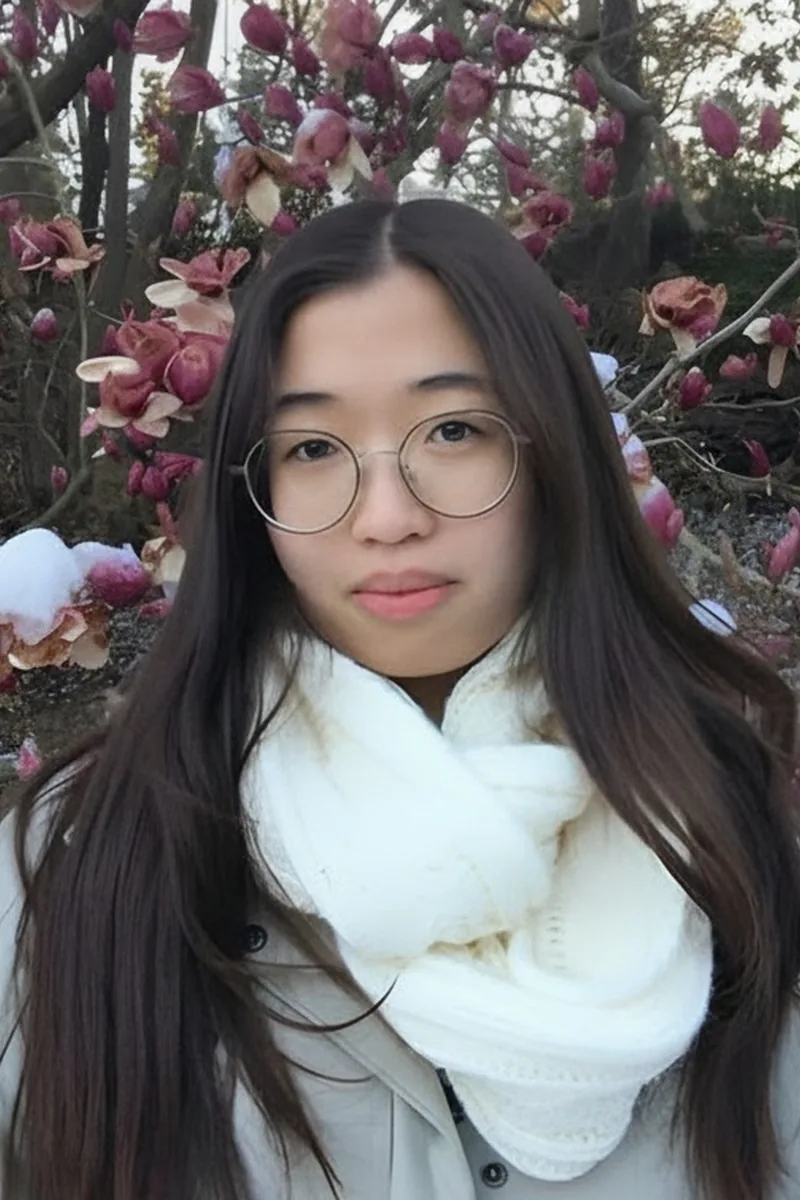
Clarity in writing comes from knowing what you actually want to say — and Michelle treats revision as the place where that discovery happens. She teaches students to restructure arguments, tighten prose, and eliminate filler by working through their own drafts line by line. Her dual interests in neuroscience and literature at Duke give her range across analytical and creative writing styles.
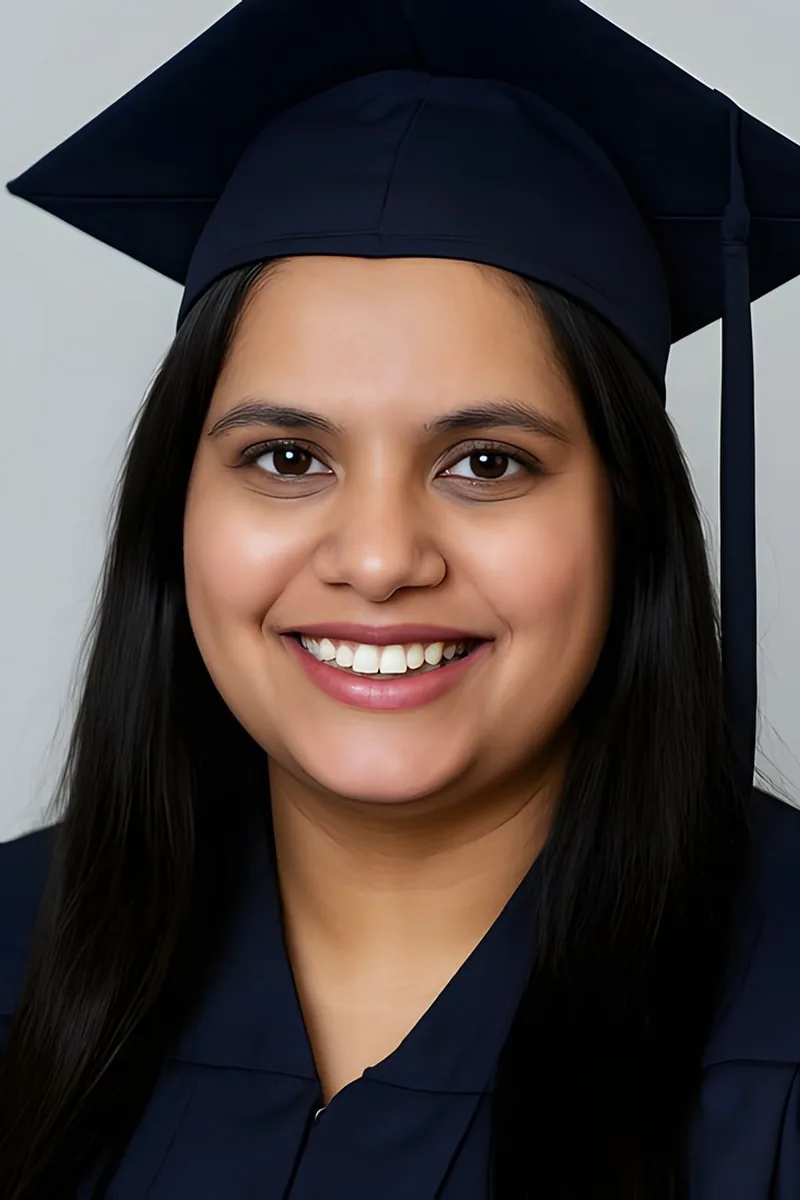
Clear writing is clear thinking, and Apoorva's experience in engineering — where lab reports and technical proposals demand exactness — translates directly into teaching students how to organize ideas on the page. She digs into paragraph structure, thesis development, and how to support claims with specific evidence rather than vague generalizations.
Learning to write well means learning to think on paper — organizing messy ideas into a clear claim and supporting it with evidence that doesn't wander. Andrew pairs his writing minor with a scientist's instinct for precision, teaching students to cut filler, sharpen thesis statements, and build paragraphs that each do real work. His approach turns vague drafts into essays that say exactly what the writer means.
As a middle school Language Arts teacher, Conor spends his days teaching students how to build an argument, organize evidence, and express ideas with precision — the same core skills that matter in any writing assignment at any level. He's especially effective at turning reluctant writers into confident ones by starting with prompt analysis and outlining before drafting a single sentence.
Strong writing starts before the first sentence — with a clear sense of audience, purpose, and structure. Robert breaks down the writing process into concrete, repeatable steps, from brainstorming and outlining through revision, so the blank page stops feeling paralyzing. His experience spans expository, creative, and argumentative writing across academic levels.
Getting ideas onto the page is one challenge; making them persuasive is another. Marina teaches students how to build a thesis that actually stakes a claim, support it with well-chosen evidence, and vary sentence structure so the writing doesn't flatten out. Her UCLA coursework in Women's Studies demanded rigorous analytical writing across disciplines, a skill she now brings to every assignment.
Legal scholarship demands precision: every claim needs evidence, every paragraph needs a clear function, every word needs to justify itself. Ashley brings that discipline to writing instruction, whether a student is working on a five-paragraph essay or a research paper, and she's particularly effective at teaching thesis development and paragraph-level organization.
Every class at St. John's College requires students to construct written arguments from scratch using primary sources — no textbooks, no SparkNotes. That constant practice gives Kelsey a concrete process for teaching writing: start with a genuine question, build a thesis that answers it, and organize evidence so each paragraph earns the next. She's particularly strong at helping students move from a blank page to a structured first draft.
Strong writing starts with knowing what you're actually trying to argue before worrying about word choice or transitions. Solange walks students through that process: pinning down a clear thesis, selecting evidence that does real work, and structuring paragraphs so each one advances the argument. Years of IB extended essays and honors coursework gave her a systematic approach she now applies across genres, from analytical papers to creative pieces.
Getting words onto the page is often the hardest part, and Dylann tackles that block by teaching concrete prewriting strategies — outlining, freewriting, and thesis development — before a student ever drafts a full paragraph. Her Creative Writing background means she understands voice and style alongside the structural mechanics of argumentative, narrative, and expository writing. She holds a 5.0 rating from students.
The gap between having an idea and putting it on the page clearly is where most students get stuck. Isabella, an English major at the University of Chicago with a journalism focus, tackles that gap by teaching concrete techniques — how to build a thesis from a question, how to structure body paragraphs around evidence, and how to revise for clarity rather than just length. Her 5.0 rating speaks to how quickly students see their writing sharpen.
Every writing problem is really a thinking problem — unclear sentences usually trace back to an idea the writer hasn't fully worked out yet. Mary tackles writing instruction by teaching students to outline their reasoning before drafting, then revise with attention to paragraph cohesion, evidence integration, and voice. Her background spans creative writing, expository work, and professional test scoring, so she adjusts her approach depending on whether a student is crafting a personal narrative or a research-based argument.
Most writing problems aren't really about writing — they're about thinking. Before a student touches a keyboard, Jairo tackles the outlining and idea-organization stage, making sure the argument or narrative has a clear spine. His own writing practice spans academic research, personal essays, and standardized-test responses, so he adjusts his coaching to whatever genre a student needs.
Hello! My name is Isabella, and I have a dual degree in biology and psychology. I would love to help you improve your performance in your psychology, biology, and/or neuroscience classes. In high school, I took AP Psychology, so I can draw on that experience to help you get good scores on your exams. I am also able to help you with your writing skills!
Getting words onto a blank page is one problem; making those words persuade, narrate, or analyze is a different one entirely. Jenna tackles both by teaching concrete techniques — outlining from a thesis backward, varying sentence rhythm, and cutting filler — that give students a repeatable process rather than vague inspiration.
Scientific training teaches a particular kind of writing discipline: say exactly what you mean, cut what doesn't serve the point, and organize ideas so a reader never has to backtrack. Michelle applies that same clarity-first philosophy to student writing across genres, from persuasive essays to personal narratives. She's especially effective at teaching students how to outline before they draft, which tends to solve most organizational problems before they start.
I am a law student, but I took an unusual route to get there. I used to attend medical school but had a change of heart in my career path. Part of this was due to my political science major (double major with biology) in college as well as a number of Spanish and other courses that I took. Tutoring is something, I feel, that has come naturally to me, even back to my high school days. My goal is to help you learn as much as you can and reach your true potential. I will work hard to make sure that this happens, as long as you put in the work, too! We will work together to tailor your learning experience to your needs.
Whether the assignment is a personal narrative, a research paper, or a rhetorical analysis, Jeannette treats writing as a craft with learnable moves — thesis construction, evidence integration, paragraph architecture. She earned degrees that required very different kinds of writing, from literary analysis in her French BA to data-driven reports in her Finance MS, and she draws on both to teach students how to adapt their voice and structure to any audience.
I am currently a Harvard student majoring in Computer Science with a minor in Applied Mathematics. I graduated Class Valedictorian in high school and was named National Merit Finalist. I took 16 AP classes in high school, including AP Calculus AB, AP Calculus BC, AP Computer Science A, AP Physics C : Mechanics and AP Physics 1, with a score of 5 in all of the tests. I scored a 1570/1600 in my SAT and 800 in the SAT Math Level 2 Subject Test and 790 in the SAT Physics Subject Test.
I am a rising senior at Duke University who is Pre Med and majoring in Asian and Middle Eastern Studies. I was born and raised in Miami FL and went to public school until college (Sunset Elementary, GW Carver Middle and Coral Reef Senior High for those from Miami). I decided to start tutoring because I would not be on this path had I not had good teachers supporting me along the way. For that reason I want to be able to help others achieve their goals without academics being a huge hurdle.
I am Pre-Med but majored in Romance Languages and Literatures. I was born in Colombia and speak Spanish at home. I studied abroad in France junior year of high school and in Chile junior year of college, and my experience abroad really strengthened my passion for languages and other cultures.
I am a graduate of Rice University (B.A. in Biochemistry and Cell Biology, History) and Emory University (MPH). Through my undergraduate and graduate studies, I have tutored students in various subjects in one-on-one and group tutoring sessions. I am fluent in Spanish and English and enjoy teaching and tutoring students in Spanish, History, English, Algebra I and II, Calculus, Biology and Chemistry. I have personal experience and tutor for the following standardized exams: AP, IB, SAT, ACT and GRE.
I am a 22-year-old medical student. In college, I triple majored in Theoretical Mathematics, Computer Science, and Chemistry. My tutoring experience includes over a dozen classes where I was a TA or grader, many of which involved me teaching classes independently. I am looking forward to tutoring hardworking and motivated students who want to challenge themselves.
I am currently graduating from School for Advanced Studies high school and Miami Dade College with my Associates in Art both simultaneously. I am going to continue my education at Carnegie Mellon University. I tutor my peers and anyone that needs help in my family. I have a pretty wide range of what I can teach because of all the different people that need help. I am also able to teach in different ways to make sure that the student understands and masters the materials given. I tutor in all types of math and am flexible with the type of math students need help with. On my free time I play the French Horn with my school band and hang out with family and friends.
I am a Senior at the University of Florida studying Industrial Engineering and Statistics. My areas of expertise include Statistics, High School and College level Math, and Government. I emphasize maintaining trust and steady communication with my students to maintain a healthy and comfortable learning environment. I believe developing micro-goals and positively reinforcing students help them stay motivated and excited.
I am a graduate of the public history program at the University of South Carolina, where I received an M.A. I am pursuing a career in historic preservation, because buildings and structures crucial to maintaining the culture of local and national society are constantly threatened. Throughout my graduate and undergraduate education, I worked in a teaching capacity, teaching sections of United States and Latin American History courses. With high scores being so crucial to student acceptance to top college programs, I am passionate about sharing the tips and strategies that helped me succeed on standardized tests. I especially enjoy teaching the Math sections of exams, because the subject boils down to learning and memorizing strategies that can be broadly applied. My strategy for standardized test preparation comes down to preparing the student not only for the material itself, but also for the experience of taking the tests. Success on standardized tests is as much an emotional exercise as an intellectual one. In my spare time, I enjoy playing the piano, card and board games, and watching NBA basketball.
I am now certified in Florida for Math 5-12, including financial literacy, and Business Education and Marketing.
I am excited to return the favor. I recently graduated with a bachelors in Cell and Molecular Biology with a minor in Biochemistry. I love to tutor biology, it is so fascinating to learn about. I am constantly learning more and am amazed by the questions students ask me that urge me to keep learning. I also enjoy tutoring en Espanol which I learned from my parents growing up and continued to learn throughout high school.
I am a rising Junior at UM majoring in Mathematics and Economics with minors in Psychology and Education and will end up graduating with both a Bachelor of Arts and a Bachelor of Science. My drive to endure such a rigorous schedule comes from the competitive edge that I feel that I have. Being a four-year, three-sport athlete throughout high school and juggling this with multiple AP courses, I felt well prepared for my time at the university level; it also pushed me to want more from my university experience. In the past, I have mostly worked informally with students as a tutor. At the University of Miami, I have been involved in a club that travels to a local church and simply helps students with homework trouble they may be having. In addition, I have tutored in a formal setting this past semester when I helped a student before his Calculus II final. I enjoyed tutoring in this formal setting, especially in subjects that revolve around Calculus (i.e. precursors such as Algebra and Pre-Calculus and Calculus I itself). Additionally, I feel extremely comfortable with the content of the ACT! When working with students, I feel it is important to appeal to what the student is interested in and apply the subject to those interests. Because of this, I place a strong emphasis on understanding the student, including their hobbies and interests. I also feel that it is important for the student to trust me as their tutor and to know that they share in some common interests. Personally, I enjoy keeping both my body and brain active. Therefore, I enjoy any kind of team sport (being a volleyball, basketball, and softball player in high school), being outdoors, and reading in my free time.
I am a student of the University of Central Florida currently working on a PhD in Digital Media. As a tutor for Varsity Tutors, I have the unique ability to be able to combine two of my greatest passions--writing, and helping others. This is a combination of interests that I've been working with for a while now whether in High School tutoring children from my old elementary school, mentoring middles schoolers and high schoolers as part of Write Away, and tutoring college students on essay writing with Tutor.com. When it comes to tutoring, I specialize in reading and writing, though find my preference to be mostly in writing as it is a subject I am both strong in as well as take a personal interest in as an aspiring writer. Outside of writing stories, however, interests of mine including consuming media of all types such as books, movies, television shows, or video games, enjoying all so long as they have good stories to back them up.
I'm eighteen years old, and I'm about to start my freshman year as a Musical Theatre major at Oklahoma City University. After being born in Colombia and living here in the United States, I've become completely fluent in both Spanish and English, which has helped me quite a bit in finding different ways to help my students solve problems and overcome issues. As a recent high school graduate, I understand how teenagers feel about school and studying, and it's easy for me to relate to that. It's comforting for teenagers to work with someone who knows what it's like to be a high school student, so it's easier for me to connect with them. In my free time I enjoy playing music, singing, watching films, and reading a good book.
I am a fun, creative college student who ensures every student gets the results they need in an efficient way.
I'm here to make sure you succeed in all your classes no matter what.
Testimonials
Because the right Writing tutor makes all the difference.
Average Session Rating – Based on 3.4M Learner Ratings
Nearby Writing Tutors
Other Miami Tutors
Related English Tutors in Miami
Frequently Asked Questions
A writing tutor works with you through every stage of the writing process—from brainstorming and outlining to drafting and revision. Instead of just marking errors, tutors provide personalized feedback on your thesis development, argument structure, and overall voice. They help you understand why certain revisions strengthen your writing, so you develop skills that apply to every essay you write.
Miami-Dade, Broward, and Monroe County schools emphasize essay writing across multiple formats—persuasive, analytical, narrative, and research-based. Students are expected to develop strong thesis statements, support claims with evidence, and master MLA or APA citation styles depending on grade level. Tutors who work with students in Miami understand these specific curriculum demands and can target instruction to what your school requires.
Both matter, but they serve different purposes. Grammar is the foundation—errors distract readers and weaken your credibility. Style is how you use language effectively to engage readers and express your voice. A tutor helps you build grammar skills while also developing your unique voice and stylistic choices. Strong writing requires both technical accuracy and the ability to communicate with clarity and confidence.
Writer's block often stems from unclear thinking, perfectionism, or not knowing where to start. Tutors use strategies like freewriting, mind-mapping, and guided questioning to help you generate ideas before you worry about perfect sentences. They teach you to separate the drafting process from editing—getting words on paper first, then refining them. With practice and personalized strategies, you'll develop confidence in your ability to start and complete writing assignments.
Summary tells what happened; analysis explains why it matters and how it works. In literary analysis, you examine literary devices (symbolism, tone, imagery), character development, and themes to support an argument about the text. Many students struggle with this shift from retelling to interpretation. A tutor helps you move beyond plot summary by teaching you to ask analytical questions, find relevant textual evidence, and construct arguments about what literature means—a critical skill for high school and college.
Your teacher or assignment prompt should specify which style to use. MLA is standard for humanities and literature courses, APA for social sciences and education, and Chicago for history and some research papers. Each has different rules for in-text citations, works cited pages, and formatting. Rather than memorizing rules, a tutor teaches you the logic behind citations and how to apply them consistently—and you'll quickly develop fluency with whichever style your classes require.
Varsity Tutors connects you with experienced writing tutors who understand Miami school curricula and can provide personalized 1-on-1 instruction tailored to your specific goals—whether that's improving essay structure, preparing for standardized writing tests, or developing stronger arguments. You can get matched with a tutor who fits your schedule and learning style, and start working together on the writing skills that matter most to you.
Let’s find your perfect tutor
Answer a few quick questions. We’ll recommend the right plan and match you with a top 5% tutor.