Award-Winning Math Tutors
serving New Haven, CT
Math
Tutors in New Haven
Private 1-on-1 tutoring, weekly live classes for academic support, test prep & enrichment, practice tests and diagnostics, and more to elevate grades and test scores.
Based on 3.4M Learner Ratings
UniversitiesSchools & Universities
DeliveredHours Delivered
ProficiencyGrowth in Proficiency
Who needs tutoring?
No obligation. Takes ~1 minute.
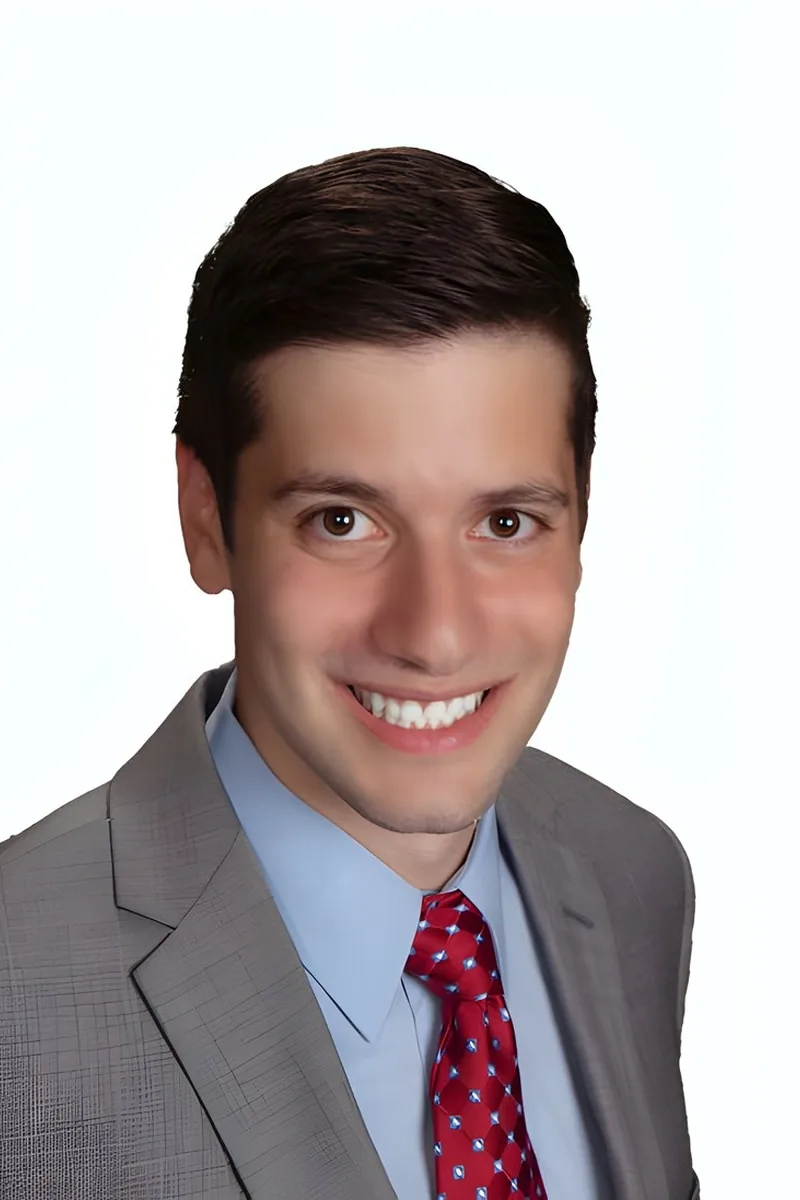
Between a 35 ACT composite and a dual degree in economics and computer science from Duke, Sami has spent years translating abstract math into practical problem-solving. He tackles everything from fractions and ratios to more advanced topics by showing students the underlying logic so each new concept feels like a natural extension of what they already know.
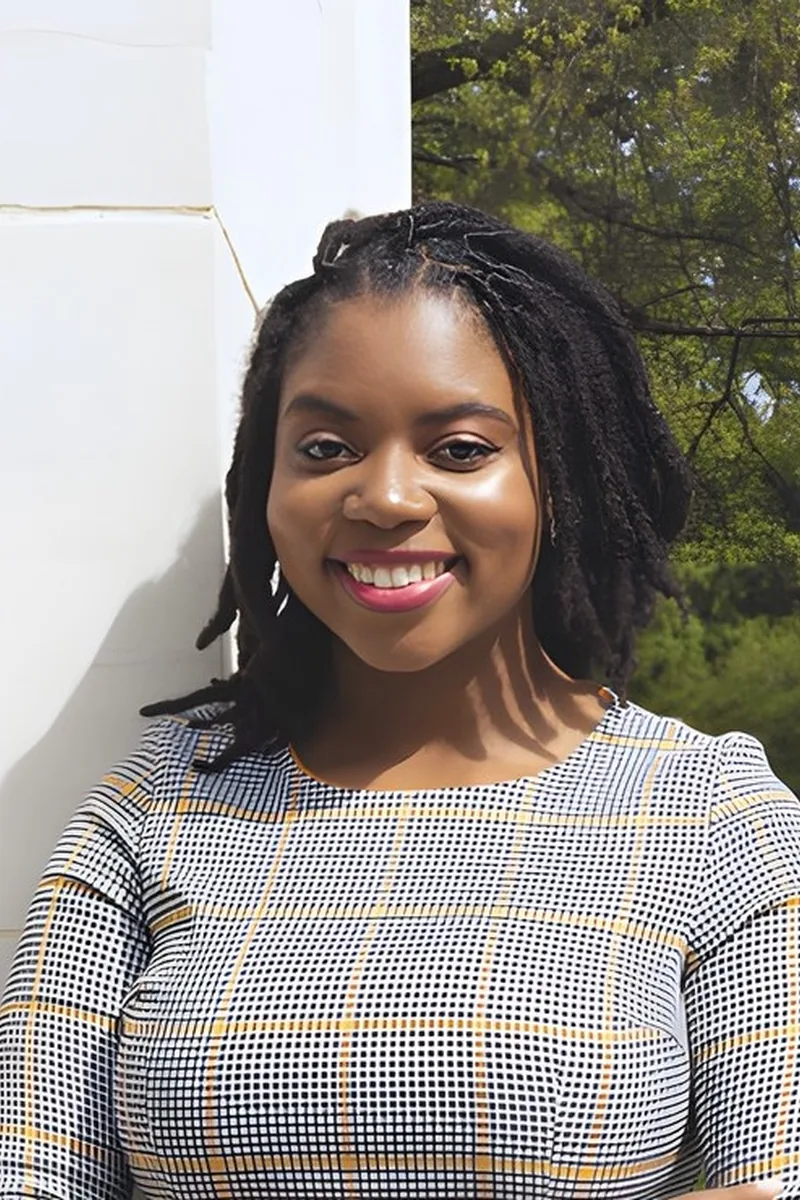
From simplifying fractions to setting up word problems, Xaviera zeroes in on the reasoning behind each step so that math stops feeling like a set of arbitrary rules. Her background in mentoring elementary and middle school students means she knows how to adjust explanations on the fly when a concept isn't clicking.
A dual bachelor's in physics and math from Yale gives Anthony unusual range — he's equally comfortable explaining fraction operations to a pre-algebra student and walking a calculus student through integration by parts. He connects each new concept to what a student already knows, building momentum instead of confusion.
From pre-algebra through calculus, Maxwell has tutored math at every level, and his science training at Yale means he constantly connects mathematical tools to real problems — using exponential functions to model cell growth, or applying derivatives to rate-of-change questions in biology. That context makes abstract procedures feel purposeful. He's rated 5.0 across his students.
From arithmetic foundations through algebra and into calculus, Jon covers a wide range of math levels and tailors his explanations to wherever a student is getting stuck. His pre-med coursework at UCLA required fluency in quantitative reasoning — unit conversions, proportional thinking, basic statistics — and he's skilled at showing younger students why these building blocks matter long before they hit a college-level class.
Brittany's teaching spans both humanities and math, and she approaches arithmetic, fractions, and early algebra with the same structured clarity she brings to essay writing — breaking each problem into logical steps a student can follow and eventually own. Her 1510 SAT score reflects sharp quantitative skills alongside her literary strengths. She's especially effective with students who think of themselves as "not math people" and need someone patient enough to rebuild their confidence from the ground up.
Studying paleography — deciphering medieval manuscripts — trains you to be obsessively systematic about pattern recognition, and James applies that same precision to math, whether he's untangling an algebraic expression or tracing the logic of a proof. His 1590 SAT and dual focus in math and humanities mean he's equally comfortable with computation and with explaining the reasoning behind it in plain language. Rated 5.0 by students.
Stephanie earned her spot in Mu Alpha Theta, the national math honor society, and has tutored students across levels from pre-algebra through calculus. She's especially effective at breaking down the transition points that stump students — moving from arithmetic to variables, or from algebraic manipulation to understanding limits and rates of change. Her 5.0 rating speaks to how clearly she communicates these concepts.
From arithmetic fundamentals through multivariable calculus, Tessa has tutored nearly every level of math — and as a Yale Mathematics major, she knows how each stage builds on the last. She zeroes in on the specific concept a student is stuck on, whether that's fraction operations in middle school or limit definitions in calculus, and explains the reasoning behind each procedure. Rated 4.9 by students.
From long division to linear equations, early math confidence comes from understanding why a method works — not just following steps. Patrycja has taught in algebra classrooms and privately tutored calculus, so she can meet a student at basic arithmetic and build the number sense and problem-solving habits that carry through every future math course.
Environmental science coursework is quietly math-heavy — population modeling, statistical analysis of field data, policy cost-benefit calculations — and Ethan's degree in Environmental Science and Public Policy meant doing all of it. That applied background lets him teach concepts like exponential growth, probability, and data interpretation through problems that actually mean something, connecting algebra and statistics to tangible scenarios. He scored a 36 on the ACT and is rated 5.0 by students.
While Niko's primary expertise is in the humanities, he also tutors math and brings a structured, patient approach to concepts like fractions, ratios, algebraic expressions, and word problems. His background in linguistics — which is more analytical than most people realize — gives him a knack for breaking down abstract notation into plain language. He's a strong fit for students who need someone willing to explain the same idea three different ways until it lands.
Whether a student is wrestling with fraction operations or working through precalculus, Maddie pinpoints the exact concept causing confusion rather than re-teaching an entire chapter. Her approach leans on the Socratic method — asking targeted questions that let students discover the logic behind a procedure instead of just memorizing steps. She tutors across algebra, calculus, and quantitative test prep, so she's comfortable connecting topics across grade levels.
Studying religious texts at Yale means spending hours tracing intricate logical structures and symbolic patterns — skills Mia applies directly when she breaks down multi-step math problems into clear, sequential reasoning. She's particularly good at helping the student who understands each individual operation but freezes when a problem combines several concepts at once, because she teaches how to read a problem's structure before diving into computation.
From pre-algebra through calculus, Max has tutored nearly every level of math — and a 1580 SAT confirms the quantitative chops behind that range. He's especially effective at bridging gaps between procedural steps and conceptual understanding, whether a student is simplifying fractions or tackling limits for the first time.
Aaron's math degree from Yale means he didn't just take calculus — he studied the underlying theory behind why algebraic structures, limits, and proofs work the way they do, which gives him unusual depth when explaining concepts across the full K-12 spectrum. When a student hits a wall with, say, rational expressions or function composition, he can trace the confusion back to the specific gap in reasoning rather than just re-demonstrating the procedure. Rated 5.0 by students.
Louie's time at Yale sharpened his quantitative reasoning before he shifted to Exercise Science, where math shows up constantly in biomechanics calculations, metabolic energy equations, and statistical analysis of training data. That blend means he teaches concepts like proportions, functions, and applied problem-solving with concrete examples that make the abstraction feel purposeful. His 1540 SAT score backs up the fluency he brings across the full range from pre-algebra through calculus.
From arithmetic fundamentals through algebra and introductory calculus, Nathan tackles math by connecting each new concept to the reasoning behind it. His approach emphasizes understanding why a method works — whether that's distributing terms in an expression or interpreting a graph's slope — so students can adapt their thinking to unfamiliar problems.
I am a musician, educator, and philosopher based in New Haven, Connecticut. I studied at UCLA graduating Cum Laude with degrees in Music Performance, Education, and Philosophy. I have been tutoring private music lessons and academic subjects for over 5 years now, and I work as a substitute teacher across Connecticut. My favorite subjects to tutor are Music, English, and Reading/Writing Skills, but I am capable of tutoring various Historical subjects, Math, and Science as well.
From arithmetic fundamentals through algebra and into early calculus concepts, Yossi adjusts his explanations based on exactly where a student's understanding breaks down. His mechanical engineering background at Yale means he's constantly using math as a tool, so he can show why a concept like proportional reasoning or function behavior actually matters beyond the worksheet.
From arithmetic foundations through pre-algebra concepts like fractions, ratios, and order of operations, Luke builds mathematical reasoning that carries students forward. His engineering training at Yale means he instinctively connects abstract number work to real scenarios — distances, measurements, proportions — so the concepts land and stick.
I am a PhD student in Inorganic Chemistry at Yale University. I've been spreading my love of chemistry for the past several years as a TA for general chemistry, and I'm excited to share my passion with you! Prior to Yale, I got my B.S. in chemistry from Caltech, where I also served as a TA for both general chemistry lab and advanced inorganic chemistry. Outside of teaching and research, I enjoy fencing, reading, and playing piano.
Muhammad's science and medical coursework kept him deep in applied math — calculating dosages, modeling physiological rates, interpreting statistical data — so he understands why students ask "when will I actually use this?" He tackles arithmetic, algebra, and basic problem-solving by anchoring abstract operations in tangible scenarios that make the logic click.
From middle school pre-algebra through calculus, Stephen covers a wide math range and tends to zero in on the specific concept causing a student's confusion — whether that's fraction operations, function transformations, or the chain rule. His 1500 SAT score reflects strong quantitative reasoning he brings to every session.
From arithmetic foundations through pre-calculus concepts like function transformations and trigonometric identities, Joana's biochemistry training keeps her comfortable across the full math spectrum. She pinpoints exactly where a student's understanding breaks down — whether that's fraction operations, exponent rules, or setting up proportions — and rebuilds from that specific gap forward.
Sophie's Humanities major at Yale covers surprisingly quantitative ground — political philosophy papers that require formal logic, art history analysis built on geometric proportion, and coursework that demands structured, step-by-step argumentation. That training in breaking complex arguments into sequential pieces translates well to tackling math problems where students need to see how each step logically leads to the next. Rated 5.0 by students.
Twenty years of teaching law and criminology means Ryan has spent his career building logical arguments from evidence — a habit that reshapes how he approaches math, treating each problem as a chain of reasoning where every step needs justification. His psychology background also gives him a sharp read on when a student is nodding along without actually understanding, so he catches gaps in real time. Rated 5.0 by students.
From pre-algebra through calculus, Christina covers the full math pipeline — which means she can pinpoint exactly where a gap in earlier material is causing trouble in a current course. Her approach treats each concept as a building block, connecting ideas like proportional reasoning in middle school to the function analysis students encounter later. Rated 4.8 by students.
While math isn't Julia's primary specialty, her 1510 SAT and experience teaching across multiple grade levels mean she's comfortable with arithmetic, fractions, pre-algebra concepts, and the foundational skills younger students need to build confidence. She approaches math the way she approaches history — by making sure a student understands the reasoning behind each step, not just the procedure.
Whether a student is wrestling with fractions or working through polynomial equations, Patrick zeroes in on the specific reasoning step where confusion starts. His approach leans heavily on building number sense and problem-solving habits, shaped by years of teaching across algebra, calculus, and quantitative business courses.
Jill teaches math across algebra and calculus, with a particular knack for translating word problems into equations students can actually set up and solve. Her communication background means she explains concepts in plain language, walking through each step until the logic clicks rather than just demonstrating a formula.
From basic arithmetic through pre-calculus, Zach has tutored math at nearly every level — and four years leading Yale MATHCOUNTS sessions taught him how to spot exactly where a student's understanding breaks down. He zeroes in on the underlying concept rather than just correcting the wrong answer, whether that's place value for a younger student or function behavior for someone in algebra. That diagnostic approach is what moves students forward.
A Yale STEM graduate who spent years grinding through problem sets in quantitative courses, Kaitlin knows how to break down everything from fractions and proportions to quadratic equations into manageable steps. She developed her own study systems to get through a rigorous premed curriculum, and she brings those same structured techniques to math concepts that students often find overwhelming.
Testimonials
Because the right Math tutor makes all the difference.
Average Session Rating – Based on 3.4M Learner Ratings
Practice Math
Free practice tests, flashcards, and AI tutoring for Math
Nearby Math Tutors
Other New Haven Tutors
Related Math Tutors in New Haven
Frequently Asked Questions
Varsity Tutors connects you with expert math tutors who provide personalized 1-on-1 instruction tailored to your learning style and goals. During your first session, your tutor will assess your current understanding, identify specific challenges (whether that's word problems, multi-step equations, or graphing), and create a customized plan to help you build both procedural skills and conceptual understanding. Sessions are flexible and can focus on homework help, test prep, or filling gaps in foundational concepts.
Yes. New Haven's 10 school districts use various textbooks and approaches, and tutors are experienced working across different curricula—whether your school uses traditional textbooks, problem-based learning programs, or other methods. Your tutor will align their instruction with what you're learning in class, helping you understand the specific concepts and problem-solving strategies your teachers emphasize.
Word problems require students to translate real-world scenarios into mathematical equations—a skill that combines reading comprehension, conceptual understanding, and procedural fluency. Expert tutors break down the problem-solving process step-by-step, teaching students how to identify what information matters, set up equations, and check their work. With personalized practice and feedback, students build confidence and develop strategies they can apply to unfamiliar problems.
Absolutely. Math anxiety often stems from past struggles or feeling rushed, and personalized tutoring creates a low-pressure environment where students can ask questions and learn at their own pace. When tutors help students see the patterns and connections in math—rather than just memorizing procedures—understanding grows and confidence follows. Many students who start out anxious discover that math makes sense when it's explained in a way that clicks for them.
Showing work helps teachers see your thinking process, not just your final answer—it reveals where misunderstandings happen and lets teachers give targeted feedback. For students, writing out steps reinforces conceptual understanding and makes it easier to catch and correct mistakes. Tutors emphasize this practice too, teaching students how to organize their work clearly and explain their reasoning, which strengthens both their math skills and their ability to communicate mathematically.
Geometry proofs require a different type of thinking than earlier math—students must justify each step logically and connect theorems and properties in a chain of reasoning. Expert tutors break down the proof-writing process, teaching students how to identify what's given, what they need to prove, and which theorems apply. With guided practice and feedback, students learn to see the logical structure and build the confidence to tackle proofs independently.
Your tutor will start by getting to know your learning style, reviewing your current math level, and understanding your specific goals—whether that's catching up on missed concepts, preparing for a test, or moving ahead. They'll ask questions about topics that feel confusing and identify patterns in where you struggle. This assessment helps your tutor create a personalized plan for future sessions that targets your needs and builds on your strengths.
Multi-step equations require students to apply multiple procedures in the right order—and confusion often happens when students lose track of the process or forget why each step matters. Tutors teach both the procedural steps (isolate the variable, combine like terms, etc.) and the conceptual reasoning behind them, helping students understand that they're working to "undo" operations. With practice and clear strategies for organizing work, students develop fluency and can tackle increasingly complex equations with confidence.
Let’s find your perfect tutor
Answer a few quick questions. We’ll recommend the right plan and match you with a top 5% tutor.