Award-Winning College Chemistry Tutors
serving New Haven, CT
College Chemistry
Tutors in New Haven
Private 1-on-1 tutoring, weekly live classes for academic support, test prep & enrichment, practice tests and diagnostics, and more to elevate grades and test scores.
Based on 3.4M Learner Ratings
UniversitiesSchools & Universities
DeliveredHours Delivered
ProficiencyGrowth in Proficiency
Who needs tutoring?
No obligation. Takes ~1 minute.
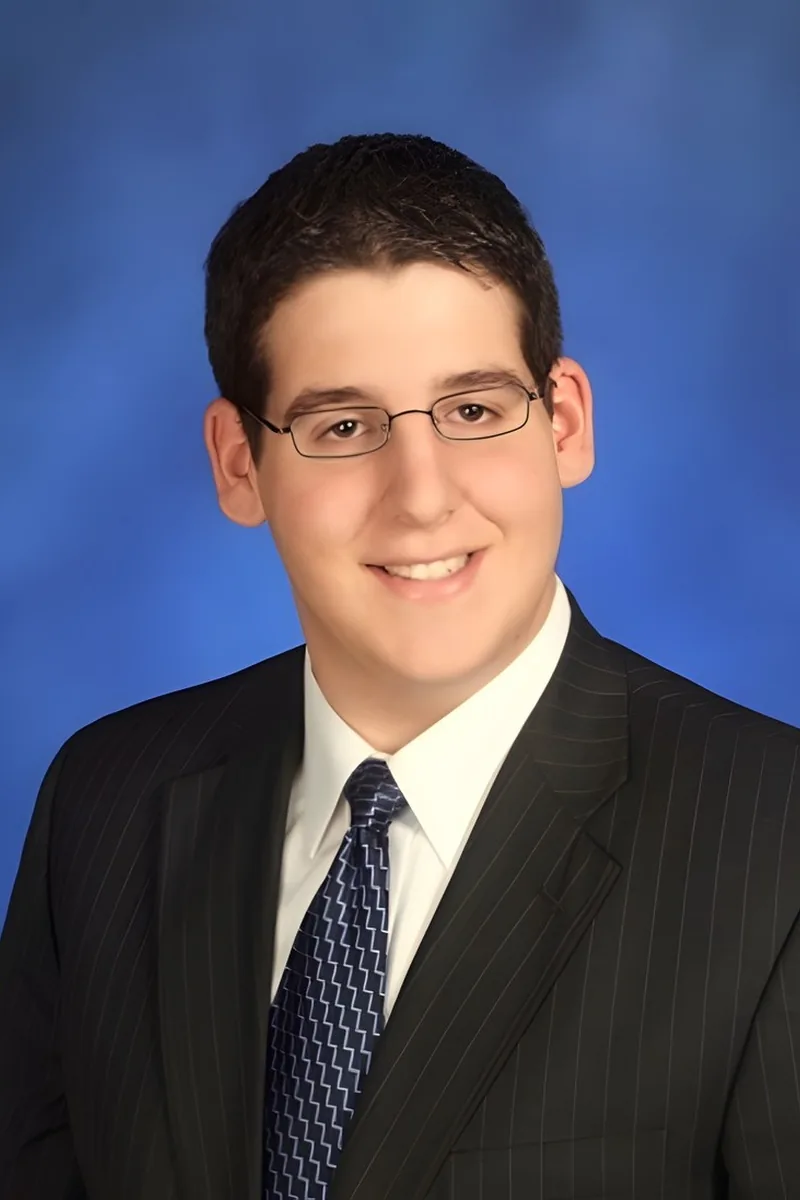
Having scored a 36 on the ACT and taught honors chemistry alongside AP-level math and statistics, Ethan brings a quantitative sharpness to college chemistry that's especially useful when students hit the calculation-dense stretches — gas law problems, enthalpy calculations, solution stoichiometry. His environmental science background also means he can ground abstract topics like chemical kinetics and equilibrium in real-world systems where those principles visibly play out. Rated 5.0 by students.

Most college chemistry students don't expect a math major to be the one who makes electron configurations or equilibrium expressions click — but Tessa's mathematics training at Yale means she can cleanly separate the quantitative mechanics of a problem from the chemical reasoning, which is exactly where most gen chem confusion hides. She also scored a 36 ACT and holds a 4.9 rating, though what matters more is her knack for showing students the logical structure underneath topics that otherwise feel like pure memorization.
I am a PhD student in Inorganic Chemistry at Yale University. I've been spreading my love of chemistry for the past several years as a TA for general chemistry, and I'm excited to share my passion with you! Prior to Yale, I got my B.S. in chemistry from Caltech, where I also served as a TA for both general chemistry lab and advanced inorganic chemistry. Outside of teaching and research, I enjoy fencing, reading, and playing piano.
Premed coursework at Yale put Kaitlin through the full gauntlet of gen chem — from electron configurations and VSEPR theory to equilibrium and electrochemistry — alongside some of the most rigorous problem sets in the country. She picked up study strategies along the way that turn dense material into something manageable, breaking each topic into the conceptual piece and the quantitative piece so students can pinpoint exactly where they're getting stuck.
Jumping from high school chemistry to college-level coursework means suddenly dealing with quantum numbers, molecular orbital theory, and multi-step equilibrium problems that move fast. Noah has been on both sides of that transition — he earned his biochemistry degree magna cum laude and then spent two years as a university organic chemistry TA, grading exams and running review sessions. He knows precisely where college students get lost and how to get them back on track.
A molecular biology degree means Chantel spent serious time with the chemistry that underpins biological systems — electron configurations, chemical bonding, solution chemistry, and the thermodynamic principles that drive cellular reactions. She tackles gen chem problems by slowing down at the exact step where notation or logic trips a student up, rebuilding clarity before moving forward.
Having earned her B.S. in Chemistry, Sabine has the full picture of how gen chem topics like electron configuration, bonding theory, and chemical kinetics thread into upper-level coursework — so she teaches introductory material with an eye toward what's coming, not just what's on the next exam. She's especially sharp at breaking down the logic behind equilibrium expressions and redox balancing, where students often memorize steps without understanding the chemistry driving them. Rated 5.0 by students.
Ten years of tutoring chemistry while progressing through medical school and into surgical residency applications means Patrick has revisited gen chem concepts like acid-base equilibria, reaction kinetics, and thermodynamics dozens of times — each pass deepening how he explains them. He zeroes in on the specific step in a multi-part problem where a student's reasoning breaks, whether it's a conceptual misread of Le Chatelier's principle or a unit-conversion slip buried in a stoichiometry chain.
Going from a Penn undergrad to medical school means Jessica sat through college chemistry twice — once as a prerequisite and again when biochemistry and pharmacology demanded she actually internalize concepts like reaction energetics, acid-base equilibria, and molecular interactions at a deeper level. That second pass gave her a clear sense of which gen chem topics students need to truly own versus merely survive, and she teaches accordingly. Rated 4.8 by students.
Between AP Chemistry, organic chemistry, and inorganic chemistry, Rebecca has covered college-level chemical concepts from multiple angles — but it's her biology background that shapes how she teaches gen chem topics like electron configurations, bonding, and solution chemistry, always tying them back to the biological systems where students will encounter them again. She's especially sharp at bridging the gap between memorizing periodic trends and actually using them to predict reactivity or molecular behavior. Rated 5.0 by students.
Li's doctoral-level medical coursework means she's encountered college chemistry concepts like acid-base equilibria, solution chemistry, and reaction energetics in clinical contexts where getting the chemistry wrong has real consequences. Her microbiology and anatomy teaching background also means she can ground abstract gen chem topics — like intermolecular forces or oxidation states — in the biological systems students will see again in upper-level courses.
Balancing redox equations, predicting reaction spontaneity with Gibbs free energy, working through equilibrium problems — these are the topics that trip up most college chemistry students. Laura tackles them daily as a biology major at WashU, where the pre-med chemistry sequence demands real fluency with thermodynamics, kinetics, and acid-base chemistry. Rated 5.0 by students, she breaks down quantitative problems into clear, logical steps.
MIT's general chemistry sequence is notoriously fast — Vania not only survived it but tutored other students through it via the university's Seminar XL and Tutorial Services Room programs, where she got fluent in the exact places students stall out on topics like thermochemistry, equilibrium, and electron configuration. Her mechanical engineering training means she thinks about chemistry problems quantitatively, tracing how molecular-level behavior connects to the math rather than treating equations and concepts as separate tasks. Rated 5.0 by students.
Sung earned his B.S. in Chemistry, which means he can unpack topics like thermodynamics, equilibrium constants, and molecular orbital theory with real depth rather than surface-level definitions. He connects abstract concepts — like why Gibbs free energy determines spontaneity — to concrete problem-solving strategies that stick. Rated 5.0 by students.
Tackling college-level chemistry means juggling thermodynamics, kinetics, and equilibrium all in the same problem set. Brittany was employed at the University of Pennsylvania's Tutoring Center specifically for General Chemistry I and II, where she worked with both undergraduates encountering the material for the first time and graduate students brushing up on fundamentals. That range sharpened her ability to adjust explanations to any level of preparation.
Engineering coursework at Harvard means Christopher regularly uses chemistry concepts like thermodynamics, equilibrium, and reaction kinetics in applied settings. He teaches college chemistry by connecting abstract ideas — say, Gibbs free energy or electrochemical cells — to tangible problems, making the material easier to internalize before exams.
Forty-plus students tutored in general and AP Chemistry, a bachelor's in chemistry, and a master's in environmental toxicology — Amy has seen college-level chemical concepts from the classroom side and the research side, where sloppy equilibrium reasoning or shaky thermodynamics understanding actually costs you results. She walks through problems like calorimetry, solution preparation, and reaction stoichiometry with an emphasis on dimensional analysis and unit tracking, which is where most gen chem mistakes quietly start. Rated 5.0 by students.
I've been working with students for over seven years, from middle school all the way through college, across subjects like math, calculus, statistics, linear algebra, chemistry, and physics, with a lot of SAT and ACT prep mixed in. My background is perhaps a little unconventional. I have two bachelor's degrees, one in Engineering and one in Communication Studies, plus a Master's in Design. That combination means I can guide you through challenging technical material and communicate it in a way that is easy to grasp. What I care most about is helping students get to a place where they don't need me anymore. I know that sounds like a strange thing for a tutor to say, but I think it's the right goal. I'm not here to walk you through steps to copy down. I want you to understand why something works, because that's what holds up under pressure, on a test you haven't seen before. If you're ready to ace that test or prove that theorem that's been bugging you, reach out and let's work together
Pre-med bio-psychology coursework at UCSB means Aaron has pushed through college chemistry the same way his students are — as a high-stakes prerequisite where every gap in stoichiometry or equilibrium shows up again in upper-division science courses. He talks through problems conversationally, pressing students to explain the reasoning back to him, which exposes shaky understanding far faster than just re-solving practice sets. Holds a 5.0 rating.
Thermodynamics is Rahul's favorite corner of chemistry — and as a Cornell chemical engineering graduate (magna cum laude), he's applied concepts like enthalpy, Gibbs free energy, and reaction spontaneity far beyond the gen chem textbook, through upper-level coursework in physical chemistry and process design. He pushes students to grasp the conceptual reasoning behind each problem before touching the math, so topics like calorimetry and equilibrium stop feeling like disconnected formula exercises. Rated 4.9 by students.
Testimonials
Because the right College Chemistry tutor makes all the difference.
Average Session Rating – Based on 3.4M Learner Ratings
Nearby College Chemistry Tutors
Other New Haven Tutors
Related Science Tutors in New Haven
Frequently Asked Questions
College Chemistry usually covers atomic structure, bonding, stoichiometry, thermodynamics, equilibrium, acid-base chemistry, and redox reactions. Many courses also include lab components where you'll apply concepts through experiments and learn proper scientific methodology. The exact curriculum varies by institution, so it's helpful to review your syllabus to identify which topics need the most support.
Balancing equations requires understanding both the symbolic representation of reactions and the conservation of mass principle—it's not just memorization. Many students find it helpful to work through the process systematically rather than guessing, and to visualize what's actually happening at the molecular level. Personalized tutoring can break down the step-by-step approach and help you build confidence with increasingly complex equations.
College Chemistry tutors can help you understand the theory behind experiments, predict outcomes, and analyze results—connecting what you learn in lecture to what you observe in the lab. They can also guide you through data analysis, error evaluation, and scientific reasoning skills that are critical for lab reports. This integrated approach helps you see chemistry as a coherent discipline rather than separate lecture and lab experiences.
Unit conversions and stoichiometry are foundational skills that require practice and a clear understanding of dimensional analysis. Rather than memorizing formulas, it helps to learn the logic behind the conversions—why you multiply or divide by specific ratios. Tutors can walk you through problems step-by-step, help you identify common patterns, and build your confidence so these calculations become second nature.
Abstract concepts like bonding, molecular geometry, and electron behavior are easier to grasp when you can see them represented visually or work through models. Tutors often use diagrams, 3D models, and real-world analogies to help you build mental pictures of what's happening at the atomic level. Once you can visualize these concepts, the math and problem-solving become much more intuitive.
Your first session is an opportunity for a tutor to understand your current level, identify specific challenges (whether it's balancing equations, thermodynamics, or lab skills), and learn your learning style. Together, you'll discuss your course goals and create a personalized plan to address your needs. This foundation helps ensure that every subsequent session is focused and productive.
Yes—tutoring goes beyond content review to develop your scientific thinking skills. Tutors help you practice problem-solving under exam conditions, teach you how to approach unfamiliar questions, and strengthen your ability to apply concepts to new situations. This builds both content mastery and the reasoning skills that college chemistry exams assess.
Varsity Tutors connects you with expert tutors who understand College Chemistry and can personalize instruction to match your needs and schedule. Whether you need help with specific topics, lab preparation, or comprehensive exam review, you can get matched with a tutor who has the right expertise. The process is straightforward—just share your goals and we'll find the right fit for you.
Let’s find your perfect tutor
Answer a few quick questions. We’ll recommend the right plan and match you with a top 5% tutor.